

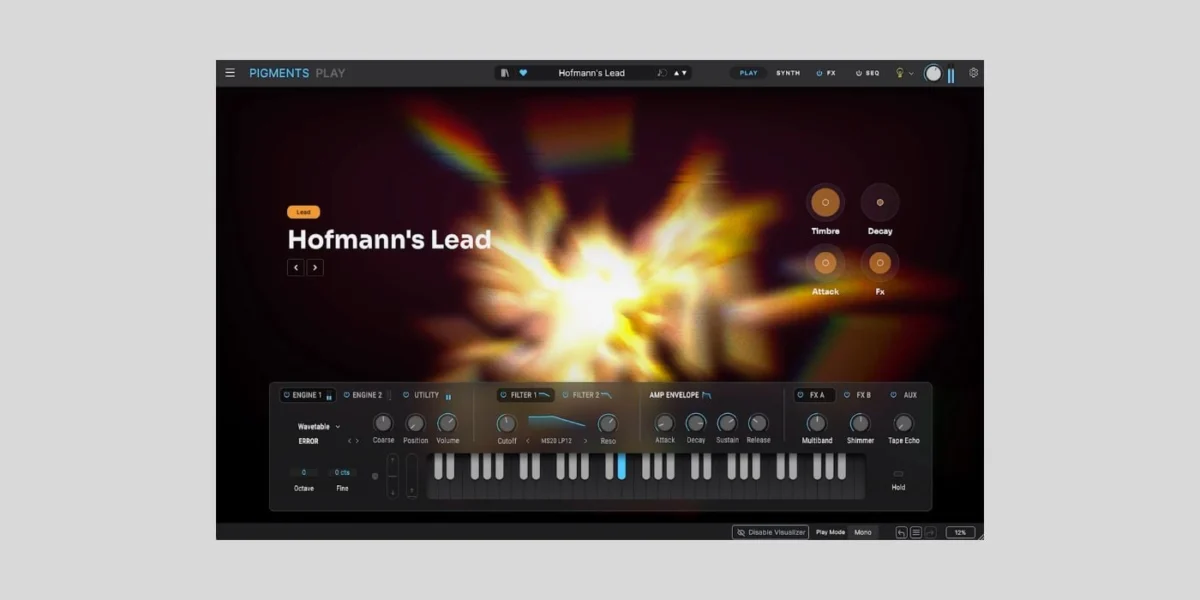
Arturia, a prominent name in the realm of music technology, has officially released Pigments Play, a complimentary software synthesizer designed to serve as an accessible entry point to the acclaimed capabilities of its flagship Pigments instrument. This strategic introduction marks a significant step in making sophisticated sound design more widely available, particularly to emerging producers and those seeking an efficient workflow without the initial commitment of a full-featured professional tool. Pigments Play is not merely a demo; it offers a curated, user-friendly experience that leverages a substantial portion of Pigments’ advanced sound engine and a selection of its high-quality preset content. This initiative mirrors Arturia’s earlier move with Analog Lab Play, which launched in 2023, establishing a clear pattern in the company’s strategy to broaden its user base through freemium offerings.
Arturia’s Legacy and the Genesis of Pigments
For decades, Arturia has been a pivotal innovator in the music technology landscape, renowned for its meticulous software emulations of classic analog synthesizers within its V Collection and its groundbreaking hardware instruments like the MiniFreak and MicroFreak. The company has consistently pushed boundaries, blending vintage appeal with modern digital capabilities. Arturia’s flagship software synthesizer, Pigments, first launched in late 2018, quickly established itself as a powerful and versatile instrument. It distinguished itself through a unique hybrid synthesis architecture, combining wavetable, virtual analog, granular, sampling, and harmonic engines, all woven together by an incredibly flexible modulation system. Subsequent updates, including Pigments V2 (2019), V3 (2021), and V4 (2023), continually expanded its sonic palette and features, solidifying its reputation as a go-to tool for cutting-edge sound designers and producers across various genres. Its depth and complexity, while offering unparalleled creative freedom, could also present a steep learning curve for newcomers.
The Strategic Rationale Behind Freemium Models in Software
The introduction of Pigments Play aligns with a broader industry trend towards freemium models, a strategic approach that has proven highly effective in the software sector. This model involves offering a basic version of a product for free, with the intention of attracting a large user base and subsequently converting a percentage of those users into paying customers for a more feature-rich "pro" version. Companies like Native Instruments with Kontakt Player or Spitfire Audio with their LABS series have successfully utilized this strategy to democratize access to sophisticated tools, fostering community engagement and providing a tangible pathway for users to invest further as their skills and needs evolve.
For Arturia, Pigments Play serves multiple strategic objectives:
- User Acquisition: It significantly lowers the barrier to entry for prospective users who may be intimidated by the cost or complexity of a professional synthesizer.
- Brand Exposure: It exposes a wider audience to the quality and innovation inherent in Arturia’s engineering, particularly the acclaimed Pigments engine.
- Educational Tool: It acts as an accessible educational resource, allowing new producers to experiment with advanced synthesis concepts in a simplified environment.
- Upselling Pathway: It creates a natural upgrade path to the full Pigments version, as users become familiar with the core sound and workflow and eventually crave deeper control.
This strategic move is indicative of Arturia’s commitment to democratizing advanced sound design, aligning with their long-standing philosophy of innovation and accessibility in music production technology.
Pigments Play: A Curated Experience for Rapid Creativity
Pigments Play is meticulously designed to offer a focused and intuitive experience, prioritizing fast preset browsing and simple sound shaping over deep, intricate programming. The instrument includes 100 professionally curated presets, hand-picked from the vast library of the full Pigments instrument. These sounds span a comprehensive array of modern music genres, including but not limited to modern pop, R&B, garage, house, drum and bass, trap, and ambient production styles. This diverse selection ensures that users can immediately access high-quality, production-ready sounds suitable for a wide range of creative projects.
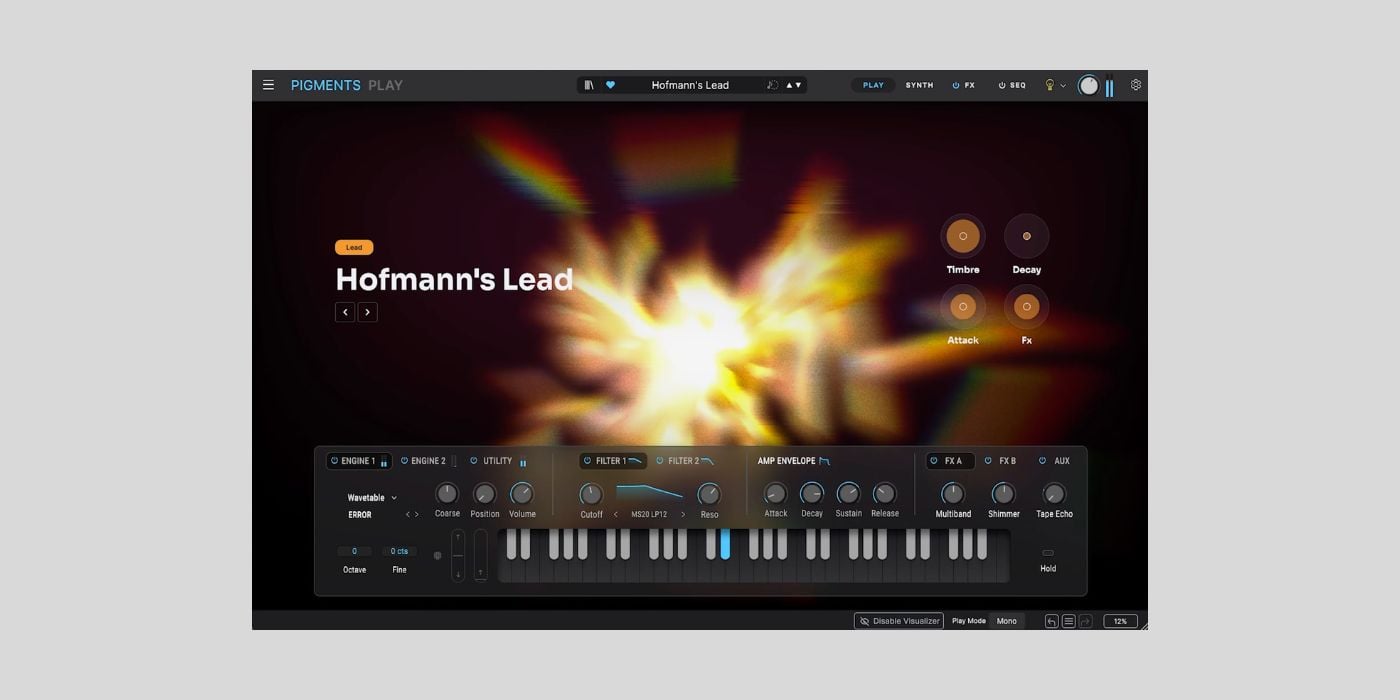
A core feature distinguishing Pigments Play is its visually engaging, audio-reactive "Play view." This interface dynamically changes as notes are played and parameters are adjusted, offering immediate visual feedback that enhances the user experience and makes sound manipulation more intuitive. This design choice stands in stark contrast to the often-complex, multi-page interfaces found in full-featured synthesizers, allowing users to remain creatively engaged without being overwhelmed by an abundance of controls.
Intuitive Control: Macros and Effects for Expressive Shaping
Each of the 100 included presets within Pigments Play comes equipped with four essential macro controls: Brightness, Timbre, Time, and Movement. These macros are not generic; they are intelligently assigned by expert sound designers to specific parameters within each individual preset, ensuring that any adjustment made remains musically useful and expressive. For instance, the "Brightness" macro might simultaneously control filter cutoff, overtone levels, or high-frequency effects, allowing for nuanced tonal shifts with a single knob turn. Similarly, "Timbre" could morph between different synthesis modes or waveform shapes, while "Time" might adjust delay feedback or LFO rates, and "Movement" could introduce subtle modulation or arpeggiator variations. This level of curated control allows users to significantly alter the character of a sound without delving into complex synthesis parameters.
In addition to these core macros, Pigments Play also provides four dedicated effect controls, covering two modulation effects (e.g., chorus, flanger, phaser), a delay effect, and a reverb effect. These essential tools allow for further sonic sculpting, adding depth, space, and motion to the sounds. The combination of contextually assigned macros and dedicated effects ensures that users have powerful yet straightforward tools to customize and adapt sounds to their specific creative vision.
Under the Hood: The Power of Pigments’ Synthesis Engines
Despite its simplified interface, Pigments Play harnesses the formidable power of the full Pigments sound engine. It supports all six of the core synthesis types that define its flagship counterpart:
- Modal Synthesis: Ideal for creating resonant, bell-like, or percussive sounds with physical modeling characteristics.
- Granular Synthesis: Allows for the manipulation of audio samples into tiny "grains," enabling the creation of evolving textures, shimmering pads, and unique soundscapes.
- Wavetable Synthesis: Offers dynamic, evolving sounds by sweeping through various waveforms stored in a wavetable, perfect for modern electronic music.
- Sample Playback: Provides the ability to load and manipulate audio samples, offering a foundation for realistic instruments or creative sound design.
- Harmonic Synthesis: Focuses on additive synthesis, building sounds from individual sine waves (harmonics) to create rich, complex, and often metallic tones.
- Virtual Analog Synthesis: Emulates the classic warmth, richness, and instability of vintage analog synthesizers, providing a foundational sound for countless genres.
Furthermore, Pigments Play incorporates 68 distinct filter modes and 20 advanced effect algorithms directly from the full Pigments suite. While direct, granular control over these parameters is limited in Pigments Play, their underlying presence ensures that the curated presets and the sounds they produce maintain the high fidelity, depth, and character expected from a premium Arturia instrument. This robust sonic foundation provides a powerful glimpse into the capabilities of the full Pigments, enticing users with the potential for unparalleled sound design.
Distinguishing Pigments Play from the Full Pigments Experience
It is crucial to understand that Pigments Play is designed as a focused introduction, not a replacement for the full Arturia Pigments. The primary distinctions lie in the level of parameter control and the breadth of the feature set. While Pigments Play provides access to the core sound engines and a selection of effects, direct parameter manipulation is significantly limited. Users will not find the extensive modulation matrix, the dedicated Main view for oscillator and engine control, the comprehensive FX view for deep effect customization, or the powerful Sequencer view for intricate melodic and rhythmic patterns that characterize the full version. Additionally, the full Pigments boasts a vast library of over 1,700 presets, dwarfing the 100 curated sounds available in Pigments Play. The in-app tutorials, which guide users through the complexities of sound design in the paid version, are also absent.
These limitations are intentional and serve a specific purpose: to streamline the creative process for quick results. For newer producers or those prioritizing speed and inspiration over deep programming, this focused approach can be highly advantageous. It allows users to start with a polished, professional-grade preset, make immediate and musically relevant adjustments, and remain focused on songwriting and arrangement rather than getting bogged down in intricate sound design. This philosophy caters to a demographic that values efficiency and immediate gratification in their creative tools.
Ecosystem Integration and Connectivity
Arturia has ensured that Pigments Play is deeply integrated into its broader software ecosystem. The instrument features an updated browser that allows users to filter sounds by type and instrument, enhancing discoverability. Furthermore, Pigments Play seamlessly connects to Arturia’s Sound Store, an expansive online marketplace offering a wealth of additional sound banks. This includes over 200 artist and genre-based sound banks, featuring both paid expansions for those looking to broaden their sonic horizons and additional free content, providing a continuous stream of fresh inspiration.
Controller support is also a key aspect of Pigments Play’s design. Arturia keyboards and controllers benefit from automatic mapping, allowing for immediate hands-on control without any configuration. For users with other MIDI controllers, parameters can be manually mapped, providing flexibility and customization. Moreover, Pigments Play can be used not only as a VST, AU, or AAX plugin within a Digital Audio Workstation (DAW) but also in a standalone mode. In standalone mode, users can interact with the instrument using a standard computer keyboard or the built-in virtual keyboard, making it accessible even without external hardware.
Technical Specifications and Accessibility
Pigments Play is designed to be compatible with a wide range of modern computer systems. It runs efficiently on Windows 10 or newer operating systems and macOS 11 (Big Sur) or newer. Its availability as a VST, AU, or AAX plugin ensures broad compatibility with virtually all major Digital Audio Workstations, from Ableton Live and Logic Pro to Cubase and Pro Tools. The installation and activation process is conveniently managed through the Arturia Software Center, a centralized application that handles all Arturia product management, updates, and authorizations, ensuring a smooth and user-friendly setup experience.
Industry Reception and Future Implications
The release of Pigments Play has been met with positive anticipation from industry analysts and the music production community. This move is widely regarded as a shrewd strategic play by Arturia, leveraging the immense popularity and technological prowess of its flagship synthesizer to capture a new segment of the market. By democratizing access to a highly regarded sound engine, Arturia not only expands its potential customer base but also reinforces its reputation as a company committed to supporting producers at all levels.
Industry observers suggest that Arturia’s "Play" series, now featuring both Analog Lab Play and Pigments Play, represents a long-term commitment to a freemium growth strategy. This approach could lead to similar "Play" versions of other complex Arturia instruments in the future, further expanding their ecosystem and making advanced tools more accessible. For emerging artists and producers, Pigments Play offers a powerful, no-cost entry point into professional sound design, potentially fostering a new generation of users who may eventually graduate to Arturia’s full suite of premium software and hardware offerings. This strategic release not only benefits Arturia but also significantly empowers the broader music production community by lowering the financial and technical barriers to creative expression.
The current landscape of music production software is increasingly competitive, with developers constantly seeking innovative ways to attract and retain users. Arturia’s Pigments Play stands out as a robust, high-quality offering that directly addresses the needs of a growing segment of producers: those who seek immediate inspiration and powerful sounds without the complexity or financial outlay of a full professional suite. It establishes a clear pathway for sonic exploration, cementing Arturia’s position as a forward-thinking leader in the music technology space.
