

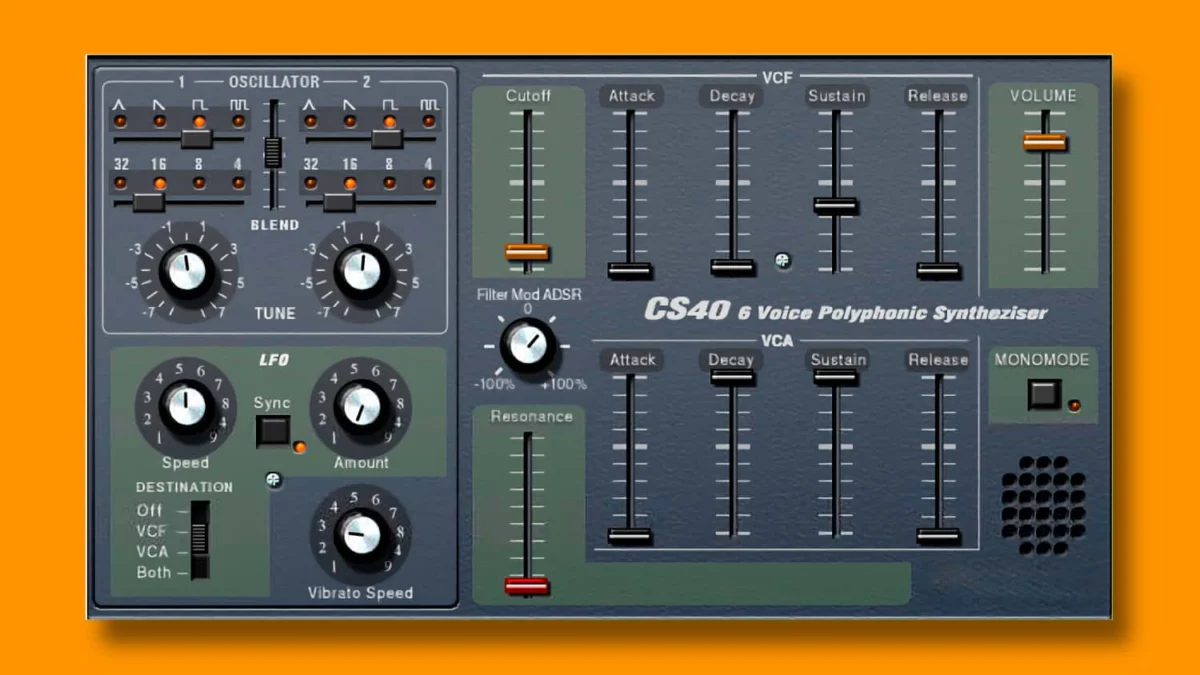
Steinberg Media Technologies GmbH has officially announced the release of the Steinberg Classics Collection, a curated bundle of the company’s most influential early software instruments and effects, made available to the public at no cost. This release marks the 30th anniversary of Virtual Studio Technology (VST), a standard that fundamentally altered the trajectory of music production by enabling the integration of software-based synthesizers and processors within Digital Audio Workstations (DAWs). The collection features updated VST3 versions of seminal tools, including Neon, VB-1, Model E, LM-7, and Karlette, ensuring that these historical digital artifacts remain functional on contemporary operating systems such as Windows 11 and macOS Sonoma.
The Genesis of a Digital Revolution: 30 Years of VST
The introduction of Virtual Studio Technology in the mid-1990s represented a paradigm shift in the recording industry. Before the advent of VST, music production was largely tethered to physical hardware—rack-mounted effects units, large-format mixing consoles, and hardware synthesizers. In 1996, Steinberg released the VST interface specification alongside Cubase 3.02, effectively creating an open architecture that allowed third-party developers to create plugins that could run in real-time within a host application.
The initial release of VST focused primarily on audio effects like EQ and reverb. However, the standard evolved rapidly. By 1999, Steinberg introduced VST 2.0, which included the VST Instrument (VSTi) specification. This allowed software to receive MIDI data, paving the way for the virtual instruments that dominate modern production today. The Steinberg Classics Collection serves as a retrospective of this era, offering the very tools that first convinced professional engineers and hobbyists alike that a "studio in a box" was a viable reality.
Anatomy of the Steinberg Classics Collection
The Classics Collection is not merely a nostalgic repackaging; Steinberg has re-engineered these legacy plugins to meet modern technical requirements. The shift to the VST3 standard is significant, as it provides better resource management, side-chaining capabilities, and compatibility with Apple Silicon (M-series) processors.
Neon: The World’s First VST Instrument
Neon holds a unique place in music technology history as the very first VSTi ever released. Originally bundled with Cubase VST 3.7, it is a simple two-oscillator polyphonic synthesizer. While its architecture is modest by today’s standards—featuring a resonant low-pass filter, an ADSR envelope, and an LFO—its release proved that a computer’s CPU could handle real-time synthesis alongside multi-track audio playback.
Model E: The Analog Modeling Pioneer
Originally known during its development phase as the CS-40, Model E was one of the first "serious" attempts at virtual analog modeling. Designed to emulate the classic three-oscillator architecture of the Minimoog, Model E became a staple for bass and lead sounds in the late 90s. Its inclusion in the free collection allows modern producers to access the specific "low-end" character that defined many early digital electronic productions.
VB-1: Physical Modeling Bass
The VB-1 was an early experiment in physical modeling synthesis rather than traditional sampling or subtractive synthesis. It was designed specifically to emulate a four-string electric bass. Users can adjust the pick position and the "damper" of the virtual strings, providing a unique, slightly lo-fi aesthetic that has remained popular in certain "retro-digital" genres.
LM-7: The Digital Drum Machine
The LM-7 was a straightforward digital drum machine that provided many users with their first taste of integrated drum programming within a DAW. It featured a limited but effective set of 24-bit drum kits, including classic "909-style" sounds and more traditional acoustic kits. In the updated Classics Collection, it retains its original simplicity, serving as a lightweight tool for quick rhythm sketching.
Karlette: Vintage Tape Delay Emulation
Rounding out the collection is Karlette, a four-tap delay unit designed to mimic the behavior of vintage tape echo machines. In an era where digital delays were often sterile and overly precise, Karlette introduced a sense of "vibe" and "warmth" through its tape-loop interface. It remains a highly musical tool for creating dub-style echoes and rhythmic textures.
Technical Evolution: From VST 1.0 to VST3
The decision to release these plugins as VST3 versions highlights the ongoing transition within the industry toward more efficient and stable software standards. Steinberg officially deprecated the VST2 standard in recent years, pushing the industry toward VST3 to take advantage of several key technological leaps:
- Efficiency: VST3 plugins only consume CPU cycles when an audio signal is actually passing through them, unlike VST2 plugins which often remain active even during silence.
- Adaptive I/O: VST3 allows for more flexible routing, enabling plugins to adapt to the channel configuration (mono, stereo, or surround) of the track they are placed on.
- Sample-Accurate Automation: The VST3 standard allows for much higher precision in parameter automation, eliminating the "stepping" artifacts sometimes heard in older digital systems.
- 64-bit Architecture: By updating these classics to 64-bit VST3, Steinberg has ensured they can run on modern machines that have long since abandoned 32-bit bridging.
Chronology of Steinberg’s Industry Contributions
To understand the weight of this 30th-anniversary release, one must look at the timeline of Steinberg’s innovations:
- 1984: Karl Steinberg and Manfred Rürup found Steinberg Research in Hamburg, Germany.
- 1989: The release of Cubase for the Atari ST introduces the concept of the graphic MIDI sequencer.
- 1996: VST 1.0 is released, allowing for real-time digital signal processing (DSP) without dedicated hardware.
- 1999: VST 2.0 and the first VST Instruments (including Neon) are introduced.
- 2000: The ASIO (Audio Stream Input/Output) protocol becomes an industry standard for low-latency audio.
- 2008: VST3 is launched, offering a major overhaul of the plugin architecture.
- 2024: Steinberg releases the Classics Collection, bridging three decades of software history.
Industry Impact and Market Implications
The release of the Steinberg Classics Collection is more than a promotional gesture; it is a statement on the longevity of digital tools. In a market often driven by the "subscription model" and constant paid upgrades, the free release of functional, updated legacy software is a rarity.
Industry analysts suggest that this move serves two purposes. First, it strengthens brand loyalty among long-time Cubase and Nuendo users who may have used these tools in their formative years. Second, it serves as an entry point for a new generation of producers who are increasingly interested in "vintage digital" sounds—a trend mirrored in the hardware world by the resurgence of early digital synthesizers and samplers.
Furthermore, the release underscores the dominance of the VST standard. While competitors like Apple’s Audio Units (AU) and Avid’s AAX serve specific ecosystems, VST remains the most widely used and cross-platform plugin format in the world. By celebrating 30 years of VST, Steinberg reinforces its position as the primary architect of the modern production workflow.
Broader Cultural Significance
The "democratization of music production" is a phrase often cited in history books, but the plugins in the Classics Collection were the actual instruments of that change. In the late 1990s, a bedroom producer with a mid-range PC could suddenly access the sounds of a Moog (via Model E) or a multi-tap delay (via Karlette) without spending thousands of dollars on hardware.
The availability of these tools for free in 2024 allows musicologists and historians to accurately recreate the production environments of the turn of the millennium. For modern creators, these plugins offer a specific "early digital" character that is distinct from both modern high-fidelity software and traditional analog gear.
Availability and Future Outlook
The Steinberg Classics Collection is available for immediate download via the Steinberg website. It is compatible with any DAW that supports the VST3 format on Windows and macOS. While Steinberg has moved forward with advanced AI-driven tools and massive sample libraries like HALion and Groove Agent, the company has indicated that maintaining the legacy of its early innovations remains a priority.
As the industry looks toward the next decade—likely dominated by further AI integration and cloud-based collaboration—the Steinberg Classics Collection stands as a reminder of the foundational technologies that made the digital audio revolution possible. By making these tools free, Steinberg ensures that the history of the virtual studio is not just remembered, but heard.
