

The music production landscape has witnessed a significant shift with the official release of I Am Choir, a sophisticated vocal processing plugin developed by I Am Audio. Designed to bridge the gap between solo vocal recordings and complex ensemble arrangements, this software leverages proprietary artificial intelligence voice models to transform a single monophonic input into a full-scale choir. Unlike traditional harmonizers, which often rely on pitch-shifting the original signal and can result in a "robotic" or "artificial" timbre, I Am Choir synthesizes entirely new vocal performances that mirror the source material’s lyrics, timing, and melodic nuances while introducing the natural variations found in human groups.
The plugin represents a departure from standard digital signal processing (DSP) techniques. It utilizes AI models trained on extensive datasets of professional singers, allowing the software to "re-sing" the input audio in various styles. At launch, the plugin features three distinct vocal models: a Gospel Choir, a Children’s Choir, and a "Gang Vocals" preset typically used in rock and hip-hop production. This development marks a pivotal moment for independent producers and film composers who may lack the budget or physical space to record a live vocal ensemble.
Technical Architecture and Functional Capabilities
At its core, I Am Choir functions as an advanced inference engine. When a user feeds a monophonic vocal track into the plugin, the AI analyzes the phonemes, pitch fluctuations, and rhythmic cadence of the performance. It then maps these characteristics onto its internal voice models. The result is an ensemble output that maintains the intelligibility of the lyrics while providing the harmonic depth and spatial width associated with a multi-person recording.
One of the most notable technical achievements of I Am Choir is its ability to handle "live processing" within a Digital Audio Workstation (DAW). While many high-end AI vocal tools require offline rendering due to heavy computational demands, I Am Audio has optimized the plugin for real-time or near-real-time performance on modern macOS and Windows systems. This allows producers to hear the choir effect instantly during the arrangement phase, facilitating a more intuitive creative workflow.
The user interface provides controls for adjusting the size of the ensemble, the degree of human variation (often referred to as "jitter" or "drift" in timing and pitch), and the tonal balance of the output. By manipulating these parameters, users can transition from a tight, disciplined quartet to a massive, resonant cathedral choir.
Ethical AI and Artist Compensation Models
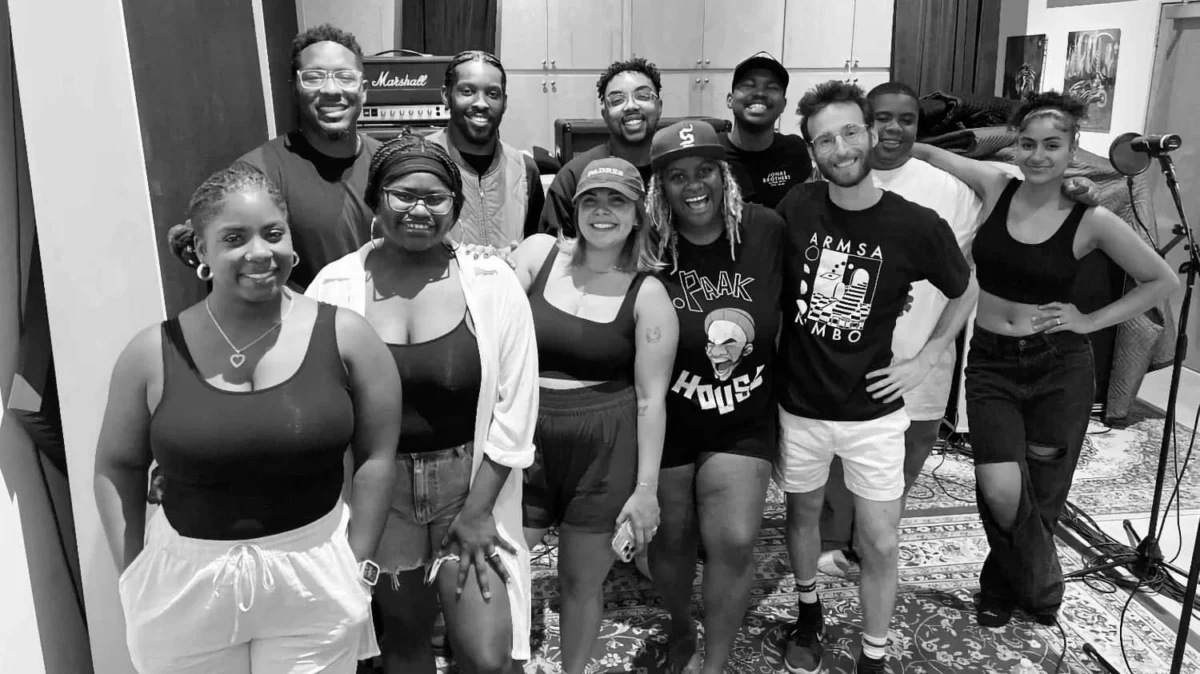
The emergence of AI in the music industry has been met with significant legal and ethical scrutiny, particularly regarding the data used to train models. I Am Audio has positioned I Am Choir as an ethically sourced alternative to "black box" AI tools. The company explicitly stated that all voice models were developed in direct collaboration with participating vocalists.
These singers were not only compensated for their initial recording sessions but also entered into a royalty-sharing agreement. A portion of the proceeds from every sale of the I Am Choir plugin is distributed back to the original artists whose voices form the basis of the AI models. This "pro-artist" framework addresses a major concern within the creative community: the potential for AI to replace human labor without compensation. By integrating a royalty system, I Am Audio suggests a sustainable path forward where technology augments the reach of human performers rather than merely exploiting their likeness.
Historical Context: From Vocoders to AI Synthesis
The release of I Am Choir is the latest chapter in a decades-long evolution of vocal manipulation technology. To understand its impact, it is necessary to look at the timeline of vocal processing:

- The Analog Era (1940s–1970s): The development of the Vocoder (Voice Coder) originally for telecommunications led to its adoption in music. Artists like Kraftwerk and Herbie Hancock used these tools to impose synthetic textures on human speech.
- The Pitch-Correction Revolution (1997): Antares Audio Technologies released Auto-Tune, which allowed for the transparent (or stylistic) correction of vocal pitch. This was followed by Celemony’s Melodyne, which introduced polyphonic manual editing.
- The Sampling and Granular Era (2000s–2010s): Plugins like EastWest Quantum Leap and Kontakt-based libraries allowed producers to trigger pre-recorded choir samples via MIDI. However, these lacked the ability to sing specific lyrics provided by a live vocal track.
- The AI and Neural Era (2020–Present): Technologies like Retrieval-based Voice Conversion (RVC) and Synthesizer V began allowing for high-fidelity voice cloning. I Am Choir represents the integration of these capabilities into a streamlined, "plugin-and-play" format for professional studio environments.
Industry Implications and Market Analysis
The introduction of I Am Choir at a retail price of $199 (with an introductory offer of $169) places it in the mid-to-high tier of the plugin market. Its primary competitors include tools like Antares Harmony Engine, Izotope VocalSynth, and various "vocal transformer" plugins from companies like Soundtoys and Waves. However, I Am Choir distinguishes itself by focusing on the "ensemble" aspect through AI modeling rather than simple pitch intervals.
Market analysts suggest that tools like I Am Choir will significantly lower the barrier to entry for high-end pop and cinematic production. In the past, achieving a convincing "Gospel" or "Children’s Choir" sound required hiring 10 to 20 session singers, booking a treated room, and spending hours on phase-aligned mixing. For a one-time investment of under $200, producers can now approximate this sound with a single vocal take.
However, the technology also raises questions about the future of session singing. While I Am Audio compensates its source singers, the widespread availability of such tools may reduce the overall demand for live ensemble recordings. Conversely, proponents argue that these tools allow songwriters to create more sophisticated demos, which could eventually lead to larger budgets for live recordings in the final production stages.
Official Responses and User Reception
Early feedback from the beta testing phase and initial launch reviews has highlighted the plugin’s "naturalistic" quality. Producers have noted that the "Gang Vocals" model is particularly effective for modern rock and punk productions, where multiple voices shouting in unison are required to create the necessary energy.
In a statement regarding the product’s philosophy, I Am Audio emphasized that their goal was not to replace the human element but to "democratize the sound of the human voice." The company noted: "We believe that the soul of music lies in the performance. By training our models on real singers and ensuring they are paid for their contribution, we are creating a tool that respects the craft while pushing the boundaries of what is possible in a digital environment."
The inclusion of a Children’s Choir model has also been cited as a unique selling point. Recording children is notoriously difficult due to labor laws, shorter attention spans, and the specific acoustic requirements for high-frequency voices. I Am Choir provides a logistical solution for composers working on film scores or holiday-themed music who need that specific timbre on a tight deadline.
Future Development and Expansion
I Am Audio has confirmed that the three models included at launch are only the beginning of a planned ecosystem. The company intends to release additional voice packs, potentially covering genres such as operatic ensembles, traditional folk groups, and more experimental, avant-garde vocal textures.
The software is currently available for download on the I Am Audio website, compatible with major DAWs including Ableton Live, Logic Pro, FL Studio, and Pro Tools. As AI continues to permeate the creative arts, I Am Choir stands as a prominent example of how machine learning can be harnessed to expand the toolkit of the modern musician while maintaining a commitment to ethical standards and artist compensation.
The long-term impact of I Am Choir will likely be seen in the diversification of "bedroom-produced" music, which can now feature the grandiose arrangements once reserved for major label studios. As the industry watches the adoption of this technology, the focus remains on the balance between technological efficiency and the preservation of human artistic value.
