

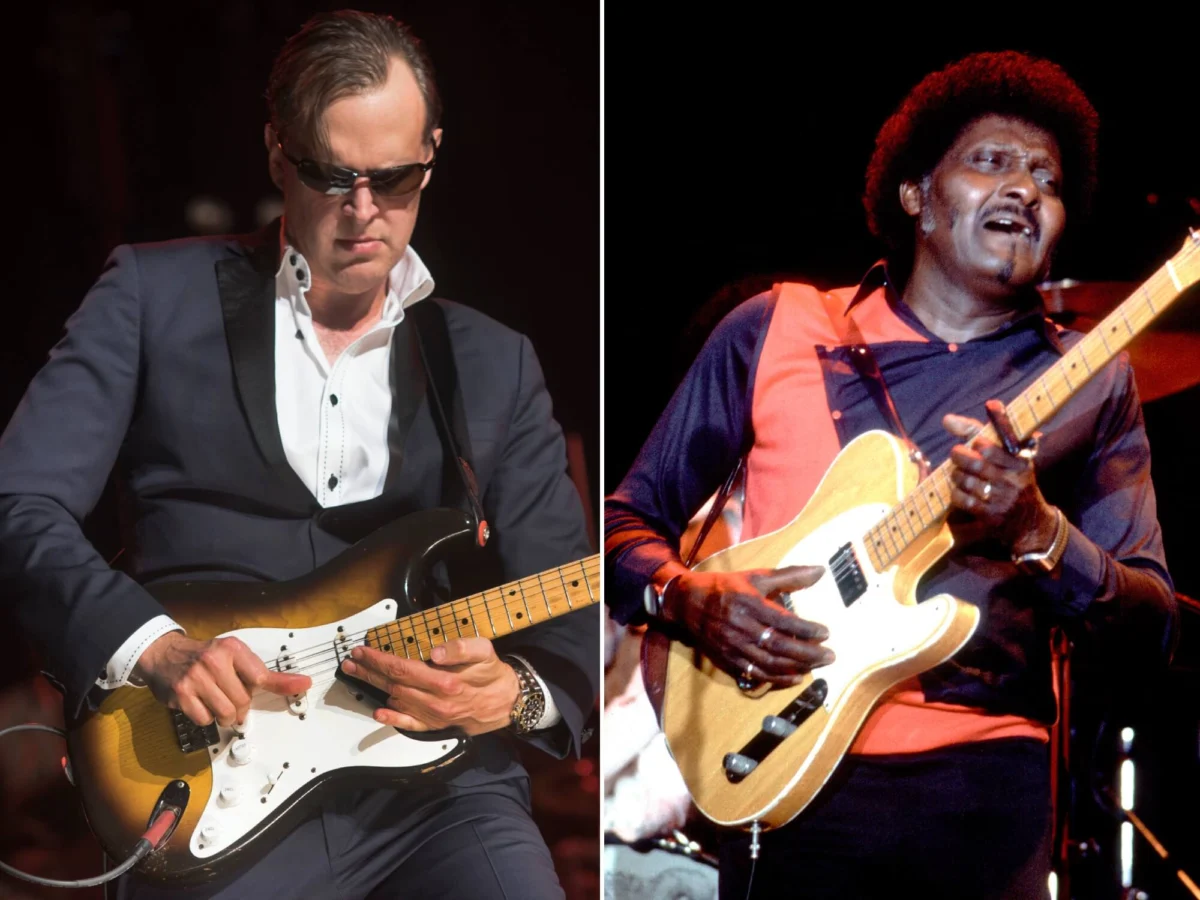
In a candid reflection that offers a rare glimpse into the crucible of his formative years, contemporary blues titan Joe Bonamassa recently recounted a profoundly intimidating yet ultimately transformative encounter with blues legend Albert Collins. Speaking on the No Cover Charge podcast, Bonamassa detailed how sharing the stage with the iconic "Iceman" as a mere 12-year-old taught him some of the most crucial lessons he has ever learned about performance, stage presence, and the sheer power of the electric guitar. This pivotal interaction, described as a masterclass in wielding the instrument not just for melody but as a commanding force, underscored a philosophy that would profoundly shape Bonamassa’s own illustrious career.
The Genesis of a Prodigy: Bonamassa’s Early Ascent
Before his unforgettable encounter with Albert Collins, Joe Bonamassa was already a recognized wunderkind in the blues circuit. Born in New Hartford, New York, in 1977, Bonamassa began playing guitar at the astonishing age of four, influenced heavily by his father’s extensive British blues-rock record collection. By age seven, he was already demonstrating an extraordinary aptitude, and at just 12 years old, he had earned the unparalleled distinction of opening for none other than blues titan B.B. King. King himself, a man not easily impressed, remarked, "This kid’s got a future." Bonamassa’s precocious talent was not merely technical; it encompassed an innate understanding of blues phrasing and emotional depth that belied his tender age. This early exposure to the highest echelons of blues performance cultivated a fearless approach, yet even a prodigy like Bonamassa was not immune to the intimidating presence of a true master like Albert Collins. His appearances at various festivals, including the Silver Lake New York Blues Festival, were part of a rapid ascent, positioning him as a notable young talent destined for greatness.
Albert Collins: The Iceman Cometh and His Unique Weaponry
To fully appreciate the weight of Bonamassa’s experience, one must understand the formidable presence and unique artistry of Albert Collins. Born in Leona, Texas, in 1932, Collins carved an indelible niche in blues history with his distinctive "cold sound" and incendiary Telecaster technique, earning him the moniker "The Iceman." His playing was characterized by an aggressive, sharp attack, often utilizing a capo on the fifth, seventh, or ninth fret, and a unique open F minor tuning (C-F-C-F-A-D). This unconventional setup, combined with his finger-picking style and reliance on long, sustained notes punctuated by sudden, sharp bends and staccato bursts, created a sound that was both chillingly precise and electrifyingly raw. Collins was renowned for his extended stage forays, often venturing deep into the audience with a ridiculously long guitar cable, engaging directly and intensely with every spectator. Albums like Ice Pickin’ (1978), Frosty (1962), and the collaborative masterpiece Showdown! (1985) with Robert Cray and Johnny Copeland, were cornerstones of any serious blues fan’s collection, records that Bonamassa himself "worshiped." Collins’ live performances were legendary for their intensity, his commanding stage presence, and his ability to push both his bandmates and any guest musicians to their absolute limits, ensuring that every note played was delivered with conviction and purpose. His guitar, in his hands, was not merely an instrument but an extension of his will, capable of both captivating and confronting.
The Silver Lake New York Blues Festival: A Stage for Legends and Apprentices
The setting for this legendary confrontation was the Silver Lake New York Blues Festival in Hog Rose, an event that, while perhaps not as globally renowned as some larger blues festivals, served as a vital regional platform for both established blues artists and burgeoning talents in the late 1980s. These festivals were crucial cultural hubs, fostering community among blues aficionados and providing invaluable stages for young musicians to hone their craft alongside their idols. Bonamassa’s invitation to sit in with Albert Collins did not come out of the blue; it was a direct consequence of his burgeoning reputation. A year prior, the young blues prodigy had already captivated audiences at the same festival, sharing the stage with another Telecaster virtuoso, Danny Gatton. Gatton, known as "The Humbler" for his astounding technical prowess across multiple genres, had undoubtedly been impressed by Bonamassa’s talent, a performance that paved the way for the subsequent, even more significant, opportunity to play with the Iceman himself. The festival organizers, recognizing Bonamassa’s exceptional skill and the potential for a truly memorable moment, "convinced Albert Collins to let me sit in," a testament to the young guitarist’s undeniable promise and the festival’s commitment to showcasing diverse blues talent.
The Fateful Encounter: A 12-Year-Old Faces the Iceman’s Gaze
The stage was set. A 12-year-old Joe Bonamassa, brimming with youthful enthusiasm and perhaps a touch of trepidation, found himself standing beside one of his musical heroes. The atmosphere was charged, the weight of the moment palpable. Bonamassa, still in his formative years, arrived with his modest but capable setup: a USA Stratocaster, likely equipped with Lace Sensor pickups – a popular choice at the time for their noiseless operation and balanced tone – plugged into a Sunn Beta Lead solid-state 4×12 amp, a powerful but arguably less nuanced rig compared to the tube amplifiers favored by many blues purists.
In stark contrast stood Albert Collins, a vision of blues authority. He brandished his signature Fender Telecaster, a stripped-down, no-frills workhorse that, in his hands, became a formidable sonic weapon. His amplifier of choice was a Fender Quad Reverb, a robust, loud, and clean-sounding amp capable of delivering the sharp, piercing tones that were central to his style. And, of course, there was the legendary "150-foot cable," a practical necessity for his audacious crowd excursions but also a symbolic tether to his audience, drawing them directly into his musical orbit. The band, including the accomplished blues guitarist Debbie Davies, provided a seasoned backdrop, creating an authentic blues environment where every note mattered. For Bonamassa, standing amidst such seasoned professionals and facing his idol in his prime, it was, by his own admission, "a daunting prospect." The records he worshipped – Ice Pickin’, Frosty, Showdown! – were now playing out live before him, and he was part of the narrative.
The "Guitar as a Weapon" Lesson Unfolds
The moment of truth arrived swiftly. Albert Collins wasted no time in testing the mettle of the young prodigy. Bonamassa vividly recalls Collins’ immediate challenge: "He stung a note… He did all that Albert Collins shit, but he kept stinging the note." This was no gentle invitation; it was a gauntlet thrown. Collins, with his characteristic intensity, "pointed the Tele like [he was pointing a gun] at me." This was not merely a gesture; it was a deliberate act of musical intimidation, a non-verbal communication of the rigorous demands of the stage. Bonamassa, a "little kid in the cowboy hat," understood the message implicitly. It was Collins’ unique, unvarnished way of saying, "Welcome to the big leagues, kid. I don’t care how old you are, being up here requires a certain amount of intestinal fortitude, and I’m testing you to see if you had it."
This wasn’t about technical proficiency alone; it was about spirit, resilience, and the ability to stand your ground under pressure. Bonamassa’s immediate response was to rise to the challenge: "So I did my best [plays note] Albert impression." This spontaneous imitation, an instinctive act of musical dialogue and deference, demonstrated his quick thinking and his deep understanding of Collins’ style. It was a baptism by fire, a lesson in stagecraft delivered not through words, but through the raw, unyielding power of the blues. Bonamassa realized that the guitar could be used not just to "coddle people," but as a "weapon" to command attention, challenge collaborators, and assert one’s presence. This philosophy, of using the instrument to create impact and evoke a strong reaction, resonated deeply with the young guitarist and would become a cornerstone of his own performance style.
Technical Deep Dive: The Iceman’s Unconventional Arsenal
Decades later, the technical intricacies of Albert Collins’ approach continue to fascinate Bonamassa. Collins’ choice of an open F tuning (C-F-C-F-A-D) was highly unconventional for blues guitarists, most of whom stuck to standard tuning or common open tunings like G or E. This specific tuning allowed Collins to create his signature ringing, sustained chords and sharp, angular single-note lines that often sounded as if they were played on a different instrument entirely. Further adding to the mystique was his "primitive capo," often a simple device that held down multiple strings at a high fret. Bonamassa marveled, "It was kind of gnarly, and I don’t know how he was able to keep the strings from moving. He would bend and not have the strings just move into another position. I don’t know how he did it."
This observation highlights a crucial aspect of Collins’ genius: his ability to master an unconventional setup to produce a consistent and powerful sound. In open tunings, string stability during bends can be a significant challenge, as the altered tension can cause strings to shift. Collins’ mastery over this issue, combined with his precise attack and unique finger-picking technique (he rarely used a pick), contributed to the almost architectural quality of his solos – each note precisely placed, each bend perfectly articulated, creating a sound that was both sparse and incredibly impactful. His gear choices and technique were not just quirks; they were integral to his "Iceman" persona, allowing him to carve out a sonic identity that was instantly recognizable and profoundly influential.
Broader Implications and Lasting Legacy
The encounter with Albert Collins proved to be far more than just a memorable gig for Joe Bonamassa; it was a foundational moment that deeply influenced his artistic philosophy. The lesson of the "guitar as a weapon" instilled in him the importance of not just playing notes, but performing with conviction, presence, and a willingness to assert himself on stage. This understanding of the instrument’s power to command and challenge undoubtedly contributed to Bonamassa’s own reputation as a commanding live performer, known for his dynamic stage presence and his ability to hold an audience rapt. The experience taught him that true mastery involves not just technical skill, but also a profound understanding of the psychological and emotional impact of music.
This narrative also underscores a significant tradition within the blues: the unwritten code of mentorship and testing. Older, established blues musicians often challenged younger players, not out of malice, but to gauge their commitment, resilience, and readiness for the demanding life of a professional musician. These "trials by fire" were essential rites of passage, ensuring that the legacy of the blues was passed down not just through licks and scales, but through character and spirit. Albert Collins, in his pointed, unyielding way, was not just testing a kid; he was initiating a successor into the deeper mysteries of blues performance.
Albert Collins’ enduring influence on the blues genre remains immense. His unique style, uncompromising stage presence, and innovative use of the Telecaster continue to inspire countless guitarists. Stories like Bonamassa’s recollection only amplify Collins’ legendary status, painting a vivid picture of a man whose impact transcended mere musical notes, extending into the very ethos of blues performance. For Bonamassa, who would go on to become one of the most successful and prolific blues-rock guitarists of his generation, that lesson from the Iceman served as a crucial catalyst, shaping his approach to his craft and solidifying his understanding of what it truly means to be a master of the blues.
The "No Cover Charge" Podcast and Preserving Musical History
Bonamassa’s detailed recollection on the No Cover Charge podcast highlights the invaluable role of such platforms in preserving and disseminating music history directly from the artists themselves. In an era where music consumption is increasingly digitized, these personal narratives offer a vital human connection to the legends and moments that shaped genres. By sharing these formative experiences, artists like Bonamassa not only entertain but also educate, providing future generations with insights into the lineage, challenges, and triumphs that define the musical landscape. The full interview, available on YouTube, serves as a rich archive of these pivotal moments, ensuring that the lessons learned on stages like the Silver Lake New York Blues Festival continue to resonate and inspire.
