

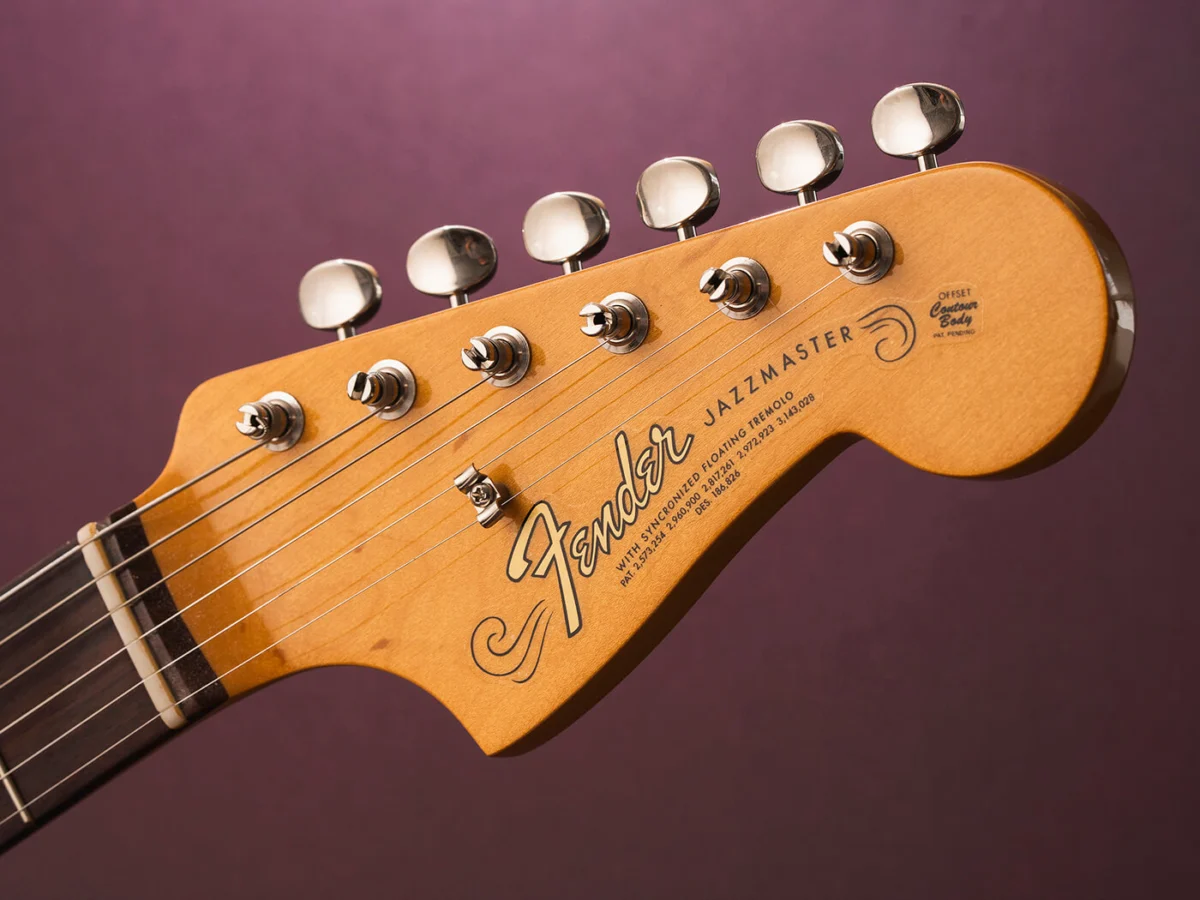
Fender Musical Instruments Corporation has officially launched its Vintera III Mid-60s Jazzmaster, priced at $1,349 / £1,149, marking the latest iteration in its popular Vintera series. This new model represents a concerted effort by the iconic guitar manufacturer to deliver highly accurate vintage specifications, aesthetics, and tonal characteristics to a broader market, avoiding the premium price points typically associated with American-made reissues. The introduction of the Vintera III series underscores Fender’s ongoing commitment to its global fanbase, particularly the often-exacting community of Jazzmaster enthusiasts who demand historical fidelity in their instruments.
The Evolution of Authenticity: Fender’s Vintera Strategy
The launch of the Vintera III series is not merely an incremental update but a refined strategic move by Fender to solidify its position in the competitive mid-price guitar market. Historically, Fender has navigated a delicate balance between innovation and tradition, often facing scrutiny from purists when modernizing classic designs. The Jazzmaster, originally introduced in 1958 as a high-end electric guitar for jazz musicians, quickly found its true calling in the hands of surf rock pioneers, and later became a cornerstone for alternative, indie, and shoegaze artists. Its unique offset body, distinct vibrato system, and idiosyncratic rhythm circuit have cultivated a devoted following, making any deviation from its historical blueprint a subject of intense debate.
Previous instances, such as the initial American Vintage II Jazzmaster’s not-wholly-vintage-correct headstock shape, or the first Player series Jazzmasters featuring open-coil humbuckers and lacking the traditional rhythm circuit, illustrate the high expectations of the Jazzmaster faithful. These past "snafus," while perhaps minor in the broader context of Fender’s operations, highlighted the critical importance of specific historical details to this particular demographic. The company has since demonstrated a clear commitment to addressing these concerns, with significant improvements noted across its Mexican-made Vintera range.

The Vintera series, first introduced in 2019, was conceived to bridge the gap between Fender’s entry-level Squier and Player series guitars and its premium American Vintage and Custom Shop offerings. Its core mission was to provide instruments with vintage-inspired features, looks, and sounds without requiring a substantial financial outlay. The Vintera II series, launched three years prior, built upon this foundation, offering a range of models inspired by specific decades. The Vintera III, however, refines this approach further, moving from a "decade-spanning" scope to a more granular focus on "era-based" specifications, homing in on precise inflection points in a guitar’s developmental timeline. For the Jazzmaster, this translates to an emphasis on the mid-1960s, a period celebrated for the introduction of custom colors and painted headstocks that imbued the instrument with a new aesthetic vibrancy.
Mid-60s Precision: Design and Specifications
The Vintera III Mid-60s Jazzmaster meticulously recreates the characteristics of an instrument from this specific era. Unlike the Vintera II Jazzmaster, which drew inspiration from late-1950s specifications, the Vintera III returns to the mid-1960s style, akin to the first 2019 Vintera run, but with an enhanced level of detail and accuracy. This period, roughly approximating a 1964 Jazzmaster, is notable for features that preceded the later-decade introductions of bound necks (1965) and large block inlays (1966).
Key vintage-correct details distinguish the Vintera III:
- Headstock Decals: Now applied over the finish, a period-accurate touch that adds a subtle three-dimensional quality.
- Fretboard: A round-laminated rosewood fretboard replaces the slab board found on earlier models, reflecting mid-60s construction.
- Inlays: Clay-colored fretboard dots are utilized instead of modern white ones, enhancing the vintage aesthetic.
- Nut Material: A real bone nut replaces synthetic alternatives, contributing to improved tone and sustain.
- Hardware and Electronics: All components, including the neck profile, are now "era-based" rather than "decade-based," ensuring a more precise historical approximation.
These seemingly minor details collectively contribute to a significantly more authentic vintage presentation. The Olympic White review model, while featuring a plain headstock (a slight deviation from some mid-60s Olympic White Jazzmasters that sported painted pegheads), nonetheless benefits from the deep, off-white hue of its polyurethane finish, contrasting sharply with the brighter, almost sterile white of some modern finishes. The rich, chocolate-colored rosewood fretboard, adorned with clay dots, further enhances the vintage appeal.

Craftsmanship and Playability from Ensenada
Fender’s manufacturing facility in Ensenada, Mexico, has garnered a strong reputation for producing high-quality instruments, and the Vintera III Jazzmaster is a testament to this prowess. The guitar exhibits excellent build quality, with a notable focus on player comfort and setup. The mid-60s C-profile neck, combined with a 7.25-inch fretboard radius and vintage-tall frets, offers a surprisingly refreshing playing experience for those accustomed to more modern, flatter profiles and jumbo frets. While not designed for high-speed shredding, the neck’s comfortable heft facilitates expressive lead playing and large chord voicings. The vintage-tall frets are particularly conducive to deep string bending, allowing players to dig in with precision.
A significant enhancement in the Vintera series has been the implementation of gently rolled fretboard edges, a feature typically found on more expensive instruments. This detail greatly improves comfort, especially during extended playing sessions or when executing demanding bends that require a firm grip on the neck. The factory setup and fretwork on the review model were exemplary, with a low action and no discernible dead spots, indicating a high standard of quality control.
The Jazzmaster’s iconic vibrato system is a central feature, and the Vintera III’s rendition performs admirably. Its smooth action allows for expressive pitch wobbling, while the tension provides a responsive and tactile feel. The rocking bridge effectively maintains tuning stability, even after vigorous use of the vibrato arm. The push-in vibrato arm remains securely in place yet can be silently moved out of the way, avoiding the common issue of creaking or loose arms found on some other models.
The Bridge Debate and Minor Quibbles

Despite the extensive efforts towards vintage accuracy, certain elements of the Jazzmaster design continue to spark debate among players. The inclusion of the threaded saddle bridge, while historically correct, is often cited as a practical challenge. Many offset players opt to replace this bridge with modern alternatives, such as a Jaguar bridge or other barrel-saddled options, to mitigate issues like strings slipping out of their grooves, particularly the low E string. While the Vintera III’s threaded bridge functions adequately with the factory setup, it remains a point of contention for many, suggesting a potential area where a concession to modern playability might be welcomed, even at the cost of strict historical accuracy. The factory strings (0.010s) are lighter than the heavier gauges traditionally recommended for optimal performance with the Jazzmaster’s rocking bridge/vibrato system, further highlighting this practical consideration.
Another minor, yet surprisingly impactful, critique pertains to the orientation of the control knobs. When the guitar’s volume and tone are set to maximum, the numbers displayed on the knobs (4, 5, 6) are positioned to align the "volume" and "tone" labels parallel to the neck. This design choice, while seemingly intended for aesthetic alignment of labels, leads to an unintuitive user experience, as most players expect to see "10" when the controls are at full. In an instrument where meticulous vintage details like headstock decal placement are prioritized, such a functional oversight in an immediate user interface element stands out.
Sonic Landscape: Pickups and Circuitry
The Vintera III Mid-60s Jazzmaster is equipped with pickups and electronics designed for authentic vintage tone. The relatively low output of the pickups, while not as low as some true vintage examples, is a deliberate choice that offers a broad dynamic range. This characteristic allows for nuanced expression, particularly on clean and lightly overdriven settings, responding well to player touch. When pushed through higher gain stages, the pickups maintain surprising clarity and breadth, handling stacked fuzzes, reverbs, and delays with aplomb.
The lead circuit provides the characteristic Jazzmaster "spank" and "punch," with a bright yet never shrill bridge pickup and a warmer, rounded neck pickup that features a present upper midrange. This tonal versatility makes the guitar suitable for a wide array of musical genres.

The rhythm circuit, a signature feature of the Jazzmaster, remains a point of division among players. Some find its darker, muddier character unusable, while others embrace it as an essential tool for creating unique, atmospheric soundscapes, particularly when combined with heavy effects. For fans of artists like Kevin Shields of My Bloody Valentine, the rhythm circuit is integral to achieving specific sonic textures. Its presence on the Vintera III is crucial for maintaining vintage accuracy, and for many, a Jazzmaster would be incomplete without it, even if some players opt to "mask off" the switch with tape to prevent accidental engagement. The rounded character of the Vintera III’s neck pickup, in particular, makes the rhythm circuit a more usable proposition for smooth leads or experimental sound design.
Statements from Fender (Inferred)
"The Vintera III series represents a significant milestone in Fender’s ongoing commitment to delivering authentic vintage experiences to musicians worldwide," stated a Fender spokesperson, speaking on the company’s design philosophy. "We’ve listened intently to the passionate feedback from our Jazzmaster community, and with Vintera III, we’ve pushed the boundaries of our Ensenada factory’s capabilities to achieve an unprecedented level of era-specific detail at a price point that remains accessible. Our goal is to empower more players to connect with the timeless designs and sounds that have shaped music history."
A product development lead for the Vintera series added, "The decision to focus on the ‘mid-60s inflection point’ for the Jazzmaster was driven by our desire to capture a very specific aesthetic and sonic period that resonates deeply with players. From the over-finish headstock decals to the round-lam fretboard and clay dots, every detail was meticulously researched and implemented. While we make careful considerations for modern playability and affordability, such as the polyurethane finish, our priority is to provide an instrument that truly feels and sounds like a treasured vintage piece."
Market Implications and Future Outlook

The Fender Vintera III Mid-60s Jazzmaster arrives in a market where the demand for vintage-style instruments remains robust. Its pricing positions it strategically against both its in-house alternatives and offerings from other manufacturers. At $1,349 / £1,149, it represents a considerable investment for a "mid-priced" guitar, reflecting broader market trends and inflationary pressures that have impacted instrument costs over recent years. However, when compared to the significantly higher price tags of American Vintage II models ($2,799 / £2,379) or bespoke Custom Shop creations, the Vintera III offers exceptional value for its level of vintage accuracy and craftsmanship.
The Vintera III series also includes a Mid-60s Jaguar offering, indicating Fender’s continued dedication to the entire offset family. For players seeking alternatives, the Road Worn Vintera II 50s Jazzmaster offers a nitro finish with light aging at a slightly higher price point, while the Player II Jazzmaster provides a more contemporary, yet still enjoyable, experience at a lower cost.
The Vintera III Mid-60s Jazzmaster is an iterative but highly successful evolution within Fender’s lineup. It addresses specific desires of Jazzmaster aficionados by sharpening the focus on vintage details without reinventing the core design. The remarkable construction quality and meticulous attention to historical accuracy, particularly in the neck profile, fretwork, and aesthetic appointments, result in an instrument that is both highly playable and visually striking. While the perennial debate surrounding the threaded bridge persists, and minor ergonomic quirks like knob orientation could be refined, these are small concessions in an otherwise extraordinarily well-executed package.
As Fender continues to refine its Vintera strategy, it is plausible to anticipate future iterations exploring other distinct eras, perhaps Vintera IV introducing the bound fretboards and block inlays of the late-60s. For now, the Vintera III Mid-60s Jazzmaster stands as a compelling testament to Fender’s ability to deliver a highly authentic, vintage-spec instrument that remains within reach for a substantial segment of the guitar-playing public, solidifying its reputation as a leader in preserving and evolving guitar heritage.
