

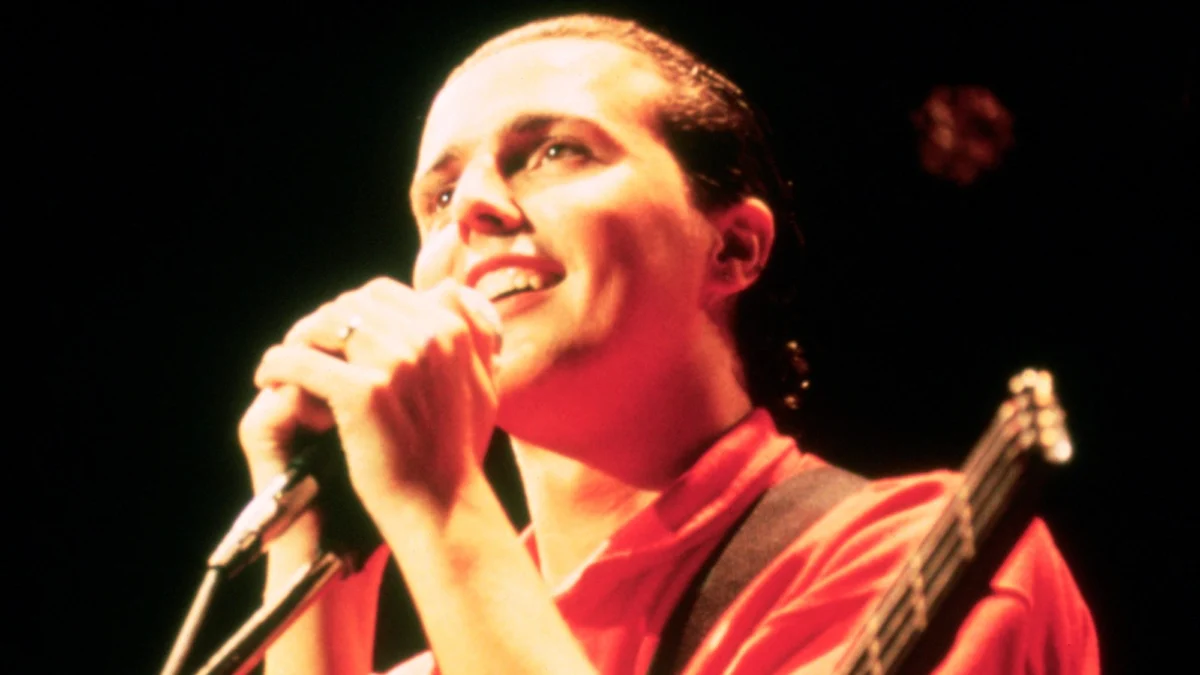
The year 1989 served as a definitive cultural bridge, marking the conclusion of a decade defined by excess and the dawn of a new era in global music production. As the recording industry transitioned from the analog warmth of the 1980s to the digital precision of the 1990s, the Billboard charts reflected a diverse tapestry of genres, ranging from synth-driven dance-pop and hair metal power ballads to sophisticated neo-psychedelia. While many tracks from this period, such as Madonna’s "Like a Prayer" or Janet Jackson’s "Miss You Much," remain staples of contemporary recurrent radio, several high-charting masterpieces have gradually receded from the public consciousness. Analyzing these overlooked hits—Cyndi Lauper’s "I Drove All Night," Bad English’s "When I See You Smile," Warrant’s "Heaven," and Tears For Fears’ "Sowing The Seeds Of Love"—reveals the intricate craftsmanship and shifting market dynamics that characterized the final year of the eighties.
The Evolution of the 1989 Musical Landscape
To understand the significance of these four tracks, one must examine the state of the music industry in 1989. It was a year of massive commercial success; the Recording Industry Association of America (RIAA) reported significant growth as the compact disc (CD) began to overtake the cassette tape as the primary medium for music consumption. This technological shift allowed for more complex production values, which are evident in the layered arrangements of the era’s pop hits.
The mainstream charts were a battleground between established superstars and emerging subgenres. Glam metal was reaching its commercial zenith, while "sophisti-pop" and alternative influences were beginning to permeate the Top 40. Amidst this saturation, certain songs that dominated the airwaves in 1989 have since been overshadowed by the "grunge revolution" of the early 1990s, which retroactively reframed the late 80s as an era of artifice. However, a factual reassessment of these compositions suggests they possess a level of musicality and emotional resonance that transcends the era of their release.
Cyndi Lauper and the Dramatic Resonance of I Drove All Night
Released as the lead single from her third studio album, A Night to Remember, "I Drove All Night" represented a pivotal moment for Cyndi Lauper. By 1989, Lauper was seeking to move away from the "quirky" persona that defined her She’s So Unusual era, opting instead for a more mature, vocally demanding sound. The song, written by the prolific songwriting duo Billy Steinberg and Tom Kelly (the minds behind "Like a Virgin" and "Eternal Flame"), was originally intended for rock legend Roy Orbison. While Orbison recorded a version in 1987, it remained unreleased until 1992, allowing Lauper’s version to become the definitive introduction of the track to the public.
Lauper’s rendition is characterized by its driving synth-bass line and an explosive vocal performance that showcases her multi-octave range. Upon its release, the single was a global commercial success, peaking at No. 6 on the Billboard Hot 100 and reaching the Top 10 in multiple countries, including the United Kingdom and Australia. Despite its initial dominance and a subsequent Grammy nomination for Best Female Rock Vocal Performance, the track is frequently omitted from 80s nostalgia playlists in favor of "Time After Time."
Industry analysts suggest the song’s relative "disappearance" from radio may be due to the sheer volume of Lauper’s earlier hits, which continue to overshadow her later, more experimental work. Nevertheless, "I Drove All Night" remains a masterclass in synth-pop tension and release, bridging the gap between the neon-soaked 80s and the more somber adult contemporary sounds of the early 90s.
The Supergroup Success of Bad English: When I See You Smile
In the late 1980s, the "supergroup" phenomenon was a popular strategy for veteran musicians to maintain chart relevance. Bad English, formed by members of Journey (Neal Schon and Jonathan Cain) and The Babys (John Waite and Ricky Phillips), epitomized this trend. Their 1989 self-titled debut album produced the quintessential power ballad "When I See You Smile."
Written by Diane Warren—arguably the most successful songwriter of the era—the track utilized a "squeaky-clean" production style that maximized John Waite’s emotive vocals against a backdrop of melodic rock instrumentation. The song’s trajectory was meteoric; it reached No. 1 on the Billboard Hot 100 in November 1989 and stayed at the top for two weeks. It also achieved significant success on the Canadian RPM Top Singles chart.
The song’s legacy is tied to the peak of the "power ballad" era, a time when rock bands found massive crossover success by softening their sound for Top 40 radio. While "When I See You Smile" is often categorized as a relic of corporate rock, its technical execution remains impeccable. The collaboration between Warren’s hit-making sensibilities and the seasoned musicianship of Journey’s core members created a track that defined the "big sound" of 1989. Its decline in modern airplay is largely attributed to the radical shift in rock music that occurred two years later, which prioritized the raw aesthetic of Seattle-based alternative rock over the polished production of groups like Bad English.
Warrant and the Commercial Peak of Glam Metal Ballads
While "When I See You Smile" represented the melodic rock side of the spectrum, Warrant’s "Heaven" showcased the dominance of the glam metal power ballad. Featured on their debut album, Dirty Rotten Filthy Stinking Rich, "Heaven" became the band’s most successful single, peaking at No. 2 on the Billboard Hot 100.
The song was written by the band’s lead singer, Jani Lane, who reportedly wrote the track in a matter of minutes. Its success was bolstered by heavy rotation on MTV, where the music video became a staple of the "Headbangers Ball" and mainstream countdowns alike. In 1989, the song was ubiquitous, serving as a prom anthem and a radio favorite.
The historical significance of "Heaven" lies in its ability to bring a "heavy metal" act into the living rooms of mainstream pop listeners. It outperformed many established pop acts of the year, demonstrating the massive purchasing power of the suburban youth demographic. Despite its No. 2 peak and RIAA Gold certification, "Heaven" is often eclipsed in the "classic rock" canon by Warrant’s later, more controversial hit, "Cherry Pie." However, from a structural and melodic standpoint, "Heaven" represents the pinnacle of the 1980s power ballad, featuring a crescendo that remains a hallmark of the genre’s songwriting.
Tears For Fears and the Psychedelic Ambition of Sowing The Seeds Of Love
Perhaps the most artistically ambitious track of 1989 was Tears For Fears’ "Sowing The Seeds Of Love." Coming four years after the massive success of Songs from the Big Chair, the band—led by Roland Orzabal and Curt Smith—spent years and over $1.5 million in production costs to create its successor, The Seeds of Love.
The title track, "Sowing The Seeds Of Love," was a radical departure from the synth-heavy "Everybody Wants to Rule the World." Drawing heavy inspiration from the Beatles’ psychedelic era (specifically Sgt. Pepper’s Lonely Hearts Club Band), the song featured orchestral arrangements, complex vocal harmonies, and a politically charged lyricism that critiqued the social climate of Margaret Thatcher’s Britain.
The song was a significant hit, reaching No. 2 on the Billboard Hot 100 and No. 5 in the UK. Music critics at the time praised its "baroque-pop" sensibilities and modern production values. Unlike many of its contemporaries, the track has aged remarkably well due to its organic instrumentation and timeless melodic structure. The fact that it is frequently labeled a "forgotten" hit is a testament to the enduring shadow of the band’s mid-80s output. Analysis of the track’s production reveals a level of sonic detail that few other 1989 pop hits could match, making it a critical favorite for audiophiles and music historians.
Chronology of Chart Dominance: 1989
A timeline of these releases illustrates how they occupied the cultural zeitgeist throughout the year:
- May 1989: Cyndi Lauper releases "I Drove All Night," signaling a shift toward more dramatic pop-rock.
- August 1989: Warrant’s "Heaven" begins its ascent on the Hot 100, eventually peaking at No. 2 in late September.
- August 1989: Tears For Fears releases "Sowing The Seeds Of Love" after a lengthy hiatus, garnering immediate critical acclaim.
- September 1989: Bad English releases "When I See You Smile," which begins its climb to the top of the charts.
- November 1989: "When I See You Smile" hits No. 1, solidifying the power ballad as the dominant radio format of the year’s end.
Broader Impact and Implications for Modern Listeners
The "forgetting" of these 1989 hits is not a reflection of their quality, but rather a byproduct of the massive cultural "reset" that occurred in 1991 with the arrival of Nirvana’s Nevermind. The music industry’s pivot toward grunge and hip-hop in the early 90s led to a retrospective dismissal of late-80s pop as overly commercial or "over-produced."
However, in the current era of streaming and digital archives, these tracks are undergoing a slow rediscovery. Data from streaming platforms indicates a growing interest in "deep cuts" and high-quality pop from the late 80s as younger generations look past the "80s cliches" to find songs with genuine emotional weight and technical proficiency.
The implications of revisiting these four songs are significant for the study of pop history. They represent a moment when the industry was at its most confident, blending high-budget production with sophisticated songwriting. Whether it is the raw vocal power of Cyndi Lauper, the melodic precision of Bad English, the anthemic quality of Warrant, or the psychedelic depth of Tears For Fears, these tracks offer a comprehensive snapshot of a year that was much more musically diverse than history often remembers. As 1989 continues to be a point of fascination for pop culture historians, these four songs stand as essential pillars of a decade’s grand finale.
