

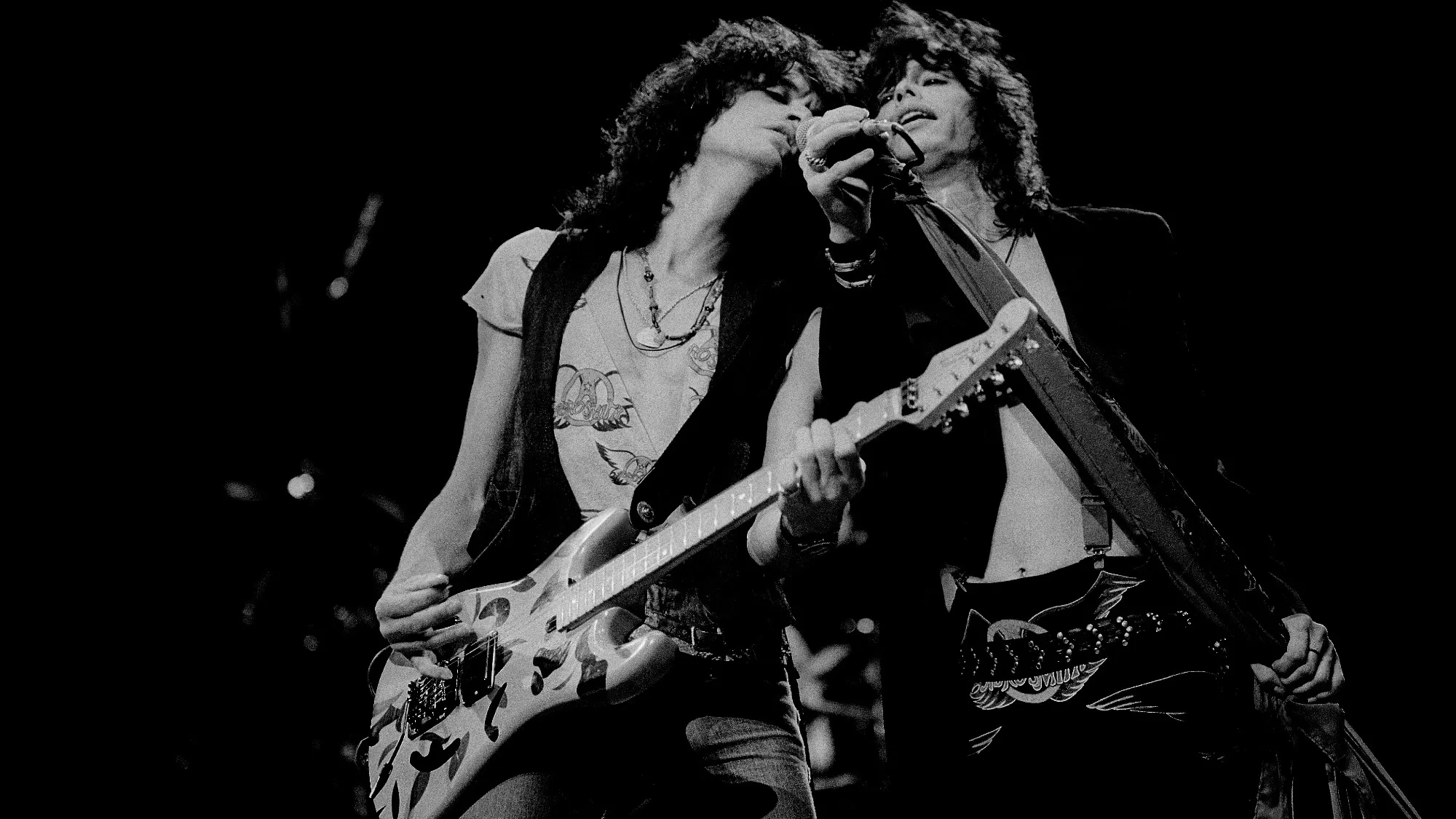
The year 1976 serves as a definitive cornerstone in the evolution of rock and roll, acting as a cultural bridge between the psychedelic experimentation of the late 1960s and the impending explosion of punk and new wave in the late 1970s. During this period, the music industry witnessed a shift toward high-fidelity production, stadium-sized ambitions, and a blend of genres that allowed rock to permeate the mainstream more deeply than ever before. Central to this enduring legacy are three specific tracks released that year: Aerosmith’s "Last Child," Heart’s "Crazy On You," and The Steve Miller Band’s "Take The Money And Run." These songs did more than just climb the charts; they defined the sonic identity of an era and established a blueprint for the "classic rock" format that remains a staple of global media consumption nearly five decades later.
The Gritty Sophistication of Aerosmith and the Success of Rocks
In May 1976, Aerosmith released their fourth studio album, Rocks, an aggressive, high-energy record that many critics and fans consider the pinnacle of the band’s hard-rock output. At a time when the band was competing with the likes of Led Zeppelin and The Rolling Stones for global dominance, Rocks offered a raw, unpolished alternative that resonated with a younger, more rebellious audience. Among the tracks on this seminal album, "Last Child" stood out as a unique fusion of heavy blues and rhythmic funk.
Written by lead singer Steven Tyler and rhythm guitarist Brad Whitford, "Last Child" represented a departure from the band’s more straightforward hard-rock hits like "Walk This Way." The song’s structure is notable for its slow, atmospheric intro that gives way to a syncopated, bass-heavy groove. According to production archives, the song was born out of a jam session where Whitford’s riff caught Tyler’s attention, leading to a lyrical exploration of urban alienation and the desire to return to one’s roots.
While "Last Child" peaked at number 21 on the Billboard Hot 100—making it the only single from Rocks to break the Top 25—its commercial performance at the time belies its long-term impact. The song became a masterclass in the "swagger" that defined mid-70s rock. In a retrospective analysis, music historians often point to the track as evidence of Aerosmith’s technical versatility. The closing refrain, "I was the last child / I’m just a punk in the street," captured the burgeoning "punk" sentiment that was starting to simmer in the New York underground, despite Aerosmith being firmly rooted in the arena-rock establishment. Today, the track remains a mandatory inclusion in the band’s live repertoire, serving as a showcase for Whitford’s guitar work and Tyler’s signature vocal gymnastics.
Heart and the Breaking of the Gender Barrier with Crazy On You
While Aerosmith was solidifying the hard-rock archetype in the United States, a new force was emerging from the Pacific Northwest and Canada. Heart, led by sisters Ann and Nancy Wilson, challenged the male-dominated hierarchy of rock with their debut album, Dreamboat Annie. Released in the U.S. in early 1976, the album’s standout single, "Crazy On You," became an immediate sensation, blending folk-inspired acoustic artistry with heavy electric riffs.
The song is perhaps most famous for its intricate acoustic guitar introduction, performed by Nancy Wilson. This prelude, titled "Silver Wheels," demonstrated a level of technical proficiency that demanded respect from a skeptical industry. However, it was the lyrical depth and the vocal power of Ann Wilson that gave the song its staying power. "Crazy On You" was written against the backdrop of the Vietnam War and a period of intense political disillusionment in North America.
Nancy Wilson has frequently reflected on the song’s dual nature, describing it as a balance between social commentary and personal intimacy. The lyrics reflect a world in chaos, where the only refuge is found in human connection. The line "But I tell myself that I’m doing alright / There’s nothing left to do at night / But go crazy on you" suggests a desperate need for escapism. This thematic complexity allowed Heart to appeal to both the intellectual listener and the casual radio fan.
Data from the era shows that "Crazy On You" reached number 35 on the Billboard Hot 100, but like "Last Child," its legacy far outstripped its initial chart position. It broke ground for female-fronted rock bands, proving that women could write, arrange, and perform heavy music with as much—if not more—technical skill as their male counterparts. The song’s influence can be heard in the subsequent decades of alternative and grunge music, particularly in the Seattle scene where Heart was founded.
The Narrative Craftsmanship of The Steve Miller Band
If Aerosmith represented the grit and Heart represented the soul of 1976, The Steve Miller Band represented the era’s penchant for polished, narrative-driven pop-rock. Released in May 1976 as part of the multi-platinum album Fly Like An Eagle, "Take The Money And Run" became an instant classic of the "outlaw" subgenre of rock storytelling.
Written solely by Steve Miller, the song follows the escapades of Billy Joe and Bobbie Sue, two young lovers who turn to crime and flee to El Paso. The track’s infectious beat, punctuated by distinctive handclaps and Miller’s smooth vocal delivery, made it a mainstay on FM radio. Structurally, the song is a masterclass in economy; it tells a complete cinematic story in less than three minutes.
"Take The Money And Run" was the first of three massive hits from the Fly Like An Eagle sessions, followed by the title track and "Rock’n Me." The album itself was a massive commercial success, eventually being certified quadruple platinum by the RIAA. While Miller had already achieved legendary status with 1973’s "The Joker," his 1976 output showed a shift toward a more sophisticated production style that utilized synthesizers and multi-layered tracking, techniques that would become standard in the 1980s.
The song’s enduring popularity is evidenced by its constant presence on classic rock radio and its frequent use in film and television. It tapped into the American fascination with the road trip and the rebel spirit, themes that were particularly resonant during the United States Bicentennial year.
The 1976 Cultural Context and the Rise of the AOR Format
To understand why these three songs have remained relevant for nearly 50 years, one must look at the media landscape of 1976. This was the golden age of Album-Oriented Rock (AOR) radio. Stations were moving away from the "Top 40" AM radio format, which favored short pop songs, and toward FM stations that played longer, higher-quality tracks with a focus on the "album experience."
This shift allowed songs like "Last Child" and "Crazy On You" to flourish. They weren’t just three-minute jingles; they were compositions with movements, solos, and thematic depth. The technical quality of recording equipment had also reached a plateau of excellence; the warm, analog sound of 1976 is still considered by many audiophiles to be the "sweet spot" of recorded music history.
Furthermore, 1976 was a year of transition for the American psyche. The Bicentennial celebrations brought a sense of nostalgia, but the recent conclusion of the Vietnam War and the Watergate scandal left a lingering sense of cynicism. These three songs captured that duality: "Last Child" focused on the grime of the city, "Crazy On You" sought solace in love amidst political turmoil, and "Take The Money And Run" celebrated the myth of the American outlaw.
Statistical Legacy and Contemporary Implications
The longevity of these tracks is supported by modern streaming data and airplay statistics. According to industry monitors, songs from the mid-to-late 70s consistently outperform newer releases in the "recurrent" category. On platforms like Spotify, these three tracks boast hundreds of millions of plays, fueled not just by those who lived through the era, but by younger generations discovering them through social media and digital sync placements.
The implications of this enduring popularity are significant for the music industry. It has led to the "catalog boom," where investment firms spend billions of dollars to acquire the publishing rights of 1970s artists, betting that these songs will continue to generate revenue for decades to come. The fact that Aerosmith, Heart, and Steve Miller’s music remains in high demand for commercials and movie trailers confirms that the "sound of 1976" has a universal appeal that transcends age demographics.
In conclusion, the year 1976 was not merely a time of bell-bottoms and disco; it was a year where rock music matured into a sophisticated, permanent fixture of global culture. Through the gritty funk of Aerosmith, the trailblazing power of Heart, and the narrative wit of The Steve Miller Band, the music of 1976 provided a soundtrack for a world in flux. These songs remain "classics" not because of nostalgia, but because of their fundamental quality—their ability to marry technical skill with universal themes of rebellion, love, and the search for identity. As they continue to echo through digital playlists and arena speakers, their status as timeless artifacts of the human experience remains undisputed.
