

The global market for vintage electronic musical instruments has undergone a radical transformation over the past decade, characterized by a staggering appreciation in the value of secondary-market hardware and a burgeoning movement toward high-fidelity digital preservation. At the center of this shift is the Roland JP-8000 and its rackmount counterpart, the JP-8080—instruments that defined the sound of late-1990s electronic dance music. Originally released in 1996, these "Virtual Analog" synthesizers were designed to replicate the behavior of traditional voltage-controlled oscillators and filters using digital signal processing (DSP). While these units could be acquired for as little as $200 to $400 on the used market during the mid-2000s, current market valuations have surged to approximately $1,200, representing a 500% increase in secondary-market value. This economic phenomenon has ignited a complex debate regarding the rights of consumers to access legacy software, the role of emulation in preserving cultural history, and the responsibilities of original equipment manufacturers (OEMs) toward their "orphaned" products.
The Historical Significance of the Roland JP-8000 Series
To understand the current market fervor, one must examine the technological milestone the JP-8000 represented upon its release. In 1996, the music industry was transitioning from the dominance of sample-based synthesis (PCM) back toward the hands-on control of the analog era. Roland’s introduction of the "Supersaw" waveform—a dense, detuned stack of seven sawtooth waves—revolutionized the trance, techno, and hardstyle genres. The hardware utilized the Motorola DSP56303 chip, a powerful processor for its time, which allowed for real-time manipulation of sound without the tuning instabilities of true analog circuitry.
Despite its digital nature, the JP-8000 gained a reputation for a specific "character" or "sheen" that many users found difficult to replicate with subsequent software plugins. As the "In-The-Box" (ITB) revolution of the 2010s saw producers moving toward software-only setups, much of this hardware was liquidated. However, the cyclical nature of music technology has led to a "hardware renaissance," where the tactile interface and specific sonic artifacts of 1990s digital gear are once again in high demand.
Market Chronology: From Mainstream to Obscurity to Luxury
The financial trajectory of the Roland JP series mirrors the broader trend in the "vintage digital" sector. In 1996, the JP-8000 carried a manufacturer’s suggested retail price (MSRP) of roughly $1,300 USD. By 2005, following the release of more advanced workstations and the rise of powerful software synthesizers like LennarDigital’s Sylenth1, the JP series was viewed by many as "dated" technology. It was during this era that savvy collectors and musicians could procure units for a fraction of their original cost, often cited around the $200 mark.
The shift began in the late 2010s, accelerated by the COVID-19 pandemic and the subsequent global supply chain disruptions. As home studio production surged, the demand for "classic" gear skyrocketed. By 2022, listing prices on platforms such as Reverb and eBay for a JP-8080 in "Excellent" condition frequently topped $1,100, with some mint-condition units reaching $1,400. This price hike has created a significant barrier to entry for modern producers, leading many to seek alternative ways to access these specific sounds.
The Rise of the DSP56300 Emulation Project
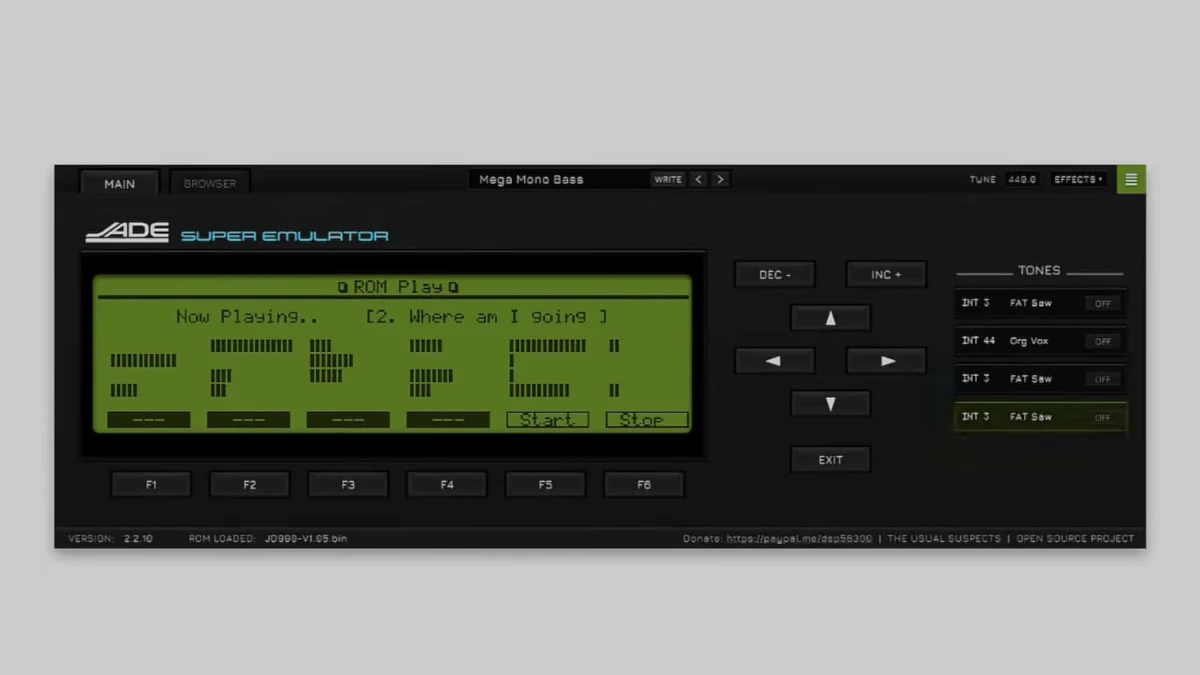
As hardware prices moved beyond the reach of the average consumer, a community-driven initiative known as "The Usual Suspects" (TUS) emerged to address the preservation of DSP-based hardware. This project focuses on the emulation of the Motorola DSP563xx series chips. Unlike traditional "clones" or "VST recreations" that attempt to mimic the sound of a synthesizer using modern coding techniques, the TUS project (specifically the "Osirus" and "Shamrock" plugins) emulates the actual hardware architecture of the original synthesizer.
This distinction is critical. By emulating the chip itself, the software can run the original, proprietary firmware (the "code") of the hardware. For users, this means the emulation is "bit-accurate," providing the exact same filter curves, oscillator behaviors, and even the bugs or quirks of the original physical unit. The success of these projects has highlighted a growing demand for "orphaned" software—code that is no longer supported or sold by the original developer but remains highly functional and culturally relevant.
The Gap in Official Software Offerings
A primary driver of the emulation movement is the perceived inadequacy of official modern alternatives. While Roland has been proactive in digitizing its legacy through the "Roland Cloud" subscription service and "Analog Circuit Behavior" (ACB) technology, many users argue that these offerings do not fully capture the specific JP-8000 lineage. Roland’s modern software, such as the ZENOLOGY suite or their various "Model Expansions," often focuses on their 1980s analog legends (like the JUNO-106 or JUPITER-8) or their newest synthesis engines.
The absence of a dedicated, high-fidelity JP-8000 virtual instrument in Roland’s official catalog has left a vacuum. Producers who grew up using the hardware find that while modern software "sounds good," it often lacks the specific aliasing characteristics and "grit" of the 1990s converters. This discrepancy has fueled the argument that when a company ceases to support or sell a product, the community should have a moral, if not legal, right to preserve and run that code on modern systems.
Legal and Ethical Implications of Digital Preservation
The intersection of copyright law and digital preservation remains a contentious "gray area" in the music technology industry. Under current international copyright frameworks, the firmware of a synthesizer is protected as software. Even if the hardware is no longer manufactured and the company no longer derives revenue from it, the copyright typically remains in effect for 70 years or more.
However, the "Right to Repair" movement and digital preservationists argue for a "fair use" exemption for orphaned software. The argument posits that because the original manufacturer (Roland) is no longer profiting from the secondary-market sales of 25-year-old hardware, the emulation of that hardware does not cause financial harm to the creator. In fact, secondary-market sales only benefit independent sellers, not the engineers or designers who originally created the product.
Key Arguments in the Preservation Debate:
- The "Orphaned Code" Problem: If a company refuses to sell a product and does not provide a modern way to access it, does the code belong to the public or the archive?
- Economic Impact: Emulation may actually increase interest in a brand’s legacy, potentially leading to higher sales for modern "re-imagined" products.
- Cultural Heritage: Electronic instruments are tools of artistic expression. Proponents argue that losing the ability to use these sounds is akin to losing a specific color of paint or a traditional instrument.
Data Analysis: Secondary Market Trends vs. Consumer Accessibility
Data from major musical instrument marketplaces indicates that the "vintage digital" bubble shows no signs of bursting. In a 24-month period between 2021 and 2023, the average sale price of digital synthesizers from the 1990s (including the Roland JP series, the Korg MS2000, and the Access Virus A/B) rose by an average of 34% year-over-year.
| Year | Average Used Price (JP-8000/8080) | Market Availability |
|---|---|---|
| 2005 | $250 – $350 | High |
| 2010 | $400 – $500 | Moderate |
| 2015 | $550 – $700 | Moderate |
| 2020 | $800 – $950 | Low |
| 2024 | $1,100 – $1,300 | Very Low |
This data suggests that the hardware is transitioning from a functional tool into a collector’s item. For the working musician, this transition necessitates the shift toward emulation. The "ridiculous prices" mentioned by users are a symptom of "scarcity-driven inflation," where the number of functional units in the world is slowly dwindling due to component failure (such as leaking capacitors or failing internal batteries), while the demand remains static or grows.
Industry Response and the Future of Synthesis
While Roland has not officially commented on the TUS emulation projects, the industry at large is watching closely. Some manufacturers have embraced the trend; for example, companies like Korg have released highly accurate software versions of their legacy hardware (such as the Wavestation and M1). Others maintain a stricter control over their intellectual property, occasionally issuing "cease and desist" orders to emulation projects.
The broader implication for the music industry is a shift toward "Hardware-as-a-Service" or the total virtualization of classic gear. As the original hardware continues to age and become more expensive to maintain, the reliance on bit-accurate emulation will likely become the standard for professional production.
Conclusion
The resurgence of interest in the Roland JP-8000 series highlights a critical juncture in the history of music technology. It exposes the tension between the high costs of vintage hardware ownership and the technical possibilities of modern software emulation. As used prices continue to hover around the $1,200 mark—a price point that many argue is decoupled from the actual utility of the device—the push for community-led preservation efforts like those of "The Usual Suspects" will likely intensify. For the end-user, the goal remains simple: access to the specific sonic textures that define their creative work, regardless of whether those sounds originate from a 25-year-old circuit board or a modern processor. The resolution of this debate will ultimately shape how we define ownership and accessibility in the digital age.
