

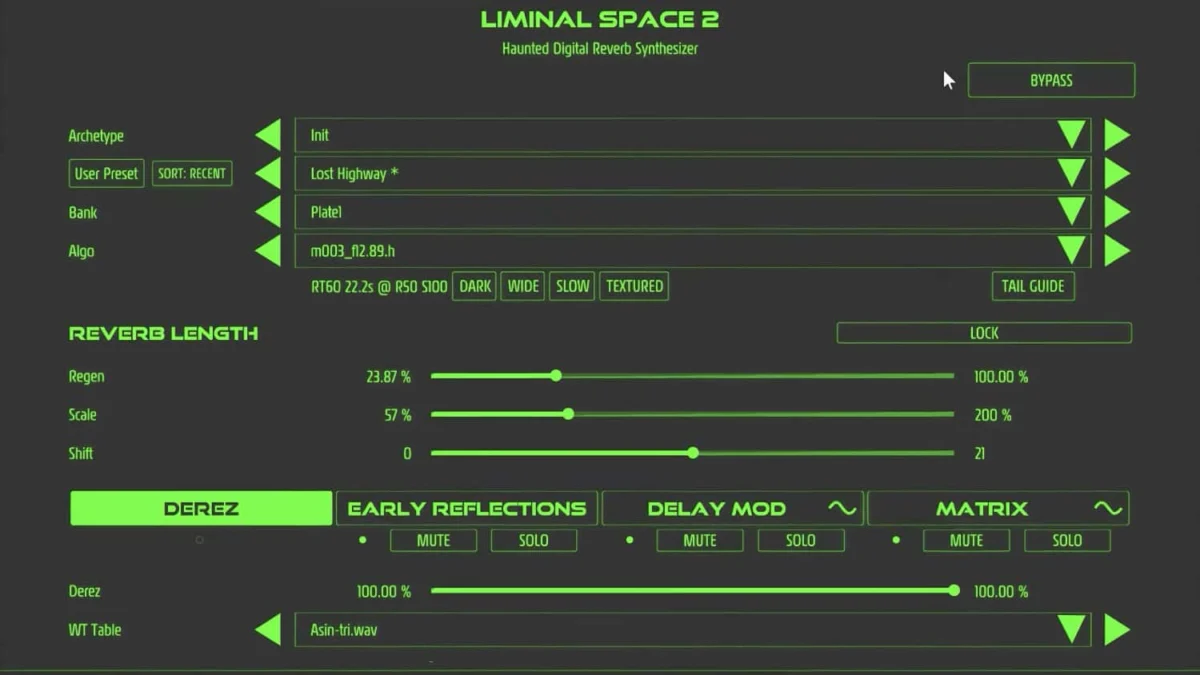
The release of Liminal Space 2 marks a significant evolution in the landscape of boutique digital signal processing (DSP), offering musicians and sound designers a specialized tool for atmospheric manipulation. Developed by Keith Crosley, this software arrives as a comprehensive successor to the original Liminal Space, expanding the scope of its predecessor through a massive increase in algorithmic variety and control parameters. Available for both Windows and macOS platforms, the plugin is positioned as a bridge between the nostalgic sonic textures of the 1980s and the modern "liminal" aesthetic that has gained significant cultural traction in recent years.
Technical Foundations and Algorithmic Diversity
At the core of Liminal Space 2 lies an expansive library of over 4,000 discrete reverb algorithms. This volume of data represents a departure from traditional reverb plugins, which typically offer a handful of core models (such as Room, Hall, Plate, and Spring) with adjustable parameters. By providing thousands of distinct mathematical models for sound reflection, Crosley has created a tool capable of producing highly specific acoustic environments that defy conventional classification.
The "programmable" nature of the plugin allows users to navigate these algorithms not just as static presets, but as malleable foundations for sound design. The software utilizes a custom engine designed to handle nonlinear decay—a process where the reverberant tail does not fade out in a standard, smooth curve but instead exhibits complex, sometimes erratic behavior. This is a critical component in recreating the "uncanny" feel associated with liminal spaces: environments that feel familiar yet fundamentally "off" or transitionary.
The technical architecture supports high-fidelity audio processing while maintaining a low CPU footprint, a necessity for modern digital audio workstation (DAW) environments where multiple instances of a reverb plugin are often used simultaneously. The plugin supports VST3 and Audio Unit (AU) formats, ensuring compatibility with major industry-standard software such as Ableton Live, Logic Pro, FL Studio, and Cubase.
The Aesthetic of Liminality in Sound Design
The title of the plugin refers to the psychological and internet-culture phenomenon of "liminal spaces." Originally a term used in architecture and sociology to describe transitional areas—such as empty hallways, abandoned malls, or deserted school corridors at night—the concept has evolved into a specific visual and auditory aesthetic. These spaces evoke a sense of nostalgia, unease, and surrealism.
In the context of Liminal Space 2, this aesthetic is translated into audio through the use of pitch-warped soundscapes and unnatural decay patterns. Traditional reverb aims to simulate real-world physics; however, Liminal Space 2 leans into the "digital-ness" of its processing. By incorporating pitch-shifting within the feedback loop of the reverb, the plugin creates "shimmer" and "dissonance" effects that mimic the way sound might behave in a dreamlike or distorted reality. This makes it a specialized tool for composers working in genres such as vaporwave, ambient, lo-fi, and horror film scoring.
Historical Context: The 1980s Influence and Gated Reverb
A primary feature highlighted in the release of Liminal Space 2 is its dedication to "80s tricks," most notably gated reverb and nonlinear decay. To understand the significance of these features, one must look back at the technological shift that occurred in recording studios during the early 1980s.
Gated reverb became the defining sound of the decade, famously associated with the drum sounds of artists like Phil Collins and Peter Gabriel. The effect was originally discovered by accident at Townhouse Studios in London using the "Listen Mic" compressor on a Solid State Logic (SSL) console. It involves taking a large, lush reverb tail and abruptly cutting it off with a noise gate before it can naturally decay. This creates a powerful, "larger-than-life" sound that remains punchy and clean.
Liminal Space 2 integrates this historical technique into its programmable interface, allowing users to achieve that specific "intimate yet massive" 1980s room sound without the need for complex external side-chaining or manual gating. By combining this with nonlinear decay—where the reverb might actually get louder before it disappears or change its frequency content over time—the plugin offers a level of vintage authenticity paired with modern experimentalism.
Development Chronology and Market Positioning
The development of Liminal Space 2 follows a period of rapid growth in the independent plugin market. Keith Crosley, operating under the digital storefront "Wavetables.lol," has focused on creating niche tools that prioritize character and "vibe" over clinical transparency.
The timeline of the Liminal Space series reflects a broader trend in the music production industry:
- Phase One (The Original Release): The first Liminal Space plugin established the concept of using "broken" or "uncanny" reverb algorithms to create atmospheric textures.
- Phase Two (Community Feedback): Following the success of the initial version, the developer spent time expanding the algorithm library based on user demand for more "80s-style" digital artifacts and more robust control over pitch modulation.
- Phase Three (Liminal Space 2 Launch): The current release represents a total overhaul, moving from a simple atmospheric tool to a "wildly programmable" powerhouse with 4,000+ algorithms.
The pricing strategy for Liminal Space 2 is notably disruptive. Launched at $10, the plugin is positioned far below the price point of industry giants like Altiverb, Lexicon, or FabFilter, which can cost hundreds of dollars. This "micro-pricing" model is becoming increasingly common among independent developers who aim to build a large, loyal user base by making high-quality DSP accessible to bedroom producers and professionals alike.
Analysis of Implications for Modern Production
The release of Liminal Space 2 has several implications for the music production community. First, it democratizes access to complex algorithmic reverb. Historically, having access to thousands of high-quality reverb models required expensive hardware units like the Bricasti M7 or the Eventide H9000. While a $10 plugin does not claim to replace $5,000 hardware in terms of raw analog circuitry, it provides a similar level of "algorithmic depth" for creative exploration.
Second, the plugin caters to the "New Nostalgia" movement. As modern digital recordings become increasingly "perfect" and high-resolution, there is a counter-movement among producers to reintroduce "imperfections." The pitch-warping and nonlinear characteristics of Liminal Space 2 allow producers to "age" their digital tracks, giving them a sense of being recorded on tape or played back through vintage digital-to-analog converters.
Summary of Features and Availability
Liminal Space 2 offers a robust suite of features for $10:
- Massive Library: Over 4,000 unique reverb algorithms.
- Vintage Effects: Specialized 1980s-style rooms and gated reverb capabilities.
- Sound Design Tools: Nonlinear decay and pitch-warping for "infinite" soundscapes.
- Programmability: Deep user control over the digital behavior of the reverb.
- Cross-Platform Support: Full compatibility with Windows and macOS.
Industry reactions, while still early, suggest that the plugin will find a home in the kits of sound designers for video games and film, where the "liminal" aesthetic is currently in high demand. The ability to create spaces that feel "wrong" or "haunted" is a specific requirement for psychological thrillers and atmospheric gaming experiences.
As of its release, Liminal Space 2 is available directly through the developer’s website. The package includes the plugin files, a digital manual, and access to future updates. Given the price point and the sheer volume of algorithms provided, it stands as one of the most comprehensive "budget" reverb solutions currently on the market.
Conclusion and Future Outlook
Keith Crosley’s release of Liminal Space 2 signals a continued interest in specialized, aesthetic-driven audio tools. By moving away from the "one-size-fits-all" approach to reverb and instead leaning into the niche requirements of "liminal" and "80s" soundscapes, the plugin fills a specific gap in the market.
Looking forward, the success of such boutique plugins may encourage larger software houses to explore more experimental, non-traditional algorithms. For now, Liminal Space 2 provides a vast, affordable playground for those looking to explore the eerie, the nostalgic, and the infinite through the medium of digital sound. Whether used for a simple vocal plate or a complex, pitch-shifted cinematic wash, the plugin offers a level of versatility that belies its modest price tag, cementing its place as a notable entry in the 2024 software release calendar.
