

Melbourne Instruments, the Australian music technology firm known for pioneering the integration of motorized tactile interfaces in analog synthesis, has officially announced a significant extension of its hardware warranty program. Effective immediately, the company is offering a 10-year warranty on the motorized rotary controls integrated into its entire product lineup, including the NINA desktop synthesizer, the DELIA polyphonic synthesizer, and the standalone ROTO-CONTROL unit. This strategic move marks a departure from standard industry practices, where mechanical components in electronic musical instruments typically carry limited warranties ranging from one to three years. The extension is rooted in the specific engineering architecture of the company’s proprietary "Roto" technology, which utilizes a contactless design to eliminate the mechanical wear and tear that historically plagues traditional potentiometers and rotary encoders.
The decision to offer a decade-long guarantee reflects a high level of confidence in the durability of the magnetic and optical systems that drive the company’s flagship interfaces. According to technical specifications provided by Melbourne Instruments, the motorized knobs do not rely on physical contact to transmit torque or register positional data. Instead, torque is transferred from the internal motor to the user-facing knob through a magnetic field, bypassing the need for a traditional gear train or belt system. This lack of friction ensures that there is no physical wear surface between the motor and the player’s fingers, a design choice intended to preserve the tactile integrity and accuracy of the controls over several decades of use.
The Engineering Evolution of Motorized Synthesis
To understand the significance of this warranty extension, it is necessary to examine the evolution of control interfaces in the synthesizer market. For decades, the primary method of adjusting parameters on a synthesizer has been the potentiometer—a mechanical component where a metal wiper moves across a resistive track. While effective, these components are susceptible to dust ingress, oxidation, and physical degradation over time, often resulting in "scratchy" audio or erratic parameter jumps. Digital encoders, which offer endless rotation, solved some of these issues but introduced their own set of problems, most notably the lack of physical indicators for preset positions and the eventual softening of mechanical detents.
Melbourne Instruments sought to address these limitations by developing a motorized system that combines the tactile feedback of a traditional knob with the precision of digital automation. The company’s "Roto" technology utilizes brushless motors and optical sensors. Because the position is read optically—meaning a light source and a sensor track the movement without touching—there is no resistive track to wear out. Furthermore, the magnetic coupling allows the firmware to dynamically adjust the "feel" of the knob. Through software control, the same physical knob can behave as a smooth potentiometer, a stepped encoder with varying numbers of detents, or a multi-position switch.
This versatility is a cornerstone of the NINA and DELIA synthesizers. When a user changes a preset, the knobs physically rotate to the correct positions, providing an immediate visual and tactile representation of the sound’s architecture. This "instant recall" capability has long been a staple of high-end motorized mixing consoles but remained largely absent from the synthesizer world due to the cost and complexity of the hardware required. By removing the gear train—a common point of failure in older motorized systems—Melbourne Instruments has mitigated the risks of mechanical jam-ups and noise, which were frequent complaints in early motorized hardware.
Rigorous Testing and Reliability Standards
The announcement of the 10-year warranty is backed by extensive laboratory stress testing. Melbourne Instruments reports that their motorized assemblies have undergone 50 million cycles of operation without failure. In the context of musical performance and studio production, 50 million cycles represents a workload that far exceeds the expected usage of a professional musician over a lifetime. The company noted that the 10-year period is not necessarily the projected lifespan of the component, but rather the point at which they concluded their formal endurance testing.
The durability of these components is particularly relevant for touring musicians and high-traffic recording studios. Electronic instruments are often subjected to environmental stressors such as humidity, temperature fluctuations, and airborne particulates. In traditional systems, these factors accelerate the degradation of the lubricant and the resistive tracks inside the knobs. By employing a sealed magnetic and optical approach, Melbourne Instruments has essentially "future-proofed" the primary point of interaction between the artist and the machine. This level of reliability is positioned as a key selling point for the NINA and DELIA, which occupy the premium tier of the synthesizer market.
Chronology and Registration Guidelines for Existing Owners
Melbourne Instruments has structured the warranty extension to be inclusive of its existing user base, ensuring that early adopters of the NINA synthesizer—the company’s debut product—are not excluded from the new terms. The rollout follows a specific timeline designed to facilitate the registration of units currently in the field.
Under the new policy, the 10-year warranty applies to all new purchases. For customers who acquired their instruments prior to August 17, 2026, the company has established a grace period for registration. These owners have until February 17, 2027, to visit the official Melbourne Instruments website and register their serial numbers to activate the extended coverage. Once registered, the 10-year term is backdated to the original date of purchase. This proactive approach to customer service is intended to bolster brand loyalty and stabilize the resale value of the instruments on the secondary market.

The registration process requires users to provide proof of purchase and serial number verification through the company’s dedicated portal. By centralizing this data, Melbourne Instruments aims to streamline future service requests and maintain a comprehensive database of the hardware’s operational history.
Market Context and Competitive Implications
The move by Melbourne Instruments comes at a time when the synthesizer industry is facing increased scrutiny regarding the longevity and repairability of modern electronics. As components become more integrated and specialized, the "right to repair" has become a significant talking point among enthusiasts and professional users alike. By offering a 10-year warranty on the most complex mechanical part of their instruments, Melbourne Instruments is making a statement about the sustainability of boutique hardware.
In the broader landscape of music technology, few companies offer comparable long-term support for mechanical parts. While some high-end manufacturers provide excellent service, the standard remains a 12-to-24-month limited warranty. The introduction of a 10-year standard for motorized parts could pressure other manufacturers to reconsider their component sourcing and quality control measures.
Furthermore, the "Roto" technology represents a significant shift in how haptic feedback is utilized in music production. The ability of the hardware to "fight back" or provide physical resistance based on software parameters opens new avenues for expression. For example, a filter cutoff knob could become harder to turn as it reaches its resonance peak, or a wavetable selector could provide physical clicks that correspond to the number of waves available. The 10-year warranty ensures that these complex haptic interactions remain consistent over the long term, preventing the "drift" or "looseness" that often affects high-end gear as it ages.
Impact on Product Design and User Experience
The practical implications of this technology extend beyond simple durability. For the user, the motorized interface solves the "parameter jump" problem inherent in digital-analog hybrid systems. On a traditional synthesizer without motorized knobs, moving a control after loading a preset causes the value to snap from the preset level to the physical position of the knob, often resulting in jarring audio artifacts. While "catch" or "relative" modes in software have mitigated this, they lack the intuitive nature of a physical control that is always where it needs to be.
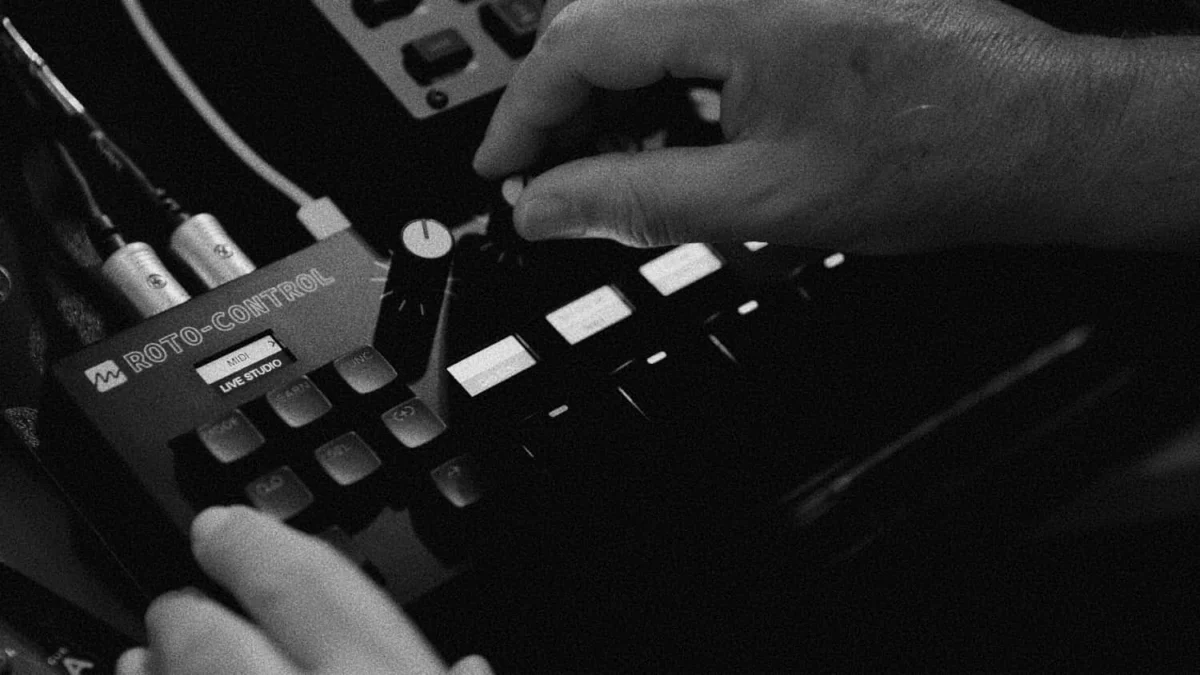
With the NINA and DELIA, the physical interface is always in sync with the internal patch. This synchronization is critical for live performance, where immediate visual feedback is essential. The ROTO-CONTROL unit, which functions as a MIDI controller, brings this technology to the broader digital audio workstation (DAW) environment, allowing users to control software plugins with the same level of tactile precision and motorized recall.
The decision to focus the warranty specifically on the motorized rotary controls addresses the primary concern potential buyers have regarding motorized hardware: the fear of mechanical failure. By removing this barrier, Melbourne Instruments is likely to see increased adoption of their motorized ecosystem.
Conclusion and Future Outlook
Melbourne Instruments’ 10-year warranty on its motorized rotary controls is a landmark development in the music hardware industry. By leveraging contactless magnetic torque and optical sensing, the company has bypassed the traditional failure points of rotary interfaces, allowing for a level of longevity previously unseen in complex motorized instruments. The inclusion of existing customers in the warranty program demonstrates a commitment to the long-term viability of their products and sets a high bar for customer support in the boutique synthesizer market.
As the industry moves toward more integrated and software-dependent hardware, the emphasis on mechanical durability and tactile consistency will likely become a primary differentiator for premium brands. Melbourne Instruments’ "Roto" technology, now backed by a decade-long promise of performance, positions the company as a leader in the intersection of precision engineering and musical expression. The success of this initiative will be watched closely by both competitors and consumers, as it may signal a shift toward a more sustainable and reliable future for high-end electronic musical instruments. For now, users of NINA, DELIA, and ROTO-CONTROL can operate their instruments with the assurance that the core of their tactile experience is engineered to last well into the next decade.
