

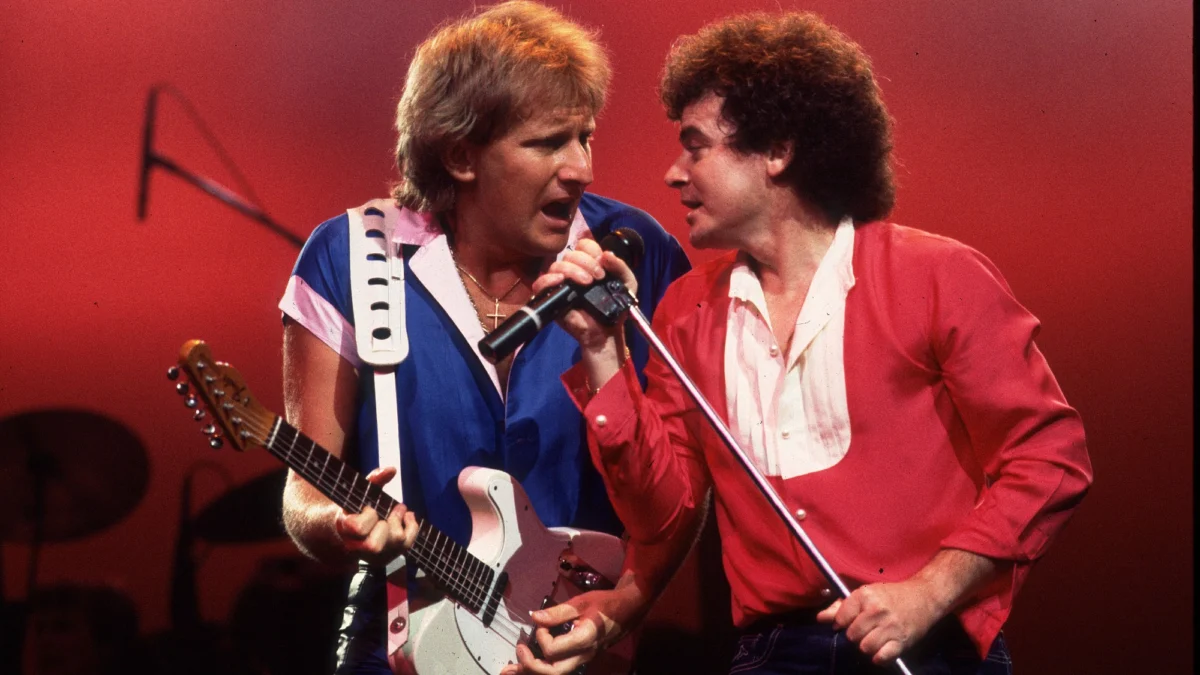
The year 1979 stands as a pivotal corridor in the history of modern music, marking the definitive transition from the analog warmth of the 1970s to the synthesized precision of the 1980s. While the year is often remembered for the explosive rise of New Wave and the controversial "Disco Demolition Night," it also represented the commercial zenith of soft rock—a genre characterized by sophisticated arrangements, melodic accessibility, and high production values. This period saw the emergence of "Adult Contemporary" as a dominant force on the Billboard charts, providing a sonic sanctuary for listeners navigating a rapidly changing cultural landscape. Within this context, three specific tracks—Air Supply’s "Lost In Love," Anne Murray’s "I Just Fall In Love Again," and Styx’s "Babe"—emerged not only as chart-topping successes but as definitive artifacts of a genre that bridged the gap between heavy rock and mainstream pop.
The Cultural and Industrial Landscape of Late 1979
To understand the success of these tracks, one must consider the volatile state of the music industry at the close of the decade. By 1979, the high-energy dominance of disco began to fracture under the weight of market over-saturation and social backlash. Simultaneously, the progressive rock movement, which had dominated the early-to-mid 1970s, was being streamlined into "Arena Rock" or "AOR" (Album-Oriented Rock). This vacuum allowed for the proliferation of soft rock, often referred to retrospectively as "Yacht Rock," which utilized professional session musicians and advanced studio technology to create a "clean" sound suitable for the expanding FM radio market.
The industry was also undergoing a technological shift. The introduction of the Sony Walkman in 1979 began to change how consumers engaged with music, moving toward a more personal, portable experience. The songs that thrived in this new environment were those with strong lyrical narratives and emotive vocal performances, qualities that "Lost In Love," "I Just Fall In Love Again," and "Babe" possessed in abundance.
Air Supply and the Global Ascent of Lost In Love
Air Supply’s "Lost In Love" serves as a primary case study in the internationalization of soft rock. Originally released in 1978 on the band’s Australian album Life Support, the song was a regional success before catching the attention of Arista Records founder Clive Davis. Recognizing the track’s potential for the North American market, Davis signed the duo—consisting of Graham Russell and Russell Hitchcock—and oversaw a remix and re-recording of the track for their 1979 self-titled international debut (later released as the album Lost In Love in 1980).
Written by Graham Russell, the song is a masterclass in the soft rock formula: a gentle acoustic guitar opening, followed by a building arrangement that highlights Hitchcock’s soaring tenor. The lyrics, which explore themes of reconciliation and emotional vulnerability, resonated deeply with a public fatigued by the aggressive posturing of the era’s harder rock acts.
Statistically, "Lost In Love" was a juggernaut. It peaked at No. 3 on the Billboard Hot 100 in early 1980, but its impact began in the final months of 1979. It spent four weeks at No. 1 on the Adult Contemporary chart, setting the stage for a record-breaking run of seven consecutive Top 5 hits for the band. Industry analysts point to this song as the catalyst for the "Australian Invasion" of the early 1980s, proving that melodic, ballad-heavy rock had a massive, untapped global audience.
Anne Murray’s Crossover Dominance with I Just Fall In Love Again
While Air Supply represented the male-driven vocal duo tradition, Anne Murray’s "I Just Fall In Love Again" exemplified the power of the crossover artist. By 1979, Murray had already established herself as a formidable force in both pop and country music. Her album New Kind of Feeling was designed to solidify this dual-market appeal, and "I Just Fall In Love Again" was the centerpiece of that strategy.
The song’s history provides insight into the era’s "song-plugging" industry. Written by Steve Dorff, Harry Lloyd, and Gloria Sklerov, the track was first recorded by The Carpenters for their 1977 album Passage. While The Carpenters’ version was well-received by fans, it was never released as a single. Murray’s 1979 version, however, featured a more robust, contemporary production that better suited the radio climate of the late 70s.
The commercial performance of the track was historic. It reached No. 1 on both the Billboard Hot Country Songs chart and the Adult Contemporary chart, while also peaking at No. 12 on the Billboard Hot 100. This triple-threat performance was rare and highlighted a specific trend in 1979: the "mellowing" of country music, which was moving away from traditional honky-tonk sounds toward a more polished, suburban aesthetic. Murray’s success with this track paved the way for subsequent crossover stars like Juice Newton and Kenny Rogers, who would dominate the charts in the early 1980s.
Styx and the Evolution of the Power Ballad in Babe
The success of "Babe" by Styx represents a different phenomenon: the pivot of a progressive rock band toward mainstream pop balladry. By 1979, Styx was one of the largest touring acts in the United States, known for their complex arrangements and conceptual albums like The Grand Illusion and Pieces of Eight. However, the release of the album Cornerstone signaled a significant shift in their artistic direction.
"Babe" was written by founding member Dennis DeYoung as a private birthday gift for his wife, Suzanne. Initially, DeYoung did not intend for the song to be a Styx track, but bandmates Tommy Shaw and James "JY" Young recognized its commercial potential. The song is notable for its use of the Fender Rhodes electric piano, a staple instrument of the 1979 sound, and its minimalist, emotive vocal delivery.
The song became Styx’s first and only No. 1 single on the Billboard Hot 100, holding the position for two weeks in December 1979. It also performed exceptionally well internationally, reaching the Top 10 in the United Kingdom and Canada. Despite its commercial success, "Babe" created internal friction within the band; the tension between DeYoung’s preference for ballads and Shaw’s preference for harder rock would eventually lead to the band’s splintering in the mid-80s. Nevertheless, from a historical perspective, "Babe" is credited with helping to define the "power ballad" archetype—a slow, emotional song that retains the production scale of a rock anthem.
Data-Driven Analysis of the 1979 Music Market
The dominance of these three tracks is reflected in the year-end data for 1979 and 1980. According to Billboard’s historical archives, the Adult Contemporary (AC) format saw a 15% increase in radio share during this period. This growth was driven by a demographic shift; the "Baby Boomer" generation was entering their late 20s and early 30s, moving away from the rebellious sounds of their youth toward music that reflected their more stable, domestic lives.
Furthermore, the production credits of these songs reveal a high degree of technical overlap. The use of the "LA Sound"—characterized by high-end compression, layered backing vocals, and the inclusion of session legends such as those from the band Toto—became the industry standard. This high barrier to entry meant that only the most polished tracks could achieve the level of "airplay saturation" seen by Air Supply, Murray, and Styx.
Broader Impact and Long-term Legacy
The legacy of these 1979 hits extends far beyond their initial chart runs. In the early 2000s, the "Yacht Rock" revival brought a new wave of critical appreciation for the technical proficiency and melodic complexity of late-70s soft rock. Musicologists now argue that these songs were not merely "easy listening" but were sophisticated compositions that utilized jazz-influenced chord progressions and innovative recording techniques.
For Air Supply, "Lost In Love" was the beginning of a career that would see them sell over 40 million albums. For Anne Murray, it was a career-defining moment that cemented her status as one of Canada’s greatest musical exports. For Styx, "Babe" proved that a rock band could achieve ultimate pop success without losing their identity, even if it meant alienating a portion of their original fanbase.
Ultimately, the soft rock of 1979 served as the emotional connective tissue of a decade in flux. As the world moved toward the digital era, these songs provided a final, resonant echo of the analog age—a period where melody, harmony, and heartfelt lyricism were the primary currencies of the airwaves. Today, these tracks remain staples of recurrent radio and streaming playlists, serving as a testament to the enduring appeal of the 1979 sound. Their continued relevance suggests that while musical trends are cyclical, the demand for well-crafted, emotionally resonant pop music remains a constant in the global cultural consciousness.
