

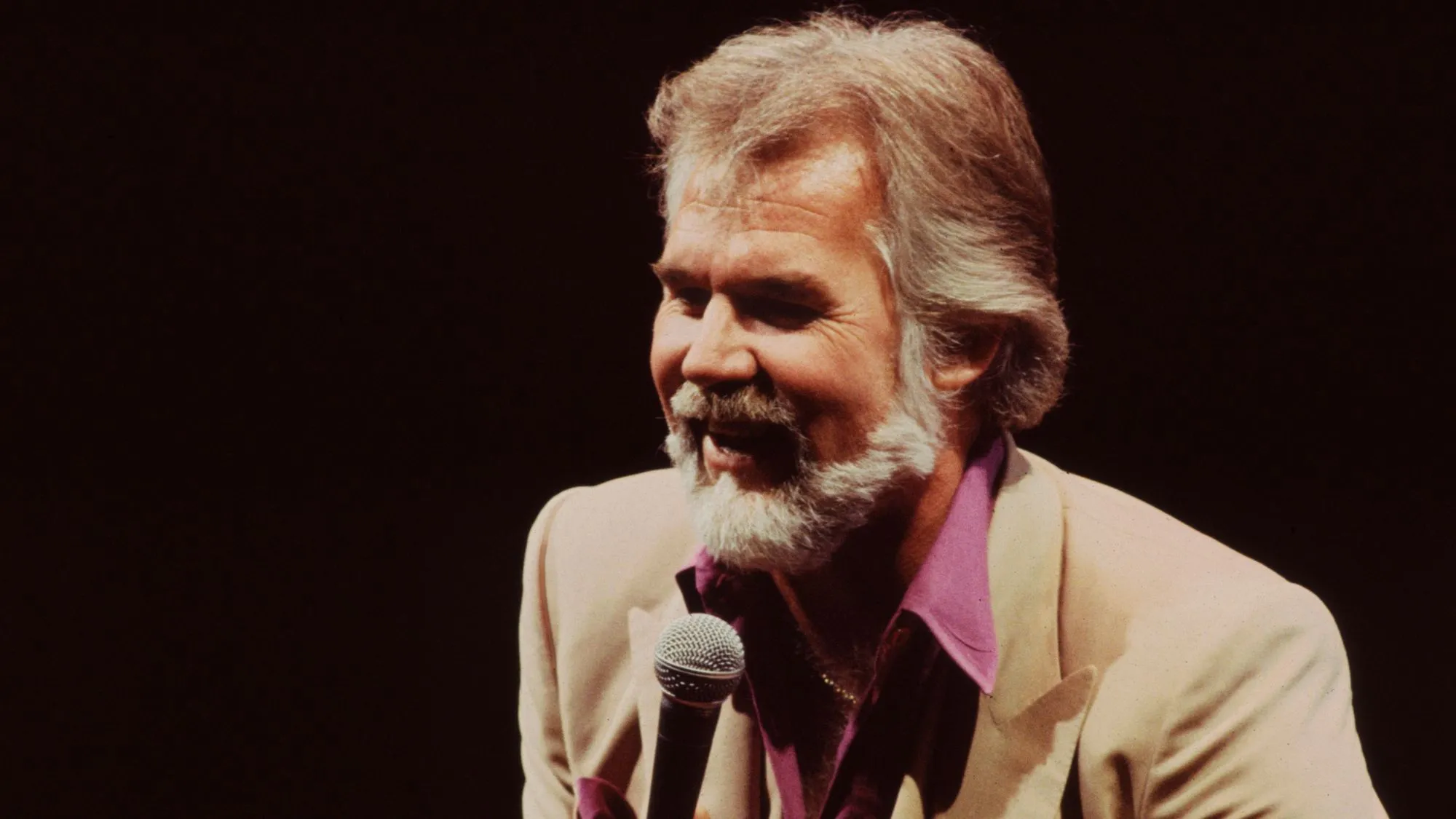
The global music community today marks what would have been the 88th birthday of Kenneth Donald Rogers, known professionally as Kenny Rogers, a titan of the industry whose career redefined the boundaries of country and pop music. Born on August 21, 1938, Rogers’ trajectory from a federal housing project in Houston to the pinnacle of international stardom remains one of the most significant narratives in American entertainment history. Over a career spanning sixty years, Rogers charted more than 120 singles, dominated the Billboard charts for a cumulative 200 weeks, and sold upwards of 100 million records, solidifying his status as a quintessential crossover artist.
The Foundations of a Diverse Musical Palette
The roots of Kenny Rogers’ eclectic sound can be traced to his upbringing in the San Felipe Courts, a federal housing development in Houston’s Fourth Ward. Growing up as one of eight children in a financially struggling household, Rogers was immersed in a multicultural environment that served as a melting pot for musical genres. The proximity to jazz clubs, R&B venues, and traditional country circles in East Texas allowed a young Rogers to absorb a wide array of influences that would later characterize his genre-blurring discography.
His formal introduction to the stage occurred in 1949 at the Texan Theatre, where he won a local talent show. By the time he reached his senior year at Jefferson Davis High School, Rogers had mastered both the guitar and the fiddle. His first professional venture was with a rockabilly group called the Scholars. The group achieved localized success, but it was Rogers’ 1957 solo single, "That Crazy Feeling," that provided his first taste of national exposure. The song’s performance earned him an appearance on Dick Clark’s American Bandstand, a significant milestone for a teenage artist from Texas.
Navigating the 1960s: From Jazz to Psychedelic Rock
The 1960s represented a period of intense experimentation for Rogers. Following the dissolution of his early rockabilly interests, he joined the Bobby Doyle Three, a jazz trio where Rogers played the upright bass. This era refined his technical skills and stage presence, but the allure of the burgeoning folk movement eventually led him to the New Christy Minstrels in 1966.
However, the rigid structure of the Minstrels did not align with Rogers’ evolving artistic vision. In 1967, Rogers and several fellow bandmates—Mike Settle, Terry Williams, and Thelma Camacho—departed to form The First Edition. The band became a vehicle for Rogers to explore the psychedelic rock and folk-rock sounds that were defining the counterculture era. Their 1968 hit, "Just Dropped In (To See What Condition My Condition Was In)," written by Mickey Newbury, peaked at number five on the Billboard Hot 100. The track, featuring Rogers’ gritty lead vocals and a distorted guitar riff, remains a hallmark of the psychedelic era and was later famously featured in the cult classic film The Big Lebowski.
As the frontman of Kenny Rogers and The First Edition, he continued to produce hits such as "Ruby, Don’t Take Your Love to Town," a song that hinted at the country-storytelling prowess that would later define his solo career.
The 1977 Turning Point and the Birth of a Solo Superstar
By the mid-1970s, the First Edition’s popularity began to wane, leading to the group’s disbandment in 1975. At age 37—an age when many artists consider their peak years behind them—Rogers signed a solo contract with United Artists. His initial solo efforts were met with modest reception until the 1977 release of "Lucille."
"Lucille" was a transformative moment for both Rogers and the country music genre. The narrative-driven song about a man encountered in a bar whose wife had left him struck a chord with a global audience. It reached number one on the Billboard Country Singles chart and climbed to number five on the Pop chart, winning the CMA Single of the Year and a Grammy Award for Best Country Vocal Performance, Male. This success established the "Rogers Blueprint": a blend of country sentimentality with polished pop production that appealed to suburban audiences without alienating rural listeners.
The Gambler and the 1980s Dominance
If "Lucille" made Rogers a star, "The Gambler" (1978) made him a legend. The song, written by Don Schlitz, transcended music to become a cultural touchstone. Its lyrics, offering sage advice on knowing "when to hold ’em" and "when to fold ’em," provided Rogers with a persona that he would inhabit for the rest of his life.
The late 1970s and early 1980s saw an unprecedented run of hits, including "She Believes in Me," "You Decorated My Life," and "Coward of the County." During this period, Rogers was instrumental in the "Urban Cowboy" movement, a phase where country music saw significant crossover success in mainstream pop culture.
One of his most enduring legacies from this era is his work with other icons. His 1980 collaboration with Lionel Richie on the song "Lady" resulted in a multi-week number-one hit that bridged the gap between R&B and country. Furthermore, his 1983 duet with Dolly Parton, "Islands in the Stream"—written by the Bee Gees and produced by Barry Gibb—became one of the best-selling singles of all time, topping both the pop and country charts and earning a permanent place in the American songbook.
Expanding the Brand: Acting and Business Ventures
Kenny Rogers’ influence extended beyond the recording studio. He successfully transitioned into acting, largely by leveraging his musical hits into film and television properties. The Gambler became a series of five highly-rated television movies, with Rogers starring as the titular character, Brady Hawkes. He also starred in the 1982 feature film Six Pack, a racing-themed comedy-drama that further cemented his "everyman" appeal.
In addition to his entertainment pursuits, Rogers was a savvy businessman and an accomplished photographer. He co-founded the restaurant chain Kenny Rogers Roasters in 1991, which expanded internationally and became a recognizable brand in the fast-casual dining sector. His photography, often focused on American landscapes and portraits of fellow celebrities, was published in several well-received books, showcasing a level of artistic depth that complemented his musical career.
Statistical Overview and Industry Recognition
The magnitude of Rogers’ success is reflected in the sheer volume of his accolades. Over six decades, he earned:
- Three Grammy Awards.
- Six Country Music Association (CMA) Awards.
- Eight Academy of Country Music (ACM) Awards.
- The CMT Artist of a Lifetime Award (2015).
- Induction into the Country Music Hall of Fame (2013).
His chart performance remains a benchmark for crossover success. Rogers is one of the few artists to have charted a record in each of the last seven decades (1950s–2010s). At the height of his career, he was a frequent recipient of the "Favorite Artist" title at the American Music Awards, often beating out contemporary pop and rock stars, which underscored his broad demographic appeal.
Retirement and Final Years
In 2015, Rogers announced his "The Gambler’s Last Deal" farewell tour, citing a desire to spend more time with his wife, Wanda Miller, and their twin sons. The tour was a global victory lap, concluding with a star-studded tribute concert in Nashville in 2017 titled "All In for the Gambler," featuring performances by Dolly Parton, Lionel Richie, and Don Henley.
Kenny Rogers passed away on March 20, 2020, at the age of 81, at his home in Sandy Springs, Georgia. His family confirmed that he died of natural causes while under hospice care, having privately battled health issues including Alzheimer’s disease and bladder cancer. His passing occurred during the early stages of the global COVID-19 pandemic, which necessitated a small, private service, though fans worldwide participated in digital vigils and tributes.
Impact and Implications for the Music Industry
The legacy of Kenny Rogers serves as a masterclass in brand longevity and genre flexibility. In an era where the music industry often sought to pigeonhole artists, Rogers resisted categorization. He proved that a great story, delivered with a distinctive, husky baritone, could resonate across cultural and geographical divides.
Industry analysts often point to Rogers as the architect of the modern country-pop crossover. Before the rise of Garth Brooks, Shania Twain, or Taylor Swift, Rogers demonstrated that country music could achieve massive commercial scale without losing its narrative soul. His ability to collaborate with artists as diverse as Dottie West, Kim Carnes, and Coolio showcased a lack of musical pretension that endeared him to multiple generations.
Today, as fans celebrate his 88th birth anniversary, the "Gambler’s" influence remains palpable. From the airwaves of classic country radio to the streaming playlists of pop aficionados, the music of Kenny Rogers continues to provide a soundtrack for the complexities of life—reminding listeners of the importance of knowing when to walk away, and more importantly, when to run. His journey from the federal housing projects of Houston to the global stage stands as a testament to the enduring power of American storytelling.
