

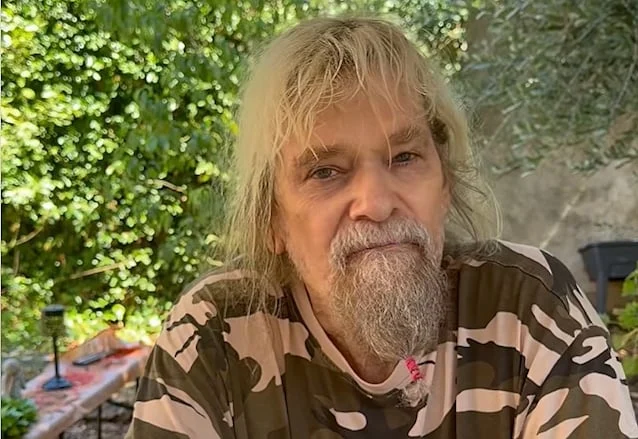
Former W.A.S.P. guitarist Chris Holmes has issued an urgent plea for continued public assistance, providing a candid update on his ongoing battle with prostate cancer and the critical need for funds to sustain his treatment. The 68-year-old musician, who has resided in Cannes, France, with his wife since 2014, is currently undergoing chemotherapy in France for prostate cancer. This marks a significant health challenge, occurring just four years after he successfully completed treatment for throat and neck cancer. His reliance on a GoFundMe campaign highlights the substantial financial burden associated with his medical care, particularly given the complexities of his health insurance situation.
A Race Against Time and Mounting Debt
In a heartfelt video message shared across his social media platforms, Holmes expressed profound gratitude to those who have already contributed to his GoFundMe campaign. "I would like to take this moment to thank everybody… I’d like to thank everybody who’s donated to my GoFundMe very, very, very much. It’s helped me. It’s actually given me a prolonged lease on life, ’cause it’s helped me through my cancer thing," he stated. Holmes emphasized the life-saving impact of the donations, articulating the dire circumstances he would face without this financial lifeline. "I don’t know what I would’ve done if I couldn’t get the money to help me through this. I could’ve got the radiation. I don’t know if I’d have finished whatever. I just wouldn’t have the money," he admitted.
The former W.A.S.P. guitarist revealed that the campaign is still short of its fundraising goal, with approximately 20% of the targeted amount remaining. He implored supporters to continue promoting the GoFundMe page, stressing its crucial role in enabling him to access necessary medical interventions. "I’d like to know if you could still help promote the GoFundMe, ’cause I haven’t reached the goal that we’ve been looking for," Holmes urged. "We’re about 20% [away from reaching the goal] – we’ve made 80% of it, [with] about 20% to go."
The Harsh Realities of Cancer Treatment and Insurance Gaps
Holmes detailed the debilitating side effects of his current treatment, particularly the hormonal therapy, which has rendered him severely ill. He described a recent two-week period as one of the most challenging of his life, exceeding even the difficult times he experienced during his throat cancer treatment. The aggressive nature of the therapy has had a profound impact on his physical well-being, leading to significant gastrointestinal distress due to radiation’s effect on his body’s natural bacteria. "The last two weeks I just went through probably one of the most sickest times I’ve ever been in my life. I thought the throat cancer was bad when on chemo, but something happened in my… not my, after my stomach, my gizzards, I lost all the good and bad bacteria that’s in there because of radiation. And then when I drink water, it just went straight from my stomach right out my rear end," he explained with a somber laugh, illustrating the severity of his condition.
His wife, Catherine, provided further context on the financial predicament, explaining that an administrative error related to their marriage registration has led to Chris being classified under "emergency only" health insurance coverage in France. This classification meant an initial three-month waiting period for non-emergency care, with only the radiotherapy administered in July being covered by the system. Consequently, all other essential medical expenses, including hormone therapy, scans, PET scans, biopsies, blood tests, and daily transportation to and from the hospital, have fallen entirely on the couple.
A Financial Precipice: Accumulating Debt and Inability to Work
The accumulation of these uncovered medical costs has resulted in a substantial debt of approximately €20,000, with ongoing treatment set to exacerbate this financial burden monthly. Compounding their challenges, Holmes is required to remain in France to receive his radiotherapy. The risk of his emergency status lapsing if he were to leave the country prevents him from traveling, and consequently, from working. "Chris must remain in France to receive radiotherapy. Leaving the country would risk his emergency status lapsing, so he cannot travel and therefore cannot work," Catherine stated in a GoFundMe update. She underscored Holmes’s lifelong dedication to his music and his fans, lamenting their current inability to manage these overwhelming expenses independently. "Chris has given everything to his music and to the people who listen to it. It is his whole life. Today we cannot carry this alone."
The GoFundMe campaign has set a goal of €50,000, and as of the latest updates, over €45,000 has been raised. This indicates a significant outpouring of support from his fanbase, yet the remaining shortfall underscores the ongoing urgency of his appeal.
The Genesis of the Diagnosis and the Decision to Go Public
Holmes elaborated on the circumstances leading to his prostate cancer diagnosis in an interview with The Metal Voice. He recounted a conversation with his doctor in February 2025, during a routine check-up for his throat. He had previously mentioned experiencing unusual urination patterns and waking multiple times a night, which the doctor had initially attributed to aging and prostate issues. However, a subsequent scan, which extended beyond the typical neck examination to encompass his entire body, revealed the presence of cancer. "And he goes, ‘Everything’s not cool.’ He showed it up on a screen, he goes, ‘See that? You got prostate cancer.’ I go, ‘Damn!’" Holmes recalled. He also noted a familial history of the disease, as his father also had prostate cancer, acknowledging the potential hereditary link.
Initially, Holmes and his bandmates in T3RMINAL, including Tesla bassist Brian Wheat, attempted to keep his diagnosis private to avoid negative publicity that could impact their upcoming musical endeavors. However, the escalating medical costs and the realization that insurance would not cover the majority of his treatment forced their hand. After discovering that the insurance only covered radiation and not the myriad of other necessary procedures and expenses, Holmes made the difficult decision to launch the GoFundMe. "And so I called up Brian. I go, ‘I need to do a GoFundMe. It’s the only way I’m gonna make it through,’" he explained.
A Psychological Resilience Forged in Previous Battles
When asked if his previous experience with throat and neck cancer had psychologically prepared him for this new health challenge, Holmes affirmed that it had. He drew parallels between the radiation treatments, detailing the seven weeks he underwent for his throat condition. He described the current radiotherapy process for prostate cancer, which involves precise targeting with lasers and takes approximately six to eight minutes per session, as being somewhat more involved than his previous treatment. He has three weeks of this intensive treatment completed and five more weeks scheduled, requiring daily sessions except on weekends.
A History of Health Scares and Resilience
This latest health crisis follows a series of cancellations and postponements of his touring commitments. In April of this year, Holmes canceled a planned tour of the United Kingdom and Scandinavia for May 2026. While initially attributed to "health issues that require immediate attention," his wife later clarified it was due to "a minor prostate issue" that was "already being taken care of" and expressed confidence in his swift return to the stage.
His bout with throat and neck cancer in February 2022 also necessitated the postponement of his touring schedule. After completing seven weeks of radiation therapy, he shared positive news with fans five months later, announcing that his cancer was "gone."
The W.A.S.P. Legacy: A Complex and Contentious Past
Chris Holmes’s career is indelibly linked to the iconic heavy metal band W.A.S.P., which he joined in 1982. He was a member of the band until 1990 and rejoined for a second tenure from 1996 to 2001. Since his departure, he has not performed with W.A.S.P.
In past interviews, Holmes has expressed his perspective on the band’s dynamic, suggesting that after their debut album, W.A.S.P. evolved into a "one-man show" primarily driven by frontman Blackie Lawless. He has maintained that his unique guitar playing style was instrumental to the band’s initial sound and success, even asserting that Lawless himself acknowledged his essential role in the band’s formation. "If I hadn’t joined in the beginning, it would have never worked. Blackie told me that the first day, when he came and talked to me to play in W.A.S.P. He says, ‘I’ve got this band. It’s not gonna work unless you’re in it.’ He told me that to my face," Holmes stated in a 2021 interview with SiriusXM’s "Trunk Nation With Eddie Trunk."
However, this narrative has been contested by Blackie Lawless. In response to claims made in Holmes’s documentary, "Mean Man: The Story Of Chris Holmes," that he was financially exploited during his time with W.A.S.P., Lawless asserted that Holmes received substantial settlements on two separate occasions and was paid "quite well." Lawless unequivocally stated, "That is not true," regarding Holmes’s assertions of unpaid royalties and songwriting credits.
Lawless has also consistently resisted calls for a W.A.S.P. reunion with Holmes, likening the situation to divorced parents whom children wish would reconcile, but where reconciliation is not feasible. In a 2017 press conference in Moscow, he stated, "People get divorced for certain reasons, and there’s times when the kids want the parents to get back together, but sometimes it never happens. And this is one of those [times]. Sorry."
As Chris Holmes continues his fight against cancer, the public’s support through his GoFundMe campaign remains a critical lifeline, enabling him to access the essential medical treatments he needs while navigating the complexities of his health insurance and financial situation. His candid updates serve as a powerful reminder of the often-unseen struggles faced by individuals battling serious illness, particularly when personal finances become intertwined with life-saving care.
