

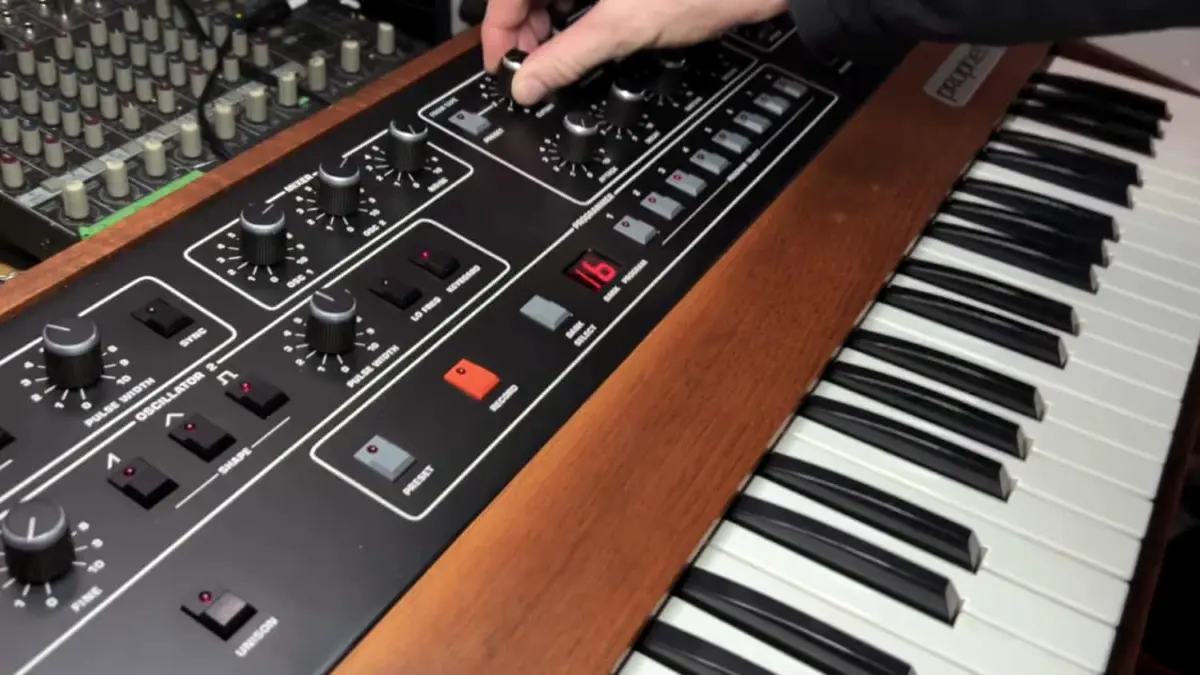
The landscape of professional music production and synthesizer maintenance is witnessing a significant shift as community-driven software solutions begin to augment high-end hardware. In a recent development within the electronic music community, a new open-source firmware project titled prophet-rev4-mods has been released, targeting the Sequential Prophet-5 and Prophet-10 Rev4 synthesizers. This project represents a milestone in the "alternate firmware" movement, providing owners of these iconic analog instruments with a suite of features previously unavailable in the factory specifications, including an integrated arpeggiator, a polyphonic step sequencer, octave shifting, and patch-level sequence memory.
The Prophet-5, originally released in 1978 by Sequential Circuits, is widely regarded as one of the most influential synthesizers in history. When Sequential—under the leadership of the late Dave Smith—reintroduced the Prophet-5 and Prophet-10 as the "Rev4" in 2020, the goal was to provide a definitive version that combined the best elements of the original three revisions. However, in keeping with the vintage-accurate design philosophy, the Rev4 omitted several modern conveniences found in Sequential’s other contemporary instruments, such as the Prophet-6 or the OB-6. The prophet-rev4-mods project seeks to bridge this gap, offering modern performance tools without necessitating any physical alterations to the hardware’s circuitry.
Technical Overview and Feature Set
The prophet-rev4-mods project is a software-level patch that interacts with the existing architecture of the Sequential Prophet Rev4 series. By utilizing the synthesizer’s internal processing power, the developer has successfully implemented several high-demand features that enhance the instrument’s utility in both live and studio environments.
Polyphonic Step Sequencer and Arpeggiator
The most significant addition provided by the firmware is a polyphonic step sequencer. While the original Prophet-5 was lauded for its rich, analog pads and lead sounds, its lack of onboard sequencing often required users to rely on external MIDI controllers or Digital Audio Workstations (DAWs) to create rhythmic patterns. The new firmware allows users to program sequences directly on the unit. Furthermore, the inclusion of an arpeggiator brings the Prophet-5/10 in line with its smaller sibling, the Prophet-6, providing a classic tool for rhythmic movement that was historically absent from the Prophet-5’s interface.
Patch-Level Sequence Memory
A critical limitation of many vintage-style sequencers is the inability to save sequence data alongside sound presets. The prophet-rev4-mods firmware addresses this by enabling patch-level sequence memory. This means that when a user saves a specific sound (patch), the associated sequence or arpeggio pattern is stored within that slot. For performing musicians, this allows for seamless transitions between songs, as the rhythmic character of the instrument changes instantly upon selecting a new preset.
Octave Shifting
Despite its expansive sound, the Prophet-5 Rev4 has a five-octave keyboard. In certain performance scenarios, users find themselves limited by the physical range of the keys. The new firmware introduces a digital octave shifting function, allowing players to transpose the keyboard range up or down instantly. This is a standard feature on most modern synthesizers, and its addition to the Rev4 enhances its versatility as a primary controller in a multi-synth setup.
Chronology of Development and Release
The development of prophet-rev4-mods follows a long tradition of "modding" Sequential instruments. In the 1980s and 90s, third-party companies often provided hardware kits to add MIDI or extra memory to original Prophet-5s. The modern era, however, has shifted toward firmware-based modifications.
The Prophet-5 and Prophet-10 Rev4 were released in October 2020 to critical acclaim, praised for their "Vintage" knob which simulated the instability of older hardware. Over the following years, Sequential released several official firmware updates, most notably the "Expansion" update that allowed Prophet-5 owners to upgrade their voice count to ten via a hardware voice card.
The prophet-rev4-mods project emerged as an independent initiative, separate from Sequential’s official engineering team. According to the project’s documentation on GitHub, the developer successfully tested the modification on a Prophet-10 Rev4 hardware unit in October 2026. While the Prophet-5 Rev4 is architecturally nearly identical to the Prophet-10, the developer has noted that the firmware remains untested on the five-voice hardware version, though it is theoretically compatible. This timeline highlights the enduring relevance of the Rev4 platform, which continues to receive community support six years after its initial market debut.
Installation Process and Technical Requirements
The distribution of prophet-rev4-mods follows an open-source model under the MIT license, hosted on GitHub. This approach allows for transparency and permits other developers to contribute to or audit the code. However, the installation process requires a degree of technical proficiency and carries inherent risks that are standard with unofficial firmware.

To install the modification, users must possess the official Sequential Main OS 2.1.0 firmware file. The prophet-rev4-mods utility acts as a patcher, modifying the official binary to include the new features. Once the patched firmware is created, it is transmitted to the synthesizer via a MIDI System Exclusive (SysEx) transfer utility. This method is identical to how official updates are applied, but because the software is not sanctioned by the manufacturer, it may void warranties or lead to system instability if not handled correctly.
The project repository includes a comprehensive set of instructions for both installation and recovery. Recognizing the value of these instruments—which often retail for between $3,500 and $5,000—the developer has included a "factory restore" path, allowing users to revert to the official Sequential firmware should they encounter bugs or wish to sell the unit in its original state.
Industry Context: The Rise of Alternate Firmware
The emergence of prophet-rev4-mods is part of a broader trend in the music technology industry where users take the longevity of their instruments into their own hands. Other notable examples include the "Gligli" firmware for the Sequential Prophet-600, which fundamentally transformed a budget vintage synth into a high-performance machine, and various community hacks for Korg and Novation synthesizers.
This movement is driven by several factors:
- Feature Parity: Users often desire features found in newer models but prefer the sound or interface of their current hardware.
- Longevity: Open-source firmware ensures that even if a manufacturer ceases support for a product, the community can continue to fix bugs or add compatibility for new MIDI standards.
- Customization: Modern musicians often seek unique workflows that mass-market firmware does not prioritize.
While manufacturers like Sequential (now part of Focusrite Group) generally do not officially support third-party firmware, they have historically maintained a respectful distance, provided the modifications do not infringe on intellectual property or lead to widespread hardware failures. At the time of reporting, Sequential has not issued an official statement regarding the prophet-rev4-mods project.
Implications and Fact-Based Analysis
The introduction of these features via software raises questions about the original design choices of the Prophet-5 Rev4. Dave Smith and the Sequential team deliberately chose a "minimalist" approach for the Rev4 to maintain the purity of the 1978 user experience. By adding a sequencer and arpeggiator, the prophet-rev4-mods project changes the fundamental "workflow" of the instrument.
From a market perspective, this firmware could potentially increase the resale value and desirability of the Rev4 series. The Prophet-5 and Prophet-10 are often criticized by modern producers for lacking the rhythmic tools found in competitors like the Arturia PolyBrute or the Moog One. By adding these capabilities for free, the prophet-rev4-mods project removes one of the few remaining arguments against the Prophet-5 as a centerpiece of a modern studio.
However, the "untested" status on the Prophet-5 hardware serves as a cautionary note. In the world of analog-digital hybrid systems, subtle timing differences or memory allocations can lead to "bricking"—a state where the hardware becomes unresponsive. Potential users are advised to wait for further community verification or to perform the update only if they are comfortable with the risks of unofficial software.
Future Outlook
The prophet-rev4-mods project is currently in an active state of refinement. The developer has indicated that further features could be explored, depending on the available memory overhead within the Prophet’s internal CPU. As more users adopt the firmware and report their findings, it is likely that the project will see iterative updates to improve stability and perhaps add even more functionality, such as enhanced MIDI CC mapping or additional modulation routings.
For the synthesizer industry at large, this project reinforces the idea that hardware is no longer a static purchase. Much like the automotive industry is seeing "software-locked" features and aftermarket tuning, the world of high-end audio is entering an era where the software layer is just as vital as the analog oscillators and filters. The prophet-rev4-mods project stands as a testament to the passion of the synth community and the enduring legacy of the Prophet-5, ensuring that this legendary instrument continues to evolve alongside the needs of modern musicians.
