

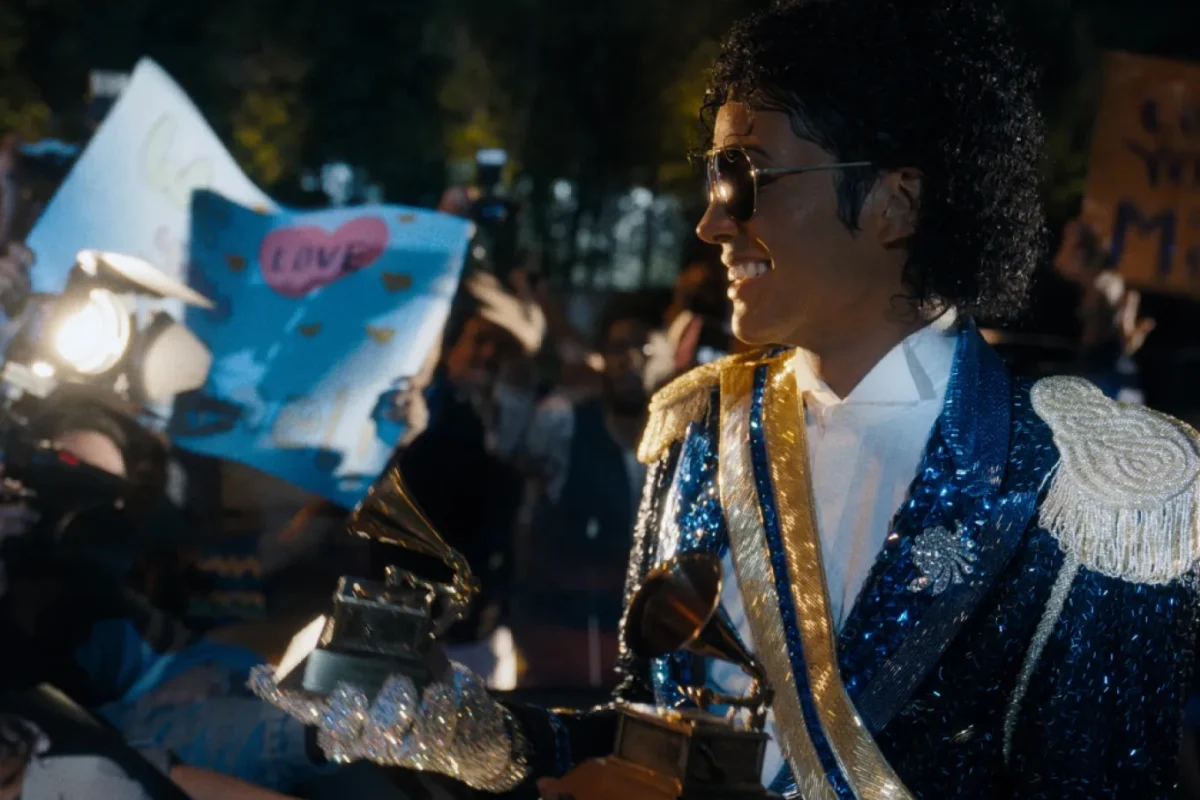
The highly anticipated sequel to Michael, the record-breaking Michael Jackson biopic, is reportedly gearing up to tackle the long-standing allegations of sexual abuse against the pop icon, with lead actor Jaafar Jackson indicating the narrative will be presented "from [Michael’s] point of view." This announcement, emerging from a recent GQ Middle East cover story featuring Jaafar Jackson, immediately raises questions about the film’s objectivity and its potential to reframe deeply controversial aspects of Jackson’s life, especially given the full participation of the Michael Jackson Estate in the production. The first film, released earlier this year, achieved unprecedented commercial success by largely sidestepping these contentious issues, a strategy that allowed it to become the highest-grossing musician biopic ever made.
The Initial Film’s Strategic Omission and Legal Constraints
The journey to the screen for Michael was fraught with challenges, particularly concerning how to address the numerous accusations of child sexual abuse that plagued Jackson’s later career. Reports suggest that early plans for the biopic included a significant story arc detailing the 1993 allegations brought by 13-year-old Jordan Chandler, who accused Jackson of molestation. This segment reportedly depicted Jackson as a "naïve victim of the money-grubbing Chandler," a narrative consistent with the long-held defense of Jackson by his family and estate. However, after substantial filming for this third act, producers were compelled to scrap the entire sequence. The reason: legal counsel discovered that the 1993 out-of-court settlement with the Chandler family explicitly forbade Jackson and his estate from including the Chandler family in any future film or media portrayal. This legal restriction underscored the enduring complexity of Jackson’s legacy and the intricate web of agreements that continue to shape its public representation.
Consequently, the theatrical release of Michael adopted a dramatically different approach. The film conspicuously omitted all details of the sordid events of the later decades of Michael Jackson’s life. Instead, it concluded with Jackson distancing himself from his domineering father, Joe Jackson, at the culmination of The Jacksons’ 1984 Victory Tour. A brief flash-forward showed Jackson performing "Bad" in London in 1987, before fading out with a title card simply stating that Jackson’s story continued. This narrative choice effectively presented a sanitized version of Jackson’s life, focusing on his artistic triumphs and early struggles, while deliberately avoiding the controversies that defined his later years.
Commercial Triumph and the Greenlight for a Sequel
Despite, or perhaps because of, its carefully curated narrative, Michael proved to be an astounding box office phenomenon. The film was lauded by some critics as "ridiculous and entertaining" and resonated deeply with audiences globally, ultimately surpassing Bohemian Rhapsody to become the highest-grossing musician biopic in cinematic history. Its worldwide box office haul exceeded a billion dollars, firmly establishing it as a top contender among 2026’s most successful films, ranking behind only blockbusters like Spider-Man: Brand New Day, The Odyssey, and Toy Story 5. This unprecedented commercial success made a sequel not just likely, but inevitable.
Variety recently confirmed that Lionsgate, the studio behind the film, is moving forward with Michael 2, with aspirations to commence production before the end of the current year. The rapid turnaround signals a strong financial incentive to capitalize on the first film’s momentum, but it also reignites the critical debate surrounding how the more challenging aspects of Jackson’s life will be handled without the protective legal shield that dictated the first film’s omissions.
Jaafar Jackson’s Perspective and the Estate’s Influence
The conversation around the sequel’s direction gained significant traction with Jaafar Jackson’s recent interview in GQ Middle East. Jaafar, the nephew of Michael Jackson and the chosen actor to portray him, articulated his desire for the sequel to address the abuse allegations by presenting them "from [Michael’s] point of view." In the interview, he stated:
"I think the second film will give even more insight from his point of view, because at the end of the day, [the allegations] are always from someone else’s. It’s someone else’s story. It’s someone else’s idea of what it is, and it’s mainly driven by an agenda. And that’s really the issue we’ve been having as a family – not having Michael’s voice being heard. I think that’s very, very important, especially in the late years."
This "money quote" encapsulates the core challenge facing Michael 2: how to navigate a highly sensitive and legally charged subject from a perspective that is inherently biased towards the subject. While Jaafar Jackson, as an actor, may express his personal hopes for the screenplay, the GQ story clarifies that he has no direct influence over its content. The film’s narrative will ultimately be shaped by the creative team working in full collaboration with, and under the purview of, the Michael Jackson Estate. This crucial detail suggests that the "point of view" espoused in the sequel is highly likely to align with the estate’s long-standing defense of Jackson against all accusations of misconduct.
The Estate’s Narrative Control and the Challenge of Objectivity
The Michael Jackson Estate has consistently and vehemently denied all allegations of child sexual abuse against the singer. Since Jackson’s death in 2009, the estate has actively worked to protect and rehabilitate his image, vigorously contesting claims and documentaries that portray him negatively, most notably the 2019 HBO documentary Leaving Neverland. This documentary, which featured detailed testimonies from Wade Robson and James Safechuck, who both claimed Jackson abused them as children, triggered a renewed global discussion about Jackson’s legacy and the nature of his relationships with children. The estate responded with a multi-million dollar lawsuit against HBO, alleging breach of contract and disparagement.
Given this history, it is highly improbable that Michael 2, an authorized biopic, will offer a complex, nuanced, or truly objective depiction of the abuse allegations. Instead, the "from his point of view" approach is expected to present a narrative consistent with Jackson’s own denials, portraying him as a victim of false accusations, media sensationalism, and financially motivated opportunists. This strategy, while potentially satisfying to Jackson’s ardent fans and family, will likely draw significant criticism from advocacy groups, former accusers, and media outlets concerned with historical accuracy and ethical storytelling.
Broader Implications: Legacy, Accountability, and Biopic Ethics
The approach of Michael 2 taps into a broader cultural debate surrounding how society grapples with the legacies of controversial public figures. In an era where figures like R. Kelly, Bill Cosby, and Harvey Weinstein have faced severe legal and public repercussions for their alleged or proven misconduct, the portrayal of Michael Jackson remains a particularly contentious issue. Biopics, by their very nature, often walk a tightrope between factual recounting, dramatic interpretation, and the often-conflicting interests of the subject’s estate or family.
The commercial success of Michael, despite its omissions, highlights a public appetite for celebratory narratives of beloved icons, even when those narratives bypass uncomfortable truths. However, the sequel’s direct engagement with the allegations, albeit from a specific viewpoint, signifies a shift. It suggests that the filmmakers and the estate recognize that these controversies are too central to Jackson’s story to be indefinitely ignored, especially in a comprehensive biographical portrayal.
The decision to frame the allegations from Jackson’s perspective also raises questions about the ethical responsibilities of filmmakers producing authorized biopics. While a creative team has the right to choose its narrative angle, the potential for an authorized film to become a platform for historical revisionism, especially on such sensitive matters, invites scrutiny. Critics will likely argue that presenting only one side of a deeply contested issue, particularly one involving alleged child abuse, risks undermining the experiences of the accusers and potentially perpetuating harmful narratives.
Additional Insights from Jaafar Jackson
Beyond the allegations, Jaafar Jackson’s GQ profile offered further glimpses into the anticipated portrayal of Michael Jackson’s inner life in the sequel. He described Jackson in his later years as seeking a "more spiritual journey," reading authors like Deepak Chopra, a pursuit he attributed to the "scrutiny and the level of pressure he was probably feeling from the press." Jaafar also emphasized Michael’s unwavering kindness, even amidst profound personal struggles: "No matter all the stuff he went through, how he was treated, what things were said about him, he never stopped treating people with kindness. He never stopped believing in and wanting to look for the good in people… even though he was broken, his heart still stayed the same… I hope that this is felt in the second movie."
These sentiments, while painting a sympathetic picture of Jackson, further underscore the film’s likely inclination towards a narrative that emphasizes his humanity, resilience, and perceived victimhood, rather than a dispassionate examination of the accusations against him.
Looking Ahead: Michael 2 and its Challenges
As Michael 2 moves into production, it faces a monumental task: to navigate the treacherous waters of Michael Jackson’s controversial legacy while simultaneously aiming for commercial success. The film’s approach to the abuse allegations will undoubtedly be its defining feature, sparking renewed debate and scrutiny. The estate’s firm control over the narrative, coupled with Jaafar Jackson’s stated desire to present Jackson’s "point of view," suggests a sequel that will likely double down on a defense-oriented portrayal.
The commercial triumph of the first film has set a high bar, but also granted the production team significant creative leeway. However, the decision to engage directly with the allegations, even from a biased perspective, ensures that Michael 2 will be more than just another blockbuster. It will be a significant cultural event, reigniting discussions about celebrity, culpability, and the enduring power of narrative in shaping public perception. The ultimate reception of Michael 2 will offer a crucial barometer of how audiences and critics alike are willing to engage with the complex, often contradictory, legacies of figures like the King of Pop.
