

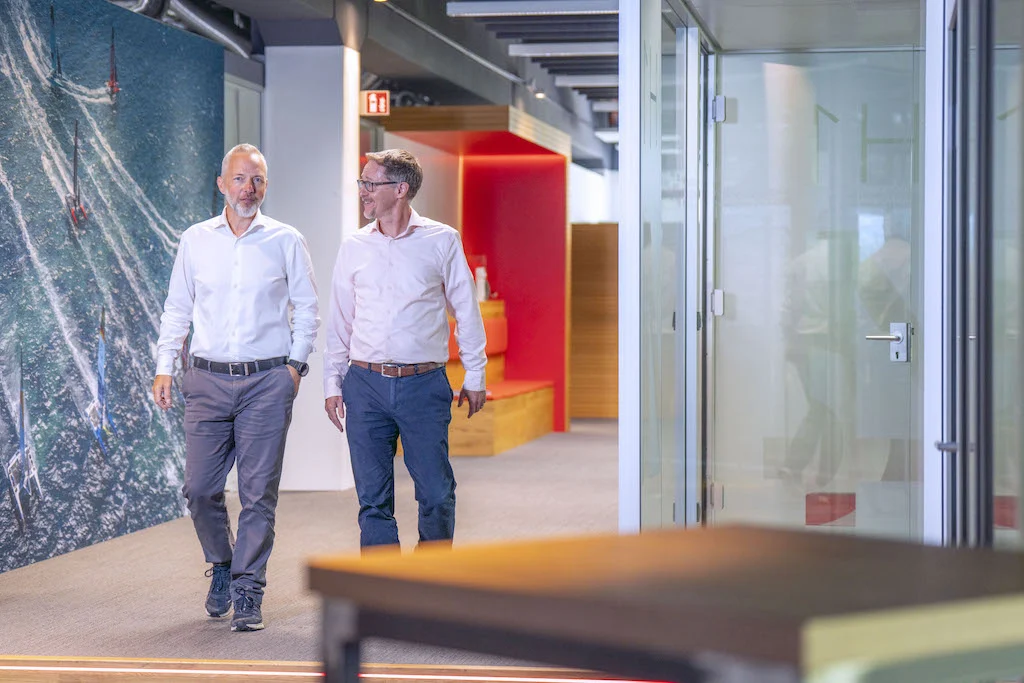
The global media and technology landscape is bracing for a significant shift as Riedel Communications, a leading provider of cutting-edge networking, intercom, and distribution solutions, prepares for a transformative leadership transition. Effective January 1, 2027, the company will implement a new organizational structure designed to streamline its operations and enhance its customer-centric approach. Under this new mandate, Lutz Rathmann will ascend to the role of Chief Executive Officer (CEO) of Riedel Communications, assuming comprehensive responsibility for both the Product Division and the Managed Technology Division. Simultaneously, Anthony Zuyderhoff will step into the position of Chief Commercial Officer (CCO), where he will oversee a newly unified global Go-to-Market organization. This strategic realignment follows the announced retirement of Jan Eveleens, the current CEO of the Product Division, who will conclude a distinguished career in the broadcast industry at the end of 2026.
This restructuring represents more than a simple change in personnel; it signifies a fundamental evolution in how Riedel Communications interacts with its global clientele and manages its internal resources. By merging the leadership of its product development and live production service arms under Rathmann, the company aims to dissolve internal silos that have historically separated hardware and software sales from high-level event services. The integration is intended to foster a more holistic environment where the expertise gained from massive live productions—such as the Olympic Games or Formula 1 races—informs the development of the next generation of broadcast products, and vice versa.
A Strategic Shift Toward Unified Operations
For decades, Riedel Communications has operated with a dual-focus model. The Product Division has been responsible for the innovation, manufacturing, and sale of world-renowned systems like the Bolero wireless intercom and the MediorNet signal distribution platform. Meanwhile, the Managed Technology Division has functioned as a high-end service provider, offering turnkey technical solutions, equipment rentals, and on-site engineering for the world’s most complex live events. While both divisions have seen immense success, the modern market increasingly demands a seamless blend of product reliability and service-oriented flexibility.
The new structure, spearheaded by Rathmann and Zuyderhoff, is designed to ensure that Riedel’s internal divisions are more closely intertwined. While the Product and Managed Technology divisions will retain their specialized teams and market-specific focuses, they will operate under a unified strategic umbrella. This synergy is expected to accelerate the company’s ability to respond to market trends, such as the industry-wide shift toward IP-based workflows and software-defined architectures. By bringing sales, service, support, and marketing under a single Go-to-Market leadership, Riedel intends to provide a consistent and simplified experience for its partners and customers, regardless of whether they are purchasing a single intercom beltpack or contracting a multi-million-dollar infrastructure for a global sporting event.
Profiles in Leadership: Lutz Rathmann and Anthony Zuyderhoff
Lutz Rathmann’s appointment as CEO is a testament to his deep-rooted history within Riedel and his proven track record of operational excellence. Rathmann originally built his reputation at Riedel in various high-stakes roles, including Vice Director of Global Events and Head of Project Management. After a brief hiatus, he returned to the company in 2020 to lead the Managed Technology Division. During his recent tenure, Rathmann has been instrumental in navigating the complexities of the post-pandemic live events market, expanding Riedel’s global footprint, and securing key partnerships that have solidified the company’s status as an industry leader. His dual experience in project management and executive leadership makes him uniquely qualified to oversee the convergence of Riedel’s technological and service-based offerings.
Rathmann has long advocated for a structure that mirrors the reality of the client experience. He has noted that customers do not view their challenges through the lens of a company’s internal organizational chart; rather, they seek comprehensive solutions that solve specific technical and logistical hurdles. By taking the helm of both divisions, Rathmann is positioned to ensure that the "Managed Technology" insights from the field are directly funneled into the "Product" innovation pipeline, creating a feedback loop that drives technical superiority.
Complementing Rathmann’s operational focus is Anthony Zuyderhoff, who currently serves as the Executive Director of Global Sales. As the incoming CCO, Zuyderhoff will be tasked with the monumental job of unifying Riedel’s commercial efforts. His role is centered on the philosophy that the company must lead with outcomes rather than just products. In the modern broadcast environment, where "Everything-as-a-Service" (XaaS) is becoming a standard, Zuyderhoff’s mission is to align the sales and support teams to provide a cohesive journey for the customer. This involves integrating marketing strategies with direct sales efforts and ensuring that post-sale support is as robust as the initial consultation. Zuyderhoff’s leadership is expected to shorten decision-making cycles and provide a more agile response to the shifting needs of regional markets in EMEA, the Americas, and Asia-Pacific.
The Retirement of Jan Eveleens and the End of an Era
The transition also marks the departure of Jan Eveleens, a figure whose influence on the broadcast technology sector spans decades. Eveleens joined Riedel as the CEO of the Product Division, bringing with him a wealth of experience from his previous roles, including his time as CEO of Axon and his leadership positions within the IABM (International Association of Broadcasting Manufacturers). Under Eveleens’ guidance, Riedel’s product portfolio expanded significantly, embracing the transition to SMPTE ST 2110 standards and pushing the boundaries of what is possible in decentralized signal routing.
Thomas Riedel, the founder and CEO of the Riedel Group, has publicly expressed his gratitude for Eveleens’ contributions, noting that his leadership was pivotal in stabilizing and growing the Product Division during a period of rapid technological change. Eveleens will remain in his current role through the end of 2026 to ensure a smooth handover and to assist in the finalization of the 2027 strategic roadmap. His retirement signals the end of a highly successful chapter for Riedel, but his legacy remains embedded in the robust product lineup that continues to dominate the market.
Contextual Background: Riedel’s Market Position and Technological Impact
To understand the weight of these leadership changes, one must consider Riedel Communications’ role in the global media ecosystem. Founded in 1987 in Wuppertal, Germany, Riedel has grown from a small rental shop for radio equipment into a global powerhouse with over 1,000 employees across more than 30 locations. The company’s technology is the "central nervous system" for some of the world’s most-watched events.
In the realm of sports, Riedel is synonymous with Formula 1, providing the mission-critical intercom systems that allow drivers to communicate with pit crews at 200 mph. In the world of extreme stunts, Riedel was the technical backbone of the Red Bull Stratos jump, ensuring audio and video signals remained intact from the edge of space. The company’s MediorNet system revolutionized the industry by moving away from traditional point-to-point routing toward a decentralized, networked approach, which significantly reduces cabling and increases flexibility for broadcasters.

By 2027, the industry is expected to be fully immersed in the "cloud-native" era. The leadership of Rathmann and Zuyderhoff will be essential in navigating this transition, as Riedel moves further into software-defined hardware and virtualized production environments. The integration of divisions allows Riedel to offer "hybrid" solutions—where a client might own some hardware but rent additional cloud-based processing power or on-site support for peak demand periods.
Chronology of the Transition
The transition is scheduled as a phased implementation to ensure business continuity:
- August 2026: Official announcement of the new leadership structure and the retirement of Jan Eveleens.
- Q3 – Q4 2026: Strategic planning sessions led by Rathmann, Zuyderhoff, and Eveleens to align the 2027 budget and product roadmaps.
- December 31, 2026: Jan Eveleens officially retires from his role as CEO of the Product Division.
- January 1, 2027: Lutz Rathmann assumes the role of CEO of Riedel Communications; Anthony Zuyderhoff assumes the role of CCO; the unified Go-to-Market organization officially commences operations.
- Q1 2027: Rollout of the new unified service and support model to global partners and customers.
Industry Analysis and Future Implications
Market analysts suggest that Riedel’s move is a proactive response to the consolidation seen across the Pro-AV and broadcast sectors. As technology becomes more complex, customers are looking for fewer, more capable partners rather than a dozen disparate vendors. By unifying its commercial and operational leadership, Riedel is positioning itself as a "one-stop" strategic partner capable of handling everything from infrastructure design to live execution.
Furthermore, this restructuring allows the Riedel Group—the parent company—to focus on broader strategic acquisitions and long-term innovation. Thomas Riedel will continue to lead the Riedel Group, focusing on the high-level vision and the expansion of the company’s portfolio beyond its traditional core markets.
The appointment of an internal successor like Rathmann provides a level of stability that is often missing in corporate restructurings. His intimate knowledge of the company’s culture and technical capabilities minimizes the "learning curve" typically associated with a new CEO. Meanwhile, Zuyderhoff’s commercial focus ensures that Riedel will remain aggressive in its pursuit of market share, particularly in emerging markets and in sectors like corporate AV and theater, where high-end intercom and networking solutions are seeing increased adoption.
As the industry looks toward 2027, Riedel Communications appears to be reinforcing its foundations. The combination of Rathmann’s operational depth and Zuyderhoff’s market-focused strategy suggests a future where Riedel is not just a provider of hardware, but a comprehensive architect of the global live experience. The success of this transition will likely be measured by the company’s ability to maintain its reputation for "German engineering excellence" while becoming a more agile, service-oriented global entity.
