

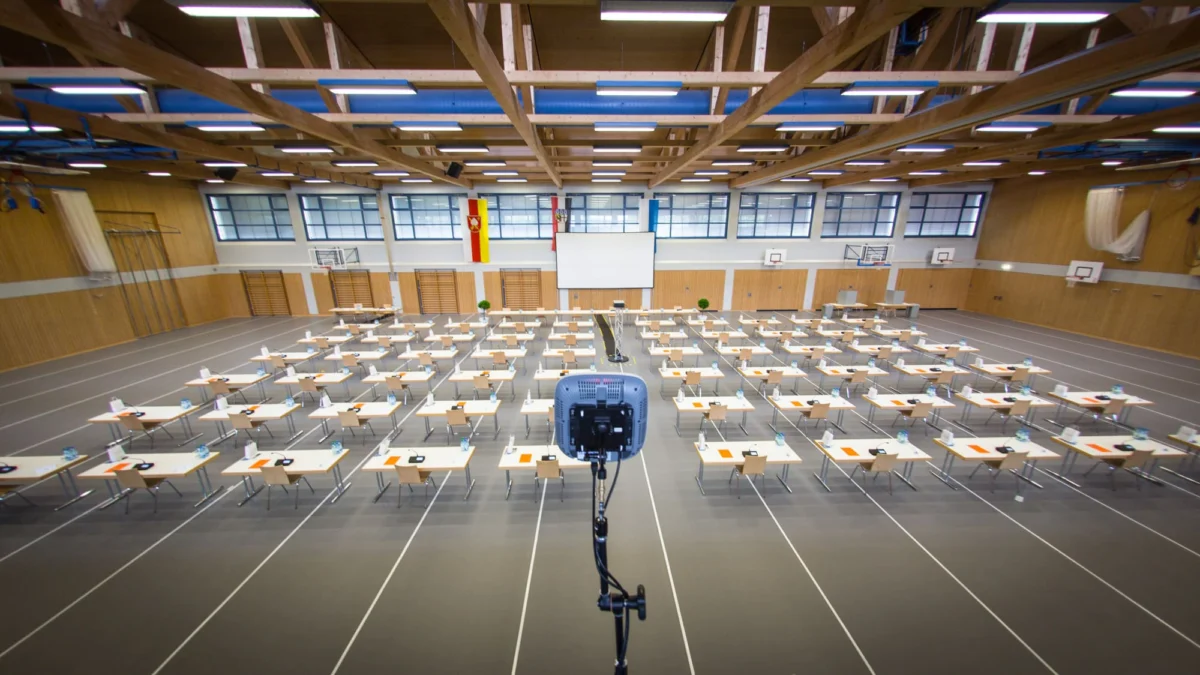
The landscape of corporate communication and event management underwent a radical transformation during the early 2020s, as the necessity for physical distancing and the limitations of traditional venues forced a migration toward unconventional meeting spaces. In this shifting environment, the limitations of hard-wired audio infrastructure became a significant hurdle for organizers attempting to maintain professional standards in temporary or architecturally restrictive settings. To address these challenges, the Shure Microflex Complete Wireless (MXCW) system emerged as a pivotal solution, designed to provide the stability of a wired conference system with the agility of a wireless setup. By supporting up to 125 conference units—each capable of hosting two participants—the system has redefined the parameters of mobile event technology, enabling high-fidelity communication in locations ranging from historical parliament buildings to the rotating gondolas of a Ferris wheel.
The Catalyst for Innovation: From Pandemic Necessity to Permanent Flexibility
The impetus for the widespread adoption of wireless conference systems was largely driven by the global pandemic, which necessitated large-scale gatherings in non-traditional venues to comply with hygiene and spacing regulations. Standard conference rooms were often too small to accommodate delegates while maintaining a two-meter distance, leading local governments and corporations to repurpose sports halls, gymnasiums, and outdoor venues for official proceedings. In such environments, laying kilometers of cabling for traditional microphone systems was not only cost-prohibitive but often logistically impossible due to safety hazards and setup time constraints.
A notable example of this technological adaptation occurred during a unique wine-tasting event held in a Ferris wheel. The event required seamless, two-way communication between a sommelier on the ground and participants distributed across 25 moving gondolas. Markus Eichhofer, a Market Development Specialist for Broadcast and Theater at Shure, notes that such a scenario would have been entirely unfeasible with wired technology. The Ferris wheel remained in constant motion, yet the wireless system allowed for real-time instruction, musical accompaniment, and an interactive Q&A session. Furthermore, the system’s integrated voting function allowed participants to cast their preferences for specific wines directly from their gondolas, demonstrating the potential for wireless systems to handle complex data beyond simple audio transmission.
Technical Architecture: Frequency Management in a Congested Spectrum
One of the most significant engineering challenges in developing a wireless conference system is the management of the radio frequency (RF) spectrum. In a modern corporate environment, the 2.4 GHz band is often saturated with traffic from Wi-Fi networks, Bluetooth devices, and other near-field communications. This congestion presents a high risk of interference and signal dropouts, which are unacceptable in high-stakes environments such as government council meetings or corporate boardrooms.
The Shure MXCW system addresses this by operating across both the 2.4 GHz and 5 GHz frequency bands. The inclusion of the 5 GHz band is particularly critical, as it allows the system to utilize Dynamic Frequency Selection (DFS). This technology enables the system to monitor the spectrum for primary users, such as weather radar systems. If a primary user is detected, the MXCW system automatically and seamlessly transitions to a clear channel without interrupting the audio stream. This automated frequency management acts as a safeguard, ensuring that the system remains operational even in "dense" RF environments where standard wireless microphones might struggle.

To further ensure reliability, the system employs a proprietary audio codec that operates at 48 kHz/24-bit resolution. While the format is data-reduced to optimize bandwidth, the high bit-depth ensures that the nuances of speech are preserved. The system manages data by prioritizing the "downlink" for control signals and the "uplink" for active speakers, allowing for the highest possible audio quality to be maintained across the network.
Scalability and the "Dual Delegate" Configuration
A central feature of the MXCW system is its modularity and capacity for high-density participation. A single MXCWAPT Access Point Transceiver can manage up to 125 wireless conference units. However, the system’s capacity for participants can effectively double to 250 through the "Dual Delegate" mode. In this configuration, a single MXCW640 unit is shared between two participants. Each individual has access to their own dedicated "push-to-talk" button—one on the left and one on the right—and their names are correctly identified in the system’s software and on the unit’s integrated display when they speak.
This versatility extends to the configuration of the units themselves. Unlike older systems that required specific hardware for chairpersons and delegates, every MXCW unit is identical and can be reconfigured via software. A unit can be designated as a "Chairman" station, giving the user the ability to mute others or manage the speaking queue, or as a "Listener" station for observers. This software-defined approach simplifies inventory management for rental companies and event planners, as a single pool of hardware can be adapted to any meeting format.
Advanced Audio Processing: Auto-Gain and Echo Cancellation
Ensuring consistent audio levels across a large meeting is a perennial challenge for sound engineers. Participants vary in their speaking volume and their distance from the microphone. To combat this, the MXCW series integrates Automatic Gain Control (AGC). Similar in function to the industry-standard Dan Dugan automixers used in television talk shows, the AGC identifies active speech and adjusts the gain in real-time to maintain a steady output level.
This is complemented by Acoustic Echo Cancellation (AEC), which has become a "must-have" feature in the era of hybrid meetings. When a local conference system is interfaced with remote platforms like Microsoft Teams or Zoom, the risk of feedback loops and echo is high. The integrated AEC prevents the audio from the remote participants—broadcast through the conference units’ built-in speakers—from being picked up by the local microphones and sent back into the stream. This creates a clean, professional audio loop that is essential for both the participants in the room and those joining via the web.
Rapid Deployment and Infrastructure Integration
The logistical advantage of a wireless system is most apparent during the setup phase. For many mobile applications, the Access Point can be mounted on a simple tripod and connected to power via Power over Ethernet (PoE). The Access Point features both analog inputs and outputs, allowing it to be connected directly to active loudspeakers for immediate room reinforcement without the need for a complex digital network or a dedicated mixing console.

In more permanent or sophisticated installations, the system integrates seamlessly with Dante digital audio networking. This allows the wireless units to work in tandem with other Shure Microflex products, such as ceiling microphone arrays or networked wall speakers. The flexibility of the system also makes it an ideal choice for heritage-listed buildings where structural modifications, such as drilling holes for cables, are strictly prohibited. By utilizing wireless technology, these historic venues can be modernized for high-level diplomatic or corporate use without compromising their architectural integrity.
Chronology of Use: From Crisis Management to New Standards
The timeline of the MXCW system’s deployment reflects a broader trend in the professional AV industry. Initially utilized as an "emergency" solution for municipal governments during the pandemic—such as the district council meetings in Bad Kissingen, Germany, and municipal sessions in Luxembourg—the technology proved its reliability under pressure.
In the post-pandemic era, the focus has shifted toward "smart meetings" and efficiency. The integration of Near Field Communication (NFC) technology into the conference units is a prime example of this evolution. Participants can be issued NFC cards programmed with their names and profiles. By inserting the card into any unit, the system automatically assigns the participant’s name to that seat, updating the digital nameplate on the unit’s screen and the central management software. This eliminates the need for printed name tags and allows for flexible seating arrangements in recurring meetings, such as city parliaments.
Technical Specifications and Performance Data
For professionals evaluating the system, the technical performance data underscores its suitability for mission-critical applications:
- Latency: The system maintains a latency of approximately 16 ms from microphone input to headphone output. For direct analog tapping at the Access Point, this is reduced to approximately 9.2 ms, ensuring that there is no perceptible delay for participants listening to the live reinforcement.
- Battery Life: The units are powered by the SB930 Lithium-Ion rechargeable battery, which provides over 11 hours of continuous operation. This exceeds the requirements for a standard full-day conference.
- Charging: A networked charging station can return a battery to full capacity in 4 hours, with a 50% charge achievable in just 1.5 hours.
- Transmission Power: The output power is scalable from 1 mW to 25 mW, allowing the system to be optimized for the size of the room and the density of the RF environment.
Broader Impact and Industry Implications
The shift toward wireless conference systems like the Shure Microflex Complete Wireless signifies a broader move toward "agile infrastructure" in the corporate world. As organizations increasingly adopt hybrid work models and flexible office spaces, the ability to deploy high-quality communication tools instantly is becoming a competitive advantage.
Furthermore, the system’s ability to handle emergency overrides—where a priority signal can mute all microphones and display "Emergency Announcement" on all screens—demonstrates a level of integration that meets the safety standards of modern convention centers and public buildings. As the technology continues to mature, the distinction between the reliability of wired systems and the convenience of wireless systems continues to blur, positioning wireless as the primary choice for the future of professional discourse.
