

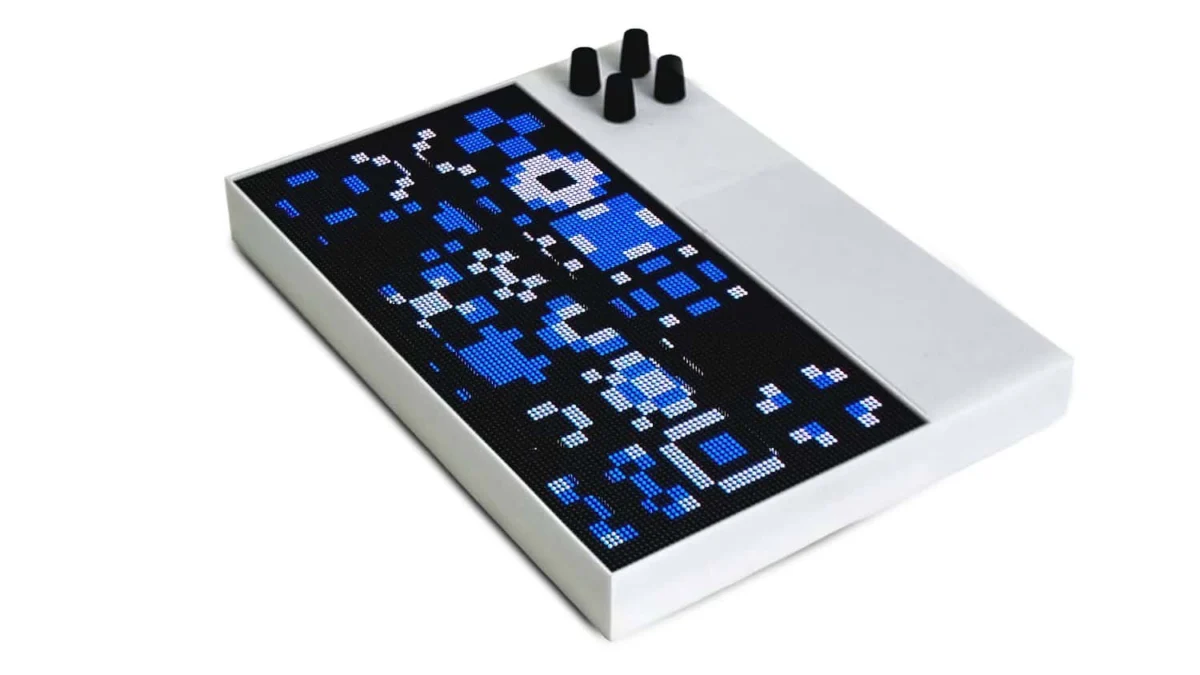
Patternflow, a groundbreaking open-source hardware project, is redefining the intersection of visual art and musical performance by introducing a dedicated "light synthesizer" designed for real-time manipulation. Unlike traditional lighting controllers that rely on pre-programmed sequences or complex DMX infrastructures, Patternflow functions as a tactile instrument, allowing users to "play" light through a minimalist interface consisting of four physical knobs. While the device produces no audible sound of its own, its integration of the Open Sound Control (OSC) protocol allows it to function as a bridge between the auditory and visual realms, creating a synchronized experience for performers and audiences alike.
The device features a high-density 128 × 64 LED matrix, totaling 8,192 individual pixels. This hardware configuration provides a vibrant canvas for complex geometric patterns and fluid visual movements. Distinct from many modern visual displays that rely on pre-rendered video files or playback loops, Patternflow computes every frame live on the device. This real-time generative approach ensures that the visual output is immediately responsive to user input, eliminating the latency often associated with software-based visualizers.
Technical Architecture and Real-Time Generative Engine
At the core of Patternflow is a specialized processing engine capable of handling high-speed calculations for thousands of LEDs simultaneously. By computing graphics on the fly, the device allows for a level of improvisation previously reserved for musical instruments. The four-knob interface serves as the primary tactile gateway, allowing users to modulate parameters such as pattern density, color frequency, movement speed, and geometric complexity.
The reliance on a 128 × 64 matrix offers a balance between portability and visual clarity. While high-definition screens are common in consumer electronics, the "lo-fi" aesthetic of an LED matrix provides a distinct retro-futuristic appeal that has become a staple in electronic music culture. The 8,192 pixels are individually addressable, meaning the software can dictate the exact color and brightness of every point on the grid 60 times per second, ensuring smooth motion and high-fidelity transitions.
The hardware is designed for extreme portability. It is powered via a standard USB power bank, removing the need for dedicated AC outlets and making it an ideal tool for mobile performers, street artists, or creators working in non-traditional venues. This focus on mobility is complemented by a streamlined setup process. Initial configuration requires a single connection to a computer to link the device to a local Wi-Fi network. Once connected, all further interactions—including pattern selection, deck management, and firmware updates—occur wirelessly via a web browser.
The Role of Open Sound Control (OSC) in Multimedia Integration
One of the most significant technical achievements of Patternflow is its bidirectional implementation of the Open Sound Control (OSC) protocol. Developed as a successor to MIDI (Musical Instrument Digital Interface), OSC offers higher resolution, increased speed, and the ability to communicate over standard network infrastructures like Wi-Fi and Ethernet.
Patternflow acts as an OSC endpoint on a local network. This allows it to communicate seamlessly with industry-standard creative software such as Max/MSP, TouchDesigner, Ableton Live, and SuperCollider. The bidirectional nature of this communication means that data flows in two directions:
- Inbound Control: A musician can send values from their digital audio workstation (DAW) or generative music software to Patternflow. These values map directly to the "virtual knobs" of the device, allowing the music itself to drive the visuals. For example, the kick drum of a track could trigger a flash of light, or the frequency of a synthesizer lead could change the color palette of the matrix.
- Outbound Control: Conversely, the physical knobs on the Patternflow device can send data back to the computer. In this configuration, Patternflow becomes a musical controller. Turning a knob to alter a visual pattern can simultaneously adjust a filter cutoff or an effect parameter in a musical performance, creating a physical link between the light and the sound.
This elimination of traditional cables and audio interfaces simplifies the performer’s workspace. By operating over Wi-Fi, Patternflow removes the physical constraints of short USB or MIDI cables, allowing the device to be placed anywhere within the venue while remaining perfectly synced to the central performance hub.
Development Chronology and Open-Source Philosophy
The journey of Patternflow from a conceptual prototype to a tangible hardware product follows the classic trajectory of modern open-source development. The project was initially shared via GitHub, providing the global maker community with access to the source code and hardware schematics. This transparency allowed early adopters to build their own units, contribute to the codebase, and suggest feature enhancements.

The chronology of the project highlights a commitment to accessibility:
- Phase 1: The Open-Source Release: The foundational code was published on GitHub, establishing Patternflow as a community-driven project.
- Phase 2: The Virtual Synthesizer: To lower the barrier to entry, the developer launched a web-based version of the synthesizer. This allowed users to experiment with the interface and the generative algorithms within a standard browser, requiring no hardware investment.
- Phase 3: The Crowdfunding Transition: Recognizing a demand for professional-grade, pre-assembled units, the project moved toward a crowdfunding campaign on Crowd Supply. This platform is specifically known for hosting "original, useful, and respectful" hardware, making it a natural fit for an open-source multimedia tool.
The transition to crowdfunding marks a pivotal moment for Patternflow. While DIY enthusiasts enjoy the process of soldering and assembly, many professional performers require "plug-and-play" reliability. The Crowd Supply campaign aims to bridge this gap, offering a polished version of the device that maintains the open-source spirit of the original prototype.
Broader Implications for the Live Performance Industry
The emergence of devices like Patternflow signals a shift in the democratization of stage production. Historically, high-quality visual accompaniment for live music required expensive media servers, specialized VJ software, and a dedicated technician. Patternflow challenges this paradigm by offering a compact, affordable, and intuitive alternative that a single performer can manage.
For independent musicians and small-scale venues, the implications are significant:
- Autonomy for Performers: Solo electronic artists can now control their visual narrative with the same level of nuance they apply to their sound. The "instrumental" nature of Patternflow means visuals are no longer an afterthought but a core part of the performance.
- Reduced Technical Overhead: By using Wi-Fi and OSC instead of DMX and long cable runs, setup times are drastically reduced. This is particularly beneficial for touring artists who need to set up and tear down quickly.
- Educational Potential: As an open-source project, Patternflow serves as an excellent educational tool for students interested in creative coding, hardware engineering, and the physics of light. The ability to look "under the hood" of a professional-grade visualizer encourages a deeper understanding of how software interacts with hardware.
Furthermore, the project addresses a growing trend in the "maker" community: the desire for specialized, single-purpose hardware. In an era dominated by multi-purpose tablets and laptops, there is a tactile satisfaction in using a device dedicated solely to the manipulation of light. The four-knob constraint forces creativity, pushing the user to find complexity within a limited set of controls.
Future Outlook and Community Engagement
As Patternflow moves toward its crowdfunding goals, the future of the project lies in the hands of its community. The open-source nature of the firmware means that new patterns, transition effects, and OSC mappings can be developed by users and shared globally. This collective intelligence ensures that the device will continue to evolve long after the initial hardware purchase.
Industry analysts suggest that the "light synthesizer" category could expand as more performers seek to break away from the "laptop performer" aesthetic. By interacting with a physical object like Patternflow, artists provide a more engaging visual experience for the audience, who can see the direct correlation between a hand movement and a change in the environment.
The developer has emphasized that while the crowdfunding project involves the inherent risks of hardware manufacturing—such as supply chain fluctuations or production delays—the transparency of the GitHub repository provides a level of security for backers. Even if the commercial venture were to face hurdles, the project’s "digital DNA" is already preserved in the public domain.
In conclusion, Patternflow represents a sophisticated blend of art and engineering. By treating light as a fluid, playable medium, it offers a new vocabulary for creative expression. Whether used as a standalone visualizer, a sophisticated OSC controller, or an educational platform, Patternflow stands as a testament to the power of open-source innovation in the modern multimedia landscape. Its arrival marks a new chapter for performers who believe that light should not just be seen, but played.
