

Rastatt-based technology provider Lawo has officially introduced Edge One, a next-generation, network-native I/O platform designed to bridge the historical divide between audio, video, and control data within a single, compact hardware footprint. This announcement marks a significant milestone in the company’s long-term strategy to drive product convergence, responding to a shifting media landscape where decentralized production, shrinking budgets, and the transition to IP-based infrastructures have become the industry standard. By integrating high-density audio and video processing with flexible control options, Edge One aims to replace the traditional "island" approach to equipment—where separate devices are required for different signal types—with a singular, software-defined node capable of adapting to diverse production requirements.
A Strategic Pivot Toward Integrated Infrastructure
The development of Edge One is the culmination of several years of internal research and development at Lawo, aimed at addressing the increasing complexity of modern broadcast and live event environments. Historically, production workflows required distinct hardware chains for audio and video, often leading to synchronization challenges, increased power consumption, and a larger physical footprint in mobile units or server rooms. Lucas Zwicker, Product Manager in Lawo’s CTO Office, noted that the project began with a fundamental question regarding whether the industry truly needs two separate devices for audio and video processing in an era dominated by high-speed networking.
The result is a platform that serves not only as a high-performance stagebox for signal acquisition and output but also as a versatile processing hub. The system is designed to cater to a broad spectrum of users, from traditional broadcasters and remote production houses to fixed installations in theaters, stadiums, and corporate event spaces. In these environments, the ability to scale resources dynamically is becoming a critical competitive advantage.
Technical Architecture and Modular Hardware Design
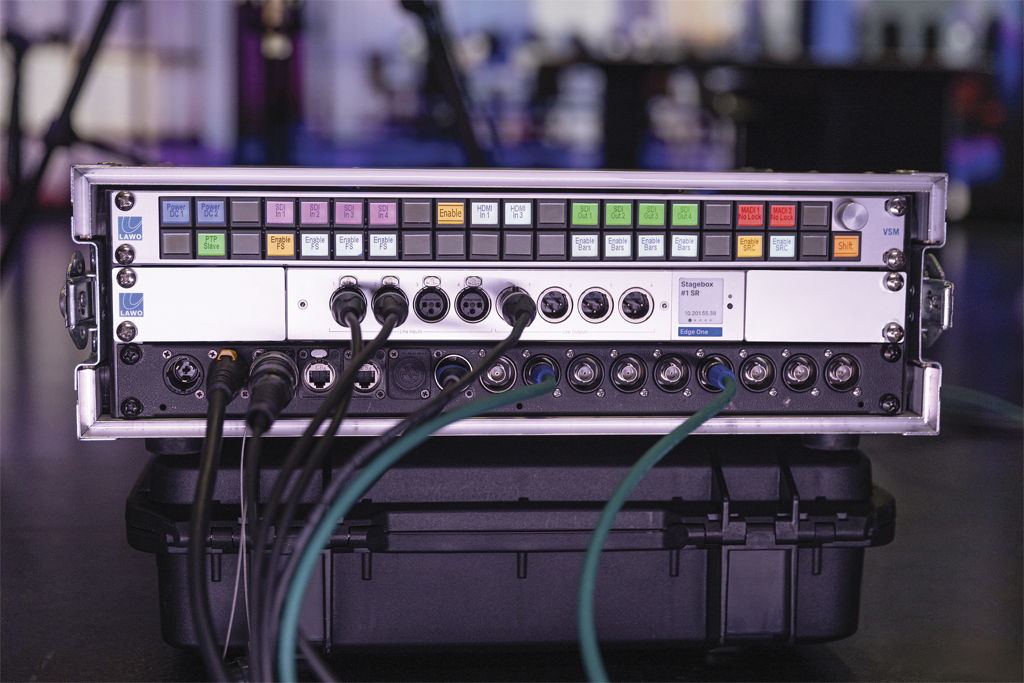
Edge One is housed in a compact 1RU (rack unit) chassis with a half-rack width, a form factor specifically chosen for space-constrained environments such as commentary booths, OB (outside broadcast) vans, and decentralized editing suites. Despite its small size, the device offers a high degree of modularity and connectivity.
On the audio front, the system features a modular front-panel I/O section. Users can configure the device with various modules depending on the specific needs of a production. Available options include:
- A dedicated microphone module with eight XLR inputs.
- A hybrid Mic/Line module offering four inputs and four outputs.
- A specialized Commentary Module, which includes three microphone inputs, three high-quality headphone outputs, and two auxiliary inputs and outputs.
This modularity is supplemented by two 64-channel MADI ports, which support full redundancy and integrated sample rate conversion. Furthermore, a USB-C audio interface allows for the direct connection of a workstation or laptop, providing a 4-in/4-out interface in the initial release, with plans to expand channel counts in future firmware updates.
The video capabilities of Edge One are equally robust, featuring eight bidirectional SDI ports and four HDMI ports. The inclusion of HDMI is a strategic move, acknowledging the growing use of prosumer monitors and compact HDMI cameras in professional environments. The HDMI ports are electronically switchable, allowing for configurations of up to four outputs or a mix of two inputs and two outputs. This flexibility eliminates the need for external converters, reducing signal latency and potential points of failure.
Advancing Commentary and Remote Production Workflows
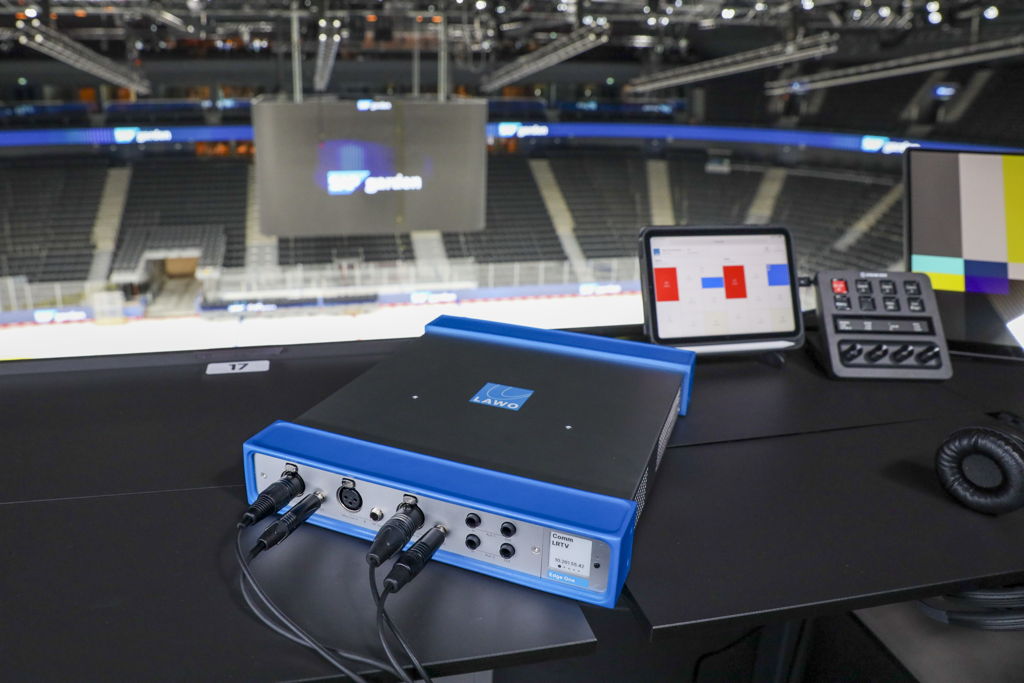
One of the primary applications for Edge One is the evolving field of remote production and commentary. As sports and news broadcasts move toward "at-home" models, where talent may be located hundreds of miles from the production hub, the requirements for local monitoring and processing have changed. Edge One addresses this by integrating on-board Digital Signal Processing (DSP) for low-latency monitoring and pre-mixing.
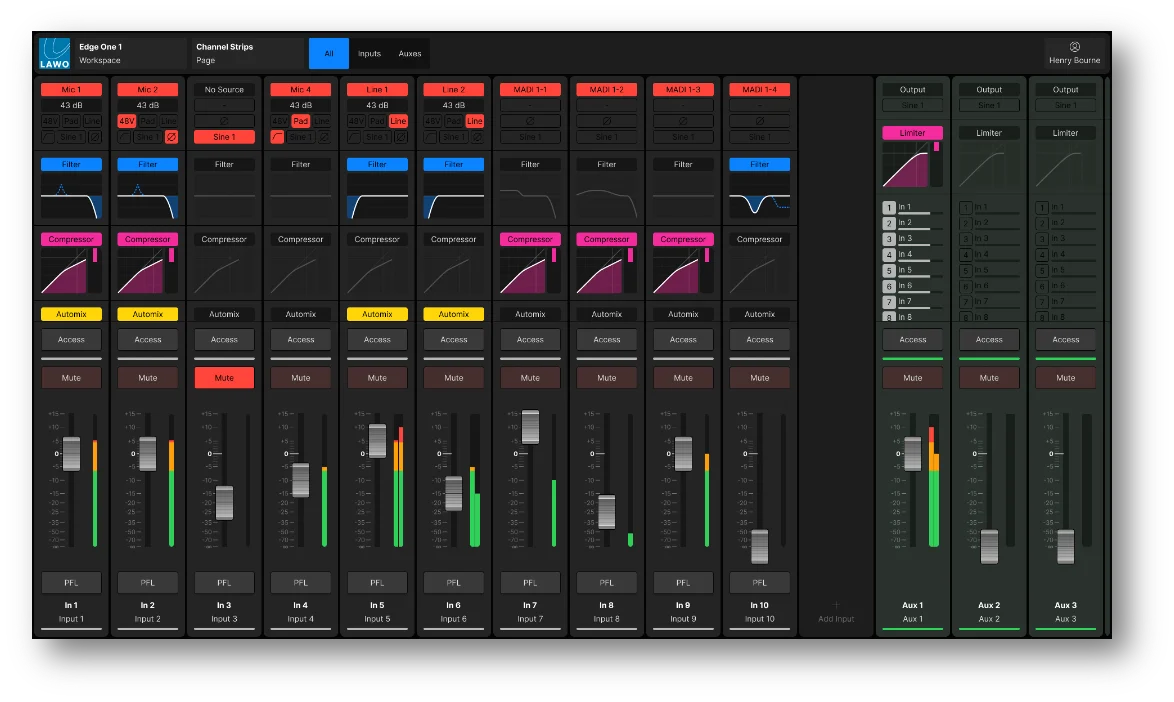
The integrated DSP suite includes essential tools such as equalizers, compressors, limiters, and an automixer. This allows commentary teams to manage their own monitor mixes and local audio processing without relying on a large-scale mixing console at the venue. To further streamline operations, Lawo has moved away from proprietary commentary hardware interfaces in favor of software-based UIs and integration with third-party controllers like Elgato Stream Decks. This software-centric approach allows for a more compact setup that is easier to ship, deploy, and manage remotely.
Native IP Integration and Industry Standards
Technically, Edge One is built on a foundation of open standards, ensuring compatibility with the wider broadcast ecosystem. It provides native support for SMPTE ST 2110 for professional media over IP, as well as NMOS (Networked Media Open Specifications) IS-04 and IS-05 for discovery, registration, and connection management.
The platform’s networking capabilities are supported by two SFP slots for high-speed fiber uplinks and two standard Ethernet ports. For power and synchronization, the unit includes redundant inputs for external power supplies and a comprehensive sync section featuring Sync In, Through, and Out, alongside a Wordclock output.
Looking toward future updates, Lawo has indicated that the RJ45 ports on the device will eventually serve as switch or tunnel ports. This will allow for the direct connection of AES67 devices, intercom systems, or networked control surfaces, further cementing Edge One’s role as the central connectivity hub for a production node.
Software-Defined Functionality and Flexible Licensing
In line with the broader industry trend toward "Hardware-as-a-Service" and software-defined infrastructure, Edge One utilizes a flexible licensing model. Rather than purchasing a device with a fixed feature set, customers can tailor the functionality of each unit through software licenses.
Options include:
- Audio-Only: For users who require high-density audio I/O and MADI-to-IP bridging.
- Video-Only: For SDI/HDMI routing and IP encapsulation.
- Combined AV: For full-featured production nodes.
Additional features, such as frame synchronizers for video or the specialized commentary DSP package, can be added as needed. Lawo is also offering a subscription-based model, allowing rental companies and large broadcasters to move licenses between different hardware units depending on the specific requirements of a given week’s production schedule. This approach reduces capital expenditure (CAPEX) while maximizing the utility of the hardware.
Market Context and Chronology of Release
The announcement of Edge One comes at a time when the broadcast industry is under pressure to optimize efficiency. The transition from SDI to IP is well underway, but many organizations still struggle with the "last mile" of connectivity—getting signals from the field into the network in a cost-effective manner.
The timeline for Edge One’s market entry is as follows:
- July 2026: Official product unveiling and commencement of the ordering phase.
- August 2026: Finalization of software-defined license packages and technical documentation.
- October 2026: Expected commencement of first customer shipments.
The base variant of the Edge One hardware is set to start at a list price of approximately €8,500. While this represents a premium over basic, single-purpose I/O boxes, the consolidated nature of the device—combining audio, video, and control—is intended to provide a lower total cost of ownership by reducing the number of units, cables, and rack spaces required.
Broader Industry Implications and Analysis
The introduction of Edge One reflects a significant shift in how broadcast manufacturers are viewing the hardware layer. By decoupling the physical box from its specific functions, Lawo is positioning itself as a provider of "elastic" infrastructure. For the end-user, this means that a device used for a sports commentary booth one week could be repurposed as a high-density SDI-to-IP gateway for a corporate theater the next, simply by changing a software profile.
Furthermore, the integration of HDMI into a professional ST 2110 environment suggests a democratization of broadcast standards. By allowing "non-broadcast" signals to be natively handled by a professional IP node, Lawo is lowering the barrier to entry for high-end IP production, potentially appealing to a wider range of sectors including higher education and large-scale houses of worship.
As the industry moves closer to the October shipping date, the focus will likely turn to the real-world performance of the integrated DSP and the stability of the NMOS control layer in multi-vendor environments. If Edge One delivers on its promise of true AV convergence, it could set a new benchmark for the "edge" of the broadcast network, where the physical world meets the digital infrastructure. Detailed field tests and reports on initial practice applications are expected to follow the official launch later this year.
