

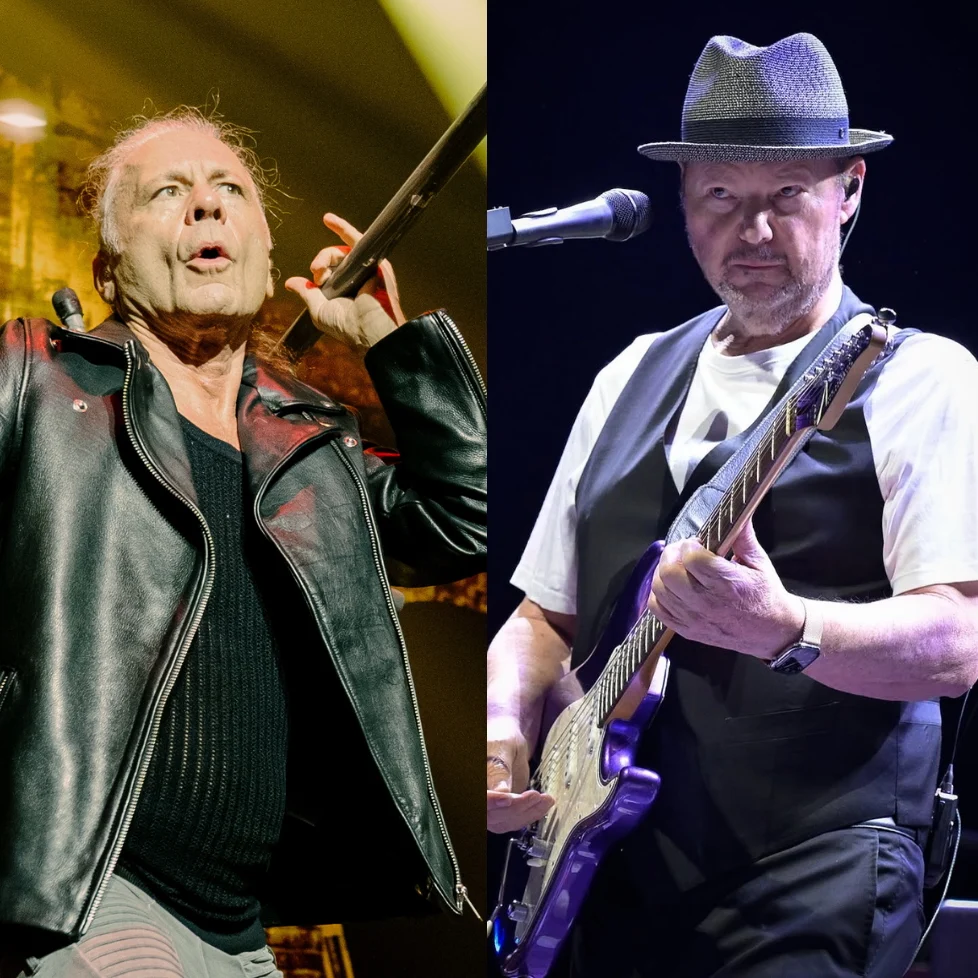
Over a recent weekend, the vibrant cultural hub of Toronto became an unexpected nexus for international political commentary, as two prominent musical acts, the British heavy metal titans Iron Maiden and American singer-songwriter Christopher Cross, utilized their concert stages to address the escalating diplomatic and economic tensions between Canada and the United States. Their remarks, delivered to sold-out audiences, underscored a growing public frustration with the strained bilateral relationship, particularly in the wake of controversial executive orders and collapsing trade negotiations initiated by the then-U.S. administration.
A Weekend of Concerts and Commentary in Toronto
The confluence of these events began on Saturday evening with Iron Maiden’s first of two sold-out nights at the Scotiabank Arena, marking the kickoff of their 50th-anniversary North American tour. Known for their theatrical performances and often socially conscious lyrics, the band’s vocalist, Bruce Dickinson, took a moment from the high-octane spectacle to acknowledge a recent, highly publicized, and widely ridiculed executive order by U.S. President Donald Trump to unilaterally rename Lake Ontario as "Lake America." Dickinson’s comment, delivered with characteristic flair, highlighted the perceived absurdity of the situation. "We got here, we crossed Lake Ontario [applause] and later this year we will be crossing the Gulf of Mexico. But apart from the ridiculous state of the world, how the fuck are you lot tonight? Alright?" His remarks, met with enthusiastic applause and cheers from the Canadian audience, implicitly criticized the U.S. administration’s provocative stance, which had recently manifested not only in the symbolic renaming of a shared Great Lake but also in significant economic actions, including the imposition of a 50 percent tariff on a variety of Canadian goods following the collapse of crucial trade negotiations.
The political discourse continued the following night, Sunday, at the RBC Amphitheatre, where Christopher Cross concluded his North American tour alongside Toto and The Romantics. Cross, known for his smooth rock hits, adopted a more direct and apologetic tone. He opened his set with his 2011 track "Dreamers," which incorporates a snippet of Martin Luther King Jr.’s iconic "I Have A Dream" speech. Before launching into the song, Cross offered a poignant introduction: "It’s a recording from something quite famous in our country, but you may not know what it was, but it was a gentleman named Dr. Martin Luther King, speaking about civil rights. It represents a very dark time in my country, which is happening again." He then transitioned to a heartfelt apology to his Canadian audience regarding the U.S. political climate. "I want to tell you that we love your country and appreciate your country very much," he continued. "I’m just very sorry and embarrassed that we have an asshole for a president. But don’t give up on us. We have an election coming up, and we’re going to do our best to fix it. And then we’ll be buying all your shit again, and you’ll be buying all our shit again. We can be victims of corporate greed together." His candid and impassioned speech resonated deeply with the audience, reflecting a shared sentiment of dismay and hope for a return to more amicable relations.
The Geopolitical Backdrop: Strained Canada-U.S. Relations
The artists’ comments did not emerge in a vacuum but were direct responses to a period of unprecedented strain in the relationship between Canada and the United States. Historically, the two nations have shared one of the most robust and interdependent bilateral relationships in the world, characterized by extensive trade, shared cultural values, and deeply integrated economies. Canada is the largest trading partner for the U.S., with bilateral trade in goods and services exceeding $700 billion annually. Millions of jobs in both countries depend on this cross-border commerce. However, the administration of President Donald Trump introduced a new era of unpredictable and often confrontational diplomacy.
One of the most symbolically jarring actions was the executive order to rename Lake Ontario. While largely considered a performative gesture with no actual legal authority to unilaterally rename an internationally shared body of water – as Lake Ontario is part of the Great Lakes system, governed by bilateral treaties and geographic realities – it nonetheless served as a potent symbol of disrespect and disregard for international norms. The practical implications extended even to digital mapping services; the original article briefly noted that this move "put Google Maps in a weird spot," highlighting the logistical and policy challenges for global technology companies tasked with accurately reflecting geopolitical realities. Such an order challenged established geographic conventions and highlighted the administration’s willingness to engage in provocative actions that had little practical benefit but significant symbolic weight.
The Intensification of Trade Disputes
Beyond symbolic gestures, the most significant driver of tensions was a series of escalating trade disputes. The Trump administration had long expressed dissatisfaction with existing trade agreements, particularly the North American Free Trade Agreement (NAFTA), which it labeled a "disaster." While NAFTA was eventually renegotiated into the United States-Mexico-Canada Agreement (USMCA), the process was fraught with contentious rhetoric and punitive actions.
In the months leading up to the Toronto concerts, trade negotiations between Canada and the U.S. had reached a nadir. The U.S. had imposed tariffs on steel (25%) and aluminum (10%) imports from Canada, citing national security concerns under Section 232 of the Trade Expansion Act of 1962. Canada retaliated with equivalent tariffs on a range of U.S. goods, including steel, aluminum, and various consumer products, impacting industries in both countries. Furthermore, the Trump administration threatened and eventually enacted a 50 percent tariff on additional Canadian goods, a broad measure that covered a wide array of products, from agricultural produce to manufactured items. This move was a direct response to perceived stalemates in trade talks, particularly concerning Canada’s supply management system for dairy, poultry, and eggs, which the U.S. viewed as unfair trade barriers.
The economic impact of these tariffs was substantial. For instance, Canadian steel and aluminum producers faced increased costs and reduced market access to their largest export destination, while U.S. manufacturers relying on Canadian inputs also saw their costs rise. Farmers on both sides of the border felt the squeeze, as retaliatory tariffs disrupted established supply chains and markets. The overall effect was a dampening of economic confidence and a tangible strain on the interconnected economies. Data from the U.S. Department of Commerce indicated that while overall trade remained high, specific sectors experienced significant contractions and job losses due to the tariffs. For example, in 2018-2019, steel and aluminum exports from Canada to the U.S. saw a decline in value following the imposition of tariffs, despite robust demand in other areas.
Artists as Unofficial Ambassadors and Reflectors of Public Sentiment
In times of political discord, public figures, especially artists, often serve as unofficial ambassadors, reflecting and shaping public sentiment. Bruce Dickinson’s dry wit and Christopher Cross’s emotional apology offered different but equally potent forms of commentary. Dickinson’s "ridiculous state of the world" captured a widespread international perception of the Trump administration’s foreign policy as unpredictable and often absurd. His audience’s applause indicated a shared understanding and endorsement of his subtle critique.
Christopher Cross’s reference to Martin Luther King Jr.’s "I Have A Dream" speech was particularly resonant. King’s speech, delivered during the Civil Rights Movement, remains a powerful symbol of hope, equality, and the pursuit of justice in America. By drawing a parallel between that "dark time" and the contemporary political climate, Cross underscored a profound sense of division and regression he perceived within his own country. His apology to Canada – a nation often viewed by Americans as a close friend and reliable ally – highlighted the embarrassment many Americans felt over their president’s rhetoric and policies. His hopeful message about an upcoming election and the desire to "fix it" and resume normal trade relations ("buying all your shit again, and you’ll be buying all our shit again") resonated with the desire for a return to normalcy and cooperation. These sentiments, expressed on a public stage, offered a glimpse into the emotional toll that strained international relations take on ordinary citizens and cultural figures alike.
Official Reactions and Diplomatic Nuance
While artists are free to express their personal opinions, official government responses to such provocations are typically more measured. Canadian officials, while often expressing concern over U.S. tariffs and rhetoric, generally maintained a diplomatic tone, emphasizing the long-term importance of the Canada-U.S. relationship and the need for constructive engagement. For instance, then-Prime Minister Justin Trudeau consistently advocated for free and fair trade and condemned the tariffs as unjustifiable, but always reiterated Canada’s commitment to finding common ground.
The "Lake America" order, for its part, was largely met with a mixture of bewilderment and dismissal by Canadian authorities and the general public, who recognized its symbolic nature over any practical effect. The challenge for entities like Google Maps was navigating the tension between officially reported, albeit controversial, government pronouncements and established geographic reality. This highlighted the broader issue of how digital platforms manage information when political actions diverge from international consensus or scientific fact.
Looking Ahead: Economic and Political Ramifications
The moments shared by Iron Maiden and Christopher Cross in Toronto served as a snapshot of a turbulent period in Canada-U.S. relations. The economic implications of continued trade tensions were significant, threatening the integrated supply chains that had benefited both countries for decades. Industries from automotive to agriculture faced uncertainty, impacting investment decisions and employment. The prospect of an upcoming U.S. election, as alluded to by Christopher Cross, represented a potential turning point. A change in administration could signal a shift back towards multilateralism and a more predictable, cooperative approach to international relations, potentially easing trade disputes and rebuilding diplomatic trust.
Conversely, the continuation of the existing administration’s policies risked further entrenching protectionist measures and exacerbating bilateral tensions. The comments from these artists, therefore, were not just entertainment; they were poignant cultural interventions, reflecting widespread public concern and a yearning for stability, respect, and mutual benefit in one of the world’s most vital international partnerships. Their voices from the stage amplified the sentiment that while political leaders might create divisions, cultural exchange and shared human values often transcend national borders, offering hope for reconciliation and renewed collaboration.
