

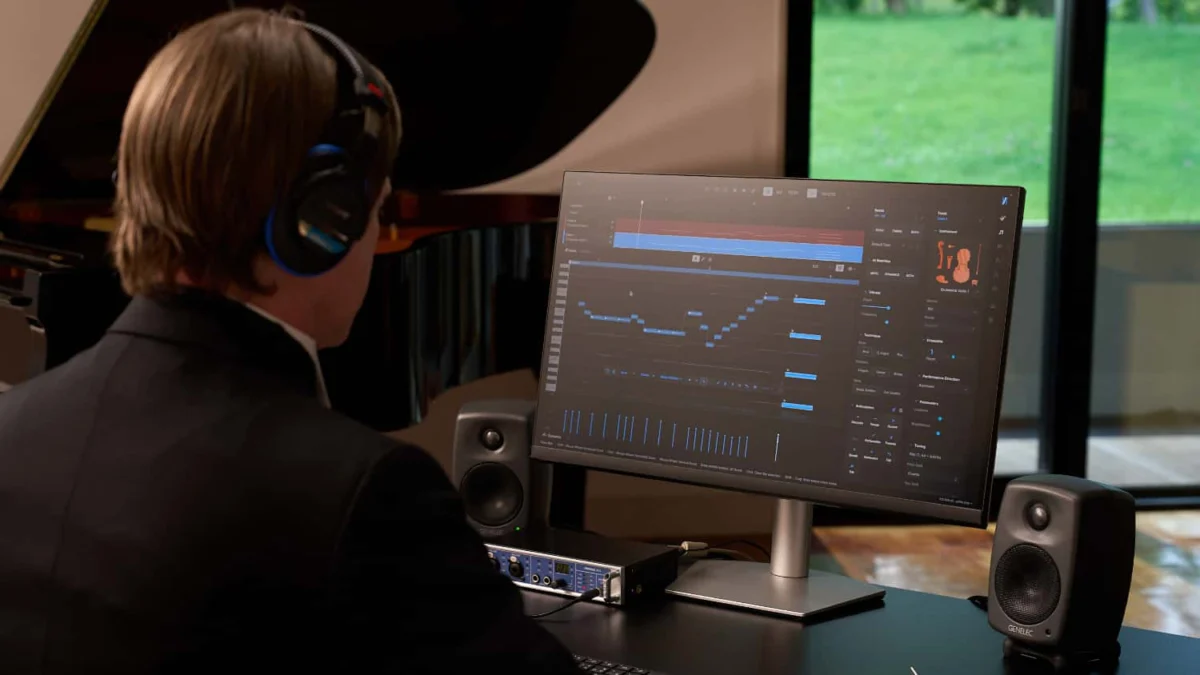
Dreamtonics, the pioneering music technology company behind the acclaimed Synthesizer V vocal synthesis software, has officially announced the launch of Instrument X, a next-generation virtual instrument platform designed to fundamentally alter the landscape of digital music production. By moving away from the industry-standard reliance on massive, multi-gigabyte sample libraries and toward a sophisticated neural acoustics modeling engine, Instrument X represents a significant leap in how acoustic sounds are reproduced within a digital environment. The platform aims to provide composers, orchestrators, and music producers with a more fluid, expressive, and storage-efficient method of creating lifelike instrumental performances directly from a MIDI keyboard or notation software.
For decades, the high-end virtual instrument market has been dominated by sample-playback technology, which requires recording thousands of individual notes at various velocities and articulations. While effective, this method often results in "static" performances where the transition between notes can feel mechanical or repetitive. Instrument X bypasses these limitations by utilizing neural networks to translate musical notation and MIDI data directly into sound-waves in real-time. This approach allows for a level of organic nuance—including the subtle shifts in bow pressure on a violin, the breath support of a flutist, or the mechanical key noise of a piano—that traditional sampling struggles to replicate without immense manual programming.
The Technological Shift: Neural Acoustics vs. Traditional Sampling
The introduction of Instrument X signals a potential paradigm shift in the digital audio workstation (DAW) ecosystem. Traditional "super-libraries" used in film scoring often exceed 100 gigabytes in size, placing a heavy burden on hardware RAM and solid-state drive storage. In contrast, neural modeling allows for a much smaller installation footprint without sacrificing sonic fidelity. By training AI models on vast datasets of acoustic recordings, Dreamtonics has developed a system that understands the physics of sound production.
In a neural acoustics framework, the software does not simply "play back" a recorded file. Instead, it predicts how an instrument would sound based on the specific context of the musical passage. This includes the speed of the legato transition, the intensity of the vibrato, and the harmonic resonance of the instrument’s body. For professional users, this means the end of "machine-gun effects" (the unnatural repetition of the same sample) and the beginning of truly continuous, expressive performance.
Industry analysts suggest that this move by Dreamtonics is a direct response to the growing demand for more "performable" virtual instruments. As CPU processing power continues to increase, the industry is moving away from the "data-heavy" model of the 2010s toward an "intelligence-heavy" model where real-time synthesis handles the complexities of expression.
Launch Library and Versatile Instrument Expansions
At launch, Dreamtonics has introduced a comprehensive lineup of 15 distinct instrument expansions. These expansions are curated into core collections designed to meet the needs of various genres, from classical orchestration to contemporary pop production and cinematic sound design.
The initial offerings cover a broad spectrum of the orchestral and solo palettes:
- The Strings Collection: Featuring solo and ensemble configurations that prioritize the complex physics of bowing and string tension.
- The Woodwinds Collection: Focused on the breath-controlled dynamics and overblowing characteristics of flutes, oboes, and clarinets.
- The Brass Collection: Highlighting the powerful transients and timbral shifts associated with trumpets, horns, and trombones.
- The Keyboard and Specialty Collection: Including nuanced renditions of traditional instruments with a focus on mechanical authenticity.
Each expansion is built on the same neural architecture, ensuring a consistent workflow across the entire ecosystem. Unlike traditional VSTs that may require different interfaces for different brands, Instrument X provides a unified environment where the same control logic applies to a solo cello as it does to a concert flute.
Integration with the Synthesizer V Ecosystem
One of the most compelling aspects of Instrument X is its shared DNA with Synthesizer V, Dreamtonics’ flagship vocal synthesis engine. Synthesizer V revolutionized the industry by providing AI-generated vocals that were virtually indistinguishable from human singers. Instrument X applies these same principles to non-vocal instruments.
A key feature inherited from this ecosystem is the "style-shaping" interface. Each instrument in the library comes equipped with five distinct performance instructions that can be accessed through a single, intuitive interface. These instructions allow users to adjust the "global emotional execution" of a piece. For example, a composer can shift an entire string section from a "Romantic" and vibrato-heavy style to a "Modernist" and "Senza Vibrato" style with a few clicks.
This macro-level control is a departure from the micro-editing usually required in MIDI orchestration. Rather than adjusting hundreds of CC (Continuous Controller) lanes to simulate emotion, Instrument X users can define the "intent" of the performance, leaving the neural engine to handle the technical execution of that intent.
Chronology of Development and Market Context
The development of Instrument X follows a multi-year trajectory of innovation at Dreamtonics. Founded by Kanru Hua, the company first gained international attention for its breakthrough in neural singing synthesis. Following the success of Synthesizer V Pro, the company began exploring how similar neural architectures could be applied to the more rigid but equally complex world of instrumental acoustics.
- 2020-2022: Dreamtonics refines its neural modeling for vocals, establishing a dominant position in the AI music space.
- 2023: Internal development begins on "Project X," seeking to solve the "static sample" problem in orchestral libraries.
- Early 2024: Beta testing begins with a select group of film composers and producers to ensure the software meets the rigors of professional studio environments.
- Late 2024: Official launch of Instrument X and the first 15 expansions.
The timing of this release is critical. The virtual instrument market is currently valued at billions of dollars, with major players like Native Instruments, Spitfire Audio, and Orchestral Tools vying for dominance. However, most of these competitors remain rooted in the sampling tradition. By entering the market with a purely neural-based solution, Dreamtonics is positioning itself as a disruptive force, potentially forcing legacy developers to reconsider their technological foundations.
Official Response and User Accessibility
In statements surrounding the launch, Dreamtonics emphasized their commitment to accessibility and workflow efficiency. The company noted that the goal was not just to create "better sounds," but to remove the technical barriers that often stifle creativity during the compositional process.
"Instrument X is about more than just sound quality; it’s about the connection between the composer and the instrument," a spokesperson for the development team noted. "By translating notation directly into sound-waves, we are removing the ‘middle-man’ of the sample trigger. The result is a more direct, more emotional, and more efficient way to make music."
To encourage adoption, Dreamtonics has implemented a flexible pricing and trial model. The core Instrument X editor is available as a free download with the purchase of any instrument expansion. Recognizing the need for professionals to test tools within their specific workflows, the company is offering a 14-day trial for the editor and 7-day trials for individual instruments. This "try before you buy" approach is designed to demonstrate the software’s low latency and high CPU efficiency—two areas where neural modeling must prove itself against traditional sampling.
Broader Implications for the Music Industry
The implications of Instrument X extend beyond the immediate convenience for producers. From a technical standpoint, the move toward neural acoustics could lead to a "democratization" of high-end sound. As high-quality neural models require less storage space, composers working on mobile setups or laptops with limited drive space will have access to the same caliber of sound as those with massive studio server racks.
Furthermore, the ability of Instrument X to interpret notation directly suggests a future where the line between "mockup" and "final recording" continues to blur. In the past, MIDI mockups were merely sketches used to show directors or clients what a live orchestra might eventually play. With the realism promised by neural modeling, these "mockups" are increasingly becoming the final product used in television, film, and video game scores.
However, the rise of AI-driven instruments also raises questions about the future of session musicians. While Dreamtonics positions Instrument X as a tool for "composers and producers," the increasing realism of these tools may reduce the necessity for live recording in mid-budget productions. Conversely, proponents argue that these tools allow human performers to focus on the most high-stakes, artistic recordings while AI handles the labor-intensive task of high-quality background and utilitarian scoring.
Conclusion and Availability
Instrument X is currently available through the Dreamtonics Store. The platform supports standard plugin formats (VST3, AU, and AAX), ensuring compatibility with major DAWs such as Ableton Live, Logic Pro, Cubase, and FL Studio.
As the music industry continues to grapple with the integration of artificial intelligence, Dreamtonics’ Instrument X stands as a practical, high-performance application of the technology. By focusing on the physics of sound and the nuance of human performance, the platform offers a glimpse into a future where the digital and the acoustic are no longer distinguishable by the ear, but only by the method of their creation. Whether Instrument X will fully replace the multi-terabyte libraries of old remains to be seen, but its launch marks a definitive turning point in the evolution of the virtual instrument.
