

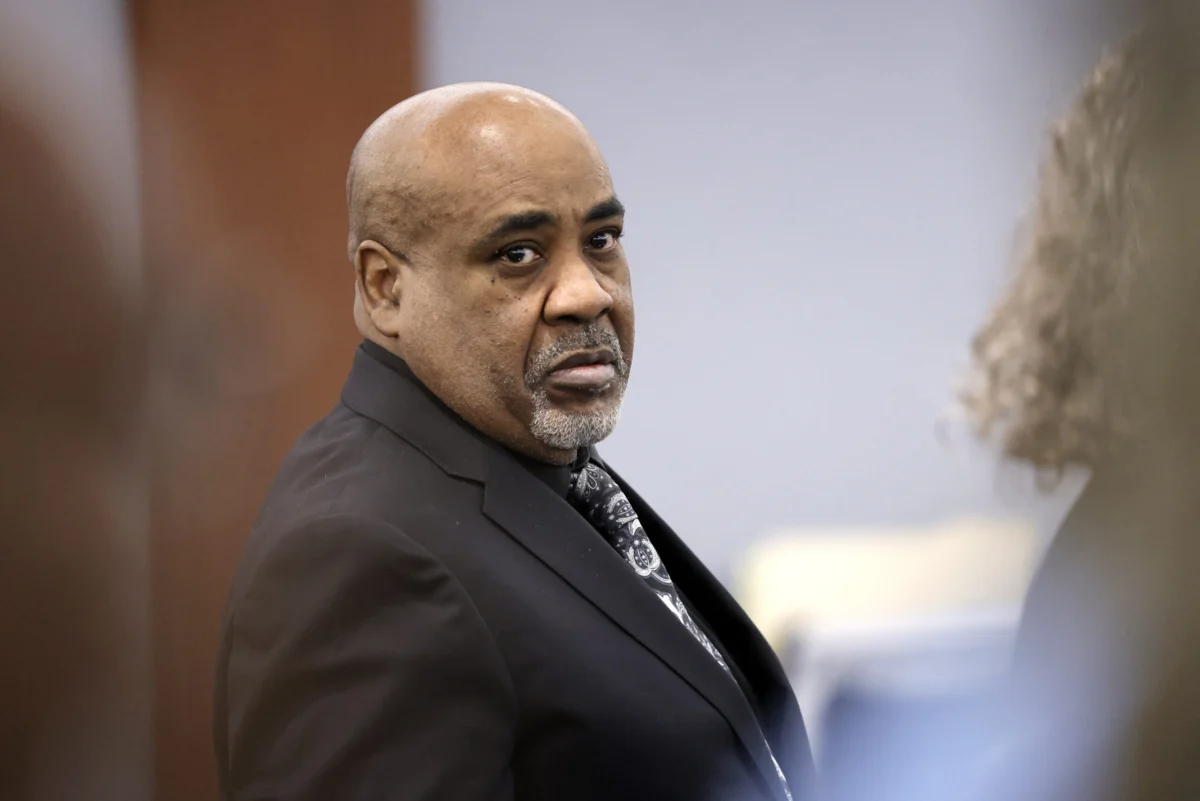
Duane "Keffe D" Davis, a 63-year-old former leader of the South Side Compton Crips, has been convicted of the 1996 murder of iconic rapper Tupac Shakur, bringing a long-dormant cold case to a monumental conclusion. The verdict, delivered today by a Las Vegas jury after approximately three hours of deliberation, found Davis guilty of orchestrating the drive-by shooting that claimed the life of one of music’s most influential figures. Arrested in 2023, Davis was charged with a felony count of murder with a deadly weapon. He now faces a possible maximum sentence of life in prison, with his sentencing scheduled for October 13.
The Verdict and Its Immediate Aftermath
The conviction marks a pivotal moment in one of the most high-profile unsolved crimes in American history, offering a long-awaited measure of justice to Tupac Shakur’s family, fans, and the broader music community. Prosecutors in Las Vegas successfully argued that Davis meticulously planned the attack as an act of retaliation. The motive, they contended, stemmed from an altercation hours earlier at the MGM Grand Hotel, where Shakur and his entourage reportedly assaulted Davis’s nephew, Orlando "Baby Lane" Anderson. The prosecution’s case leaned heavily on Davis’s own 2019 memoir, "Compton Street Legend," in which he explicitly detailed his involvement in the killing, providing an unprecedented, self-incriminating account that ultimately proved damning. The swiftness of the jury’s decision underscores the perceived strength of the evidence presented by the state.
A Legacy Interrupted: The Rise and Fall of Tupac Shakur
Tupac Amaru Shakur, born Lesane Parish Crooks in New York City in 1971, emerged as a poetic and revolutionary voice in hip-hop, captivating millions with his raw lyricism, charismatic presence, and profound social commentary. His career, though tragically short, was meteoric. From his debut album "2Pacalypse Now" in 1991 to his critically acclaimed "All Eyez on Me" released just months before his death, Shakur sold tens of millions of records worldwide. He was not merely a rapper; he was an actor, poet, and activist, embodying the struggles and aspirations of a generation. His music frequently explored themes of racism, poverty, violence, and police brutality, often juxtaposed with celebratory anthems of resilience and ambition.
However, Shakur’s life was also marked by controversy and legal troubles, reflecting the turbulent landscape of the 1990s hip-hop scene. His affiliation with Death Row Records, led by the formidable Suge Knight, placed him at the epicenter of the escalating East Coast-West Coast hip-hop rivalry. This bitter feud, primarily between Death Row Records (West Coast) and Bad Boy Records (East Coast), fueled a narrative of territorialism and artistic animosity that occasionally spilled over into real-world violence. Shakur’s lyrics and public statements often inflamed these tensions, making him a central, often polarizing, figure. He had survived multiple previous shootings, including a highly publicized incident in 1994, leading many to believe he lived a charmed or cursed existence, constantly teetering on the edge of danger.
The Fateful Night: September 7, 1996, in Las Vegas
The events leading to Shakur’s murder unfolded on the night of Saturday, September 7, 1996, in Las Vegas, Nevada. Shakur was in the city to attend a heavyweight boxing match featuring Mike Tyson against Bruce Seldon at the MGM Grand Garden Arena. Tyson, a close friend of Shakur’s, won the fight in a mere 109 seconds. The celebratory atmosphere, however, soon took a dark turn.
Following the fight, as Shakur, Suge Knight, and their entourage were leaving the MGM Grand, they encountered Orlando Anderson, a known member of the South Side Compton Crips gang. Surveillance footage from the hotel captured Shakur and his group engaging in a physical altercation with Anderson. Prosecutors would later argue that this beating, which left Anderson visibly injured, was the direct catalyst for the retaliatory shooting that would occur hours later. Duane Davis, Anderson’s uncle, was reportedly present or made aware of the incident, allegedly vowing revenge.
After the altercation, Shakur and Knight departed the MGM Grand in Knight’s black BMW 750iL, part of a larger convoy of vehicles. Around 11:15 p.m., as they waited at a red light at the intersection of East Flamingo Road and Koval Lane, a white Cadillac pulled up alongside Knight’s BMW. Occupants of the Cadillac opened fire, riddling Knight’s vehicle with bullets. Shakur was shot multiple times, including twice in the chest, once in the arm, and once in the thigh. Knight sustained a minor head injury from bullet fragments. The Cadillac then sped away, disappearing into the Las Vegas night. Shakur was rushed to the University Medical Center of Southern Nevada, where he underwent emergency surgery. Despite the efforts of medical staff, he succumbed to his injuries six days later, on September 13, 1996, at the age of 25. His death sent shockwaves across the globe, leaving a void in the music world and an enduring mystery that captivated millions.
A Quarter-Century of Unanswered Questions: The Cold Case Investigation
For 27 years, the murder of Tupac Shakur remained one of the most notorious cold cases in contemporary American history. Despite extensive initial investigations by the Las Vegas Metropolitan Police Department (LVMPD), no arrests were made, and the case gradually faded into the realm of urban legend and endless speculation. The lack of immediate progress fueled numerous conspiracy theories, ranging from government involvement to theories implicating rival gang members or even Suge Knight himself. Documentaries, books, and countless articles attempted to unravel the mystery, but concrete evidence leading to an arrest remained elusive.
Several factors contributed to the case remaining cold for so long. The chaotic nature of the scene immediately after the shooting, with multiple witnesses and vehicles, made it difficult to secure evidence. The presence of gang members on both sides introduced a "code of silence," a pervasive fear and reluctance within the community to cooperate with law enforcement, which significantly hampered investigative efforts. Witnesses were often unreliable, changed their stories, or disappeared. Over the decades, investigators followed countless leads, interviewed numerous individuals, and revisited the evidence periodically, but without a breakthrough, the case stagnated. The murder of The Notorious B.I.G. six months later, another unsolved hip-hop homicide, further complicated the narrative and solidified the era’s reputation for violence within the music industry.
Keffe D’s Confession: The Turning Point
The turning point in the long-stalled investigation came with the emergence of Duane "Keffe D" Davis’s self-incriminating statements. Davis, a central figure in the South Side Compton Crips, had long been rumored to have knowledge of the shooting. However, it was his decision to publish a memoir, "Compton Street Legend," in 2019, that provided law enforcement with a crucial piece of direct evidence. In the book, Davis openly discussed his presence in the white Cadillac from which the shots were fired and his role in orchestrating the attack. He described how he obtained the firearm and passed it to a backseat passenger, though he refrained from explicitly naming the shooter, adhering to what he described as a "code of the streets."
Davis’s candid admissions in his memoir and subsequent interviews, including a Netflix documentary "Unsolved: The Murders of Tupac and The Notorious B.I.G.," provided investigators with a unique and powerful evidentiary tool. While some initial reactions questioned the veracity of his claims, the details he provided were consistent with known facts of the case and offered a perspective from inside the vehicle that had previously been unavailable. Legal experts noted that such self-incriminating statements, especially when published and widely disseminated, could be highly persuasive in a court of law, overcoming the typical challenges of witness testimony or circumstantial evidence in cold cases. The memoir essentially provided a roadmap for prosecutors, detailing the motive, the planning, and the execution of the murder from an alleged participant’s perspective.
The Road to Arrest and Trial
Following the publication of Davis’s memoir and renewed investigative efforts, a grand jury in Las Vegas began reviewing evidence related to the Shakur murder. This grand jury process, which can take months or even years, involves presenting evidence to a panel of citizens who determine if there is sufficient probable cause to issue an indictment. In September 2023, nearly three decades after Shakur’s death, the grand jury returned an indictment against Duane Davis.
His arrest on September 29, 2023, in Henderson, Nevada, marked a monumental development, finally bringing a suspect into custody for the murder. Prosecutors wasted no time in presenting their case, arguing that Davis was the "shot caller" who orchestrated the murder in retaliation for the beating of his nephew, Orlando Anderson, by Shakur and his associates. They highlighted Davis’s own admissions, emphasizing that while he may not have pulled the trigger himself, his role in planning and facilitating the shooting made him equally culpable under Nevada law. The defense, meanwhile, likely attempted to discredit Davis’s memoir as mere storytelling or exaggeration, arguing that his statements were made for notoriety or financial gain rather than being a truthful account of events, and that there was insufficient direct evidence to link him to the actual act of murder. However, the jury ultimately found the prosecution’s case, anchored by Davis’s own words, compelling enough to secure a conviction.
Reactions and Implications: Closure, Legacy, and Lingering Questions
The conviction of Duane "Keffe D" Davis elicits a complex array of reactions and carries significant implications across various sectors.
A. Law Enforcement and Legal Community:
For the Las Vegas Metropolitan Police Department and the prosecution team, the verdict represents a significant victory and a testament to decades of persistent effort. It sends a powerful message that even the most intractable cold cases can eventually be solved, reinforcing the principle that justice, though delayed, is not necessarily denied. Legal experts note that this case could set a precedent for leveraging self-incriminating public statements, such as those in memoirs or interviews, as critical evidence in prosecuting cold cases, especially when other traditional forms of evidence have diminished over time. While the defense is almost certainly expected to appeal, the conviction itself is a landmark achievement.
B. Family, Fans, and the Music World:
For Tupac Shakur’s mother, Afeni Shakur, who passed away in 2016, and other family members, this verdict brings a bittersweet form of closure. While no conviction can bring back their loved one, it offers a definitive answer to a question that has haunted them for decades. Fans across the globe, who have kept Shakur’s legacy alive through his music and various tributes, will likely feel a sense of vindication and relief. The verdict potentially demystifies a portion of Shakur’s legend, shifting focus from speculative theories to a concrete legal outcome. The music industry, which has grappled with the violence of that era, may view this as a step towards healing and accountability.
C. Broader Societal Impact:
The case underscores the enduring power of hip-hop culture and the profound impact artists like Tupac Shakur have on society. It also serves as a stark reminder of the devastating consequences of gang violence and the ripple effects it can have for decades. While Davis has been convicted of orchestrating the murder, the question of who physically pulled the trigger remains legally distinct and may continue to fuel discussion outside of the courtroom. Orlando Anderson, who was long considered a prime suspect, was himself killed in a separate gang-related shooting in 1998, further complicating the narrative of justice. The conviction of Davis, however, firmly establishes legal accountability for the planning of the assassination.
What’s Next: Sentencing and Beyond
Duane "Keffe D" Davis now awaits his sentencing hearing, scheduled for October 13. Given the severity of the charge – murder with a deadly weapon – he faces a potential maximum sentence of life in prison. While the immediate legal chapter closes with this verdict, the story is far from over. Davis’s legal team is expected to mount an appeal, challenging aspects of the trial, the admissibility of evidence, or the interpretation of Nevada’s legal statutes regarding orchestrating a crime. These appeals could extend the legal battle for years, but for now, the verdict stands as a historic moment, finally attaching a name and a conviction to the tragic end of a legendary life.
