

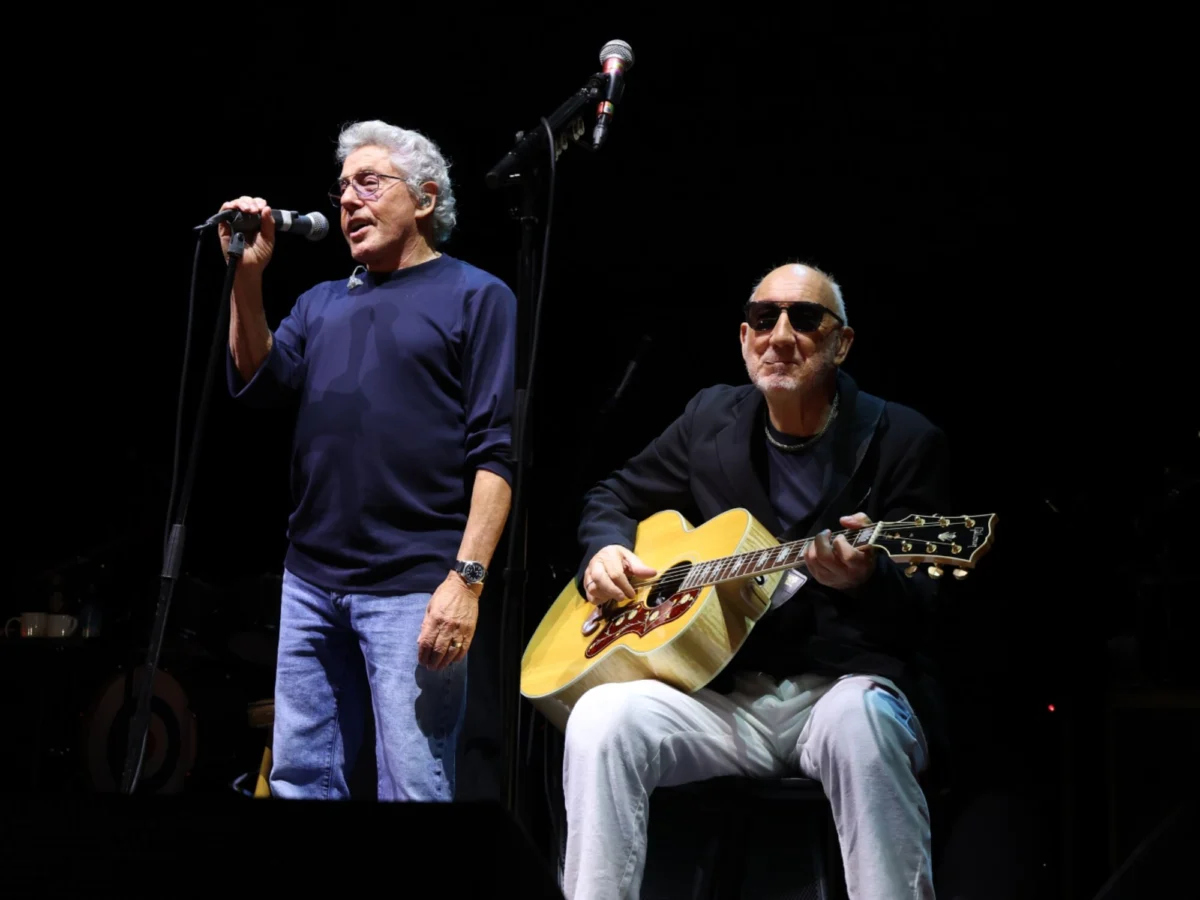
The prospect of a new studio album from The Who, one of rock music’s most enduring and influential acts, has re-emerged from the realm of speculation into a tangible possibility, according to recent statements by guitarist and primary songwriter Pete Townshend. This development comes despite frontman Roger Daltrey’s repeated public reservations regarding the financial viability and commercial appeal of producing new material in the current music landscape. Townshend’s remarks suggest a significant shift in Daltrey’s stance, igniting anticipation among fans globally who had largely resigned themselves to the band’s touring activities as their primary creative output.
A Glimmer of Hope from Townshend’s Studio
The unexpected revelation surfaced through Townshend’s personal Instagram account. On what appeared to be an ordinary post showcasing his new London writing studio, the legendary musician engaged directly with fans in the comments section. Townshend described his new creative sanctuary as a space "built by Rick Astley" and now "mine," expressing enthusiasm for its acoustics and overall environment: "I’m loving it. Great sound. I’m very spoiled." This glimpse into his current creative hub naturally sparked conversation about future musical endeavors.
It was in response to a particularly skeptical comment that Townshend delivered the news that has since sent ripples through the music world. When a user confidently stated, "no way" another Who album would happen, Townshend’s concise and surprising retort was, "You might be wrong. Roger wants to give it a try." This direct attribution of renewed interest to Roger Daltrey himself marks a pivotal moment, challenging previous assumptions about the band’s future in the studio.
Daltrey’s Previous Reservations: The Shadow of WHO
Roger Daltrey’s prior reluctance to embark on another album project has been well-documented. Following the release of WHO in 2019, the band’s twelfth studio album and first in 13 years, Daltrey frequently voiced concerns about the changing economics of the music industry. He cited the substantial cost of producing a high-quality album for a band of The Who’s stature, coupled with what he perceived as an "underwhelming commercial performance" of WHO, as primary deterrents. In a widely reported interview, Daltrey stated emphatically, "there’s no record market anymore," reflecting a broader sentiment among some veteran artists regarding the shift from physical sales to streaming, which often yields significantly lower per-unit revenue.
The 2019 album, WHO, debuted at number three on the UK Albums Chart and number two on the US Billboard 200, representing a respectable chart performance for a band over 50 years into their career. It received generally positive reviews from critics, who praised Townshend’s songwriting and Daltrey’s vocal performance, particularly noting the album’s thematic depth addressing contemporary issues. However, Daltrey’s assessment of its commercial impact likely factored in the significant investment required for its production and promotion against a backdrop of diminishing returns in traditional album sales. For artists of The Who’s caliber, who command premium studio time and production teams, the cost-benefit analysis of album creation in the 21st century is a stark reality. The band’s primary revenue streams have, for decades, predominantly relied on extensive, high-grossing tours, where their legendary live performances continue to draw massive audiences worldwide.
The Creative Partnership: Townshend and Daltrey’s Enduring Dynamic
The dynamic between Pete Townshend and Roger Daltrey has been the creative engine of The Who for over six decades. Townshend, the principal songwriter and conceptual architect, often drives the band’s artistic direction, while Daltrey, the charismatic frontman, brings these narratives to life with his powerful vocals and stage presence. Their relationship, marked by both profound collaboration and occasional public disagreements, is central to the band’s identity. Daltrey’s past hesitations were not necessarily a reflection of a lack of creative desire but rather a pragmatic assessment of the industry’s evolution. Townshend’s ability to potentially sway Daltrey, or Daltrey’s independent change of heart, underscores the complex and deeply personal nature of their ongoing musical partnership.
This potential shift signals a renewed alignment of their individual creative and professional outlooks, a crucial factor for any new project. The Who’s history is replete with examples of Townshend pushing artistic boundaries, sometimes with Daltrey initially hesitant but ultimately embracing the vision. The creation of rock operas like Tommy and Quadrophenia stands as testament to their collaborative power, even when navigating challenging conceptual territories.
Townshend’s Modern Approach: Studio Setup and AI Exploration
Beyond the exciting prospect of a new album, Townshend also offered insights into his current recording philosophy and technological preferences. His new studio setup, described as "relatively no-frills" for a musician of his stature, highlights a modern, streamlined approach to songwriting and production. "I use a MacBook. The sequencer is an MPC Live III. I use it on the road like a portastudio," he detailed in the comments, also specifying his speaker choice as Genelec. This minimalist yet powerful setup suggests an emphasis on directness and efficiency in his creative process, enabling him to capture ideas fluidly, whether in his London studio or on tour.
Intriguingly, Townshend has also openly discussed his interest in leveraging artificial intelligence (AI) to assist with his vast archive of unfinished musical ideas. During an appearance on The Late Show with Stephen Colbert, he revealed he’s "sitting on hundreds of unfinished pieces" and has managed to "wade through about half of them." His curiosity about AI’s potential role is not merely theoretical. "What’s interesting is… I don’t know what to do with it! I’m quite interested in AI [to see what it makes of it]," he stated. He further elaborated, "I’m quite interested in [using it to rework] some of my old songs that didn’t quite work. [If I put stuff] onto Suno or some AI music machine, [I could see] what it can make of it. There might be some hits!"
This forward-thinking approach to songwriting, combining traditional musicianship with cutting-edge technology, could potentially influence the sound and creative process of a new Who album. It also positions Townshend as an artist willing to explore new frontiers, even as he contributes to a band with a rich, decades-long legacy. The integration of AI could unlock new melodic or structural possibilities for his vast backlog of material, offering fresh perspectives on compositions that might otherwise remain unheard.
The Who’s Enduring Legacy and the Context of a New Album
The Who’s impact on rock music is immeasurable. From their mod anthems of the 1960s to the ambitious rock operas of the 1970s, they consistently pushed boundaries, both musically and lyrically. Their catalogue, featuring classics like My Generation, Pinball Wizard, Baba O’Riley, and Won’t Get Fooled Again, forms an integral part of rock’s canon. They are known for their explosive live performances, Townshend’s windmills and guitar smashing, Keith Moon’s chaotic drumming, and John Entwistle’s innovative bass lines, all anchored by Daltrey’s commanding vocals.
A new album in the mid-2020s would arrive more than 60 years into their career, placing them among a select few bands to maintain such longevity with original core members. The significance of such a release extends beyond mere musical output; it represents a continued commitment to artistic creation from a band whose contemporaries have largely retired or disbanded. It would also invite critical scrutiny, inevitably being measured against their monumental past achievements.
Chronology of Recent Activities and Album Releases:
- 1982: It’s Hard – Their ninth studio album, widely believed to be their last at the time.
- 1983-2006: A period primarily focused on solo careers, reunions for tours, and live performances, with no new studio album.
- 2006: Endless Wire – The band’s tenth studio album, marking a 24-year gap since It’s Hard. It featured new material from Townshend and received mixed to positive reviews.
- 2014: The "The Who Hits 50!" tour commenced, celebrating their 50th anniversary.
- 2019: WHO – The eleventh studio album, released 13 years after Endless Wire. It featured contemporary themes and showcased a revitalized sound. Its commercial performance, while charting well, led to Daltrey’s public comments about the viability of future albums.
- 2020s: Continued touring, including the "The Who Hits Back!" tour, which saw them performing with local orchestras. Both Townshend and Daltrey pursued various solo projects and public engagements.
- Late 2023/Early 2024: Pete Townshend reveals his new studio and hints at Roger Daltrey’s renewed interest in a new Who album via Instagram comments.
Implications and Broader Impact
Should a new Who album materialize, its implications would be multi-faceted:
- For The Who’s Legacy: It would solidify their status as not just a heritage act, but one still actively contributing to the musical landscape. It would challenge the notion that legacy artists should only rely on their back catalogue.
- For Fans: A new album would be a monumental gift, offering fresh material from their heroes, something many had stopped hoping for. It would generate significant excitement and discussion within their dedicated fanbase.
- For the Music Industry: It could serve as a case study for how veteran artists navigate the modern industry. If successful, it might encourage other established acts to consider new material, potentially signaling a shift in the perceived viability of album creation for older bands. It would also highlight the ongoing relevance of artists who refuse to rest on their laurels.
- Creative Evolution: Given Townshend’s interest in AI and his continually evolving songwriting, a new album could present unexpected musical directions, proving that innovation isn’t solely the domain of emerging artists. The themes explored by two septuagenarian rock icons would undoubtedly carry significant weight and perspective, potentially offering reflections on age, legacy, mortality, and the changing world.
- Critical Reception: The album would face intense scrutiny. Critics would analyze its relevance, its adherence to The Who’s iconic sound, and its ability to stand alongside their legendary works. The challenge for any new Who album is to innovate while retaining the essence of what made them great.
While Townshend’s comment is not an official announcement, it is the most concrete indication yet that the door to a new Who album, once seemingly closed by Daltrey’s pragmatic assessments, has been reopened. The journey from a casual Instagram comment to a fully realized album is long and fraught with creative and logistical challenges. However, the prospect of new music from The Who, especially with the apparent renewed enthusiasm of both its principal members, is a development that will undoubtedly be watched with bated breath by fans and the music industry alike. It represents a potential new chapter for one of rock’s most enduring sagas, proving that even after six decades, The Who still has the capacity to surprise and inspire.
