

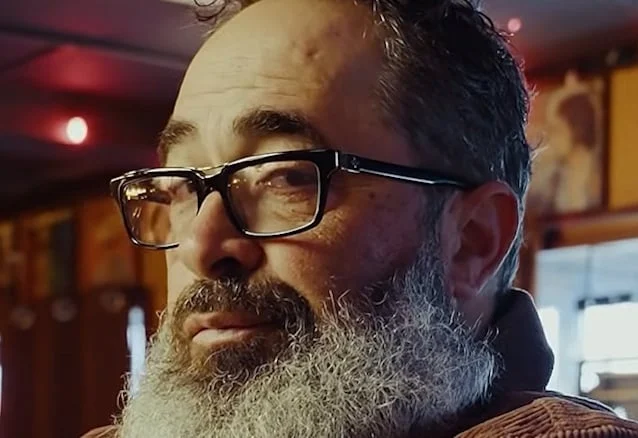
In a candid interview on the podcast "Pickin’ It Out With Andrew Pope," Aaron Lewis, the acclaimed frontman of the band Staind and a highly successful solo country artist, articulated a stark perspective on the perceived decline of societal cohesion and shared values. Lewis, whose career has seen a significant and celebrated pivot to country music, expressed a profound concern that the foundational elements of community, including trust, shared principles, and robust institutions, are steadily diminishing. His observations, delivered with characteristic directness, touch upon a broad spectrum of societal shifts he believes are contributing to this perceived unraveling.
Lewis stated, "I’ve seen firsthand the true downfall of a civilization. Nobody wants to work for anything anymore. Everybody wants everything instantaneously. There is this belief now that swearing to someone for the rest of your life is now situational and it’s no big deal to get a divorce. You swore yourself to that person for the rest of your life – period. And that’s just one little itty-bitty facet. They’ve stripped God and religion out of everything. They have stripped the merit-based system out of everything." This sentiment suggests a belief that a shift away from traditional commitments, religious grounding, and a focus on earned achievement is fundamentally weakening the societal structure.
A Nostalgic Look at American Values
Reflecting on his formative years, Lewis drew a stark contrast between the societal landscape of his youth and the present day. He elaborated on the principles that he believes once underpinned a more unified nation. "You treated people the way you wanted to be treated," he recalled. "You judged people by the content of their character, and never, ever by the color of their skin. That’s something you’re born with. You have no control over that. When I was a kid, this country was about as far away from racism as it had ever been. And now how is it back to such an extent if it’s not purposely and malicious just to divide us? United we stand, divided we fall. And we are one nation under God indivisible. That means we can’t be divided because we are all one nation of the same beliefs. And that is very important and very key to everything."
This perspective aligns with historical narratives that emphasize the Civil Rights Movement’s progress in combating overt racial discrimination and fostering a more inclusive society. Lewis appears to suggest that contemporary societal divisions, particularly those amplified by political and social discourse, represent a regression from the ideals of unity and character-based judgment. His reference to "one nation under God indivisible" evokes foundational American rhetoric, underscoring his belief in the importance of shared national identity and spiritual grounding.
The Role of Faith and Moral Frameworks
Lewis further posited that the nation’s historical success and progress are intrinsically linked to its religious and moral foundations. "This country was founded on the beliefs and the moral compass that the Bible provides – period, the end," he asserted. "It wouldn’t have worked the way that it did. It wouldn’t have created the immense wealth and success and human evolution and the shit that we have come up with in the last 120 years – from a car to everything. Go back a little bit further, fucking electricity. That’s all American ingenuity and know-how set free by a set of morals and standards that were held by everyone. We need to get back to that."
This assertion connects the era of significant American innovation and industrial growth to a specific set of moral and religious underpinnings. Historically, the period Lewis references, particularly the late 19th and early 20th centuries, did indeed witness unprecedented technological advancements and economic expansion. Many scholars and historians have explored the complex interplay of factors contributing to this era, including scientific discovery, capitalist enterprise, and the prevailing social and cultural norms of the time. Lewis’s view emphasizes the latter, suggesting that a shared ethical framework was a crucial catalyst for this period of remarkable development.
The Digital Age and its Discontents
The conversation then shifted to the pervasive influence of modern technology, particularly smartphones and social media, which Lewis identified as significant contributors to societal fragmentation and individual well-being. Responding to host Andrew Pope’s sentiment that he wishes "more people would take all of that seriously," Lewis expressed concern for future generations. "Our kids and our grandkids are certainly gonna wish we had [taken all of that more seriously]," he stated. "And what’s sad to me is they have no idea what this country was like before those – it’s an electronic syringe that you carry around in your hand all day. They have no idea what it was like before that and how much freer and carefree and enjoyable life was before any of this shit."
Lewis described smartphones as an "electronic syringe," a potent metaphor suggesting a form of addictive and potentially harmful dependency. He elaborated on the nature of social media, characterizing it as a platform for curated fantasy lives that disconnect individuals from reality. "It’s made us impatient. Everything is based on instant gratification. It’s allowed us to create a life that doesn’t even exist on a platform that is… Everybody on [social media] is just – it’s their fantasy life. It’s the fantasy person. It’s the person that they wanna put forth as who they are, and all reality and all life and all realism is completely stripped away from everything. And you can get on that thing and you can say the most damaging, destructive things about humanity and get a whole bunch of people to believe you."
This critique resonates with ongoing societal discussions and academic research concerning the psychological effects of social media. Studies have frequently linked excessive social media use to increased rates of anxiety, depression, and social comparison. The concept of "digital escapism" and the creation of idealized online personas are well-documented phenomena, contributing to a sense of disconnect from authentic selfhood and real-world interactions. The amplification of misinformation and the ease with which divisive narratives can spread on these platforms are also significant concerns for public discourse and social cohesion.
Aaron Lewis’s Country Music Trajectory
The interview’s context is further illuminated by Lewis’s recent professional endeavors. On July 17, 2026, he released his sixth solo country album, "Give My Country Back," under the Big Machine Label Group. Produced by Sol Philcox-Littlefield, the album is described as a fusion of traditional honky-tonk elements with contemporary country sounds, presenting a project characterized by personal introspection and assertive expression. The songwriting credits include established collaborators such as Jeffrey Steele and Bobby Pinson, alongside contributions from Casey Bethard and Travis Meadows, shaping an album described as both reflective and spirited.
This release marks a significant chapter in Lewis’s career, which has seen him achieve considerable success in the country music genre. His solo country albums, including "Town Line" and "Sinner," have debuted at number one on the Billboard Country Albums chart. Furthermore, he has achieved platinum certification for his collaboration "Country Boy" with country music legends George Jones and Charlie Daniels, and a gold-certified number one hit with "Am I The Only One" in 2021. His cumulative streaming numbers worldwide have surpassed 5.7 billion, underscoring his widespread appeal.
Lewis is currently engaged in his "2026 American Tour," performing with his band, THE STATELINERS. This tour follows a career path deeply rooted in his upbringing in Springfield, Vermont, where exposure to his grandparents’ country music collection on 8-tracks ignited his passion for the genre. This foundational influence has been pivotal in his transition from the multi-platinum success of Staind to becoming a prominent figure in country music. His ability to blend traditional country aesthetics with his distinctive vocal style has garnered critical acclaim and commercial success.
Recognition and Enduring Influence
The impact of Lewis’s country music career has been formally recognized through various accolades. In 2024, he received Pandora’s Billionaires Plaque, a testament to his exceeding one billion streams on the platform. His collaborations with esteemed artists such as George Jones, Willie Nelson, Charlie Daniels, Alison Krauss, and Vince Gill highlight his integration into the country music establishment, while maintaining his unique artistic identity. His "outlier country" sound, as it has been described, has resonated with a broad audience, bridging the gap between his rock roots and his country sensibilities.
The broader implications of Lewis’s commentary extend beyond his personal reflections and musical career. His articulation of societal concerns taps into a larger cultural conversation about national identity, the erosion of traditional values, and the influence of digital technology on human connection and well-being. As he continues to tour and release music, his platform provides an opportunity to engage with these complex issues, potentially sparking further dialogue among his diverse fan base and the wider public. The convergence of his artistic output and his outspoken views on societal matters positions him as a notable voice in contemporary cultural discourse.
