

July 19, 2026
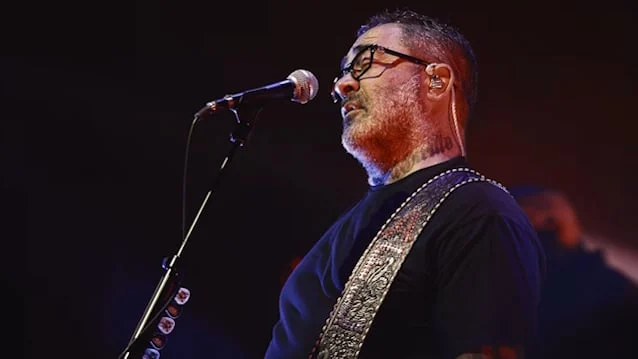
Aaron Lewis, the acclaimed frontman of the multi-platinum rock band STAIND and a successful solo country artist, has voiced strong criticism regarding the prevalent use of backing tracks in contemporary live music performances. In a recent appearance on "The Anchormen" podcast, hosted by Dan Ball and Riley Lewis, the singer asserted that this practice has become so widespread that it fundamentally diminishes the value of a live concert experience for the audience. Lewis stated that on STAIND’s last three to four tours, they were the sole act not relying on pre-recorded instrumental or vocal tracks to augment their live sound.
"I honestly feel like what I’m about to talk about, it’s robbing the person that is going to see a live show," Lewis declared. "What tends to happen more often than not these days is that there’s full tracks running underneath what is getting played on stage. The band themselves could put their instruments down and walk off stage and the listener in the crowd would barely even notice if they weren’t looking at the stage to see everybody walk off. And that’s real. It’s real."
This candid assessment comes at a time when Lewis is actively promoting his latest solo country album, "Give My Country Back," released on July 17, 2026, via Big Machine Label Group. Produced by Sol Philcox-Littlefield, the LP is described as a fusion of traditional honky-tonk sensibilities with modern country production, presenting a deeply personal and boldly defiant collection of songs. Lewis co-penned five tracks on the album with established collaborators such as Jeffrey Steele and Bobby Pinson, with additional lyrical contributions from Casey Bethard and Travis Meadows, among others, shaping the album’s reflective yet assertive character.
A Legacy Built on Authenticity and Chart Success
Lewis’s foray into country music has been met with significant commercial success. Since launching his solo country career, he has achieved two No. 1 debuts on the Billboard Country Album chart with "Town Line" and "Sinner." His collaboration with country music legends George Jones and Charlie Daniels on "Country Boy" earned platinum certification, and his 2021 single "Am I The Only One" secured a gold certification and a No. 1 position on the charts. Collectively, his music has garnered over 5.7 billion streams worldwide, underscoring his broad appeal across genres.
Currently, Lewis is engaging with fans on his "2026 American Tour," performing with his backing band, THE STATELINERS. This tour, like his musical approach, emphasizes a commitment to live, unadulterated performance.
Roots in Country Music and a Defining Artistic Journey
Lewis’s connection to country music runs deep, stemming from his childhood in Springfield, Vermont. He recalls listening to his grandparents’ country 8-track tapes, a formative experience that would later inspire his return to his musical roots. This influence is evident in his highly successful country albums, including "Town Line" and "Sinner," which both debuted at No. 1 on the Billboard Country Album chart. Furthermore, his single "Am I The Only One" achieved a rare No. 1 debut on Billboard’s Hot Country Songs chart, a feat accomplished only nine times since 1958. His collaborations with esteemed artists such as George Jones, Willie Nelson, Charlie Daniels, Alison Krauss, and Vince Gill further solidify his position as an artist who bridges traditional country values with a contemporary edge. In 2024, Lewis was recognized by Pandora with a Billionaires Plaque for exceeding one billion streams on the platform, a testament to his enduring popularity and the widespread reach of his music.
The "Backing Track" Debate: A Historical Perspective
The use of pre-recorded tracks in live performances is not a new phenomenon. However, its prevalence and the degree to which it replaces live instrumentation have become a significant point of contention within the music industry and among concertgoers. While some artists utilize backing tracks to replicate complex studio arrangements, incorporate synthesized elements, or ensure a consistent sound across different venues and technical capabilities, critics argue that it compromises the spontaneity and raw energy inherent in a live show.
Historically, live performances were defined by the musicians’ ability to execute their parts in real-time, with the potential for improvisation and variations that made each show unique. The advent of digital audio workstations and sophisticated playback systems has made it technically easier to incorporate backing tracks, leading to a debate about what constitutes a "live" performance. For artists like Aaron Lewis, who have built their careers on powerful, authentic live shows, the reliance on technology to fill perceived gaps in performance is seen as a dilution of the art form.
Industry Reactions and Fan Sentiment
While the article does not include direct quotes from other artists or industry figures regarding Lewis’s statements, the sentiment he expresses resonates with a segment of musicians and fans who prioritize organic live performances. There is a discernible divide in opinions, with some defending the use of backing tracks as a tool for enhancing the show or making it feasible for certain artists to tour. However, a significant portion of dedicated music enthusiasts often voice their disappointment when they perceive a lack of genuine live effort. Online forums and social media discussions frequently feature debates on this topic, with fans sharing their experiences of attending concerts where they felt the performance was heavily reliant on pre-recorded elements.
Implications for the Live Music Industry
Lewis’s strong stance highlights a critical juncture for the live music industry. As technology continues to evolve, the definition of a "live" performance may also shift. However, the core appeal of live music often lies in its immediacy, the visceral connection between the performers and the audience, and the shared experience of witnessing artistry unfold in real-time.
The widespread adoption of backing tracks, as Lewis suggests, could lead to a homogenization of live experiences, where the unique character of each band and performance is overshadowed by a standardized sonic template. This could potentially alienate audiences who seek genuine engagement and artistry, and it raises questions about the future value proposition of live concerts. For artists committed to a purist approach, like Lewis, their commitment to unadulterated live performances may become an even more significant differentiator in a crowded marketplace. The economic implications are also noteworthy; if audiences perceive less value in live shows due to the perceived lack of genuine performance, it could impact ticket sales and the overall profitability of the live music sector.
The ongoing discussion initiated by artists like Aaron Lewis is crucial for maintaining the integrity of live music and ensuring that the connection between performers and their audiences remains authentic and deeply resonant. As Lewis continues his "2026 American Tour," his commitment to delivering a genuine, unvarnished live experience stands in stark contrast to the practices he criticizes, offering audiences a choice in the type of musical engagement they seek.
