

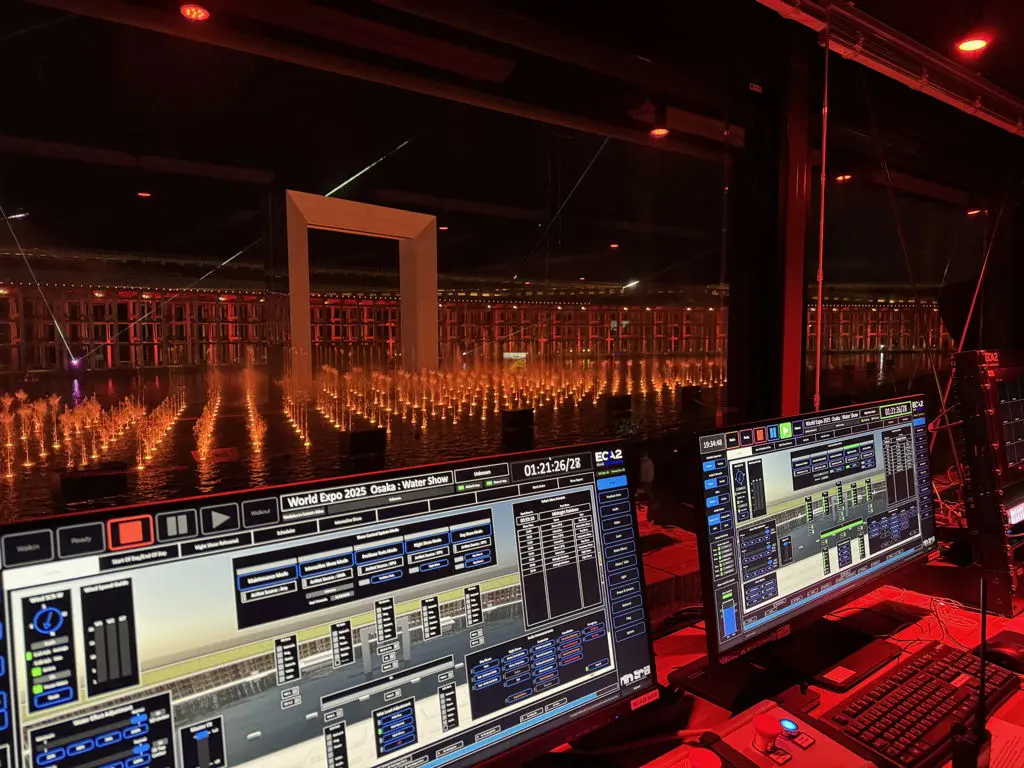
The World Expo 2025, held on the artificial island of Yumeshima in Osaka, Japan, served as a global stage for innovation, sustainability, and the "Designing Future Society for Our Lives" theme. Among the myriad of high-tech pavilions and futuristic exhibits, one of the most significant cultural and emotional highlights was the nightly multimedia spectacular, "Under the Midnight Rainbow." Staged at the expansive Water Plaza, this show acted as the emotional finale for the thousands of daily visitors, blending the elements of water, fire, light, and sound into a seamless, choreographed narrative. To manage the immense complexity of synchronizing hundreds of moving parts across an 8,800-square-meter aquatic stage, the production firm ECA2 turned to the specialized expertise of db Show Control & Automation and the robust industrial automation framework provided by Beckhoff.
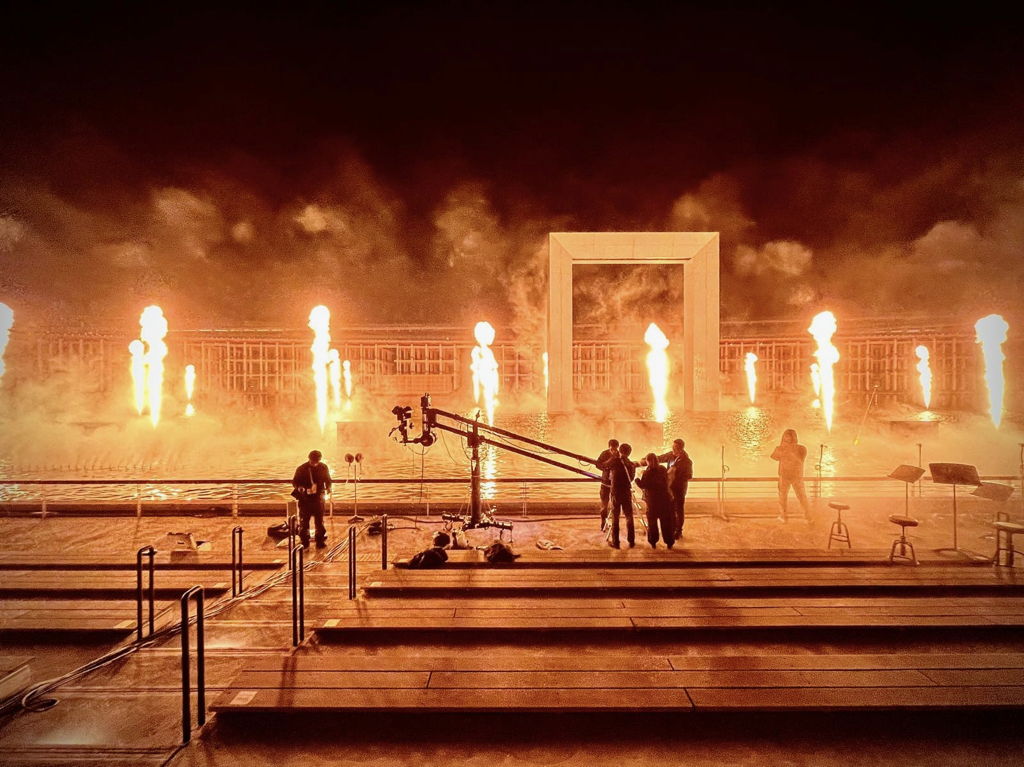
The scale of "Under the Midnight Rainbow" was unprecedented for a temporary installation. The production featured a staggering array of hardware: 280 stationary water jets, eight 3D water jets equipped with dynamic kinematics for multidimensional movement, two massive water screens, and a specialized cascade screen. These water elements were punctuated by 30 flame effect stations and supported by high-output fog pumps, intricate video mapping, laser projections, and a state-of-the-art spatial audio system. Managing these disparate systems required more than just a traditional lighting console; it demanded an industrial-grade automation topology capable of millisecond-precise synchronization and fail-safe reliability over the course of the six-month event.
The Technological Core: Industrial Automation Meets Entertainment
At the heart of the show’s control architecture sat the Beckhoff CX5240 Embedded PC. Acting as the central "brain" or Show Controller, this unit was situated in the main control room, overseeing the entire 8,800-square-meter performance area. The choice of an industrial PC over proprietary entertainment controllers was a strategic decision based on the need for "Open Automation." By utilizing a platform that supports standard IT protocols alongside specialized entertainment languages, the engineering team could bridge the gap between heavy machinery—such as high-pressure pumps and flame throwers—and delicate AV systems like media servers and audio processors.
The distribution of control was handled via eleven specialized control racks positioned strategically around the Water Plaza. These racks were interconnected through a high-speed EtherCAT network, supplemented by standard UDP/TCP Ethernet for non-critical data. This hybrid approach allowed for a "deterministic" control environment. In automation terms, determinism ensures that a command sent from the controller reaches the actuator (such as a water valve or a flame igniter) at a guaranteed time interval, with virtually zero jitter. This is essential for a show where a water jet must hit its peak height at the exact moment a musical crescendo occurs or a video frame is projected onto a mist screen.
Craig Pow Chong, Director of Engineering at db Show Control & Automation, highlighted the necessity of this precision. According to Pow Chong, the ability to control nearly 300 frequency converters via EtherCAT provided the cycle times and synchronicity required for such an exacting choreography. Simultaneously, the system’s ability to interact natively with AV systems via TCP/IP meant that the "Under the Midnight Rainbow" production could integrate complex video and audio triggers without the need for cumbersome conversion hardware.
Environmental Adaptability and Safety Integration
One of the most significant challenges of the Osaka installation was its outdoor location. Situated on the waterfront, the show was subject to the unpredictable coastal weather of Osaka Bay. Strong winds, fluctuating temperatures, and varying water depths posed not only a threat to the aesthetic quality of the show but also to the safety of the 2,500 spectators gathered in the stands. A water jet caught by a sudden gust of wind could easily drench the audience or, more dangerously, interfere with the 30 active flame stations, creating a fire hazard.
To mitigate these risks, db Show Control & Automation leveraged the TwinCAT software suite from Beckhoff to create a real-time environmental monitoring system. Sensors were deployed across the site to continuously track wind speed, wind direction, ambient temperature, humidity, and water levels. This data was fed directly into the automation logic. If the sensors detected a wind gust exceeding a pre-defined safety threshold in the direction of the grandstands, the TwinCAT system would automatically adjust the frequency converters of the affected water jets within a fraction of a second, lowering their height or shutting them down entirely. Similarly, flame effects could be deactivated instantly if wind conditions made their operation unsafe.

This level of integrated safety was made possible through TwinSAFE, Beckhoff’s functional safety solution. By using TwinSAFE EL1918 terminals, the safety logic was embedded directly into the main control network. Because the safety communication occurred via Fail Safe over EtherCAT (FSoE), the need for extensive parallel wiring—a common headache in traditional show setups—was eliminated. This not only reduced the complexity of the installation but also increased the overall reliability of the system, as every safety-critical component was constantly monitored for faults.
A Paradigm Shift in Show Playback and Diagnostics
For the playback of the show’s timecoded sequences, db Show Control & Automation moved away from traditional, bulky server racks. Instead, they developed a proprietary recording and playback platform based on TwinCAT, running on two ultra-compact C6017 Industrial PCs. These devices, which are roughly the size of a human palm, operated in a master-backup configuration. Despite their small stature, they were capable of handling the playback of 32 DMX universes autonomously.
The transition to ultra-compact industrial hardware represents what Pow Chong describes as a "paradigm shift" in the entertainment industry. The ability to record a complex, multi-layered show and play it back with industrial-grade reliability from a device that fits in a pocket allows for much greater flexibility in site design. It reduces the footprint required for technical rooms and lowers the cooling and power requirements of the control infrastructure.
Furthermore, the system provided deep diagnostic capabilities that are rarely seen in temporary event installations. Every piece of data, from the power consumption of a pump to the temperature of a laser projector, was logged via the TwinCAT Database Server. This allowed the technical team to perform real-time monitoring and conduct deep-dive diagnostics if an anomaly was detected. This proactive approach to maintenance ensured that "Under the Midnight Rainbow" maintained a perfect operational record.
Performance Metrics and Global Impact
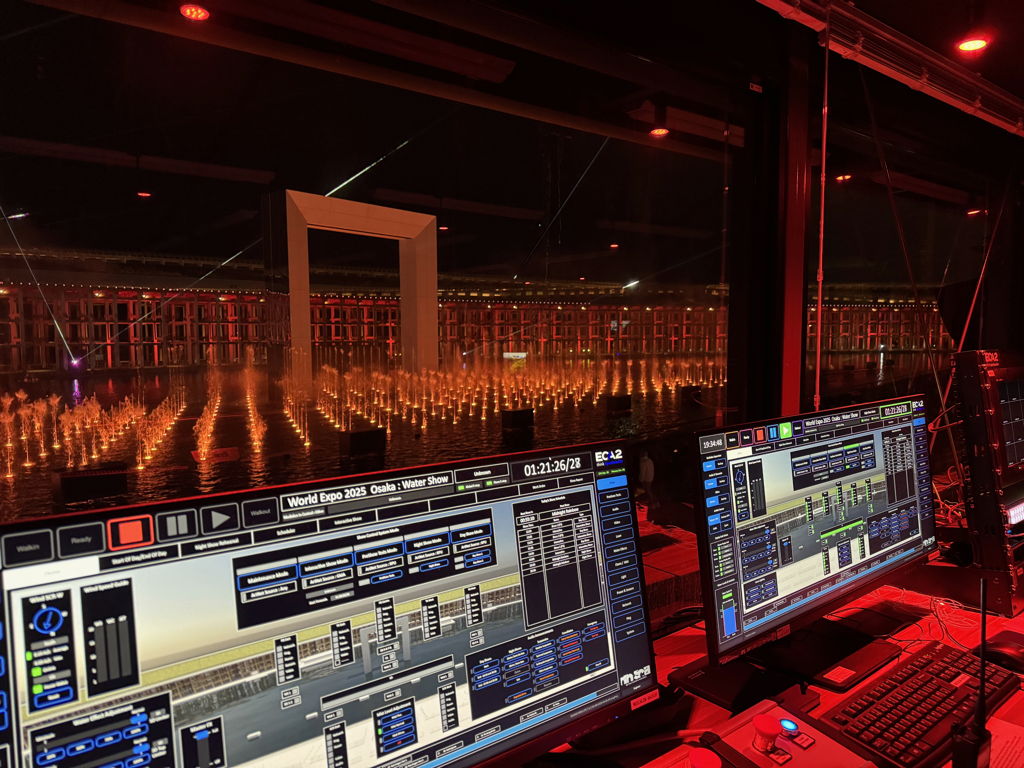
The success of the "Under the Midnight Rainbow" show can be measured by its impressive operational statistics. Over the six-month duration of World Expo 2025, the show was performed hundreds of times, reaching an estimated total audience of two million people. Despite the harsh coastal environment and the technical complexity of the 300-jet, 30-flame setup, the production reported zero technical failures. This 100% uptime is a testament to the durability of industrial automation components when applied to the world of live entertainment.
David Birchall, CEO of db Show Control & Automation, noted that Beckhoff stands out in the market as the only manufacturer successfully merging industrial-grade hardware with native support for entertainment protocols like DMX, sACN, and specialized integrations like Q-SYS from QSC. This convergence is becoming increasingly vital as multimedia shows evolve from simple light displays into complex, multi-sensory "living" environments that require the same level of uptime and safety as an automated factory floor.
The implications of this project extend far beyond the shores of Yumeshima. The methodologies developed for the Osaka Expo are already being applied to new projects. According to the project partners, a follow-up installation of a similar scale is currently under development, signaling a growing trend toward using standardized industrial automation in high-end themed entertainment.
Conclusion: The Future of Themed Entertainment
"Under the Midnight Rainbow" at World Expo 2025 serves as a landmark case study for the "IT-based" future of show control. By moving away from proprietary, "black box" controllers and embracing open, PC-based automation, production companies like ECA2 are gaining unprecedented creative freedom. They are no longer limited by the channel counts or processing power of a specific lighting desk; instead, they can scale their control systems to match the limits of their imagination.
As the lines between the physical and digital worlds continue to blur in public spaces, the role of companies like Beckhoff and db Show Control & Automation will only become more central. The ability to synchronize thousands of physical movements with digital media, all while ensuring the safety of thousands of spectators through real-time sensor data, is the new standard for global spectacles. For the millions who watched the "Midnight Rainbow" dance across the Osaka sky, the technology remained invisible, serving its ultimate purpose: to allow the artistry and emotion of the performance to take center stage without a single technical stumble.
