

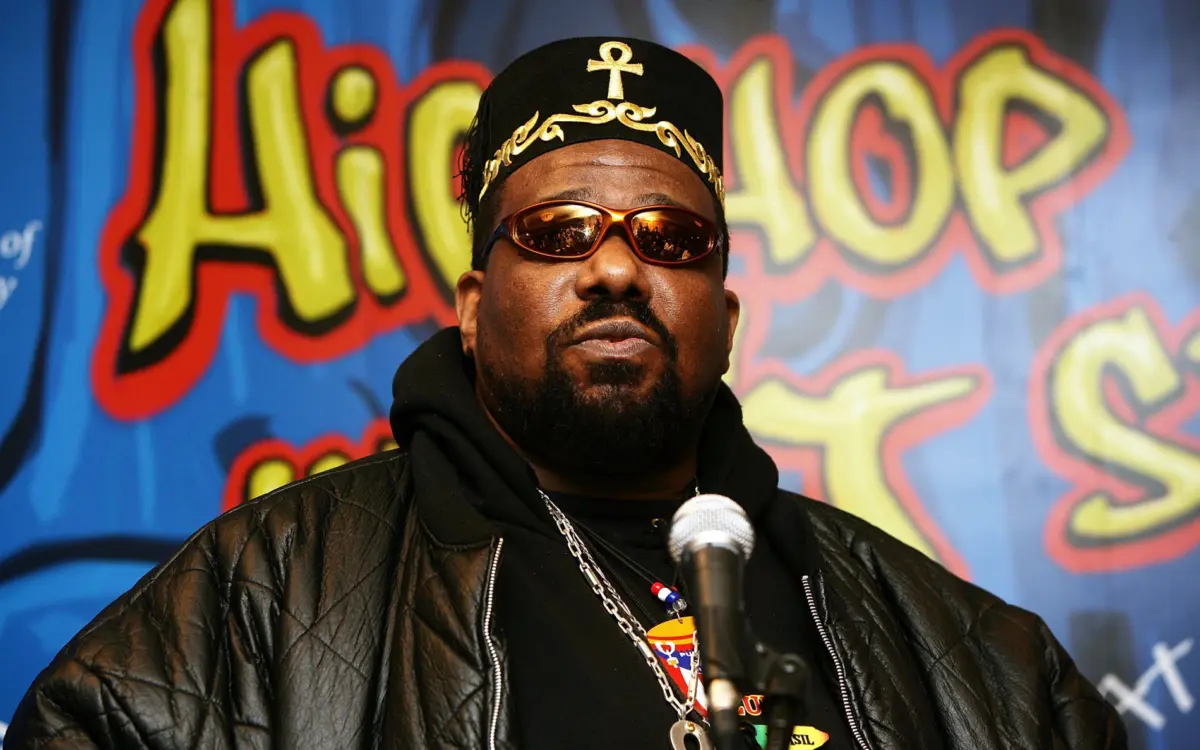
Afrika Bambaataa, a pivotal figure in the genesis of hip-hop culture and the visionary founder of the Universal Zulu Nation, has died at the age of 68. His passing on Thursday, April 9, in Pennsylvania was attributed to prostate cancer, as confirmed by his lawyer to the Associated Press. Bambaataa, born Lance Taylor in the South Bronx, New York, was a revolutionary DJ, rapper, and producer whose influence permeated the foundational elements of hip-hop, shaping it into a global phenomenon.
A Cornerstone of Hip-Hop’s Birth
Born in the heart of the South Bronx, a borough often cited as the crucible of hip-hop, Lance Taylor’s early life was deeply intertwined with the social and cultural landscape of the 1960s and 70s. Emerging from the Black Spades street gang, Bambaataa channeled his experiences and energy into a more constructive and creative path. He recognized the potential for music and art to serve as vehicles for social change and community empowerment. This vision led him to establish the Universal Zulu Nation in the 1970s, an organization that became instrumental in formalizing and promoting the four core pillars of hip-hop culture: DJing, graffiti art, breakdancing, and MCing.
The Zulu Nation, under Bambaataa’s leadership, offered a powerful alternative to the gang violence that plagued urban communities. It provided a space for young people to express themselves creatively, foster unity, and develop a sense of pride and belonging. Bambaataa’s philosophy of "Peace, Unity, Love, and Having Fun" became a guiding principle for the burgeoning movement, emphasizing its potential for positive social impact.
The Sonic Architect of "Planet Rock"
As a DJ, Bambaataa was a sonic innovator, known for his eclectic and groundbreaking approach to music selection and mixing. He was among the first to incorporate a wide array of musical genres into his sets, seamlessly blending funk, soul, disco, and electronic music. This adventurous spirit culminated in his most iconic recording, the 1982 electro-funk anthem "Planet Rock."
Featuring the Soulsonic Force, "Planet Rock" was a landmark achievement that not only achieved commercial success, peaking in the top 50 of the Billboard Hot 100, but also profoundly influenced the direction of popular music. Its futuristic sound, heavily sampling Kraftwerk’s "Trans-Europe Express," became a blueprint for electro-rap and dance-pop, demonstrating the genre’s capacity for innovation and global appeal. The track’s infectious rhythm and pioneering electronic textures resonated with audiences worldwide, solidifying Bambaataa’s reputation as a visionary artist.
Bambaataa’s contributions, alongside those of fellow pioneers DJ Kool Herc and Grandmaster Flash, are widely acknowledged as laying the essential groundwork for hip-hop’s evolution into arguably the most dominant and culturally influential artistic movement of the past half-century. Their collective efforts transformed the Bronx into a global cultural export, a testament to the power of innovation born from grassroots expression.
Acknowledging the Complexities: Allegations and Legal Battles
Despite his monumental contributions to music and culture, Afrika Bambaataa’s legacy is undeniably complex and has been the subject of significant controversy in recent years. Beginning in 2016, disturbing allegations of sexual abuse emerged, casting a shadow over his celebrated status.
The initial public accusation came from Ronald Savage, who claimed Bambaataa had sexually abused him in the 1980s when Savage was a teenager. Bambaataa consistently denied these allegations. However, the initial accusations spurred further claims from several other individuals who also alleged that Bambaataa had sexually abused them during their adolescence.
A significant legal development occurred in 2021 when an anonymous man filed a lawsuit accusing Bambaataa of sexual abuse and trafficking. The lawsuit alleged that the abuse began in 1991 when the accuser was 12 years old and Bambaataa was in his 30s, and that the abuse continued for four years. Bambaataa did not formally respond to this lawsuit. As a result, he was subject to a default judgment in 2025 after failing to appear in court, with the alleged victim being awarded a judgment.
These allegations, and the subsequent legal proceedings, prompted difficult conversations within the hip-hop community and among Bambaataa’s admirers. While some sought to separate the artist’s creative contributions from his alleged personal transgressions, others emphasized the importance of accountability and the need to acknowledge the pain of survivors.
In 2024, Ronald Savage, the initial accuser, made statements to AllHipHop that appeared to walk back his earlier claims. He stated, "Bambaataa is not a pedophile and, in my eyes, he was doing something that was consensual with someone that he thought was of age." These statements added another layer of complexity to the narrative, though they did not erase the subsequent accusations and the legal outcome of the 2021 lawsuit.
Statements and Reactions
The news of Afrika Bambaataa’s passing elicited a range of responses, reflecting the dual nature of his public perception.
Kurtis Blow, a fellow hip-hop pioneer and the executive director of the Hip Hop Alliance, issued a statement acknowledging Bambaataa’s significant role in shaping the genre. "Today, we acknowledge the transition of a foundational architect of Hip Hop culture, Afrika Bambaataa," Blow stated. "He helped shape the early identity of Hip Hop as a global movement rooted in peace, unity, love, and having fun. His vision transformed the Bronx into the birthplace of a culture that now reaches every corner of the world."
However, Blow also directly addressed the complexities surrounding Bambaataa’s legacy. "At the same time, we recognize that his legacy is complex and has been the subject of serious conversations within our community," he added, underscoring the ongoing dialogue about his impact in light of the allegations.
Other figures within the music industry and hip-hop community have expressed tributes that often acknowledge his pioneering spirit while also navigating the sensitive nature of the accusations. Many have chosen to focus on his profound artistic achievements and his role in establishing a positive cultural force.
Broader Impact and Implications
The passing of Afrika Bambaataa marks the end of an era, not only for hip-hop but for global youth culture. His influence extended far beyond music, impacting fashion, dance, and social activism. The Universal Zulu Nation, though its prominence has shifted over time, remains a symbol of hip-hop’s potential for community building and positive social engagement.
The enduring debate surrounding Bambaataa’s legacy highlights a critical challenge facing many cultural icons: how to reconcile groundbreaking artistic contributions with personal accountability for alleged misconduct. His story underscores the need for nuanced discussions that acknowledge both the immense impact of his creative work and the gravity of the accusations made against him.
For many, Bambaataa will be remembered as the "Father of Hip Hop," the visionary who foresaw the global potential of a culture born from urban struggle. His music, particularly "Planet Rock," continues to inspire new generations of artists and producers. Simultaneously, his life and the allegations that arose present a somber reminder of the ongoing societal imperative to address issues of abuse and to prioritize the voices and experiences of survivors. The intricate tapestry of his life and career will undoubtedly continue to be a subject of discussion and re-evaluation as hip-hop culture itself evolves and matures. His death, therefore, is not just the passing of an artist, but the closing of a significant, albeit complicated, chapter in the history of modern culture.
