

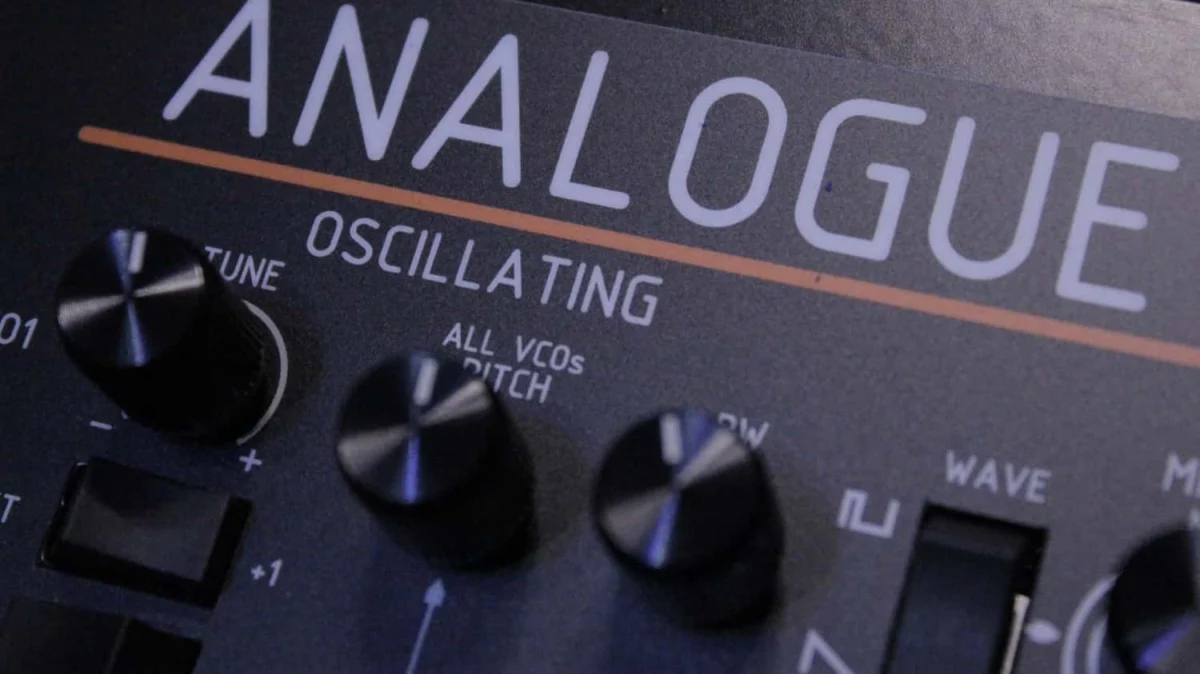
Analogue Solutions, the British boutique synthesizer manufacturer renowned for its commitment to pure analog signal paths, has officially announced the release of Filtopia, a specialized stereo monophonic synthesizer designed to push the boundaries of subtractive synthesis and spectral processing. Representing a significant departure from conventional synthesizer architectures, Filtopia centers its sound design philosophy on a sophisticated bank of five analog filters wired in parallel. This configuration allows for the creation of complex, multi-band frequency sweeps and the replication of human-like vocal characteristics through formant synthesis. Priced at £1,799.00 and currently available for pre-order, the instrument targets professional sound designers, electronic musicians, and experimental composers seeking a distinctive sonic palette that deviates from the standard low-pass filter paradigms found in traditional hardware.
The Architecture of Multi-Band Analog Filtering
At the heart of Filtopia lies its unique selling proposition: a multi-channel filter bank. While most monophonic synthesizers utilize a single filter (or perhaps two in series or parallel) to shape the harmonic content of an oscillator, Filtopia employs five discrete analog filters. By wiring these in parallel rather than the traditional serial configuration, the instrument allows each filter to act independently on the raw audio signal. This architecture is reminiscent of the "fixed filter banks" found in massive modular systems of the 1960s and 70s, such as those produced by Moog or Buchla, but with the added flexibility of modern control and a dedicated synthesis engine.
The primary advantage of a five-filter array is the ability to create multiple resonant peaks across the frequency spectrum. When these filters are set to high resonance levels and their cutoff frequencies are slightly offset from one another, they begin to mimic the resonant properties of the human vocal tract. This phenomenon, known as formant synthesis, enables Filtopia to produce "vowel" sounds—shifting from "A" to "E" or "O" textures—through the manipulation of these specific frequency clusters. Because the filters are analog, the transitions between these states are smooth and organic, avoiding the stepping or aliasing often associated with digital modeling.
Stereo Signal Path and Sonic Width
Despite being a monophonic synthesizer—meaning it plays one pitch at a time—Filtopia is built with a comprehensive stereo signal path. This is a rare feature in the world of analog monosynths, which are typically mono-in and mono-out. In Filtopia, the stereo implementation allows for spatial movement within the filter bank itself. Users can distribute the five filters across the stereo field, creating a wide, immersive soundstage where different frequency components of a single note emerge from different spatial locations.
This stereo capability is particularly relevant in modern music production, where "width" is a highly sought-after attribute. By processing a single oscillator through five spatially-distributed filters, the resulting sound possesses a depth and complexity that usually requires extensive external processing or double-tracking. For film composers and ambient artists, this provides an immediate "cinematic" quality directly from the hardware output.
Core Synthesis Components and Modulation
While the filter bank is the centerpiece, Filtopia is a fully-featured synthesizer equipped with the standard building blocks of analog sound generation. It includes high-stability Voltage Controlled Oscillators (VCOs) that provide the raw waveforms—typically sawtooth, square, and pulse—necessary to feed the filter bank. The inclusion of dedicated Low-Frequency Oscillators (LFOs) and Envelope Generators (EGs) ensures that the spectral movement within the filters can be automated and shaped over time.
The modulation matrix in Filtopia is designed to allow the EGs and LFOs to affect the cutoff frequencies of the five filters simultaneously or independently. This allows for "rhythmic filtering," where the different bands of the sound pulse at different rates, creating a living, breathing texture. The instrument also features the signature Analogue Solutions aesthetic: a rugged metal chassis, high-quality potentiometers, and a layout that prioritizes hands-on interaction over menu-diving.
Historical Context and Manufacturer Philosophy
Analogue Solutions, founded by Tom Carpenter, has maintained a steadfast "no-compromise" approach to analog technology for over 25 years. In an era where many manufacturers have moved toward "VA" (Virtual Analog) or hybrid digital-analog systems to save costs and add features like presets, Carpenter has remained dedicated to discrete, 100% analog circuitry. Filtopia follows in the footsteps of acclaimed instruments like the Polymath, the Leipzig, and the massive Colossus semi-modular system.
The development of Filtopia reflects a broader trend in the boutique synthesizer market toward specialized "character" pieces. Rather than attempting to be a "workstation" that does everything, Filtopia is designed to do one thing exceptionally well: spectral sculpting. This philosophy resonates with a growing segment of the market that values unique hardware for its specific "sonic fingerprint" rather than its utility.
Technical Specifications and Connectivity
While the full technical manual is typically reserved for customers, the preliminary data provided by Analogue Solutions outlines a robust set of specifications:
- Signal Path: 100% Analog circuitry.
- Filter Type: 5x Parallel Analog Filters with independent frequency and resonance controls.
- Oscillators: High-quality VCOs with multiple waveform options.
- Modulation: Integrated LFOs and ADSR Envelope Generators.
- Output: Dual 1/4” jacks for true stereo operation.
- Control: MIDI In/Thru for integration with modern DAWs and sequencers, alongside CV/Gate inputs for integration with Eurorack and vintage gear.
- Build: Heavy-duty steel and aluminum construction, hand-assembled in the United Kingdom.
The inclusion of CV (Control Voltage) inputs is a critical detail for the modular synthesizer community. It allows Filtopia to act as an expansion module for existing setups, where external sequencers can modulate the five filters to create patterns that would be impossible to perform by hand.
Market Positioning and Pricing Analysis
The pre-order price of £1,799.00 positions Filtopia in the premium, professional tier of the synthesizer market. This price point reflects the high cost of manufacturing discrete analog circuits in the United Kingdom and the niche nature of a five-filter parallel architecture. In comparison to mass-produced synthesizers from larger corporations, Filtopia is a "boutique" investment.
Industry analysts suggest that the price is justified by the instrument’s longevity and unique sound. Unlike digital instruments that may face software obsolescence, a well-built analog synthesizer like Filtopia can remain functional and relevant for decades. Furthermore, the specific combination of five parallel filters in a standalone stereo unit is virtually non-existent elsewhere in the current market, giving Analogue Solutions a temporary monopoly on this specific workflow.
Professional Reactions and Implications for Sound Design
Initial reactions from the synthesizer community and early testers have highlighted the "organic" and "vocal" quality of the instrument. Sound designers for the gaming and film industries have noted that the ability to create "formant-shifting" textures without resorting to digital plugins offers a level of warmth and presence that is difficult to replicate in the box.
The implications for electronic music production are also notable. As the market becomes saturated with "standard" synth sounds, producers are increasingly looking for "signature" sounds that stand out in a mix. Filtopia’s multi-band sweeps provide a movement and harmonic richness that can serve as the centerpiece of a track, particularly in genres like techno, IDM (Intelligent Dance Music), and experimental electronica.
Chronology of Development and Availability
The announcement of Filtopia follows a period of intense research and development at Analogue Solutions. The company has teased the concept of a specialized filter-centric synth for several months, building on the feedback received from users of their previous filter-heavy units.
- Q1 2024: Initial concept and prototyping of the 5-filter parallel circuit.
- Q2 2024: Finalization of the stereo signal path and enclosure design.
- Current Phase: Official announcement and opening of pre-orders.
- Future: Shipping is expected to commence following the initial production run, with units being built in small batches to ensure quality control.
Interested parties can secure a unit through the official Analogue Solutions website. Given the manufacturer’s history of limited production runs, it is anticipated that the initial batch may sell out quickly to collectors and high-end studios.
Conclusion: A New Frontier in Spectral Synthesis
Analogue Solutions’ Filtopia represents more than just another monosynth in an overcrowded market; it is a specialized tool that invites musicians to rethink how they approach frequency shaping. By elevating the filter bank from a secondary component to the primary focus of the instrument, Tom Carpenter has created a device that bridges the gap between traditional synthesis and advanced acoustic modeling.
As the music industry continues to balance the convenience of digital tools with the tactile and sonic advantages of analog hardware, instruments like Filtopia serve as a reminder of the enduring appeal of physical circuitry. With its unique parallel architecture, stereo width, and capacity for formant-like expression, Filtopia is poised to become a staple for those who view sound design as a form of spectral architecture. Whether used for haunting vocal-like leads, deep ambient washes, or aggressive multi-band textures, Filtopia offers a distinct voice in the modern electronic landscape.
