

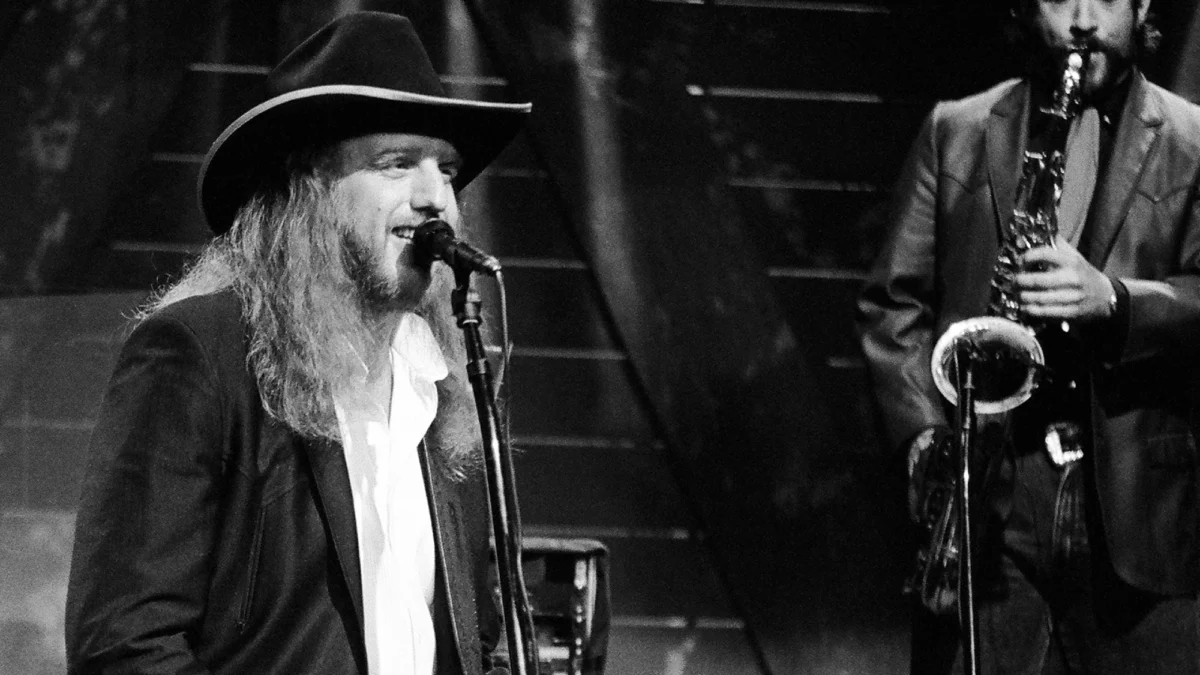
In the mid-1990s, the American Western swing institution Asleep at the Wheel reaffirmed their commitment to the preservation and evolution of roots music with the release of their 13th studio album, The Wheel Keeps On Rollin’. Published in 1995, the record serves as a testament to the band’s ability to synthesize disparate genres, blending original compositions with meticulously selected covers. Among the standout tracks on this collection is a rendition of "Lay Down Sally," a song that achieved global prominence through the work of British guitar legend Eric Clapton. The inclusion of this track on a Western swing record highlights the fluid boundaries between 1970s British blues-rock and the quintessential American sounds of the Southwest, bridging a gap between the "Tulsa Sound" and the dance halls of Texas.
The Genesis of a Country-Rock Hybrid
"Lay Down Sally" was originally released by Eric Clapton in 1977 as part of his landmark fifth studio album, Slowhand. While Clapton is primarily recognized as a blues-rock virtuoso, "Lay Down Sally" represented a significant stylistic pivot toward a more laid-back, country-inflected rhythm. This shift was largely influenced by the "Tulsa Sound," a musical style characterized by a shuffle beat and a relaxed, bluesy feel, pioneered by artists like J.J. Cale.
The song was a collaborative effort, written by Clapton alongside Marcy Levy (later known as Marcella Detroit) and George Terry. Levy, who provided backing vocals for Clapton during this era, played a pivotal role in the track’s creation. According to historical accounts and interviews, Clapton approached the studio session with a specific title in mind but required a lyrical and melodic framework to bring the vision to fruition. Levy recalled that the initial groove leaned toward the funk-inflected style of the band Little Feat. However, through a day of iterative studio work, the team landed on the distinctive, rolling rhythm that defines the track.
The lyrical content, focusing on a plea for a companion to stay and converse, resonated with a broad audience. The chorus—"Lay down, Sally, and rest here in my arms / Don’t you think you want someone to talk to? / Lay down, Sally, no need to leave so soon / I’ve been trying all night long just to talk to you"—offered a softer, more intimate side of Clapton’s persona. The song became a major commercial success, reaching number three on the Billboard Hot 100 and, perhaps more surprisingly, peaking at number 26 on the Billboard Hot Country Songs chart. This crossover appeal made it a natural choice for Asleep at the Wheel nearly two decades later.
Asleep at the Wheel and the 1995 Recording Sessions
When Ray Benson and Asleep at the Wheel entered the studio to record The Wheel Keeps On Rollin’, the band was already a two-decade-old institution. Formed in 1970 in Paw Paw, Michigan, before relocating to the musical hub of Austin, Texas, the group had won multiple Grammy Awards for their efforts to keep Western swing alive. The 1995 album was designed to showcase the band’s versatility and their ability to "swing" almost any piece of music.
The AATW version of "Lay Down Sally" leaned into the song’s inherent shuffle, emphasizing the rhythmic precision that has been the band’s hallmark since its inception. By incorporating the twin-fiddle and steel-guitar arrangements typical of the Western swing genre, Benson and his ensemble transformed the British rock track into a dance-hall standard. This reinterpretation underscored the song’s roots in the American South, effectively "bringing the song home" to the region that had inspired Clapton’s original composition.
The album also featured original material penned by Ray Benson, including the title track. Benson’s songwriting has long been the backbone of the group, providing a modern link to the traditions established by pioneers like Bob Wills and His Texas Playboys. By placing "Lay Down Sally" alongside original swing tunes, the band illustrated the interconnectedness of 20th-century popular music.
A Legacy of Curated Covers: From Tex Williams to Bob Wills
The Wheel Keeps On Rollin’ followed a long-standing tradition within Asleep at the Wheel’s discography: the curation of iconic American songs. The 1995 record also featured a cover of "Smoke! Smoke! Smoke! (That Cigarette)," a song famously released by Tex Williams in 1947. Written by Williams and Merle Travis, the track was a pioneering hit in the Western swing and talking-blues genres, spending 16 weeks at the top of the country charts in the late 1940s.
Asleep at the Wheel’s career is defined by such chronological and stylistic breadth. Their repertoire includes:
- "Route 66": Originally written by Bobby Troup and released in 1946 by the King Cole Trio, AATW’s 1976 version became a signature track, earning them a Grammy nomination and solidifying their reputation as masters of the jazz-country crossover.
- "The House of Blue Lights": First released in 1946 by Freddie Slack and Ella Mae Morse, the song was a proto-rock-and-roll hit. AATW’s cover reached the Top 40, demonstrating the band’s ability to find the "swing" in early boogie-woogie.
- "Roly Poly": A Bob Wills classic, which the band re-recorded in 2000 for their collaborative project Ride with Bob. This version featured The Chicks (then known as the Dixie Chicks), highlighting AATW’s role in mentoring and collaborating with younger generations of country artists.
This penchant for covers is not merely a lack of original material but a deliberate archival project. Ray Benson has frequently stated in interviews that the band views itself as a "traveling museum," dedicated to ensuring that the complex, sophisticated arrangements of Western swing do not fade into obscurity.
Chronology of Success: The Rise of Ray Benson
To understand the significance of the 1995 album, one must look at the trajectory of the band’s commercial and critical peak in the 1970s. The group’s most successful single at country radio remains "The Letter That Johnny Walker Read," released in 1975. Written by Benson alongside LeRoy Preston and Chris Frayne, the song was a Top 10 hit and served as the band’s introduction to mainstream country audiences.
The success of "The Letter That Johnny Walker Read" provided the band with the institutional capital to pursue more experimental projects, including their deep dives into the Bob Wills catalog. By the time they recorded "Lay Down Sally" in 1995, Asleep at the Wheel had transitioned from being "young rebels" of the Austin scene to being the elder statesmen of the genre.
The production of The Wheel Keeps On Rollin’ occurred during a transitional period for country music, as the "90s Country" boom—led by artists like Garth Brooks and Alan Jackson—was at its zenith. While much of the industry moved toward a more polished, pop-oriented sound, AATW remained steadfast in their commitment to live instrumentation and traditional rhythms.
Collaborative Origins and Musical Implications
The enduring nature of "Lay Down Sally" is partly due to the collaborative spirit of its creation. Marcy Levy’s contribution cannot be overstated; her ability to take Clapton’s title and develop a complete narrative and melodic structure provided the song with its pop sensibility. Levy’s later work as one-half of Shakespears Sister and her collaborations with Leon Russell further cement her status as a vital figure in the cross-pollination of rock and country.
For Asleep at the Wheel, covering a song co-written by a female songwriter like Levy and a British rock icon like Clapton was a strategic move. It allowed the band to appeal to classic rock fans while maintaining their country credentials. The song’s history of covers—ranging from the country-narrative style of Red Sovine to the improvisational jam-band approach of the Jerry Garcia Band—suggests that the track possesses a "flexible" musical DNA. It is a song that thrives on rhythm, making it the perfect vehicle for Asleep at the Wheel’s sophisticated section playing.
Analysis of Broader Impact
The inclusion of "Lay Down Sally" on The Wheel Keeps On Rollin’ serves as a case study in the globalization of American roots music. It represents a feedback loop: American blues and country influenced British rockers like Clapton in the 1960s and 70s; those rockers then created hybrid hits that were subsequently re-absorbed into the American country canon by groups like Asleep at the Wheel.
From a technical standpoint, the AATW version highlights the importance of the "shuffle" in Western swing. While Clapton’s version utilized a steady, driving beat, Benson’s arrangement introduced the "swing" feel—a slight delay on the offbeat—that is the hallmark of Texas dance halls. This nuance is what differentiates Western swing from standard country-rock and serves as a masterclass in rhythmic interpretation.
Today, The Wheel Keeps On Rollin’ is viewed as a pivotal entry in the Asleep at the Wheel discography. It bridged the gap between their early experimental years and their later, highly successful tribute albums. By honoring the work of Eric Clapton, Marcy Levy, and George Terry, Ray Benson and his band proved that the "Wheel" does indeed keep on rolling, carrying the traditions of the past into the contemporary era with precision, respect, and an unbreakable sense of swing.
