

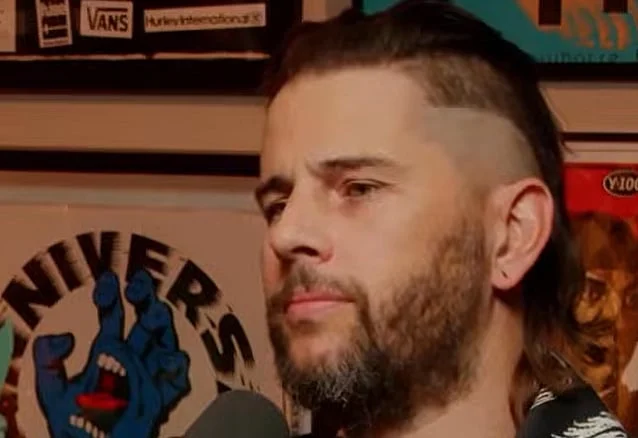
During a candid conversation on the "Artist Friendly With Joel Madden" podcast, Avenged Sevenfold frontman M. Shadows, whose real name is Matt Sanders, provided an in-depth look into the band’s strategic foray into the blockchain and Web3 space, a move initiated in 2023. The initiative, which involved a collaboration with Berify for authentication technology, Bitflips for their expertise, and a partnership with Ticketmaster, aimed to position Avenged Sevenfold as pioneers at the convergence of music, blockchain, and enhanced fan engagement. Shadows articulated the band’s vision for leveraging these emerging technologies to redefine the artist-fan relationship in an increasingly digital landscape.
The Shifting Sands of the Music Industry: A Historical Perspective
M. Shadows reflected on the transformative era of the music industry, noting the stark contrast between the band’s formative years and the current digital paradigm. "For me, when I see the hornet’s nest of the music industry trying to figure out what’s going on and what the next steps are, I am super grateful that I live in a time where there is no pure-cut path to success," he stated. He recalled the early days of Avenged Sevenfold, emerging in 1999, a period where traditional revenue streams like CD sales were still viable, physical retail space on endcaps was attainable, and radio play offered a tangible pathway to audience research. He reminisced about the era of mainstream media exposure, citing the potential to get songs played on influential radio stations like KROQ in Los Angeles, and the visibility achieved through platforms like MTV’s "TRL," where bands like Good Charlotte, hosted by Joel Madden, often appeared. This was also a time when substantial budgets, sometimes upwards of half a million dollars, were allocated to music videos, a testament to the industry’s then-established economic models.
However, this period also marked the nascent stages of a technological revolution that would fundamentally alter the industry. "But at this time, what was happening was the whole industry was changing, not from the music perspective, but from a technology perspective," Shadows explained. He highlighted the emergence of the internet, the rise of file-sharing platforms like Limewire and Napster, and the advent of video-sharing sites such as YouTube. "And technology, at the end of the day, is how we listen, how we we adapt to what we’re doing, how we view this stuff." He critically observed that the music industry’s response to these seismic shifts was largely passive. "The music industry did nothing. It sat there. And now we have a situation where everything has been blown to bits." This led to a fundamental reevaluation of artist-industry relationships. "And so you have to look back and go, ‘Okay, well, how can these people serve me as an artist?’ ‘Cause an artist should be working on the songs. But once you have the songs done, how can this person serve me in terms of a record label or management or agents, whatever it is? And what do they deserve for what they can [do for you]?"
Leveraging Blockchain for Fan-Centric Data Ownership
The 45-year-old M. Shadows, whose birth name is Matt Sanders, elaborated on how Avenged Sevenfold’s experiences with major labels and the traditional industry infrastructure had provided a stable foundation, enabling them to explore new frontiers. "So our band, because of a major label and because of being on record labels, and we give them credit where it’s due, in that time, it got us to a point to where now we can kind of take all the safety nets and the parachute off and go, ‘Okay, well, what is in front of us now? If I’m gonna make a step from day one, how do I make that first step?’" This introspection led the band to examine emerging technologies, with blockchain standing out as a particularly promising avenue.
Shadows articulated his core motivation for exploring blockchain: the desire for direct fan data ownership and improved engagement. He pointed to the limitations of existing platforms, where artists often lack direct access to information about their audience. "When I looked at the music industry, I said, there’s a merch company that doesn’t give us who’s buying our merch. There’s a record label who’s not telling us who our fan is. There’s Facebook, Instagram, they’re not telling us who our fans are. In fact, they’ll change the rules on us and charge us. That’s how they make the money. I am the product at that point. They are taking all the money." The issue extended to ticketing and streaming services. "Looking at ticketing. Ticketmaster wouldn’t tell us who is buying all of our tickets. That’s their customer, not ours. And then I’m looking at streaming. Well, who’s listening? Well, that’s Spotify’s customer, and that’s Tidal’s customer. That’s not your customer. Well, actually, if you look at it, all those companies are standing on the shoulders of artists."
His perspective on blockchain was not focused on speculative financial gains but on its potential as a data management and fan engagement tool. "So when I saw blockchain, I didn’t think of NFT price go up. I didn’t think of Bitcoin. Obviously, those are different conversations, and I wasn’t thinking of all these things. I was thinking, ‘These are pieces of data, the fan, and how do you make the fan’s experience better while collecting that data and being able to reach out to them?’"
The band’s collaboration with Bitflips was central to this vision. "So my idea with BitFlips was to make a completely comprehensive flow of everything a fan would do with an artist – listening, purchasing, going to events, all of it – and putting it on some sort of reward card. This is your user profile. You get rewarded, and then you’d go, ‘Well, Matt, how do you make their experience better?’ Well, it’s easy. You give them your time. You give them access to the front of the line, which most of them want. You give them access to early tickets, and you give them ownership of all these things." This approach empowers fans by granting them verifiable ownership of their engagement with the artist, which they can choose to utilize, trade, or gift. "Now you prove that you’re a fan, and you have ownership of whether you wanna use it, sell it or give it to somebody. And the blockchain is the only thing I’ve seen that allows you to do that."
Shadows addressed the technical challenges and skepticism surrounding decentralized data management. "People can come at you all day and go, ‘Make your own database.’ Oh, yeah? Well, how am I gonna get the information from all these companies that are taking it from us? How am I gonna have that user database and be able to give somebody something that’s not like a user code and tell them that they can sell that? The person will steal it from you or take it from you." He underscored blockchain’s unique capability to provide a secure and transparent ledger for such interactions.
A Call to Action for the Music Industry
M. Shadows also expressed concern about the music industry’s recurring lag in adopting new technologies, drawing parallels to the early days of digital disruption. "All I’ve seen in the press for the last 10 years that I’ve been involved in crypto is how bad it is and how much it’s a scam. Today I’m starting to see all the, ‘We were too late to the puzzle. Now you can move money around the world, and that’s how it works.’ And all of a sudden, it’s a, ‘Oh, my God. What were we doing? We weren’t paying attention.’" He reiterated his desire to prevent the music industry from falling behind once again. "And so I don’t want the music industry to be again behind the times, and then all these new artists are gonna come up, and they’re locked into shitty deals, giving 75% of their earnings away, when the label really doesn’t have the tools at that point to do what they can do themselves and give the fan a better experience."
Chronology of Avenged Sevenfold’s Blockchain Initiatives
Avenged Sevenfold’s engagement with blockchain technology has been a progressive development, marked by several key milestones:
- December 2021: The band launched its initial foray into the NFT space with the Deathbats Club. This collection was conceptualized as a foundational element for the band’s on-chain strategy, aiming to serve as a digital token connecting fans and unlocking future benefits.
- March 2023: A significant partnership was forged with Ticketmaster. This collaboration enabled token-gated access to concert tickets for members of the Deathbats Club, providing them with priority access to purchase tickets for Avenged Sevenfold’s tour dates. This move demonstrated a practical application of NFT utility within the live music ecosystem.
- April 2023 (A few weeks later): Following the Ticketmaster partnership, Avenged Sevenfold unveiled TicketPass. Developed in conjunction with Bitflips, TicketPass was introduced as a free, verification-based loyalty program designed to reward dedicated fans. The system incentivizes engagement through actions such as streaming music, purchasing merchandise, and attending live events, allowing fans to accumulate points that can be redeemed for various perks. The authentication process for TicketPass utilizes a fan’s Dapp wallet or email address, with Ticketmaster facilitating ticket confirmations for those who successfully secure them. This initiative aimed to create a more integrated and rewarding fan experience.
Broader Industry Context: Independence and Evolving Label Relationships
Avenged Sevenfold’s recent declaration of being a "fully independent band" following the release of their 2023 album, "Life Is But A Dream…," marks a significant shift in their career trajectory. This independence was achieved upon the completion of their contractual obligations with Warner Records.
The band’s relationship with Warner has been complex and has previously involved legal disputes. In late 2015, Warner sued Avenged Sevenfold after the band sought to exit their contract, invoking California Labor Code’s "seven-year rule." This legislation allows individuals to exit contracts after seven years under specific unfavorable conditions. Following this, Avenged Sevenfold moved to Capitol Records, releasing their album "The Stage" in October 2016 as a surprise drop, famously promoted with a concert atop the Capitol building. Subsequently, the band returned to Warner for their latest album, "Life Is But A Dream…," bringing their contractual cycle with the label to a close. This history of label transitions underscores the band’s persistent pursuit of autonomy and favorable terms within the music industry.
Avenged Sevenfold’s Enduring Legacy and Technological Prowess
Avenged Sevenfold has established a formidable presence in the global music scene. With millions of albums sold worldwide, they have achieved critical commercial success, including two consecutive No. 1 albums on the Billboard 200 chart: "Nightmare" (2010) and "Hail To The King" (2013). Their digital footprint is equally impressive, boasting over a billion video views and billions of streams on platforms like Spotify, alongside multiple No. 1 singles on rock radio.
The band’s current lineup consists of M. Shadows (vocals), Synyster Gates (lead guitar), Zacky Vengeance (rhythm guitar), Johnny Christ (bass), and Brooks Wackerman (drums). Beyond their musical achievements, Avenged Sevenfold is renowned for their visually spectacular live performances, consistently selling out arenas and headlining major international festivals. Their consistent engagement with cutting-edge technology and their proactive approach to fostering community engagement among their fanbase have positioned them as forward-thinking artists in a rapidly evolving entertainment landscape. This commitment to innovation, as demonstrated by their blockchain initiatives, suggests a continued exploration of new avenues for connecting with and rewarding their audience.
