

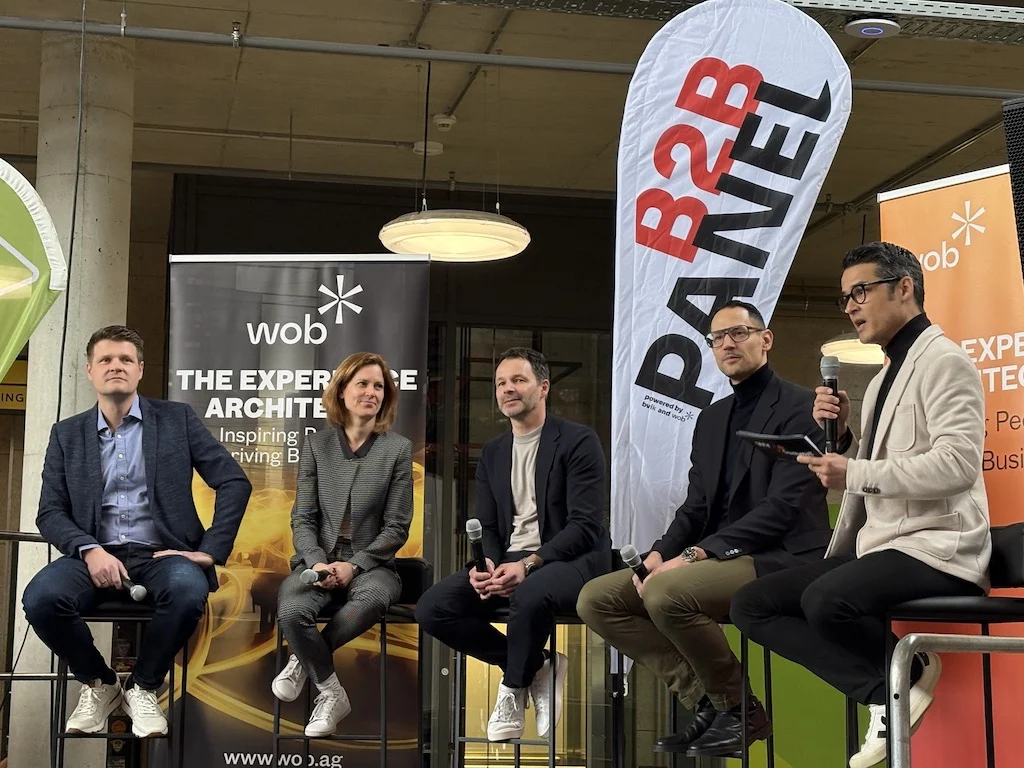
The landscape of industrial marketing underwent a significant transformation during the W&V Summit 2026 in Munich, where a high-profile panel discussion organized by the Bundesverband Industrie Kommunikation e. V. (bvik) highlighted the transition of B2B companies from background players to front-end marketing innovators. Held at the Motorworld Munich, the session titled "B2Besser: Data, Technology, and Creativity – B2B Brands as Hidden Champions in the AI Era" brought together a group of the industry’s most influential marketing leaders to dissect how data intelligence and artificial intelligence (AI) are redefining the relationship between industrial manufacturers and their global clients. The discussion served as a testament to the fact that the traditional "Hidden Champion" model—characterized by market leadership in niche sectors with low public visibility—is being replaced by a more vocal, data-driven, and strategically aggressive marketing approach.
The Convergence of Data and Industrial Strategy
The core of the discussion centered on the unprecedented access to information that modern B2B marketers now possess. Unlike previous decades where industrial sales relied heavily on personal networks and trade fair handshakes, the 2026 marketing environment is defined by an abundance of behavioral, interaction, and transaction data. According to the panelists, this data allows companies to identify customer needs long before a formal inquiry is ever made. This shift is particularly critical in the B2B sector, where decision-making units—often referred to as "Buying Centers"—can consist of six to ten different stakeholders, ranging from technical engineers to procurement officers and C-suite executives.
Dominik Heigemeir of Festo, a global leader in automation technology, characterized this shift as a fundamental paradigm change. Heigemeir noted that the reactive nature of traditional marketing has been superseded by predictive capabilities. In the past, marketing teams would wait for a customer to download a white paper or visit a booth before initiating contact. Today, through pattern analysis and AI-driven insights, companies can anticipate requirements. This proactive stance is supported by the emergence of "Data-Powered Leads," which utilize machine learning algorithms to score potential clients based on their digital footprint, ensuring that sales teams engage with prospects who have a high propensity to convert.
Structural Innovation: The Rise of the Lead Manager
As technology changes the "what" of marketing, it also necessitates a change in the "how" of organizational structure. Leonhard Kemnitzer of Baumüller, a specialist in drive and automation systems, emphasized that the mere generation of leads is no longer a sufficient metric for marketing success. The quality and subsequent nurturing of those leads have become the primary focus. To bridge the historical gap between marketing departments and sales teams, Baumüller has pioneered the role of the "Lead Manager."
This new organizational function acts as a conduit, ensuring that the data intelligence gathered by marketing is translated into actionable insights for the sales force. Kemnitzer argued that while AI can identify a lead, the human element remains vital in interpreting the nuances of industrial requirements. He cautioned that an over-reliance on digital tools could lead to a disconnect from the physical reality of the client’s needs, famously stating that in the rush to automate, companies sometimes forget the simple power of direct conversation with the customer. This hybrid approach—combining high-tech data analysis with high-touch personal interaction—is becoming the benchmark for successful industrial communication in the mid-2020s.
From B2B to B2H: The Human-Centric AI Approach
The role of SAP in this transformation cannot be overstated, as enterprise software remains the backbone of data-driven marketing. Marc Hibschberger, Head of Industry Marketing at SAP Deutschland, argued that there is virtually no limit to how data-driven a customer experience can be, provided it serves a human purpose. Hibschberger introduced the concept of "B2H" or "Business to Human" as the ultimate evolution of B2B marketing. In his view, data intelligence is not an end in itself but a tool to provide context, relevance, and timing.
For SAP and its peers, the challenge lies in making complex, often invisible software solutions "tangible." Hibschberger explained that in an era of abstract AI and cloud computing, creating "touchable" experiences is essential for building trust. By using data to personalize the customer journey, marketers can ensure that a technical lead receives information that is specifically relevant to their unique industrial challenges, thereby reducing the "noise" of generic advertising. This level of personalization, once the exclusive domain of B2C giants like Amazon or Netflix, is now a prerequisite for B2B success.
Emotional Resonance and Experiential Marketing in Industry
A recurring theme throughout the W&V Summit was the surprising importance of emotion in a sector traditionally governed by cold logic and technical specifications. Petra Dietrich of TRUMPF, a world leader in machine tools and laser technology, highlighted that even the most advanced technology requires an emotional spark to resonate with buyers. Dietrich pointed out that when a customer’s eyes light up during a product demonstration, it indicates a level of engagement that data alone cannot capture.
This realization has led to a resurgence in experiential marketing. TRUMPF and other industrial leaders are increasingly using social media not just as a megaphone for one-way corporate announcements, but as a platform for two-way dialogue and community building. Dietrich emphasized that social media in 2026 is an essential component of the B2B toolkit, allowing companies to showcase their innovations in real-time and humanize their brands. By making high-tech machinery "experienceable" through virtual reality, augmented reality, and interactive digital twins, B2B brands are successfully competing for the same "share of mind" that was once dominated by consumer brands.
Broader Economic and Strategic Implications
The insights shared at the W&V Summit 2026 carry significant implications for the German "Mittelstand" and the broader global industrial economy. As Ramona Kaden of bvik noted, B2B marketing has officially stepped out of the shadow of B2C. The strategic importance of marketing within industrial companies has risen as it becomes clear that technological leadership alone is no longer a guaranteed competitive advantage. In a globalized market where technical parity is common, the ability to communicate value through sophisticated marketing strategies becomes the primary differentiator.
Furthermore, the panel highlighted a shift in investment priorities. Industrial companies are allocating larger portions of their budgets to "MarTech" (marketing technology) and data science. This investment is not merely about efficiency; it is about resilience. Companies that can accurately predict market shifts and customer needs through AI are better positioned to navigate economic volatility and supply chain disruptions. The "Hidden Champions" of the past are realizing that visibility is a form of protection, and data is the fuel for that visibility.
Chronology of the W&V Summit and Future Outlook
The W&V Summit 2026, held on March 26, marks a pivotal moment in the post-pandemic recovery and digital acceleration of the German marketing landscape. The event, which has grown to become one of the premier gatherings for marketing professionals in Europe, provided a comprehensive look at the state of the industry three years after the initial AI explosion of 2023.
The timeline of the event reflected a clear focus on the integration of technology and humanity:
- Morning Sessions: Focused on the macro-economic trends and the technical infrastructure of AI in marketing.
- Mid-Day Panel: The bvik-organized session "B2Besser" focused specifically on the industrial sector’s unique challenges.
- Afternoon Workshops: Deep dives into specific tools like generative AI for content creation and predictive analytics for lead scoring.
Looking forward, the bvik and W&V have already announced the dates for the next summit, scheduled for March 10 and 11, 2027, in Munich. The expectation for the coming year is a further refinement of AI tools, moving away from experimental use cases toward standardized, high-ROI applications.
Conclusion: The New Identity of the Industrial Brand
The W&V Summit 2026 has made it clear that the era of the silent, invisible industrial giant is over. B2B brands are no longer content to remain "Hidden Champions." By embracing the dual forces of data intelligence and creative storytelling, they are transforming into modern marketing strategists capable of commanding global attention. The integration of the "Lead Manager" role, the shift toward "B2H" communication, and the strategic use of AI-powered analytics are not just trends—they are the new foundations of industrial commerce.
As these companies continue to blend their traditional "inventor spirit" with cutting-edge data technology, they are setting a new standard for how value is communicated in the 21st century. The competitive advantage in 2026 and beyond belongs to those who can connect the precision of a laser with the emotional resonance of a human experience. The W&V Summit provided the roadmap; the task now for B2B leaders is to execute that strategy with the same engineering precision they apply to their products.
