

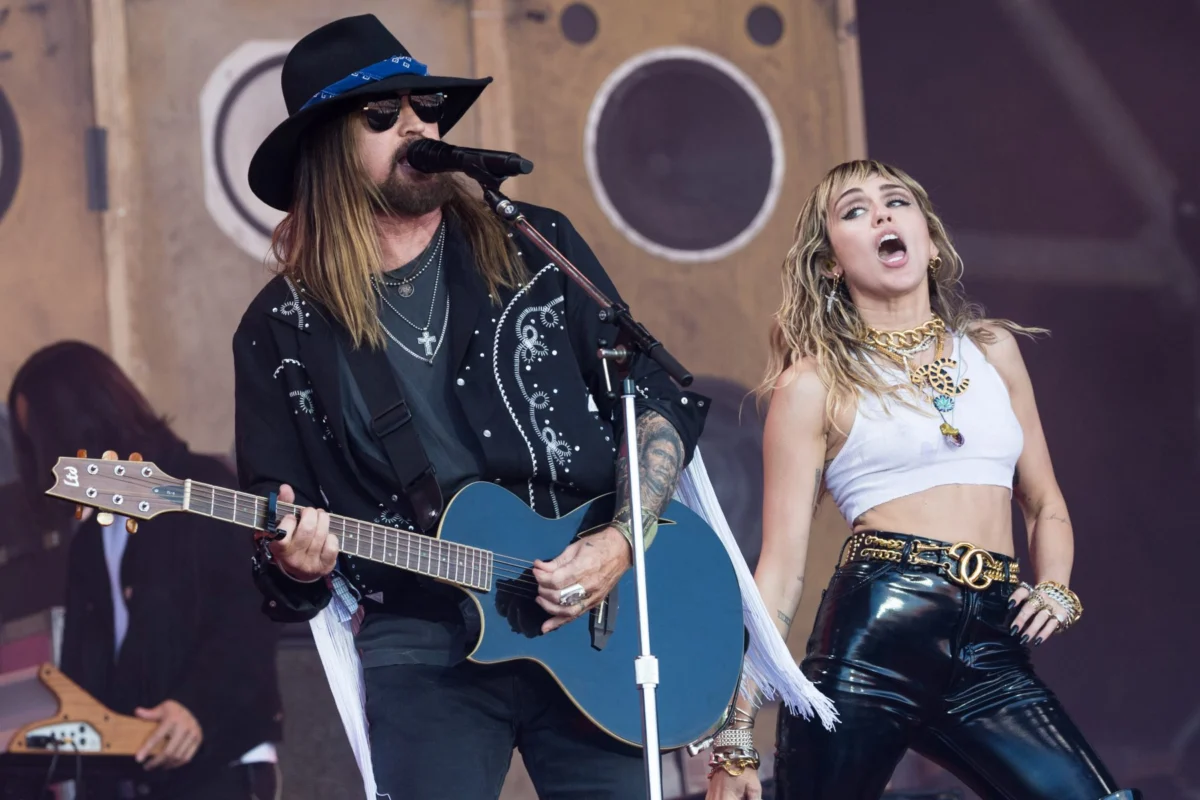
In a significant development within the music industry, veteran country star Billy Ray Cyrus has publicly voiced his unequivocal support for his daughter, Miley Cyrus, as she embarks on a new chapter of her career, embracing a mononym. This strategic rebranding, which sees the globally recognized artist shedding her inherited surname, coincides with the announcement of her anticipated new album, Bass Persuades, slated for release on September 18. Billy Ray Cyrus’s endorsement, delivered through a heartfelt Instagram post on Wednesday, September 2, provides a compelling layer of personal insight into a move that carries substantial implications for Miley’s artistic identity and brand legacy.
The decision by Miley to adopt a singular name has been met with widespread discussion, a common occurrence for artists of her stature. However, the familial blessing from her father, himself a prominent figure in music, lends a unique dimension to this artistic evolution. Billy Ray, known for his groundbreaking 1992 hit "Achy Breaky Heart," articulated his perspective, stating, "Family means more than ever now. I always called my little girl Miley. Just… Miley." This personal anecdote underscores a deep-rooted familiarity with her chosen identity, predating her public persona. He further contextualized his support by drawing parallels to his own career trajectory and the storied legacies of other iconic mononymous artists. "Bet you didn’t know… I was just CYRUS before Achy Breaky Heart came out in 92," he revealed, adding, "All of my swag and T shirts only read. CYRUS… I told @miley yesterday I felt good about her going with her first name. I mentioned Dolly and Cher. Thinkin about it more and more… Elvis… Prince… and so on. It’s a natural progression for an iconic superstar legend. And the legend continues! Looking forward to the new album." His words not only conveyed paternal pride but also offered a discerning industry perspective on the strategic value of a mononym for a global superstar.
A Father’s Endorsement of a Mononymous Rebrand
Billy Ray Cyrus’s statement is more than just a father’s approval; it’s a seasoned musician’s understanding of branding, legacy, and artistic autonomy. His reference to his own early career, where he was simply "Cyrus" before the unprecedented global success of "Achy Breaky Heart," provides a fascinating historical precedent within his own family. "Achy Breaky Heart" was a phenomenon, topping the Billboard Hot Country Singles & Tracks chart for five consecutive weeks and reaching No. 4 on the all-genre Billboard Hot 100. Its widespread appeal helped solidify his place in music history, and his journey from a single name to the full "Billy Ray Cyrus" offers a nuanced perspective on identity in the public eye.
By invoking legendary figures such as Dolly Parton, Cher, Elvis Presley, and Prince, Billy Ray highlights a tradition of artists whose singular names became synonymous with their unique artistic output and indelible cultural impact. Dolly Parton, Miley’s godmother, is an unparalleled icon whose first name alone evokes an entire genre and a philanthropic empire. Cher, a pop culture chameleon, has navigated decades of reinvention under her mononym. Elvis Presley, the King of Rock and Roll, and Prince, the enigmatic musical genius, both transcended their given names to become global phenomena identified by their first names. These examples are not merely coincidental mentions; they represent a deliberate lineage of artistic power and self-definition that Billy Ray sees Miley now inheriting and extending. This analysis suggests that Miley’s move is not merely a stylistic choice but a calculated step towards solidifying a legacy that stands independently, much like these titans of music.
Miley’s Evolving Identity: From ‘Destiny Hope’ to Global Icon
Miley Cyrus’s journey to a mononym is a culmination of a career marked by relentless evolution and a persistent quest for self-definition. Born Destiny Hope Cyrus, she legally changed her name to Miley Ray Cyrus at the age of 15, embracing the nickname "Miley" (derived from "Smiley") that her father had always used for her. This initial name change signaled an early desire to align her public identity with her personal one, even as she rose to global fame as the titular character in Disney Channel’s "Hannah Montana." The Hannah Montana era, which ran from 2006 to 2011, established her as a teen idol, a dual identity that she famously sought to shed in subsequent years.
Her post-Disney career has been a masterclass in artistic reinvention, marked by bold stylistic shifts and a determination to forge her own path distinct from her family’s country roots and her child star image. Albums like Can’t Be Tamed (2010), Bangerz (2013), and Plastic Hearts (2020) showcased her versatility across pop, rock, and experimental genres, often accompanied by provocative visuals and unapologetic self-expression. Each era has seen Miley pushing boundaries, challenging perceptions, and asserting her artistic autonomy. This latest decision to embrace a mononym, therefore, appears not as an abrupt change but as a logical, perhaps inevitable, progression in her ongoing narrative of self-discovery and artistic consolidation. It serves as a definitive statement that her artistry now stands on its own, recognizable and powerful without the need for a familial surname, despite her deep pride in her heritage.
Chart-Topping Success and Artistic Autonomy
The timing of Miley’s mononymous shift is particularly significant, following one of the most commercially successful periods of her career. Her 2023 single, "Flowers," from the album Endless Summer Vacation, became a global phenomenon. The track debuted at No. 1 on the Billboard Hot 100, marking her second chart-topper after "Wrecking Ball" in 2013. "Flowers" spent multiple weeks atop the Hot 100 and broke numerous streaming records, including the fastest song to reach 100 million streams on Spotify. Its success was not merely commercial; "Flowers" was widely interpreted as an anthem of self-love and independence, resonating deeply with audiences worldwide. This monumental achievement solidified her status as a global pop superstar with undeniable artistic and commercial clout.
This recent triumph provides the perfect backdrop for her mononymous rebrand. It demonstrates that Miley has achieved a level of cultural penetration and artistic credibility where her first name alone carries immense weight and recognition. The move can be seen as a declaration of full artistic autonomy, a signal that she has transcended the need for any external identifier beyond the name she has cultivated and empowered through her own work. It’s a strategic move to focus the narrative entirely on her individual artistic output and persona, cementing her legacy as "Miley," a standalone force in contemporary music.
‘Bass Persuades’: The Album and Its Theatrical Unveiling
The announcement of Miley’s new album, Bass Persuades, on Tuesday, September 1, served as the primary catalyst for the public revelation of her mononymous identity. Prior to the album’s formal announcement, Miley had teased the change by updating her social media usernames to simply "MILEY," sparking immediate speculation among her vast fanbase. This carefully orchestrated rollout strategy leveraged her digital presence to generate buzz and allow fans to organically discover her new branding. The album, set to arrive on September 18, promises to be a pivotal release, further defining her artistic direction in this new phase.
To celebrate Bass Persuades, Miley also revealed plans for a pair of exclusive Hollywood Bowl shows in October. These live performances are anticipated to be high-profile events, offering fans the first opportunity to experience the new material and witness the "Miley" persona in full bloom on stage. The choice of the iconic Hollywood Bowl, a venue steeped in musical history, further underscores the significance and grand scale of this album rollout. It suggests a curated, immersive experience designed to launch not just an album, but a renewed artistic statement. The combination of digital teasing, a new album, and major live shows forms a cohesive and impactful rebranding campaign designed to elevate "Miley" to an even higher echelon of global stardom.
The Broader Context: A Week of Reflection and Loss
The momentous announcements surrounding Miley’s album and mononym occurred against a backdrop of profound sadness within the music community and the Cyrus family. The album rollout tragically overlapped with the death of Dolly Parton, a legendary figure in country music, a close friend of Billy Ray Cyrus, and Miley’s beloved godmother. This confluence of events added a poignant layer of reflection and gravitas to the family’s public statements. Both Billy Ray and Miley took to social media to share heartfelt tributes mourning the Queen of Country, underscoring the deep personal and professional ties that bound them to Parton.
Miley’s statement, posted on Instagram, offered a glimpse into the private grief she experienced: "The feeling of losing my Aunt Dolly is beyond what feels right to share. Our most sacred moments were private and they’ll stay there behind the stage, beneath the glamour & between our hearts." Her words highlighted the intimate bond they shared, often away from the public eye, and the profound impact Parton had on her life and career. This personal reflection from Miley, juxtaposed with her public rebranding, showcased her vulnerability and resilience during a challenging time.
Billy Ray Cyrus also shared his grief, reflecting on Parton’s immense influence: "Like every little boy, I grew up loving Dolly Parton. She was a part of our lives, on our TV’s, right in our living rooms… Dolly recently sent me a beautiful message, telling me she loved me with her whole heart. I will always love her in the same way… with my whole heart… and I always will." These tributes not only honored Parton’s memory but also inadvertently highlighted the very nature of legacy and iconic status that Miley herself is now consciously pursuing through her mononym. The passing of an artist like Dolly Parton, whose name became synonymous with an entire genre and an era of music, serves as a powerful reminder of the enduring power of a singular, unforgettable identity—a path Miley is now more explicitly walking.
The Strategic Implications of a Mononym
Adopting a mononym is a powerful strategic move for an artist of Miley Cyrus’s caliber, laden with several implications for her brand and career trajectory. Firstly, it represents a definitive act of artistic control and self-authorship. By dropping "Cyrus," she signals a separation from past associations, whether that be her Disney persona, her family’s musical heritage, or even past controversies, allowing her to be judged solely on her current and future artistic output as "Miley." This move solidifies her individual brand, making it distinct and unmistakable.
Secondly, it is a potent branding strategy that enhances memorability and marketability. In an oversaturated media landscape, a unique, singular name cuts through the noise. It elevates her to a status of instant recognition, much like the legends her father cited. This simplified identity is easily digestible across global markets and various media platforms, reinforcing her universal appeal. The implicit message is clear: "Miley" is enough; her work, her persona, and her impact speak for themselves.
Thirdly, it contributes to legacy building. Artists who successfully transition to mononyms often achieve a higher level of iconic status. It implies a transcendence of mere celebrity to an almost mythical figure whose name becomes synonymous with an entire body of work and cultural movement. For Miley, whose career has already been defined by constant reinvention and boundary-pushing, this step firmly positions her as an artist who is not just evolving, but solidifying her place in music history on her own terms. It’s a declaration of an established, undeniable presence.
Precedents in Pop Culture History
The entertainment industry is rich with examples of artists who have successfully embraced mononyms, and Billy Ray Cyrus’s references to Dolly, Cher, Elvis, and Prince only scratch the surface. Artists like Madonna, known globally by her first name, built an unparalleled career on reinvention and cultural impact. Adele, the British singing sensation, commands immense respect and recognition solely by her first name. Beyoncé, while retaining her surname, is often referred to and recognized simply as "Beyoncé," a testament to her singular star power. These examples demonstrate that for certain artists, their first name becomes an entity unto itself, a powerful brand that transcends conventional naming conventions.
This practice is not limited to music. Figures like Oprah Winfrey, often referred to as "Oprah," exemplify how a first name can become a brand that signifies influence, power, and a distinctive persona across various media. The common thread among these mononymous icons is their profound and undeniable impact on popular culture, an impact so significant that their given names become almost redundant. For Miley, aligning herself with this tradition is a bold statement about her aspirations and her belief in the enduring power of her own artistic identity. It’s a calculated move to enter a pantheon of artists whose names resonate far beyond their legal documents.
Looking Ahead: The Future of ‘Miley’
With the release of Bass Persuades on September 18 and the accompanying Hollywood Bowl shows, the "Miley" era is poised to fully unfold. This rebranding is more than a superficial change; it signifies a deeper commitment to her artistic vision and a strategic step in shaping her legacy. The support from her father, Billy Ray Cyrus, offers a familial validation that reinforces the authenticity of this transition, assuring fans and industry observers alike that this is a considered, well-supported move.
The music world will be watching closely to see how Bass Persuades further defines this new chapter. Will the album reflect the maturity and self-possession implied by her mononym? How will her live performances at the Hollywood Bowl cement this new identity? As Miley continues to evolve, her decision to simply be "Miley" stands as a powerful declaration: an artist fully in control of her narrative, her art, and her destiny, building a legacy that will undoubtedly be discussed for generations to come. The journey from Destiny Hope Cyrus to Hannah Montana, to Miley Ray Cyrus, and now simply to "Miley," represents a fascinating and ongoing narrative of self-discovery, resilience, and unparalleled artistic ambition within the annals of popular music.
