

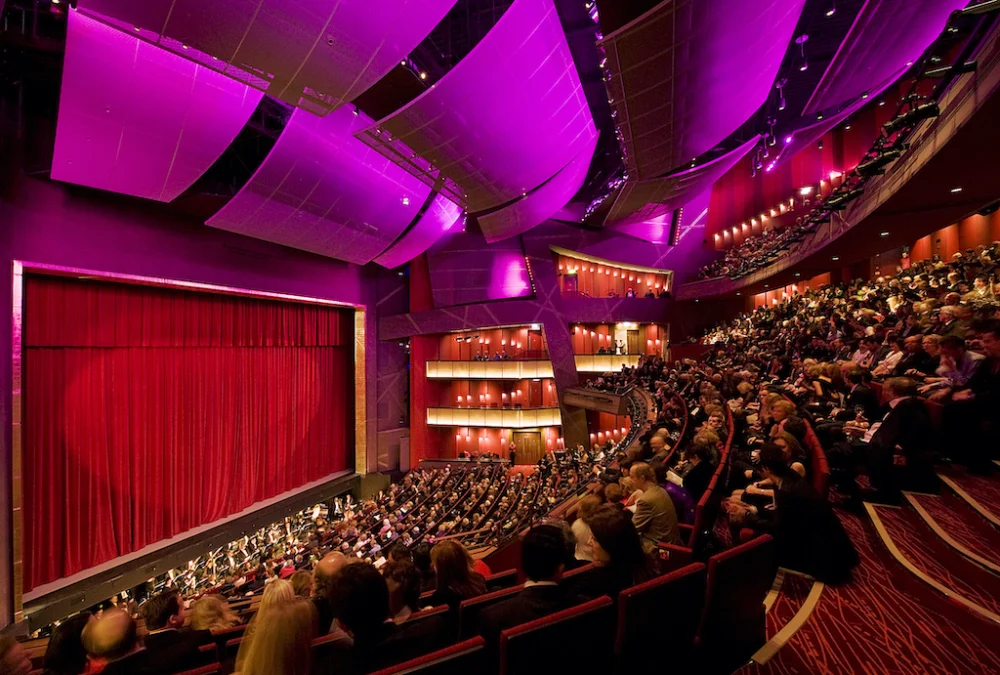
The Bord Gáis Energy Theatre (BGET) in Dublin has officially unveiled a state-of-the-art audio system overhaul, marking a significant technological leap for Ireland’s largest fixed-seating performance venue. Located in the heart of Dublin’s vibrant Docklands, the 2,111-seat theater has replaced its long-standing audio infrastructure with a sophisticated solution from d&b audiotechnik, centering on the manufacturer’s CCL-Series and the newly released U-Series. This modernization project, completed in 2025, concludes a 15-year era defined by the legendary d&b Q-Series, which had served the venue since its grand opening in 2010. The transition represents a strategic investment in long-term acoustic excellence, ensuring the venue remains a primary destination for West End musicals, international opera, ballet, and high-profile concert tours.
The Architectural and Cultural Significance of the Bord Gáis Energy Theatre
Since its inauguration on March 18, 2010, the Bord Gáis Energy Theatre has stood as a landmark of contemporary architecture and cultural ambition. Designed by the world-renowned architect Daniel Libeskind, the building is characterized by its striking glass facade and sharp, angular geometries that overlook Grand Canal Square. The venue was conceived to fill a specific void in the Irish arts landscape: the need for a theater capable of hosting large-scale touring productions that require significant stage depth, high fly-tower capacity, and a massive seating volume.
Over the past decade and a half, the BGET has hosted millions of patrons and a diverse array of productions, ranging from the technical complexity of Disney’s The Lion King and Mary Poppins to intimate acoustic performances and corporate events. Operating at a staggering frequency of over 360 performances per year, the venue leaves very little room for downtime. This high-utilization rate dictated that any upgrade to the theater’s core infrastructure must not only be sonically superior but also exceptionally reliable and efficient to install.
Transitioning from Legacy Systems: The 15-Year Evolution
The decision to upgrade the audio system was driven by the natural lifecycle of professional sound reinforcement technology. The original d&b Q-Series installation had become a industry benchmark for reliability, serving the venue through thousands of shows without significant failure. However, as digital processing, directivity control, and speaker efficiency have advanced, the BGET technical team recognized that a new standard was required to meet the evolving expectations of sound designers and touring engineers.
Liam Fitzgerald, Technical Manager at the Bord Gáis Energy Theatre, spearheaded the project. With 15 years of operational data and feedback from hundreds of visiting productions, Fitzgerald possessed a granular understanding of the room’s unique acoustic challenges. The theater’s design, while visually stunning, features a vast internal volume and multiple tiers of seating that require precise sound distribution to ensure every seat—from the front row of the stalls to the back of the upper circle—receives a consistent auditory experience.
Strategic Technical Requirements for a High-Volume Venue
The selection process for the new system was rigorous. In collaboration with independent sound designer Kevin McGing, a long-term consultant for the BGET and a seasoned expert in d&b systems, the team developed a comprehensive requirement profile. The new system needed to satisfy four primary criteria: rider-friendliness, aesthetic discretion, advanced directivity control, and seamless integration for touring shows.
One of the most critical aspects of the BGET’s operation is its role as a "plug-and-play" house for touring productions. While many large-scale musicals bring their own primary PA arrays, they almost universally rely on the house’s installed delays and fills to cover the complex geometry of the balconies and side boxes. Consequently, the theater prioritized the quality of these secondary speakers as much as the main arrays. The goal was to create a cohesive sonic environment where the transition between a touring production’s main PA and the house’s delay system would be virtually imperceptible to the audience.
The Core Technology: Implementing the d&b CCL and U-Series
The final design utilized a combination of d&b’s latest innovations, specifically tailored for fixed installations. The main left and right arrays were upgraded to the CCL-Series (Custom Cluster Line), a range designed to provide the power and clarity of line array technology within a more compact and aesthetically manageable form factor. The CCL12 and CCL8 modules were selected for their ability to deliver consistent horizontal dispersion—120° and 80° respectively—ensuring wide coverage across the broad seating area.
A significant portion of the installation focused on the new U-Series, which was integrated for delays and fills. The BGET became one of the first major venues to adopt this series on a large scale, utilizing 53 U3 loudspeakers and two U5 units. The U-Series is specifically engineered for applications where high-fidelity sound is required from a discrete, low-profile cabinet. By using the same series for all delay and fill positions, the technical team ensured a uniform tonal balance throughout the auditorium.
Precision Engineering: Acoustic Modeling and Cardioid Control
The installation of the main CCL arrays presented a unique architectural challenge. To maintain the theater’s clean aesthetic, the primary loudspeakers are positioned behind acoustically transparent fabric panels within the prosceium. While this hides the technology from view, it can create acoustic issues, such as sound energy reflecting off the internal walls of the speaker recesses.
To mitigate this, the d&b EAS (Education & Application Support) team provided extensive consulting on cardioid radiation patterns. By utilizing cardioid technology, the CCL arrays significantly reduce the amount of sound energy radiating from the back of the speakers. This ensures that the sound is directed toward the audience rather than being trapped behind the fabric panels, which would otherwise result in "muddy" low-frequency buildup and reduced clarity. The team used d&b’s ArrayCalc modeling software to simulate the room’s acoustics and determine the exact placement and angling required to optimize the "opening" in the proscenium for maximum sonic transparency.
Operational Efficiency and the Role of the 40D and 5D Amplifiers
The backend of the system is powered by d&b’s latest generation of installation-specific amplifiers: the 40D and the ultra-compact 5D. These amplifiers are designed for high-density integration, offering sophisticated Digital Signal Processing (DSP) and networking capabilities while consuming minimal rack space.
A key advantage of this setup is the ability to drive each delay and fill speaker on an individual amplifier channel. This level of granularity allows the house technicians to tune the system with extreme precision. Through the d&b R1 Remote control software, the BGET team can load various presets at the touch of a button. This is particularly useful for the venue’s "one-night-only" events, such as comedy shows or orchestral concerts, where the audio requirements differ significantly from a multi-week musical run. The R1 software provides a graphical interface that allows for real-time monitoring and adjustment of the entire system, ensuring that any technical issues can be identified and resolved before they impact a performance.
Logistical Excellence: The Ten-Day Installation Challenge
Perhaps the most impressive aspect of the project was the timeline. The Bord Gáis Energy Theatre is one of the busiest venues in Europe, often operating with a schedule that leaves only ten days per year without a performance or a load-in/load-out cycle. The installation had to be executed with surgical precision to avoid disrupting the venue’s commercial commitments.
The BGET house technical team, supported by Kevin McGing and the d&b EAS team, managed to decommission the old Q-Series and install, wire, and tune the new CCL and U-Series system within this narrow window. This feat was made possible by the "system-reality" approach of d&b, where the software modeling in ArrayCalc translates accurately to the physical performance of the speakers, reducing the time required for on-site troubleshooting and manual tuning.
Enhancing the Touring Experience for International Productions
The upgrade has immediate implications for the venue’s competitiveness on the international touring circuit. Touring sound engineers are often wary of house systems, but the d&b brand carries a level of "rider-friendliness" that is globally recognized. By providing a top-tier d&b infrastructure, the BGET reduces the logistical burden on touring companies, who can now rely on the house system with total confidence.
Liam Fitzgerald noted that the new system delivers more direct sound to more people, reducing the reliance on reflected sound and improving speech intelligibility—a critical factor for musical theater. The improved directivity control also means that the stage remains "quieter," which is a major benefit for performers using sensitive microphones and for monitors engineers trying to maintain a clean mix on stage.
Broader Industry Impact and Future Outlook
The modernization of the Bord Gáis Energy Theatre serves as a case study for large-scale venue management. It highlights the importance of proactive infrastructure investment and the value of choosing systems that offer both performance and longevity. As theater productions become increasingly immersive and technically demanding, the underlying audio infrastructure must be capable of supporting high-resolution digital audio and complex routing.
Stephen Hogg of d&b audiotechnik emphasized the collaborative nature of the project, stating that the successful implementation of the CCL and U-Series at BGET is a validation of the company’s focus on installation-specific solutions. The project reinforces d&b’s position as a leader in the theater market and sets a new benchmark for audio quality in Irish performance spaces.
As the Bord Gáis Energy Theatre moves into its next 15 years, the new audio system ensures that it will continue to provide world-class experiences for audiences and artists alike. The combination of cutting-edge cardioid technology, precision amplification, and discrete architectural integration has successfully modernized a Dublin icon, proving that even the most successful venues must evolve to stay at the forefront of the global entertainment industry.
