

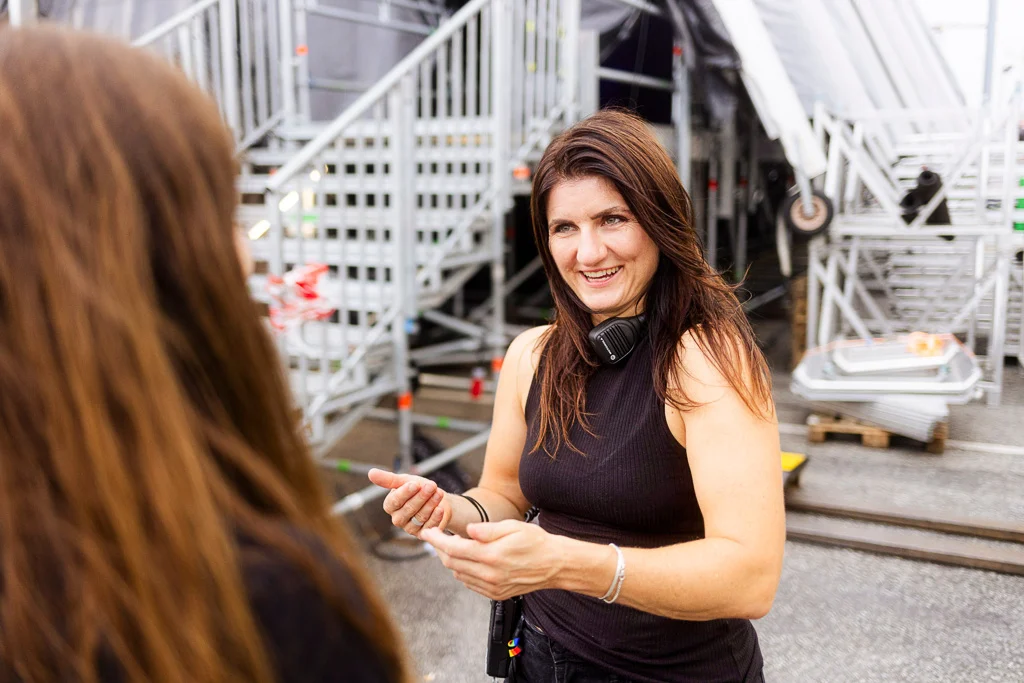
The live entertainment and concert production industry has long been characterized by its high-octane environment, technical complexity, and a cultural framework historically dominated by men. Nike Ostendarp, a seasoned mediator and conflict consultant with two decades of experience in the field, has recently brought these invisible power structures to the forefront of industry discourse. By analyzing the intersection of personal experience and systemic organizational behavior, Ostendarp highlights the subtle yet pervasive ways in which gender disparity manifests, even in professional environments that perceive themselves as progressive or egalitarian. Her insights provide a critical roadmap for understanding how differing perceptions of reality can lead to deep-seated industrial conflicts and why structural change is essential for the future viability of the live sector.
Two Decades of Transformation: From Production to Mediation
The trajectory of Nike Ostendarp’s career offers a unique vantage point on the evolution of the European live music scene. Entering the industry approximately twenty years ago, Ostendarp began her journey through a foundational internship at a concert agency. This entry point led to an immediate immersion in the rigorous demands of local concert management, booking, and large-scale production. Over the following two decades, she navigated the complexities of the Hamburg club scene, major concert halls, and thousands of live performances, mastering the logistical and interpersonal demands of the "Rock ’n’ Roll" lifestyle.
During this period, Ostendarp describes an environment where being the sole woman in a production environment was not merely common but expected. Whether standing between five heavy metal bands or managing a fifty-person travel party and an entirely male technical crew, the presence of a female professional in a leadership or coordination role was often an anomaly. For many years, this disparity was viewed through the lens of "normality," a standard industry condition that professionals simply adapted to. However, the transition from active production management to mediation and conflict consultancy allowed Ostendarp to re-evaluate these experiences through a sociological and psychological framework, revealing the underlying patriarchal structures that define the industry’s daily operations.
The Architecture of Invisible Power Structures
One of the most significant contributions of Ostendarp’s analysis is the identification of "invisible" power dynamics. In the live business—specifically within booking and technical production—women have historically been relegated to supportive or "nurturing" roles, such as artist care, catering, or administrative assistance. When women do break into decision-making circles, they often find themselves as the singular female voice in a room governed by a specific set of masculine social codes.
Ostendarp notes that while the atmosphere in these circles is often described as "casual" or "heartfelt," it is frequently punctuated by derogatory humor and sexist remarks. For many women in the industry, the survival mechanism involves "laughing along" or ignoring these microaggressions to maintain professional standing. The realization that these behaviors are not just individual quirks but symptoms of a larger patriarchal structure often comes only in retrospect.
Furthermore, Ostendarp identifies the concept of "space" as a primary indicator of power. This manifests in several specific ways:
- Physical Space: The self-evident manner in which men often occupy more physical room in meetings or on-site.
- Linguistic Dominance: Disparities in speech time and the frequency of interruptions.
- Visual Communication: The tendency for male decision-makers to maintain eye contact with other men while bypassing female colleagues, even when the woman in the room is the primary stakeholder or expert on the topic.
In such scenarios, female professionals often internalize these dynamics as personal failings—believing they are "too quiet" or "too sensitive"—rather than recognizing them as established patterns of exclusion. Ostendarp argues that "space equals power," and until this is consciously addressed, true gender equity cannot be achieved.
Statistical Context and the Gender Gap in Live Events
To understand the scope of the issues raised by Ostendarp, it is necessary to examine the broader statistical landscape of the entertainment industry. While data collection on gender in technical live production has historically been sparse, recent studies from the early to mid-2020s have begun to quantify the disparity.
According to industry reports from organizations such as the Production Services Association (PSA) and various European cultural observatories, women continue to represent a small minority in technical and high-level production roles. In technical touring positions—including sound engineering, lighting design, and stage management—representation often falls below 10%. Conversely, women are overrepresented in lower-paid, service-oriented roles within the same industry.
The "leaky pipeline" phenomenon is also prevalent; while music and production management courses often see a 50/50 gender split at the student level, the percentage of women decreases significantly as one moves up the career ladder into senior executive and "Head of Production" roles. This data supports Ostendarp’s observation that structural barriers, rather than a lack of interest or talent, are the primary drivers of the industry’s gender imbalance.
The Conflict of Perceptions: Why "Truth" is Subjective
In her current role as a mediator, Ostendarp frequently encounters a phenomenon she calls the "divergence of perception." This is the primary source of conflict when discussing gender justice within companies. Many men in the industry report a vastly different experience of the workplace; they may support the idea of equality in principle but fail to see the specific problems described by their female colleagues.
This leads to a recurring conflict cycle:
- Structural Criticism as Personal Attack: Men in leadership positions often interpret systemic critiques as personal accusations of sexism, leading to a defensive posture.
- Withdrawal and Fear: Some men may withdraw from meaningful engagement or mentorship of women for fear of "saying the wrong thing" or being misinterpreted.
- Frustration and Resignation: Women feel their lived experiences are being denied or minimized, leading to increased anger and, eventually, a withdrawal from the industry.
Ostendarp emphasizes that mediation in these contexts is not about determining who is "right" or who is "guilty," but about recognizing that different people can look at the same situation and see two entirely different realities. Breaking this cycle requires a high level of empathy and the willingness to acknowledge that one can participate in a harmful structure without being an "individually bad" person.
Industry Responses and the Path to Reform
The reaction to these insights within the live music sector has been mixed but increasingly attentive. Major festival promoters and global touring companies have begun to implement Diversity, Equity, and Inclusion (DEI) programs, though Ostendarp warns that these must be more than "window dressing."
For meaningful change to occur, Ostendarp suggests that companies must:
- Create Reflexive Spaces: Establish formal environments where employees can discuss power dynamics and communication styles without the fear of professional retribution.
- Address Internalized Misogyny: Acknowledge that women can also reproduce patriarchal structures and exhibit misogynistic behaviors as a result of their socialization within the industry.
- Prioritize Conflict Competence: Train managers in mediation and active listening to bridge the gap between differing perceptions.
Several European industry bodies have recently called for more transparent hiring practices and the implementation of "codes of conduct" on tours to mitigate the derisive environments Ostendarp described. The goal is to move away from the "Rock ’n’ Roll" excuse for unprofessional behavior and toward a corporate culture that values technical expertise and interpersonal respect equally.
Broader Implications for the Future of Live Entertainment
The insights provided by Nike Ostendarp extend beyond the moral imperative of fairness; they touch upon the economic and operational sustainability of the live entertainment industry. As the sector faces ongoing labor shortages in technical roles, the failure to retain female talent represents a significant loss of expertise and innovation.
Furthermore, as the audience for live music becomes more diverse and socially conscious, the industries that produce these experiences are under increasing pressure to reflect those values. A production crew that is homogenous in its makeup and perspective is less equipped to navigate the globalized and multifaceted nature of modern entertainment.
In conclusion, the work of Nike Ostendarp serves as a catalyst for a necessary transformation. By bringing the "invisible" into the light, she challenges the industry to move beyond its traditional hierarchies. The path forward involves a difficult but essential dialogue between genders, a commitment to understanding structural power, and the development of a new "normality" where professional competence is not overshadowed by the politics of space and gender. The evolution of the live business from a "boys’ club" to a modern, inclusive industry is not just a social goal—it is a prerequisite for its continued relevance in the 21st century.
