

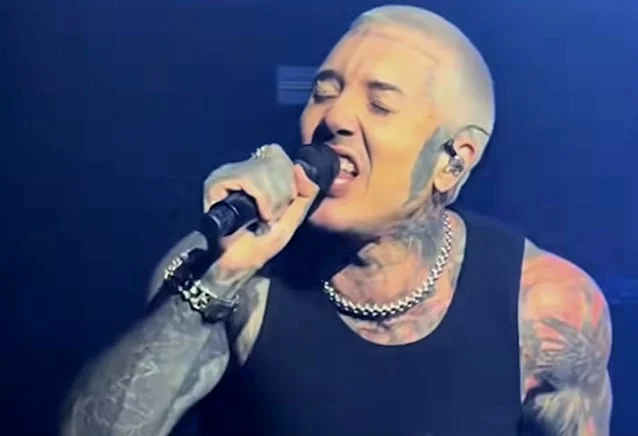
In a candid conversation with Esther Wang of Estherini, Bring Me The Horizon vocalist Oli Sykes delved into the intricate journey of the band’s sonic metamorphosis over their two-decade career. Addressing the evolution from their early, aggressive deathcore beginnings to their current status as purveyors of stadium-filling alternative rock, infused with pop, electronic, and cyber-metal elements, Sykes articulated a clear vision rooted in artistic authenticity and a relentless pursuit of innovation. He asserted that this dramatic shift was not a reactive response to external pressures but a deliberate and organic progression, a testament to the band’s core philosophy of perpetual reinvention.
The Genesis of a Sonic Shift: From Derivative Roots to a Distinctive Identity
Sykes traced the band’s initial creative impulse back to their debut album, 2006’s "Count Your Blessings." At this nascent stage, Bring Me The Horizon, like many emerging bands, found inspiration in the artists they admired. "I think when we wrote our first album, [2006’s] ‘Count Your Blessings,’ it was more derivative of the bands we loved, we were very inspired by," Sykes explained. "We just wanted to sound like X, Y and Z. It wasn’t like we were happy ripping off bands and just, like, ‘We just wanna sound like that.’" This period was characterized by a desire to emulate established sounds, a common starting point for musicians honing their craft.
However, the success of their early material, despite its derivative nature, sparked a pivotal internal dialogue. Following the release of "Count Your Blessings," the band found themselves at a crossroads, questioning their artistic direction. "Whereas after that album, we were, like, ‘Okay, that actually went really well. What’s our sound? What do we wanna sound like? What makes us special and unique and sets us apart from everyone else?’" Sykes recalled. The realization that they were becoming indistinguishable from their peers served as a potent catalyst for change. "By the end of that album, there was a lot of bands that sounded like us, and we sounded like a lot of bands, and we were just, like, ‘Okay, we wanna step out of that world now, and we wanna make a sound that makes us feel different from everyone else.’"
This introspection led to the creation of their 2008 sophomore album, "Suicide Season." The transition marked a significant departure, embracing a more accessible, albeit still intense, sound that incorporated elements of nu-metal and alternative rock. The initial reception was far from universally positive. "And we wrote this album called ‘Suicide Season’ [2008]. And I remember when we first released it, when it first came out, the first week, people hated it," Sykes admitted. "People were, like, ‘What the hell is this? They sound like nu metal. It sounds like SLIPKNOT,’ which at the time was not the cool thing for this scene. And they were, like, ‘What’s wrong with his voice? Why is he not screaming as much anymore?’ And all this stuff."
This wave of criticism and fan backlash created a moment of existential doubt for the band. "And I remember [thinking], like, ‘Oh, my God, we’ve like ruined our career.’" However, the enduring power of artistic conviction eventually prevailed. "But then over the next few months, people started to get it. And it became this huge… Like, it just pushed us into the top of our game, really. And I think we took a big risk by doing that, and it paid off so well." The success of "Suicide Season" solidified a crucial internal mantra: "It was another kind of internal kind of message to ourselves. We were, like, ‘Let’s always do that.’"
The Unwavering Rule: Never Write the Same Album Twice
This principle of constant evolution became the bedrock of Bring Me The Horizon’s creative process. Sykes emphasized that each subsequent album has been a deliberate act of pushing boundaries and exploring new sonic territories. "Every time we write an album, we push ourselves again. We try and do something different. We never write the same album twice," he stated unequivocally. This commitment to originality is not merely an artistic preference; it has been the driving force behind their sustained relevance and commercial success.
The band’s willingness to experiment with diverse instrumentation and production techniques has allowed them to incorporate a wide array of influences, from electronic soundscapes to anthemic pop sensibilities. "Because it worked, and it just kept working time and time again, and we were just, like, ‘What’s next?’ And I think just a creative desire to just go, ‘What’s next? What instruments? What mediums?’ As soon as we could get electronics and all that stuff, we just wanted to explore every avenue. We always felt like we needed a new thing. And that’s just always worked for us. And I think we’ll always be that band. We’ll never write the same album twice."
This approach has positioned Bring Me The Horizon at the forefront of modern rock, allowing them to appeal to a broad demographic while maintaining a distinct artistic identity. Their discography showcases a remarkable breadth, encompassing the visceral energy of "There Is a Hell Believe Me I’ve Seen It. There Is a Heaven Let’s Keep It a Secret" (2010), the expansive rock of "Sempiternal" (2013), the pop-infused "That’s the Spirit" (2015), and the genre-bending explorations of their "Post Human" series, beginning with "Post Human: Survival Horror" (2020) and continuing with "Post Human: Nex Gen" (2024). This consistent reinvention has prevented creative stagnation and kept their fanbase engaged, anticipating what sonic surprise the band might unveil next.
Navigating Fan Expectations: Authenticity as the Ultimate Compass
The inherent risk in such radical musical shifts often involves alienating a segment of the existing fanbase. However, Sykes has developed a profound understanding of the relationship between artistic integrity and audience reception. When questioned about concerns over losing fans with each significant stylistic change, his response revealed a mature perspective honed by experience. "Not anymore. Maybe at a time," he admitted. "But I’ve just realized that as soon as you start to try and think about what your fans want and you try and write music to either you think, ‘Oh, I’m gonna write this song. It’s gonna be huge,’ or you go, ‘I’m gonna write this song. This is what the fans are gonna want,’ it never plays out like that."
Sykes firmly believes that the most compelling music emerges from a place of personal passion and artistic conviction, rather than a calculated attempt to cater to external demands. "It always fails, because that’s not how great music’s written. You don’t write music for someone else. You write music for yourself. You write music that really excites you." This philosophy underpins the band’s creative output, ensuring that each track and album reflects their current artistic sensibilities and genuine enthusiasm. "And that’s all we do. Every time we put out a record, every song on that record is, like, ‘I love this. In this moment, this is perfect for me.’"
He acknowledges that not every fan will embrace every artistic direction, but he argues that prioritizing authenticity ultimately fosters a stronger connection with a dedicated audience. "And, yeah, I know some people aren’t gonna like it, but at the end of the day, if I try and write music for those people, I’ll end up writing music that nobody likes." The key, Sykes suggests, lies in the genuine nature of the music. "So all I can do is write music that I love, that excites me, and I think when you do that, if you love it, there’s gonna be all these other people out there that feel the same way. And if it’s genuine and it’s not contrived and it’s not forced, I think — that’s the thing with our music."
The enduring appeal of Bring Me The Horizon, even amidst their stylistic shifts, can be attributed to this perceived authenticity. "Every album we’ve got is someone’s favorite album. There’s not a single album we’ve ever written where it’s, like, everyone agrees, ‘We hate that album,’ even if there’s an album we’ve got where less people like it and more people like this other one." The consistent feedback from fans reinforces this notion. "I’ve heard every single song, like, people come up to me, ‘This is my favorite song.’ And I think that’s because even if you don’t like what we do, it never feels disingenuous. It’s always, like, this is what we wanna do. We’re not trying to write music to be bigger. We’re not trying to write music to be like someone else. It’s just this is genuinely what we like."
Sykes’ personal experiences have further cemented this conviction. "And there’s been a couple of times where I’ve gone against that, and every time I’ve just [been], like, ‘Oh, that did not work.’" This realization has led him to embrace his innate creative drive as the sole reliable guide for their musical endeavors. "So it’s all I know. It’s the only way I know to write music and be successful, is to just make music that I love."
A Legacy of Reinvention: From "Count Your Blessings" to Global Acclaim
Bring Me The Horizon’s commitment to this philosophy of constant evolution is further underscored by their recent activities. On July 10, the band released a 20th-anniversary re-recording of their debut album, "Count Your Blessings." Titled "Count Your Blessings | Repented," this project was conceptualized as a "reactivation" and "recontextualization" of the 2006 LP, breathing new life into early tracks such as "Pray For Plagues," "Slow Dance," and "A Lot Like Vegas."
The re-recording saw Sykes and guitarist Lee Malia collaborating with producer Odeholm, aiming to deliver a version of the album that is "reborn, sharper, heavier, and more vital than ever." Notably, the track "Liquor & Lost Love" was presented under its original working title, "Dragon Slaying," offering a glimpse into the band’s creative process during their formative years. To commemorate the release, Bring Me The Horizon performed "Count Your Blessings" in its entirety on July 10 at Manchester, United Kingdom’s B.E.C. Arena as part of the Outbreak festival, a poignant nod to their origins.
Globally, Bring Me The Horizon has cemented its status as one of the most influential modern rock acts. With over 6.6 million albums sold worldwide and a staggering 9.4 billion global streams, their reach extends far beyond their initial niche. Their commitment to pushing sonic boundaries has resonated with a vast and diverse audience, establishing them as a formidable force in the contemporary music landscape.
Further testament to their enduring impact is the recent screening of their concert film, "L.I.V.E. In São Paulo (Live Immersive Virtual Experiment)," in theaters in late March. Filmed at Allianz Parque Stadium in São Paulo, Brazil, the film captures the band’s monumental headline performance in late 2024, supporting their "Post Human: Nex Gen" LP. This event marked their largest headline show to date, showcasing their ability to command massive stages with their electrifying live performances. The concert film was subsequently released on LP and CD on April 10.
The journey of Bring Me The Horizon from their deathcore roots to their current multifaceted sonic identity is a compelling narrative of artistic courage and unwavering dedication to self-expression. Oli Sykes’ insights highlight a band that has consistently prioritized authenticity and innovation over complacency, a strategy that has not only ensured their longevity but has also propelled them to the upper echelons of the global music scene. Their story serves as a powerful reminder that true artistic success often lies in the courage to evolve and to create music that resonates deeply with the artists themselves, trusting that such genuine passion will inevitably find its audience.
