

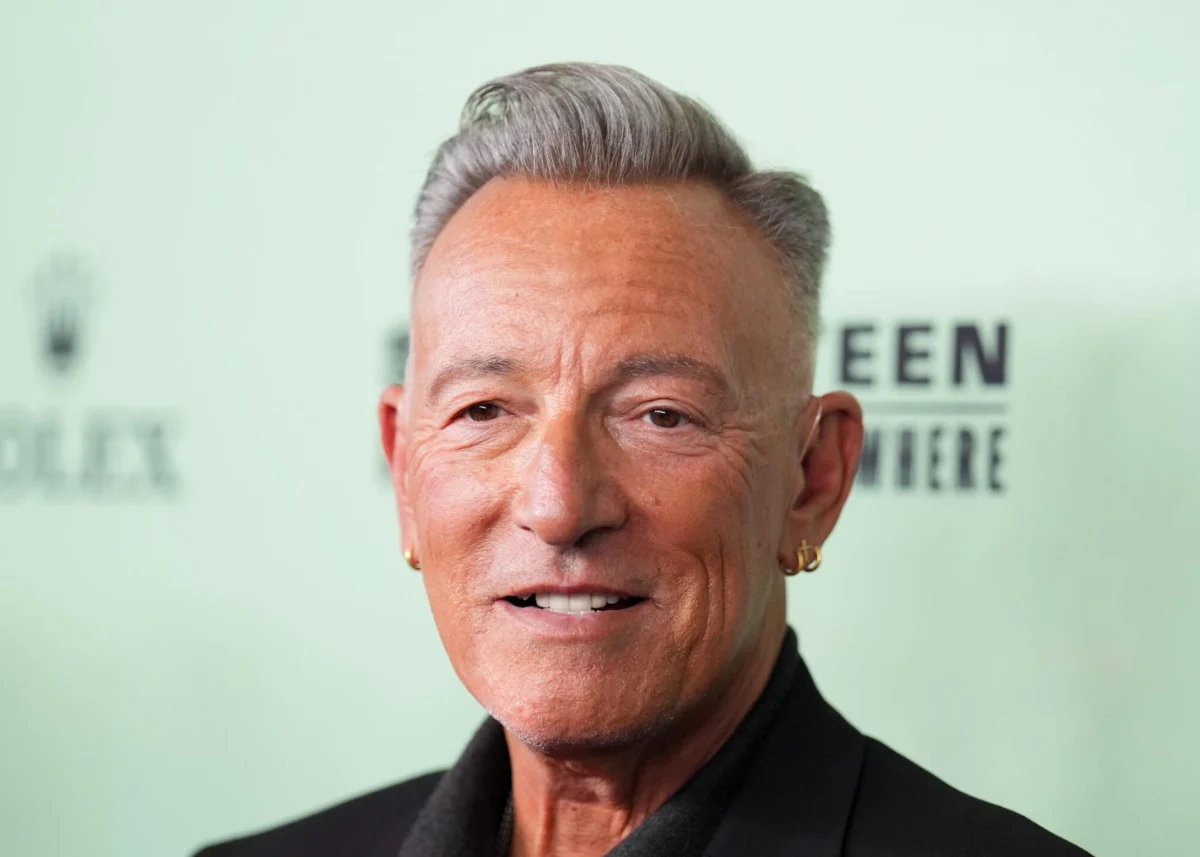
Bruce Springsteen, a revered figure whose career has spanned over five decades, recently articulated his unwavering commitment to infusing his music with potent political commentary, even if it means alienating segments of his vast global fanbase. In a candid interview with Rolling Stone, the iconic musician delved into the motivations behind his recent "Land of Hope and Dreams Tour," a 20-date U.S. trek that served as a pointed reflection of America’s tumultuous political landscape in 2026. Springsteen, often dubbed "The Boss," made it unequivocally clear that at this stage of his illustrious career, artistic integrity and message supersede commercial appeal or universal approbation. He emphasized, "I’m old now and I do what I want to do. This was the show I wanted to make, the story I wanted to tell."
The Genesis of a Politically Charged Tour
The "Land of Hope and Dreams Tour," which commenced on March 31 in Minneapolis and concluded on May 30 in Philadelphia, was not merely a retrospective of Springsteen’s iconic catalog. Instead, it was meticulously curated to serve as a sonic and narrative snapshot of the contemporary American socio-political climate. This ambition was underscored by the tour’s genesis: the January 2026 release of "Streets in Minneapolis," a poignant protest song directly addressing the tragic deaths of René Good and Alex Pretti during a confrontation with federal immigration authorities. This specific event, occurring in a city that has become synonymous with significant social justice movements in recent years, provided a potent focal point for Springsteen’s artistic response. By starting the tour in Minneapolis, Springsteen symbolically rooted his message in a site of contemporary struggle, signaling the tour’s intent from its very first note. The choice of Philadelphia, a city deeply steeped in American revolutionary history and the birthplace of the nation, for the tour’s finale, further reinforced the overarching theme of national reflection and re-evaluation.
The tour’s structure and setlist were carefully designed to contextualize his decades-long body of work within the urgent debates of 2026. Springsteen’s willingness to provoke and challenge his audience has been a hallmark of his artistry, evolving from the gritty narratives of Nebraska to the more overtly political statements of The Ghost of Tom Joad. This tour, he affirmed, was a direct extension of that philosophy.
A Legacy of Social Commentary and Activism
Springsteen’s journey as a politically engaged artist is neither new nor surprising; it is deeply interwoven with the fabric of his career. From the melancholic reflections on blue-collar despair in Darkness on the Edge of Town (1978) to the stark economic realities depicted in The River (1980), his music has consistently resonated with the struggles of ordinary Americans. However, his political messaging became more explicit and direct in later decades. His critically acclaimed 1995 album, The Ghost of Tom Joad, inspired by John Steinbeck’s The Grapes of Wrath, directly addressed issues of immigration, poverty, and social inequality, earning him a Grammy Award for Best Contemporary Folk Album. This album marked a significant turn towards more acoustic, narrative-driven protest songs.
Following the September 11th attacks, Springsteen released The Rising (2002), an album that, while offering solace and hope, also explored profound themes of loss, resilience, and national identity in a post-9/11 world. Throughout the 2000s and 2010s, he became an increasingly vocal advocate for progressive causes, performing at rallies and openly endorsing Democratic presidential candidates such as John Kerry, Barack Obama, and Hillary Clinton. His support for these figures was rooted in a belief that their policies aligned with the core American values of fairness, equality, and opportunity that he has consistently espoused in his music. He has often used his concerts as forums for civic engagement, encouraging voter registration and participation.
This historical trajectory provides crucial context for the "Land of Hope and Dreams Tour." It demonstrates that Springsteen’s current stance is not a recent pivot but rather a deepening and continuation of a lifelong artistic and personal commitment to social justice and political engagement. His comfort with potential backlash stems from this deep-seated conviction, reinforced by decades of using his platform to speak truth to power, often drawing inspiration from American folk traditions of protest music.
Re-contextualizing American Anthems for a Divided Nation
The setlist for the "Land of Hope and Dreams Tour" was a deliberate assemblage of songs designed to confront and reframe narratives about American identity in 2026. The concert experience began with Edwin Starr’s incendiary 1970 anti-war anthem, “War,” immediately setting a confrontational and politically charged tone. It concluded with Bob Dylan’s poignant 1964 civil rights anthem, “Chimes of Freedom,” a song that resonates with universal themes of human rights, liberation, and empathy for the marginalized. Sandwiched between these powerful bookends, Springsteen meticulously wove a narrative using his own politically charged catalog.
Central to this narrative was the iconic "Born in the U.S.A." — a song frequently misinterpreted as a jingoistic celebration of American exceptionalism, particularly by conservative politicians during the 1980s. Springsteen revealed that he had rarely performed the song in the U.S. in recent years precisely because of this pervasive misunderstanding of its original intent. On this tour, however, he found a way to reclaim its original, critical message. By placing it strategically between "War" and tracks like "Death to My Hometown" and "Youngstown," he meticulously re-contextualized it. "Death to My Hometown" powerfully chronicles the economic devastation wrought by corporate greed and deindustrialization, particularly impactful in regions like the Rust Belt, while "Youngstown" laments the decline of America’s industrial heartland and its impact on the working class. This arrangement allowed "Born in the U.S.A." to revert to its intended meaning: a lament for the plight of Vietnam veterans and a searing critique of a nation that, despite its promises, often fails its most vulnerable citizens. The inclusion of "Long Walk Home" further reinforced themes of disillusionment and the search for national redemption.
Beyond the music, Springsteen punctuated his performances with direct, unscripted speeches criticizing the Trump administration, linking past grievances with present political realities. These monologues, delivered with the raw passion and storytelling prowess characteristic of his live shows, were integral to the tour’s objective of presenting "the state of the nation for 2026." Audience reactions to these segments varied, with fervent applause from supporters and visible discomfort or even departures from those who disagreed, reflecting the deeply polarized nature of the contemporary political climate.
Artist Integrity vs. Fan Alienation
Perhaps the most striking revelation from the Rolling Stone interview was Springsteen’s comfort with the prospect of alienating fans who might disagree with his political views, particularly those who support Donald Trump. "I’m old now and and I do what I want to do," he stated with a conviction that speaks volumes about an artist liberated from the pressures of universal appeal. This sentiment reflects a profound dedication to artistic integrity, prioritizing the message over maintaining an undifferentiated mass audience. "I’m sure there were people, and I’ve read things where people were vehement about the content of the show," he acknowledged, adding, "And that’s just the way the chips fall."
This phenomenon is not unique to Springsteen but highlights a broader trend in the entertainment industry where artists increasingly leverage their platforms for social and political advocacy. While some fans appreciate the authenticity and courage of such stances, others express a desire for artists to remain apolitical, viewing entertainment as an escape from the contentious realm of politics. A 2023 study by the Pew Research Center, for instance, indicated that nearly 40% of Americans believe celebrities should avoid political endorsements, while a similar percentage believes they have a responsibility to speak out. For artists like Springsteen, who have consistently woven social commentary into the fabric of their work, separating the art from the political message becomes an impossibility.
His response to potential backlash — "And that’s just the way the chips fall" — suggests a seasoned artist who has long understood the transactional nature of fame versus the enduring power of conviction. It implies a conscious decision to connect with an audience that shares his values, rather than dilute his message for broader acceptance. This approach, while potentially impacting fan numbers or short-term commercial gains, often solidifies an artist’s legacy and deepens their connection with their core audience, fostering a community built on shared principles. Industry analysts might point to other artists who have weathered similar storms, such as the Dixie Chicks (now The Chicks) who faced significant backlash for criticizing President George W. Bush, only to later reclaim their narrative and artistic independence. Springsteen’s stance aligns with a tradition of artists who believe their role extends beyond mere entertainment to cultural commentary and activism.
Broader Political Engagement and Future Endeavors
Springsteen’s engagement extends beyond his tour and concert film. He openly voiced his hopes for the upcoming midterm elections, expressing a desire for Democrats to regain control of both the House and Senate. This statement underscores his belief in the democratic process and his alignment with a particular political agenda he sees as beneficial for the nation. His commitment to these causes will see him make at least one more political appearance before the midterms, joining fellow activist and musician Tom Morello for a show in Washington, D.C. Morello, known for his work with Rage Against the Machine and Audioslave, is a long-standing advocate for social justice, making their collaboration a natural synergy of shared political conviction and musical power, likely aimed at mobilizing voter turnout.
Beyond the political arena, Springsteen also offered a glimpse into his musical future. He revealed that he has two new albums in the pipeline: one already completed and another he intends to finalize and release first. This news will undoubtedly excite his dedicated followers, demonstrating his continued prolificacy and creative drive. While he remains open to future touring, he indicated a shift away from the exhaustive, large-scale runs characteristic of past E Street Band tours, some of which famously stretched to 140 shows. This suggests a desire for a more measured approach, allowing him to balance creative output with a sustainable touring schedule, potentially focusing on more intimate or thematically specific performances that might further deepen the connection with his audience.
The release of the "Land of Hope and Dreams" concert film, with the first seven songs from the Philadelphia performance already streaming on YouTube as Bruce Springsteen and the E Street Band: Land of Hope and Dreams American Tour (Philadelphia Freedom Cut), further amplifies the tour’s message. Releasing it in installments allows for sustained engagement and perhaps a more deliberate consumption of its thematic content, mirroring the narrative arc of the live shows. The premiere of "Springsteen: Deliver Me from Nowhere" at the 63rd New York Film Festival on September 28, 2025, which is a biopic reportedly exploring the creation of his iconic Nebraska album, also speaks to his enduring cultural relevance and his willingness to revisit and reflect on his own history as a storyteller. This biographical project serves as another layer in understanding the depth and consistency of his artistic vision, providing audiences with further insight into the sources of his profound social commentary.
In conclusion, Bruce Springsteen, at 77, continues to embody the spirit of a true American troubadour – not merely entertaining, but challenging, questioning, and reflecting the complex soul of the nation through his art. His "Land of Hope and Dreams Tour" and its accompanying concert film stand as a testament to an artist unafraid to confront the political realities of his time, prioritizing a powerful message over popular consensus. It reinforces his status not just as a rock icon, but as a vital cultural commentator whose voice remains as relevant and resonant as ever in the ongoing American dialogue.
