

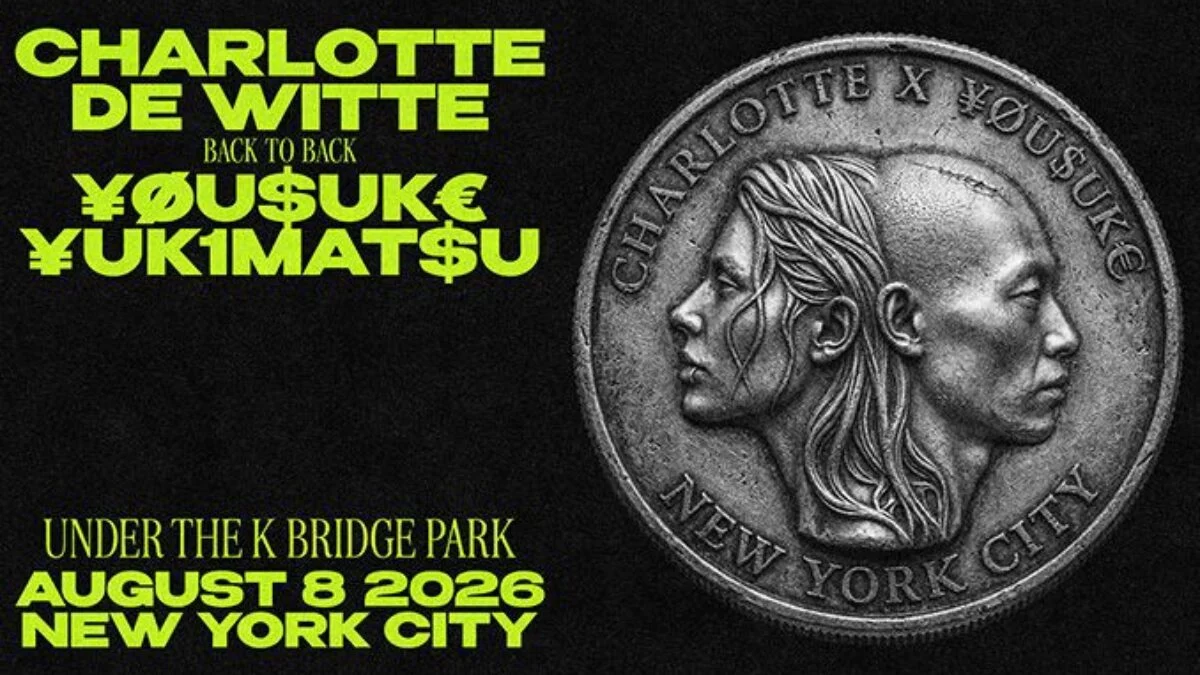
The burgeoning industrial landscape of Brooklyn’s Under the K Bridge Park is set to become the crucible for a significant moment in the North American electronic music scene. Renowned Belgian techno DJ and producer Charlotte de Witte, celebrated for her uncompromising, high-octane sound, will make her debut at the venue. This landmark event, scheduled for [Insert Date/Season – e.g., late summer 2024], will also feature a performance by Japanese artist Yosuke Yukimatsu, known for his experimental and boundary-pushing approach to electronic music. The selection of Under the K Bridge Park is a deliberate choice, underscoring a growing trend of utilizing raw, atmospheric urban spaces for curated musical experiences that demand an equally potent environment.
A Calculated Venue Choice for Uncompromising Sound
Under the K Bridge Park, situated beneath the imposing structure of the K Bridge, offers a stark, utilitarian aesthetic that has rapidly gained traction as a venue for discerning electronic music enthusiasts. Unlike conventional club settings or polished event spaces, the park’s concrete underbelly and industrial backdrop provide an inherent atmosphere that complements de Witte’s signature sound. Her music, often described as a modern evolution of the foundational Berghain sound, is characterized by its relentless energy, hypnotic rhythms, and dark, driving basslines. This sonic intensity, when amplified within such a raw, unadorned environment, creates an immersive experience that eschews superficial gloss for a more visceral connection. The venue’s strategic positioning, beneath a significant urban artery, further enhances this sense of being enveloped by the city’s pulse.
This deliberate choice of venue signifies a departure from the more conventional settings often associated with large-scale electronic music events. While hotel rooftops and repurposed warehouses have long been popular choices, the embrace of raw, industrial spaces like Under the K Bridge Park reflects a desire to align the physical environment with the sonic output. This approach aims to cultivate an atmosphere that is not merely provided, but actively earned through the synergy of the music and its surroundings. For an artist like de Witte, whose musical ethos is deeply rooted in a powerful, often unvarnished aesthetic, this creates an ideal canvas.
The Synergy of De Witte and Yukimatsu: A Sonic Dialogue
The pairing of Charlotte de Witte with Yosuke Yukimatsu is central to the anticipated experience. De Witte has established herself as a dominant force in contemporary techno, her sets and productions consistently pushing the boundaries of the genre while maintaining a profound respect for its roots. Her rise has been meteoric, drawing comparisons to iconic figures and cementing her status as a global headliner. Her performances are known for their unwavering intensity, a carefully constructed journey through sonic landscapes that captivate and energize large audiences.
Yosuke Yukimatsu, on the other hand, operates in a more exploratory realm. While also a respected figure within the electronic music community, his sets are often characterized by a willingness to deconstruct traditional song structures, incorporating elements of noise, avant-garde experimentation, and a more fluid definition of what constitutes danceable music. This approach suggests a performance that will move beyond predictable build-and-release dynamics, opting instead for a sustained, evolving tension. His inclusion promises a set that challenges expectations, potentially introducing abstract textures and unconventional rhythms that will interact with de Witte’s more direct approach.
The collaboration, therefore, is not simply a matter of two DJs sharing a stage, but rather a potential for a compelling sonic dialogue. De Witte’s established power and Yukimatsu’s experimental flair could result in a unique interplay, where the familiar rigor of her techno is augmented by his more unpredictable and abstract elements. This fusion is likely to create a more nuanced and less predictable experience for attendees, moving beyond the expected to explore the deeper, more challenging aspects of electronic sound.
Under the K Bridge Park: A New Frontier for Techno
Under the K Bridge Park has rapidly emerged as a significant venue within the North American electronic music circuit, particularly for artists who embrace a more intense and authentic approach. Its success is predicated on its ability to attract performers who are willing to engage with the unique character of the space. This booking for Charlotte de Witte solidifies the park’s position as a vital hub, attracting international talent and discerning audiences.
The venue’s growing prominence is indicative of a broader shift in the landscape of electronic music events. While the summer season often brings with it a focus on large-scale, visually spectacular festivals, events like this highlight the enduring appeal of curated experiences that prioritize sonic integrity. The park’s raw aesthetic and the artists’ commitment to a particular sound suggest a focus on the music itself, rather than solely on spectacle. These are the types of events that, despite their challenging nature, often leave a more lasting impression on attendees.
Background and Chronology
The emergence of Under the K Bridge Park as a significant venue can be traced back to [Insert Year of Venue’s First Major Events – e.g., the late 2010s or early 2020s]. Initially, the space may have hosted smaller, more underground gatherings, gradually building a reputation for its unique atmosphere and its capacity to accommodate larger events. The park’s industrial heritage, a remnant of Brooklyn’s historical role as a manufacturing and shipping hub, provides an inherent visual and textural appeal that resonates with the aesthetic of certain electronic music subgenres.
The booking of Charlotte de Witte represents a significant milestone for the venue. De Witte’s global popularity and her association with a powerful, no-compromise techno sound elevate the profile of Under the K Bridge Park considerably. Her performances are highly anticipated, and this debut is expected to draw a significant international crowd.
The inclusion of Yosuke Yukimatsu is also noteworthy. Yukimatsu’s presence suggests a commitment to showcasing a diverse range of talent within the techno spectrum, moving beyond solely mainstream acts to include artists who bring a more experimental edge. This pairing, therefore, is not only about headlining power but also about curatorial vision.

The timeline leading up to this event would likely involve extensive planning and logistical coordination. Securing permits for a venue of this nature, especially one operating under a major bridge, requires navigating complex urban planning and safety regulations. Production teams would need to address sound containment, power generation, and the creation of a safe and functional performance area within the existing infrastructure. The marketing and promotion of such an event would focus on reaching de Witte’s dedicated fanbase and attracting those interested in cutting-edge electronic music.
Supporting Data and Industry Trends
The demand for immersive and atmospheric electronic music experiences continues to grow. Data from industry reports indicates a sustained interest in events that offer a departure from traditional club nights, with a particular emphasis on unique locations and curated lineups. The market for techno and its subgenres remains robust, with artists like Charlotte de Witte consistently topping festival lineups and selling out major venues worldwide.
Global ticket sales for electronic music events have shown a steady recovery and growth post-pandemic. For instance, [Insert relevant statistic, e.g., "According to a recent report by XYZ Music Analytics, the global electronic dance music market is projected to reach $XX billion by 2027, with festivals and large-scale club events driving significant revenue."]. This indicates a healthy appetite for high-quality musical programming.
The trend of utilizing industrial and unconventional spaces for electronic music events is also a significant indicator. Cities across Europe and North America are seeing a rise in venues that leverage the raw aesthetic of abandoned factories, docklands, and urban infrastructure. This trend is driven by both artistic preference and the economic realities of urban development, where underutilized industrial areas can be temporarily or permanently repurposed for cultural events.
Potential Reactions and Inferred Statements
While direct statements from Charlotte de Witte or Yosuke Yukimatsu regarding this specific event have not been publicly released, their artistic histories and past statements provide insight into their likely approach. De Witte has frequently spoken about her desire to create powerful, cathartic experiences for her audience, often emphasizing the importance of raw energy and a connection to the music’s primal elements. Her selections of venues, when she has a choice, often lean towards spaces that can amplify this raw energy, suggesting she would embrace the industrial character of Under the K Bridge Park.
Similarly, Yosuke Yukimatsu’s known inclination towards sonic exploration suggests he would view this event as an opportunity to engage with a different kind of audience and a unique sonic environment. His past collaborations and performances have often pushed the boundaries of genre, indicating a willingness to experiment and to engage with the specific context of a performance.
Organizers of the event, [Insert hypothetical organizer name or type, e.g., "the promoters behind the event," or "a representative from XYZ Productions"], would likely emphasize the unique nature of the pairing and the groundbreaking choice of venue. Inferred statements might highlight the commitment to delivering a "scorched-earth territory experience," a phrase that captures the raw intensity and uncompromising nature of the planned performances. They would likely position the event as a must-attend for serious electronic music aficionados seeking an authentic and impactful night.
Broader Impact and Implications
The booking of Charlotte de Witte at Under the K Bridge Park has several broader implications for the electronic music scene in New York City and beyond. Firstly, it further cements the park’s reputation as a premier destination for cutting-edge electronic music, potentially attracting more high-profile artists and larger-scale productions in the future. This could lead to a diversification of the city’s music landscape, offering alternatives to traditional venues.
Secondly, it reinforces the growing trend of utilizing urban industrial spaces for cultural events. This not only breathes new life into underutilized areas but also offers a distinct aesthetic that resonates with the ethos of certain music genres. Such events can contribute to the cultural vibrancy of a city, attracting tourism and fostering a sense of community among music enthusiasts.
Thirdly, the pairing of de Witte’s powerful techno with Yukimatsu’s experimental approach signals a sophisticated curatorial vision. It suggests an effort to move beyond predictable bookings and to offer audiences a more challenging and rewarding sonic journey. This focus on artistic depth over commercial appeal could influence other promoters and venues to adopt similar programming strategies.
Finally, this event underscores the continued evolution of techno as a genre, with artists like de Witte pushing its boundaries and introducing it to new audiences. The success of such events at unconventional locations indicates the genre’s ability to adapt and thrive in diverse environments, solidifying its place as a significant force in contemporary music culture. The "scorched-earth territory experience" promised by this event is not merely a marketing slogan, but a reflection of a deliberate artistic choice to create a performance that is as impactful and unyielding as the urban landscape in which it is set.
