

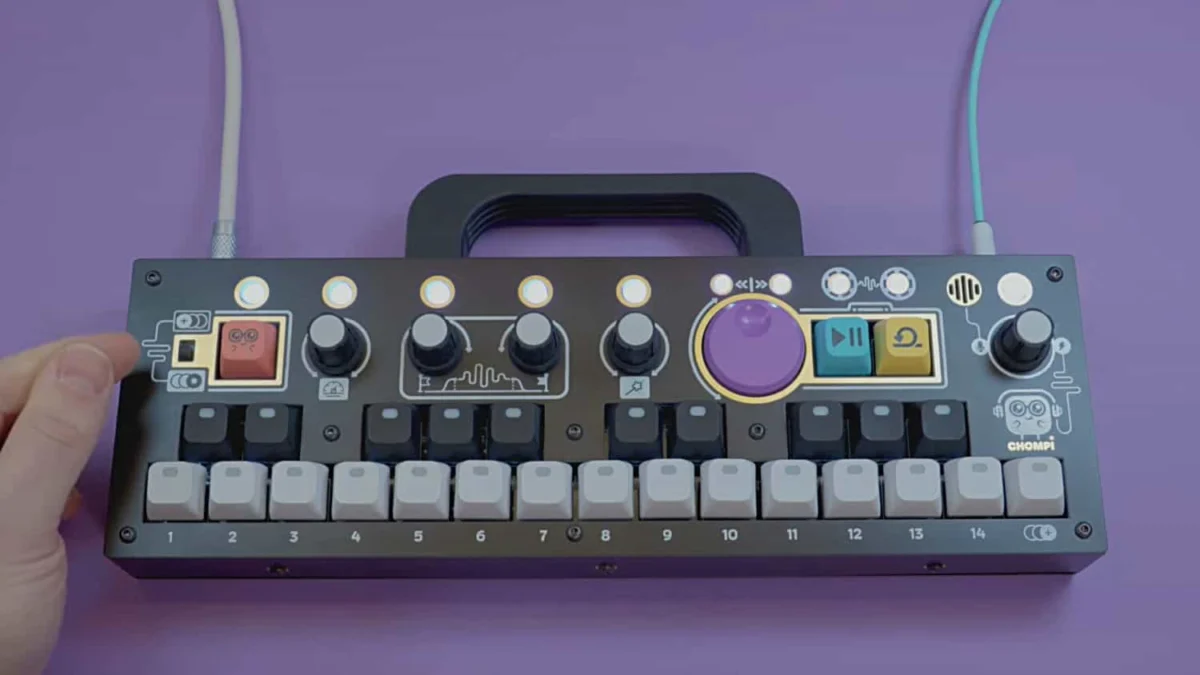
In a significant shift of strategic direction, the boutique audio electronics manufacturer Chase Bliss has officially announced the cancellation of the planned CHOMPI v1.5 hardware update. This decision marks a departure from the company’s 2023 roadmap, which initially aimed to bring the manufacturing and distribution of the CHOMPI sampling keyboard under the Chase Bliss umbrella. The move reflects the technical and logistical challenges inherent in boutique hardware development, specifically regarding the limitations of legacy processing units and the complexities of modern supply chain management.
The announcement was delivered via a formal video statement, where the company detailed the reasoning behind the pivot. According to Chase Bliss leadership, the project reached a critical juncture where the investment of time and resources no longer aligned with the potential for future innovation. The decision to halt production of the v1.5 iteration is grounded in a desire to avoid releasing a product that would be functionally stagnant upon arrival.
The Genesis of the Chase Bliss and CHOMPI Partnership
To understand the weight of this cancellation, one must look back at the unique partnership formed between Chase Bliss and the original creators of CHOMPI. CHOMPI, a boutique lo-fi sampler known for its whimsical aesthetic and intuitive workflow, was originally developed by Tobias and Chelsea of CHOMPI Club. Following a highly successful Kickstarter campaign that demonstrated a massive market appetite for creative, accessible sampling tools, the creators sought a partner capable of scaling production.
Chase Bliss, led by founder Joel Korte, appeared to be the ideal collaborator. Known for their "digital brain, analog heart" philosophy in guitar pedals, Chase Bliss had recently transitioned to a direct-to-consumer business model and was looking to expand their portfolio beyond traditional effects units. In 2023, the companies announced that Chase Bliss would take over the manufacturing of CHOMPI, with the goal of refining the hardware while maintaining the core identity of the instrument.
The proposed CHOMPI v1.5 was intended to be a bridge between the original Kickstarter units and a more sustainable, mass-producible version. The plan involved slight hardware adjustments to streamline assembly while retaining the original processor to ensure that all users—regardless of whether they owned an original unit or the v1.5—could utilize the same firmware updates.
Technical Constraints and the "Maxed Out" Processor
The primary catalyst for the cancellation was the discovery that the original hardware platform had reached its ceiling. During the development of the "TEMPO" firmware—a major software update intended to enhance the device’s capabilities—engineers at Chase Bliss found themselves increasingly constrained by the processing power of the existing microcontroller.
In boutique digital audio hardware, the processor dictates everything from sampling rates and polyphony to the complexity of real-time effects and UI responsiveness. Chase Bliss noted that while the original processor was sufficient for the initial vision of CHOMPI, the "TEMPO" firmware pushed the hardware to its absolute limits. Attempting to build a new iteration of hardware (v1.5) around this same processor would have essentially meant manufacturing a product that had no "headroom" for future growth.
"We found ourselves in the position of essentially recreating an existing product that was already maxed out," the company stated. This technical bottleneck presented a dilemma: proceed with a product that would be obsolete the moment a more advanced feature was conceived, or halt production to rethink the platform entirely.
Manufacturing and Logistical Hurdles
Beyond the technical limitations of the silicon, the manufacturing process for the v1.5 proved to be more of a "puzzle" than initially anticipated. Chase Bliss has historically specialized in compact guitar pedals. While complex, these devices follow a relatively standardized form factor and assembly logic. A sampling keyboard like CHOMPI, featuring mechanical keys, integrated speakers, and a different array of input/output configurations, introduced new variables into the production line.
The transition to in-house manufacturing for a product not originally designed by the Chase Bliss team required significant reverse-engineering and tooling adjustments. As the team worked through these logistical challenges, it became clear that the cost—both in terms of capital and "opportunity cost"—was becoming prohibitive. Continuing with the v1.5 would have required a disproportionate amount of the company’s engineering bandwidth, potentially delaying other highly anticipated projects in their core pedal line.
Chronology of the CHOMPI Project
The timeline of the CHOMPI-Chase Bliss collaboration highlights the rapid evolution of the project:
- Early 2023: CHOMPI Club concludes a successful crowdfunding campaign, delivering the first wave of samplers to backers.
- Mid 2023: Chase Bliss and CHOMPI Club announce a formal partnership. Chase Bliss takes over manufacturing and global distribution to stabilize the supply chain.
- Late 2023: Development begins on the v1.5 hardware and the TEMPO firmware. The goal is to create a unified ecosystem for all CHOMPI users.
- Early 2024: Internal testing of the TEMPO firmware reveals significant processor overhead issues. Engineers struggle to implement new features without compromising system stability.
- Mid 2024: Chase Bliss conducts a cost-benefit analysis of the v1.5 hardware. The decision is made to cease development of the incremental update.
- Present: Official announcement of the cancellation and the shift toward an open-source firmware model.
The Shift to Open Source: A "Right Move" for the Community
While the hardware update has been shelved, Chase Bliss is not abandoning the CHOMPI user base. In a move that has been praised by enthusiasts of "right-to-repair" and open-source development, the company announced it is exploring the possibility of making the CHOMPI firmware open source.
Making the code public would allow the community of users and independent developers to create their own "forks" of the software. This could lead to custom effects, alternative sampling engines, and community-driven bug fixes. In the boutique synth world, open-sourcing firmware is often seen as a way to ensure the longevity of a device after official support ends. By releasing the code, Chase Bliss and CHOMPI Club are effectively handing the keys to the users, ensuring that the "maxed out" processor can be optimized by the collective ingenuity of the global coding community.
This move follows a precedent set by other industry leaders. For instance, Mutable Instruments open-sourced the designs and code for many of their popular Eurorack modules, allowing the products to live on through clones and community updates long after the company ceased production. For CHOMPI owners, this represents a silver lining, as it transforms a "closed" system into an experimental playground.
Broader Implications for the Boutique Audio Industry
The cancellation of the CHOMPI v1.5 serves as a case study for the current state of the boutique audio industry. The sector is currently grappling with several macro-economic and technical pressures:
- Component Lifecycle Management: The rapid pace of microcontroller evolution means that chips can become "legacy" hardware within a few years. For small companies, locking into a specific chip for a long-term production run is a high-risk strategy.
- The "Feature Creep" Trap: As software capabilities expand, hardware that was once adequate can quickly become a bottleneck. The Chase Bliss experience with the TEMPO firmware illustrates how ambitious software goals can outstrip hardware reality.
- Direct-to-Consumer Risks: By handling manufacturing and shipping directly, companies like Chase Bliss take on all the financial risk of a product’s failure. This necessitates a "fail fast" mentality where projects are cut if they no longer meet viability standards.
Industry analysts suggest that this move might signal a trend where boutique companies focus more on software-agnostic hardware or more powerful, "future-proof" processing platforms like the Daisy Seed or ARM-based architectures that offer significantly more RAM and clock speed than older microcontrollers.
Reaction from the Music Technology Community
The reaction from the music technology community has been largely understanding, albeit tinged with disappointment for those who were waiting for the v1.5 units to become available. On platforms such as Gearspace and Reddit’s r/synthesizers, users have noted that Chase Bliss’s transparency is a refreshing change from the "vaporware" cycles often seen in the industry.
"It is better to have a company admit a project doesn’t make sense than to have them ship a compromised product," noted one community member. Others have expressed excitement about the open-source potential, suggesting that CHOMPI could become the "Monome Norns" of the sampling world—a piece of hardware defined by its community-contributed scripts and software.
Future Outlook for Chase Bliss and CHOMPI
As Chase Bliss moves forward, the company appears to be refocusing its efforts on its core strengths: innovative effects processing. By stepping back from the CHOMPI v1.5, they free up internal resources to focus on their primary product lines, such as the "Preamp MKII" and their various collaboration pedals.
As for the future of CHOMPI, the original units remain highly sought after on the used market. If the firmware does indeed go open source, the device’s value may even increase as it becomes a platform for community-led innovation. While the v1.5 hardware will never see the light of day, the spirit of the project—creative, tactile sampling—continues to resonate with musicians.
In conclusion, the decision by Chase Bliss to cancel the CHOMPI v1.5 is a calculated move to preserve the company’s standards of quality and innovation. By acknowledging the limitations of the hardware and looking toward an open-source future, Chase Bliss is prioritizing the long-term health of the product’s legacy over short-term manufacturing goals. This event underscores the delicate balance between hardware design and software ambition in the modern era of music technology.
