

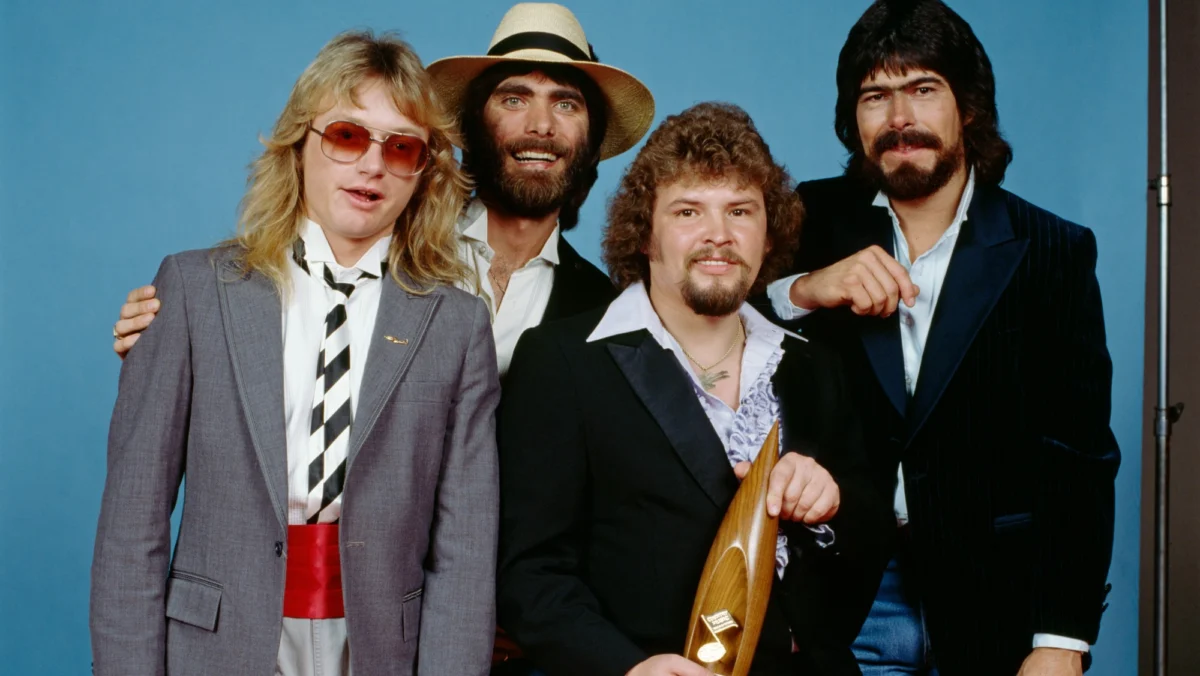
The year 1981 stands as a pivotal moment in the evolution of American country music, marking the zenith of the "Urban Cowboy" movement and the solidification of country-pop crossover as a dominant commercial force. This period saw Nashville artists achieving unprecedented visibility on the Billboard Hot 100, effectively bridging the gap between rural tradition and metropolitan appeal. Among the massive catalog of releases that year, four specific tracks—Alabama’s “Love In The First Degree,” Ronnie Milsap’s “I Wouldn’t Have Missed It For The World,” Barbara Mandrell’s “I Was Country When Country Wasn’t Cool,” and The Oak Ridge Boys’ “(I’m Settin’) Fancy Free”—emerged not only as chart-topping hits but as cultural touchstones for a generation.
The 1981 Cultural Landscape: Country Music’s Great Expansion
To understand the impact of these four songs, one must examine the state of the industry at the turn of the decade. Following the 1980 release of the film Urban Cowboy, starring John Travolta, country music underwent a rapid transformation. The genre moved away from the gritty "Outlaw" sounds of the mid-1970s and toward a more polished, sophisticated production style often referred to as "Countrypolitan." This shift was characterized by the use of lush string arrangements, synthesizers, and melodic structures that appealed to adult contemporary radio listeners.
In 1981, the Country Music Association (CMA) and the Academy of Country Music (ACM) saw their most diverse rosters of nominees to date. The industry was expanding into television, with variety shows and music specials bringing Nashville stars into living rooms across the United States. This visibility created a unique environment where a single could simultaneously top the country charts and break into the Top 10 of the pop charts, a feat achieved by several of the artists featured in this analysis.
Alabama and the Crossover Dominance of Love In The First Degree
Alabama, the quartet consisting of Randy Owen, Teddy Gentry, Jeff Cook, and Mark Herndon, was the definitive group of the early 1980s. Their 1981 album Feels So Right served as a blueprint for the modern country band, blending southern rock harmonies with radio-friendly hooks. “Love In The First Degree,” written by Tim DuBois and Jim Hurt, was the third single from the album and arguably its most successful in terms of broad market penetration.
The song’s lyrical premise utilizes legal metaphors to describe romantic devotion, a clever songwriting trope that resonated with a wide audience. With lines such as, “Lock me away inside of your love / And throw away the key,” the track combined Owen’s emotive lead vocals with the band’s signature tight harmonies.
Data from 1981 indicates that “Love In The First Degree” was more than just a regional hit. It spent multiple weeks at number one on the Billboard Hot Country Singles chart and reached number 15 on the Billboard Hot 100. Furthermore, it peaked at number five on the Adult Contemporary chart. This multi-format success was not accidental; the production by Harold Shedd and Alabama emphasized a clean, percussion-heavy sound that felt at home next to the pop hits of Hall & Oates or Air Supply. The song helped Alabama win the CMA Award for Instrumental Group of the Year and Vocal Group of the Year in 1981, beginning a streak of dominance that would last for the rest of the decade.
Ronnie Milsap’s Sophisticated Melodies: I Wouldn’t Have Missed It For The World
Ronnie Milsap, a classically trained pianist with a background in R&B and soul, was uniquely positioned to lead the crossover charge. His 1981 album There’s No Gettin’ Over Me produced two of the year’s biggest hits, the title track and the poignant “I Wouldn’t Have Missed It For The World.”
Written by the powerhouse songwriting trio of Kye Fleming, Dennis Morgan, and Charles Quillen, “I Wouldn’t Have Missed It For The World” is a masterclass in the "Nashville Sound" of the era. The song deals with the bittersweet acceptance of a failed relationship, emphasizing the value of the memories over the pain of the loss. Milsap’s delivery—smooth, precise, and deeply soulful—elevated the material beyond standard balladry.
Statistically, the song was a juggernaut. It reached number one on the Billboard Hot Country Singles chart and number 20 on the Billboard Hot 100. Its performance on the Adult Contemporary chart was even more impressive, peaking at number three. Milsap’s ability to transcend genre boundaries was recognized by the industry; in 1981, he was a constant fixture at award ceremonies, representing the "classy" side of Nashville that could compete with any pop star in terms of vocal prowess and production quality.
Barbara Mandrell: Authenticity and the Anthem of a Movement
While Alabama and Milsap were leaning into pop influences, Barbara Mandrell released a song that addressed the genre’s sudden popularity head-on. “I Was Country When Country Wasn’t Cool” became more than a hit; it became a declaration of identity. Written by Kye Fleming and Dennis Morgan, the song was featured on the 1981 album Barbara Mandrell Live.
The song is famously autobiographical, detailing Mandrell’s upbringing listening to the Grand Ole Opry while her peers were focused on rock and roll. The track’s most iconic moment is the uncredited guest appearance by country legend George Jones, whose brief vocal contribution served as a "seal of approval" from the old guard of Nashville to the new superstar.
The timing of the release was impeccable. As millions of new fans flocked to country music because of its newfound "cool" factor, Mandrell’s song provided a sense of history and pride for long-time listeners. It reached number one on the country charts and earned Mandrell the CMA Entertainer of the Year award for the second consecutive year in 1981—the first artist to ever achieve that feat. The song’s legacy persists as a shorthand for authenticity within the genre, often cited by modern artists as a foundational influence.
The Oak Ridge Boys and the Commercial Peak of Fancy Free
The Oak Ridge Boys transitioned from a gospel quartet to a country powerhouse in the late 1970s, but 1981 was the year they reached their commercial zenith. Their album Fancy Free featured two of the biggest hits of the year: the ubiquitous “Elvira” and the follow-up single, “(I’m Settin’) Fancy Free.”
Written by Jimbeau Hinson and Roy August, “(I’m Settin’) Fancy Free” is a mid-tempo track that showcases the group’s four-part harmony, particularly the interplay between Duane Allen’s lead and Richard Sterban’s famous bass vocals. The song’s narrative—setting a lover free because holding onto her would be against her will—struck a chord with listeners who appreciated the group’s blend of traditional vocal arrangements and contemporary instrumentation.
The single reached number one on the Billboard Country chart and made a significant impact on the Billboard Hot 100, peaking at number 41. While “Elvira” was the bigger pop hit, “(I’m Settin’) Fancy Free” proved that the group’s success was not a fluke. It solidified their status as one of the most bankable acts in music, contributing to the album Fancy Free being certified Double Platinum.
Chronology of Success: The 1981 Chart Timeline
A chronological review of 1981 reveals how these songs dominated the airwaves throughout the year:
- April 1981: Barbara Mandrell releases “I Was Country When Country Wasn’t Cool.” It quickly climbs the charts, peaking in July and setting the stage for her CMA Entertainer of the Year win.
- May 1981: The Oak Ridge Boys release the album Fancy Free. While “Elvira” dominates the early summer, the title track and “(I’m Settin’) Fancy Free” maintain the momentum into the fall.
- August 1981: Ronnie Milsap releases “I Wouldn’t Have Missed It For The World” as the follow-up to “There’s No Gettin’ Over Me.” It dominates the autumn airwaves, crossing over to pop and AC stations.
- October 1981: Alabama releases “Love In The First Degree.” The song enters the charts during the peak of the holiday shopping season, driving massive sales for the Feels So Right album and carrying its success into early 1982.
Broader Impact and Industry Implications
The success of these four tracks in 1981 signaled a permanent shift in how Nashville approached the global market. The production techniques refined during this year—clearer vocals, more prominent drums, and the inclusion of electric guitars—became the standard for the next decade.
Furthermore, 1981 proved that country music could be a primary driver of the American music economy. The "accidental" crossover hits mentioned in the original text were, in fact, the result of a sophisticated industry realizing that the demographic barriers between "rural" and "urban" listeners were dissolving. These songs appealed to the "Baby Boomer" generation, which was moving into its prime earning years and looking for music that combined relatable storytelling with high-quality production.
The legacy of these 1981 hits remains evident in the structure of modern country radio. The balance of romantic ballads (Milsap and Alabama), anthems of genre pride (Mandrell), and harmony-driven group efforts (The Oak Ridge Boys) continues to be the winning formula for Nashville success. For those who grew up in the 1980s, these songs represent more than just nostalgia; they represent the moment country music truly found its voice on the world stage.
