

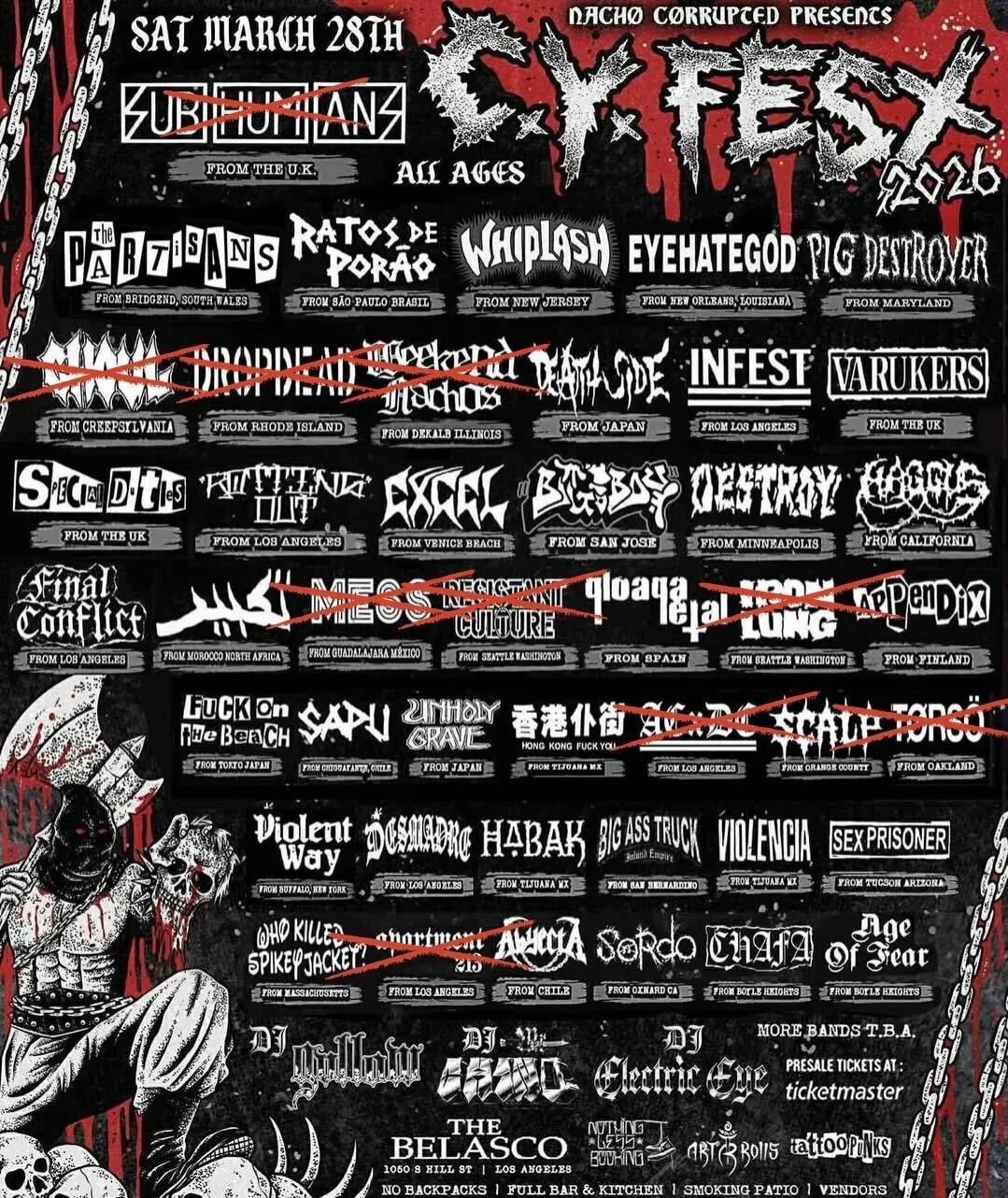
The highly anticipated CY Fest, an underground punk, hardcore, and metal festival slated to descend upon Los Angeles in just over a week, faces an increasingly dubious future following a cascade of sexual misconduct allegations against its primary promoter, Ignacio Rodriguera, known in the scene as Nacho Corrupted. The controversy, ignited by a widely circulated post from the Instagram page @Feral_bonobos, which identifies itself as "the beginning of a decentralized feminist coalition within the punk scene," has triggered a mass exodus of bands from the lineup and left the fate of the large-scale event hanging by a thread. Despite an initial attempt by a prominent figure within the punk community to salvage the festival, the logistical complexities and unanswered questions ultimately proved insurmountable, leaving hundreds of ticket holders and dozens of international bands in limbo.
The Genesis of Controversy: Allegations Surface
The first tremors of trouble for CY Fest emerged approximately a week and a half prior to its scheduled commencement. The Instagram account @Feral_bonobos published multiple detailed allegations of sexual misconduct against Ignacio Rodriguera. This digital call for accountability quickly resonated through the tightly-knit yet globally connected punk and hardcore community, known for its DIY ethos but also for grappling with systemic issues of power dynamics and harassment. The accusations against Rodriguera, a figure whose moniker "Nacho Corrupted" had become synonymous with his role in organizing significant events within the underground scene, immediately cast a dark shadow over the festival he championed.
The allegations prompted a swift and decisive reaction from many of the bands slated to perform. Within days of the initial posts, a significant number of acts began publicly announcing their withdrawal from the festival lineup. Early departures included prominent names such as Iron Lung, Törsö, Apartment 213, and Tripas Sangrientas. These initial cancellations signaled a strong stance of solidarity with the alleged victims and a refusal to participate in an event associated with the accused promoter, setting a precedent for subsequent withdrawals. The immediate financial and reputational impact on the festival was palpable, transforming an event designed to celebrate underground music into a focal point for difficult discussions about accountability and safe spaces within the scene.
Promoter Steps Down Amid Legal Battle
In response to the escalating crisis and the growing list of band cancellations, Ignacio Rodriguera issued a statement on Monday, acknowledging the allegations and announcing his decision to "step away" from the festival’s organization. Rodriguera vehemently denied the accusations leveled against him, stating his intention to legally fight them. In his communication, he expressed a desire for the festival to proceed as planned, suggesting that "an outside promoter" would step in to manage the remaining logistics. This move was intended, at least in part, to decouple the festival’s future from the controversy surrounding his personal conduct, hoping to preserve the event for the thousands of attendees and dozens of bands still committed.
However, Rodriguera’s withdrawal, while a significant development, did little to stem the tide of further cancellations. The initial promise of an "outside promoter" stepping in immediately lacked concrete detail, leaving a vacuum of leadership and engendering continued uncertainty among participating artists and the broader public. The absence of a clear, immediate succession plan or a transparent process for addressing the underlying concerns meant that the reputational damage continued to mount, making it increasingly difficult for bands to justify their participation.
Mass Exodus: Headliners and Key Acts Withdraw
Following Rodriguera’s announcement, the festival’s lineup continued to unravel at an alarming rate. More bands, including the anticipated headliners, reunited UK punk legends the Subhumans, publicly declared their withdrawal. The Subhumans’ decision, given their stature and long-standing influence within the punk community, sent a powerful message, effectively signaling a loss of faith in the festival’s ability to proceed under ethically sound conditions. Their departure was a critical blow, stripping the event of one of its most significant draws.
The list of additional bands pulling out grew exponentially, encompassing a diverse array of hardcore, metal, and punk acts. This second wave of cancellations included Ghoul, Dropdead, Weekend Nachos, Mess, Resistant Culture, ACxDC, Triste, Antichrist Demoncore, and Hell Fire. The cumulative effect of these withdrawals was devastating, transforming what was once a robust, international lineup of over 60 bands into a skeleton crew, making the feasibility of the festival’s continuation increasingly questionable. Many of these bands cited the unfolding controversy and the need for accountability as primary reasons for their decisions, often expressing gratitude towards individuals attempting to address the situation responsibly.
An Attempted Rescue: Scotty Heath’s Intervention
Amidst the chaos and growing despair within the community, a glimmer of hope appeared when Scotty Heath, owner of the respected Tankcrimes Records, stepped forward with an ambitious plan to rescue CY Fest. Many bands, in their cancellation announcements, had acknowledged Heath’s efforts and thanked him, hinting at his involvement behind the scenes. On Tuesday, Heath posted a video, later deleted, detailing his impromptu intervention and proposed solution.
In his candid statement, Heath acknowledged the "controversy" that had become a "legal matter," carefully sidestepping direct commentary on the allegations themselves. He recounted the intense, week-long discussions involving himself and "a dozen bands" on group chats and phone calls, all aimed at finding a "thoughtful solution" to save the fest. As a "last-ditch effort on Sunday," Heath explained, he had "cold-called the promoter, who I didn’t know, and suggested that he step down to save this fest, and he respectfully agreed."
Heath’s plan was comprehensive, reflecting the immense logistical undertaking required to stage such an event. He recognized the "lot of moving parts" involved in organizing a "60-band international show that’s been booked for over a year." He had been in contact with the venues, which he stated were prepared to "step up with extra staff to help stage-manage and run the shows with us." Furthermore, Heath had assembled "a small team of people in Los Angeles" to assist with crucial on-site operations, including "payouts, stage-managing, guest list, doors, all these things that need to be done." He committed to taking over "online promotions" and being "on site at the festival if anyone needs anything."
Heath’s motivation was deeply rooted in his connection to the community and the significant investment already made by many. He highlighted that "over 1,500 tickets sold" and "over 50 bands coming from around the world." Many of these bands, he noted, were "close personal friends of mine," and a collective desire to "figure out if we could come together and still have a really nice weekend together in Los Angeles" propelled his efforts. His video aimed to "inject a little positivity into all the confusion," offering a path forward and a chance to salvage the experience for those who had committed their time, money, and artistic efforts.
The Aborted Rescue: Too Many Unanswered Questions
The optimism generated by Scotty Heath’s intervention proved tragically short-lived. A mere day after his initial announcement, Heath posted another video, this time retracting his offer to take over CY Fest promotions. The rapid reversal underscored the immense complexity and unforeseen challenges of stepping into such a high-stakes, last-minute organizational role.
In his second statement, Heath admitted, "I thought I could pull it off, and there’s just — too many questions coming in from you guys that I don’t have the answers for, so I just felt like I was in over my head." He acknowledged the spontaneity and haste of his initial announcement, explaining, "I did make a solid attempt, but I think I rushed the announcement. It was less than 30 hours after I’d done it, and everything happened pretty spontaneously, and I was just trying to get out there so quick because the fest is coming up so soon."
Heath emphasized that his decision to bow out was a practical one, driven by the sheer volume of logistical and ethical queries he could not adequately address. "So I have bowed out of that," he stated, clarifying that "the venues are still running the fest. They have very competent staff and in-house people that will be doing that." However, the critical issue remained: "because there are so many unanswered questions that I don’t have the answers for, I can’t do it." He concluded by apologizing, "I’m sorry if I let you down if you gave me positive messages, and I’m sorry if you had questions that I couldn’t answer because I can’t."
Supporting Data and Scale of the Event
CY Fest was envisioned as a significant undertaking, a multi-day, multi-venue festival showcasing the breadth and depth of the international underground music scene. With an initial lineup boasting over 60 bands from around the globe and more than 1,500 tickets sold, the event represented a substantial financial and logistical commitment for all parties involved. Attendees had not only purchased tickets but had also made travel arrangements, including flights and accommodation in Los Angeles, representing thousands of dollars in non-refundable expenses for many.
For the bands, particularly those traveling internationally, the stakes were equally high. Independent artists often operate on razor-thin margins, and the investment in travel, visas, and lost income from other potential gigs can be substantial. The promise of playing a large, well-attended festival like CY Fest was not just about exposure but also about securing vital performance fees and merchandise sales crucial for their livelihoods. The abrupt collapse of the festival means these bands are now facing significant financial losses and the disruption of carefully planned tours.
The venues involved, though now reportedly taking over the direct management of the remaining, drastically truncated event, also face significant challenges. They must navigate a significantly altered program, manage an uncertain number of attendees, and contend with the reputational fallout associated with the controversy, even if they were not directly involved in the initial promotion. The implied commitment of "extra staff" and "competent in-house people" suggests an effort to mitigate the damage, but the operational realities of a festival stripped of most of its headliners and key acts are formidable.
Broader Impact and Implications for the Scene
The unfolding saga of CY Fest carries profound implications beyond the immediate financial losses and logistical headaches. It casts a harsh light on the persistent issues of accountability and safe spaces within the DIY punk, hardcore, and metal communities. The swift response from @Feral_bonobos and the subsequent band boycott demonstrate a growing intolerance for alleged misconduct and a collective demand for transparency and justice from within the scene itself. This incident highlights the increasing power of decentralized online activism in challenging established figures and structures in subcultures that often pride themselves on their anti-establishment stance.
The non-refundable nature of tickets, coupled with the disabled comments on the official CY Fest Instagram page, exacerbates the frustration and anger among attendees. This situation raises serious questions about consumer protection for events within the independent music sphere, where contractual obligations and refund policies can sometimes be less clear than with mainstream promoters. The lack of direct answers and avenues for recourse leaves ticket holders feeling exploited and unheard, potentially eroding trust in future independent festivals.
Furthermore, the incident serves as a cautionary tale for organizers of large-scale independent events. The reliance on a single, central promoter, even within a seemingly decentralized scene, can create vulnerabilities when that individual faces serious allegations. It underscores the need for robust organizational structures, clear ethical guidelines, and transparent processes for addressing complaints and ensuring the safety and well-being of all participants.
The punk and hardcore scenes, while often romanticized for their rebellious spirit and community bonds, have also grappled with internal issues of sexism, harassment, and abuse of power. The CY Fest controversy is a stark reminder that even in spaces ostensibly built on principles of liberation and equality, vigilance and collective action are required to uphold those values. The incident forces a critical re-evaluation of how accountability is enforced, how victims are supported, and how the community can collectively work to foster genuinely safe and inclusive environments. The long-term impact on the reputation of Los Angeles as a hub for such independent festivals, and on the broader trust within the international DIY music circuit, remains to be seen.
If you or someone you know is undergoing sexual abuse, please visit rainn.org or contact the National Sexual Assault Helpline at 1-800-656-4673.
