

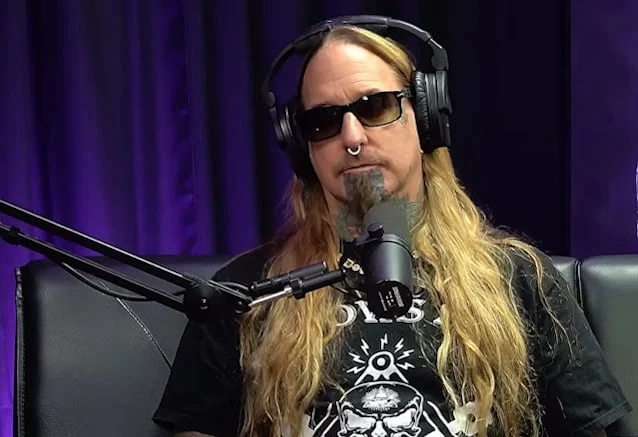
In a candid and deeply personal interview on The Garza Podcast, hosted by Suicide Silence guitarist Chris Garza, Dez Fafara, the formidable frontman for DevilDriver and Coal Chamber, has broken his silence regarding a significant health battle he has been waging for nearly two years. The revelation comes two years after Coal Chamber was forced to cancel a U.S. tour due to Fafara suffering a severe bout of vertigo and a blackout, an incident that ultimately led to the discovery of a non-cancerous tumor in his head. Fafara’s openness sheds light on the complex interplay between sudden health crises, extensive medical investigations, and the resilience required to navigate such challenges while maintaining a demanding career in the music industry.
The Vertigo Incident and the Unforeseen Discovery
The initial alarm bells for Fafara’s health sounded on a seemingly ordinary Saturday afternoon. Fafara recounted the experience, which has been a defining point in his recent medical journey. "The vertigo thing really threw me off, dude," he shared on the podcast. "‘Cause it was a great Saturday afternoon. I’d been running miles and miles on the treadmill every day, and all of a sudden I had vertigo out of nowhere, and that took me out for almost a year. They had to do all sorts of MRIs and all sorts of crazy s— to me to figure out what the f— was going on."
This sudden onset of debilitating vertigo was not just a fleeting illness; it triggered a cascade of medical evaluations. Fafara described the disorienting experience, which led to him being transported by ambulance. "I ran upstairs, and next thing I knew, I was out cold on my floor. My wife was slapping my face to wake me up. I woke up spinning. Then next thing you know, I’m in an ambulance," he recounted. The ambulance ride itself was marked by a surreal encounter with a fan who was driving. "The kid [who picked me up in the ambulance] is, like, ‘You know, Dez, it was awesome being in your house. I’m a huge fan.’ ‘Cause they had to come and wheel me out on a gurney. And I’m, like, ‘Bro, I’m so glad you’re a fan. Do me a favor. Give me something to stop the f—ing spinning.’"
Upon reaching the emergency room, Fafara’s vital signs were erratic. A head scan was performed as part of the initial assessment. It was during this examination that the unexpected discovery was made. "I came into the doc and he’s, like, ‘Hey, good news. I think you got the vertigo thing under control. I don’t think that’s really gonna happen anymore. But I wanna show you something.’ And it was a picture of my head, and you just saw a tumor. And I’m, like, ‘What is that?’ And he’s, like, ‘You got a tumor in your head.’"
A Tumorous Diagnosis and the Waiting Game
The discovery of the tumor, initially described as being roughly the size of a dime, was followed by a crucial cancer test, which Fafara’s wife insisted they undergo on Christmas Eve. The news that followed was a significant reprieve: the tumor was non-cancerous. "It was this little Chinese lady. She’s maybe five foot, and she goes, ‘I’ll be back in, like, 15 minutes and I’ll know.’… So, then she came in and she was, like, ‘Hey, I got good news. It’s non-cancerous.’ Dude, I f—ing jumped up. I scared the s— out of this woman. I jumped up and hugged her and lifted her in the air," Fafara recalled with palpable emotion.
Despite the relief of the tumor being non-cancerous, the medical journey was far from over. Fafara revealed that he has been under ongoing medical observation for nearly two years, with doctors recommending check-ups every six months. The current medical strategy involves monitoring the tumor’s growth, as immediate surgical intervention is deemed too risky. "They want me back in every six months. It’s gotta actually grow a little bit to be safe to go in [and operate] ‘cause it’s very unsafe. If they go to get it now, I could lose speech and a lot of other stuff," he explained. The tumor is located in his jawline area, slightly higher, near a salivary gland.
A Proactive Approach to Health and Healing
Fafara has adopted a proactive and holistic approach to managing his condition, attributing his current well-being and the tumor’s slight reduction in size to his lifestyle choices. He has significantly altered his diet, emphasizing intermittent fasting, and abstains from high-carbohydrate foods, excessive sugar, and alcohol. "I go in every six months. And because I fast and I do intermediate fasting, and right now I’m on a four-day fast. You never feel better than when you’re just drinking juices and stuff. I feel like I can look through walls. And I think that has kept it not growing," he stated.
His personal conviction is that he can make the tumor disappear through sheer willpower and disciplined practices. "I’m of the mindset, and this will give you a little power into me here, is that I’m gonna make it go away," Fafara declared. "I’m personally gonna make it go away with dieting, fasting and positive thought. It’s gonna go away. So the next time I go in is February or March, I think. And it’s gonna shrink more. It’s gonna go away. Period, end of story."
Fafara shared a particularly encouraging interaction with his doctor. "The next time I go in is February or March, I think. And it’s gonna shrink more. It’s gonna go away. Period, end of story… I came back out the second or third time [I got an MRI scan done] — I think the third time — and he’s like, ‘This is crazy, but this thing is getting a little bit smaller.’ And I’m like, ‘Well, have you ever had these go away?’ And he’s like, ‘No. And I get rid of a lot of these when I can, when it’s okay to operate.’ And I go, ‘Well, this thing’s gonna go away.’ And he’s like, ‘Uh, okay.’ And I said, ‘You’ll see. This’ll be a new one for your little medical booklet.’"
Timing and Transparency
Fafara chose to disclose his health situation now, after nearly two years of managing it privately, to provide transparency and to assure his fans that his commitment to performing remains unwavering. He emphasized that he has no intention of canceling upcoming tours. "I wanted to share that with you because I haven’t shared anything [with anyone]. I think people need to know. And obviously this is gonna go out on the wire and people are gonna go, ‘Fuck, that’s what he’s dealing with.’ But no, I’m not gonna cancel tours. I’m showing up in Australia [this summer]. I’m showing up in August. Nothing’s gonna stop that."
He also highlighted the serendipitous nature of the vertigo incident, recognizing that it likely saved his life by prompting the discovery of the tumor. "The doctor’s, like, ‘With this, you only have that once. Your body won’t allow that to happen,’ which is odd, but true… And that’s another thing — if I never had the vertigo, I would never find out I had the tumor until it was maybe too late. Anytime you get something like that going on with your head, tumor in your head, your body is gonna send you into a spin, just to get you to ‘go check that, bro.’"
A History of Health Challenges
This latest health revelation follows a series of significant medical issues Fafara has faced. In 2021, he experienced severe after-effects from COVID-19, which led to inflammation in his lower heart and necessitated the cancellation of DevilDriver’s appearance at the 2023 Bloodstock Open Air festival in the U.K. More recently, in January 2025, Coal Chamber was forced to cancel their rescheduled "Fiend For The Fans" U.S. tour, originally planned for August 2024 and then postponed to March/April 2025, due to Fafara’s ongoing health emergency.
The proximity of these health events underscores the vulnerability that even seemingly robust individuals can experience. The cancellation of the Coal Chamber tour in January 2025, which was set to feature support from Fear Factory, Twiztid, Black Satellite, and Frayle, caused disappointment among fans eagerly awaiting the reunion. Fafara’s current situation provides context for these past postponements, demonstrating a consistent struggle with unforeseen medical conditions.
Broader Implications and Fan Support
Fafara’s decision to share his story is likely to resonate deeply with his fanbase, who have long admired his tenacity and stage presence. The detailed account of his medical journey, from the alarming vertigo to the discovery of the tumor and his determined outlook, offers a compelling narrative of resilience. The music industry, often characterized by demanding schedules and intense touring, faces unique challenges when artists grapple with serious health issues. Fafara’s commitment to continuing his performance schedule, despite his ongoing treatment and monitoring, is a testament to his dedication to his craft and his audience.
The implications of Fafara’s proactive health management extend beyond his personal well-being. His emphasis on diet, fasting, and positive mental attitude as therapeutic tools could inspire others facing similar health battles. The medical community, too, may find his case noteworthy, particularly his doctor’s acknowledgment of the tumor shrinking, a phenomenon not typically observed in such cases. Fafara’s confident declaration that he will present his doctors with a unique case study for their medical literature ("Prepare your practitioners, bro. Get your book out, ‘cause this one is done. It’s gonna go away.") showcases his unwavering belief in his ability to overcome this challenge.
As DevilDriver prepares for their "Strike And Kill" North American tour, scheduled to kick off on August 14 in San Diego, California, Fafara’s health update provides a crucial backdrop to these upcoming performances. The tour, which will include dates in Dallas, Chicago, Salt Lake City, and Reno before concluding on September 5 in Anaheim, California, will undoubtedly be met with heightened attention from fans who are now aware of the personal battle he is fighting.
DevilDriver’s new album, "Strike And Kill," released on July 10 via Napalm Records, further solidifies the band’s continued output despite the personal health challenges faced by its frontman. The current lineup includes guitarists Alex Lee and Gabe Mangold, drummer Davier Ortega Perez, and bassist Jon Miller, signaling a stable and active musical unit ready to engage with their audience. Fafara’s journey serves as a powerful reminder of the often-unseen battles faced by public figures and the profound strength derived from transparency, resilience, and an unwavering belief in one’s own capacity for healing.
