

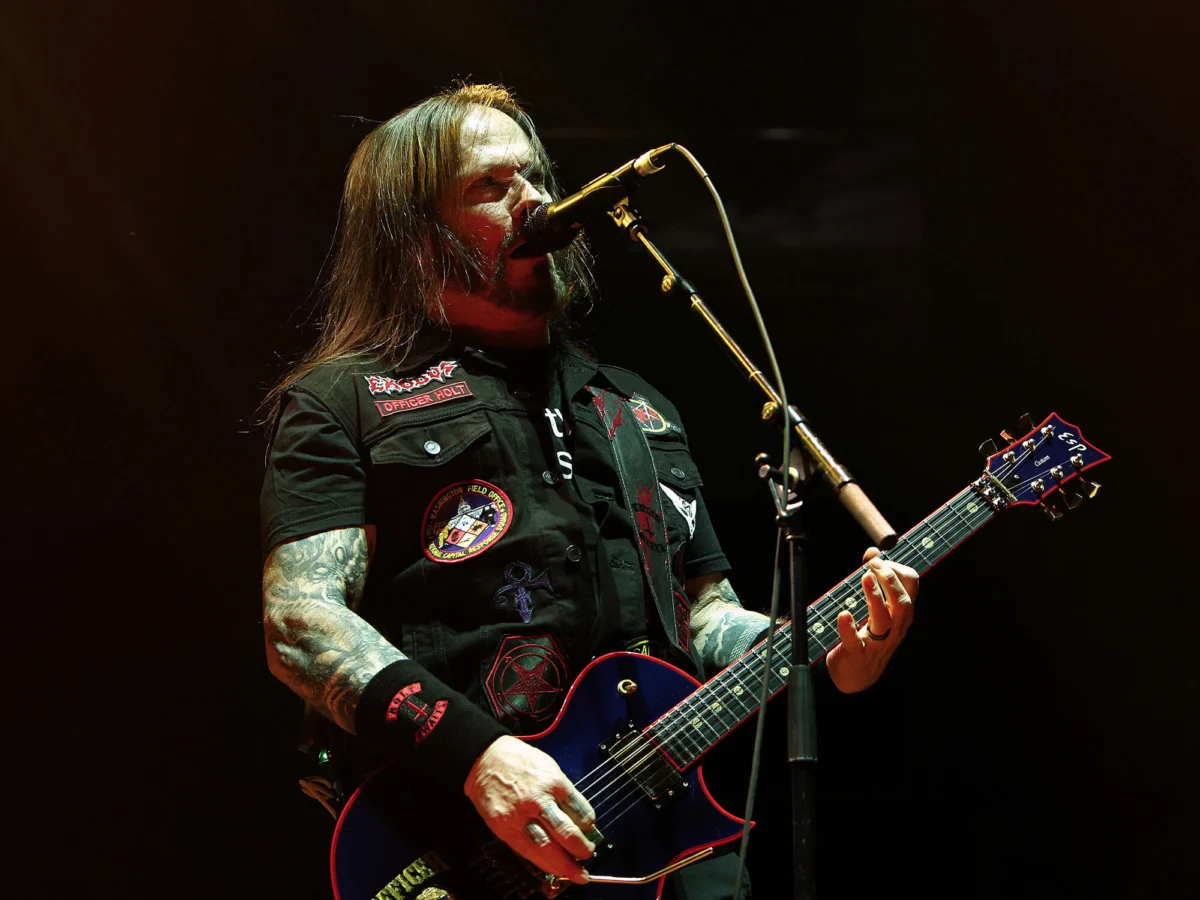
Gary Holt, the influential guitarist and primary songwriter for Bay Area thrash metal pioneers Exodus, recently lightened the mood by humorously suggesting he is owed royalties for his uncredited lyrical contribution to Metallica’s iconic 1984 track, "Creeping Death." The jest, made during a recent appearance on the Heavy Stories podcast, rekindles a long-standing anecdote within the thrash metal community, highlighting the intertwined histories of two of the genre’s most significant bands. Holt’s comments, while clearly made in jest, shed light on the formative years of both Exodus and Metallica, when creative ideas flowed freely among a tight-knit circle of musicians in the burgeoning San Francisco Bay Area scene.
The Genesis of a Thrash Classic and a Lingering Anecdote
The story centers around the early 1980s, a pivotal period during which the foundations of thrash metal were being laid. Before Kirk Hammett famously departed Exodus to join Metallica in 1983, both guitarists were integral members of the nascent Exodus lineup. Their collaboration during this formative era produced material that would eventually find its way into the discographies of both bands, albeit in altered forms.
Holt’s claim specifically relates to the lyrics of a track titled "Die By His Hand," which was featured on Exodus’s 1983 demo of the same name. According to Holt, while Hammett was responsible for the riff, he penned the original lyrics. These lyrics, he asserts, were subsequently adapted and incorporated into the middle section of "Creeping Death," a track that would become one of Metallica’s most enduring and beloved anthems, appearing on their sophomore album, Ride the Lightning, released in 1984.
"It’s Kirk’s riff, it’s my lyrics," Holt recounted with a laugh on the Heavy Stories podcast, as reported by Louder. "I’ve never been credited, so yeah, that’ll tell you how I feel. I should get paid for that shit." He further elaborated on the specific lyrical alteration: "The song was ‘dying by his hand’ and they — James — changed the line to ‘die by my hand.’" His playful demand for compensation was directed at Metallica frontman James Hetfield: "You know, I mean, I’m entitled to some money, James. I’ll send you my bank info! It’ll be a fat cheque!"
However, Holt swiftly followed these jocular remarks with a clear statement underscoring the friendly nature of his claim and the absence of any genuine dispute. He clarified, "But those are Kirk’s riffs and he was more than welcome to them. They were his. I had zero ownership of any of that." This crucial qualification firmly establishes his comments as a good-natured poke rather than a serious legal or financial contention, reflecting the long-standing friendship and mutual respect between the musicians.
A Look Back: The Intertwined Histories of Exodus and Metallica
To fully appreciate Holt’s anecdote, it is essential to delve into the vibrant and interconnected history of the Bay Area thrash scene of the early 1980s. This period was a crucible for a new, aggressive form of heavy metal, characterized by faster tempos, complex riffs, and often socially conscious or darker lyrical themes.
Early 1980s: The Birth of Thrash
The early 1980s saw the emergence of a raw, energetic underground music movement in California, particularly in the San Francisco Bay Area. Bands like Metallica, Exodus, Slayer, Testament, and Death Angel were coalescing, drawing inspiration from the New Wave of British Heavy Metal (NWOBHM) and the burgeoning hardcore punk scene. These bands shared stages, ideas, and even members, fostering a communal yet competitive environment that propelled the genre forward.
Exodus’s Formation and Early Impact
Exodus formed in Richmond, California, in 1979, with Kirk Hammett among its original members. Holt joined in 1981, quickly becoming the band’s primary creative force and a formidable guitarist. Exodus gained a reputation for their blistering live performances and uncompromising aggression, laying crucial groundwork for the thrash sound. Their 1983 demo, Die By His Hand, was a significant underground release, showcasing their raw talent and introducing tracks that would later become staples, including the title track, which featured the lyrical inspiration for "Creeping Death."
Metallica’s Ascent and Hammett’s Departure from Exodus
Metallica, originally formed in Los Angeles in 1981, relocated to the Bay Area in 1982. Their early lineup struggles famously led to the departure of guitarist Dave Mustaine (who would go on to form Megadeth) in April 1983. In a move that would reshape the landscape of heavy metal, Metallica quickly recruited Kirk Hammett from Exodus. This transition was pivotal for both bands. Hammett’s technical prowess and melodic sensibilities were a perfect fit for Metallica, who were on the cusp of recording their debut album, Kill ‘Em All. For Exodus, it meant a change in lineup but also a solidification of Holt’s role as the undisputed musical architect.
The "Die By His Hand" demo was recorded shortly before Hammett’s departure, capturing a snapshot of his final contributions to Exodus. The demo itself, circulated through tape trading, became a cult item among early thrash fans and is considered a vital piece of the genre’s history.

"Ride the Lightning" and "Creeping Death"
Metallica’s Ride the Lightning, released in July 1984, was a critical and commercial triumph that expanded upon the raw aggression of Kill ‘Em All with more sophisticated songwriting and melodic complexity. "Creeping Death," in particular, stood out. Known for its iconic main riff, powerful chorus, and a middle section (the "Die! Die! Die!" chant) that became a live staple, the song’s lyrics draw heavily from the biblical story of the Plagues of Egypt, specifically the tenth plague – the death of the firstborn. This thematic depth, combined with its musical intensity, cemented its status as one of Metallica’s most enduring compositions. The track has been a cornerstone of their live sets for decades and remains a fan favorite globally.
The Nature of Songwriting Credits and Intellectual Property
Holt’s playful comments, while not a serious legal claim, touch upon the complex and often contentious issue of songwriting credits and intellectual property in the music industry. In the early days of bands, especially in close-knit scenes like Bay Area thrash, ideas often flowed organically. Riffs, lyrical fragments, and song structures could be developed collaboratively in rehearsal spaces, with contributions sometimes blurring lines, particularly if a member left before a song’s official release.
Generally, in the music industry, "songwriting credits" refer to the individuals who contributed to the musical composition (melody, harmony, rhythm) and/or the lyrics. These credits determine how royalties are distributed, including mechanical royalties (from sales and streaming), performance royalties (from radio play, live performances), and synchronization royalties (from use in film, TV). For a song like "Creeping Death," which has sold millions of copies and been streamed billions of times, even a small percentage of royalties would amount to a significant sum.
However, Holt’s explicit statement, "I had zero ownership of any of that," clarifies that he acknowledges the legal and creative ownership of the "Creeping Death" material rests with Metallica and its credited songwriters (James Hetfield, Lars Ulrich, Cliff Burton, and Kirk Hammett). His jest serves more as a nostalgic nod to the shared creative crucible of his youth rather than a challenge to established intellectual property rights. It highlights the informal nature of creative development in a nascent music scene, where ideas might be exchanged and adapted without the formal agreements common in later stages of a band’s career.
A Bond Forged in Thrash: Holt’s Enduring Appreciation for Hammett
The jocular nature of Holt’s "royalty demand" is further contextualized by his deep and openly expressed admiration and gratitude for Kirk Hammett. In numerous interviews over the years, Holt has waxed lyrical about the pivotal role Hammett played in his own musical journey.
Just earlier in 2024, Holt elaborated on how he "owes it all to Kirk." He recalled their teenage years and the serendipitous meeting that sparked his passion for the guitar. "We became immediate friends," Holt shared. "One day, he just said, ‘Want to learn to play guitar?’ And I said, ‘Yeah,’ because I always wanted to, but I’m the youngest of six." Holt described his parents’ initial skepticism about his commitment to music, contrasting it with his siblings’ abandoned instruments. "My parents had purchased pianos for my brother to take piano lessons. It ended up being a place to put family photos [on]. You know, there’d be a trumpet in the closet that someone played for six months, and I think my parents didn’t think I’d stick with it."
However, Holt’s dedication, ignited by Hammett, quickly proved them wrong. "Six months later, I was in Exodus. So yeah, I owe it all to Kirk [laughs]," he concluded, emphasizing the profound impact Hammett had on his life and career. He even recalled the first song Hammett taught him, though the specific title eluded him: "The first song he taught me was some Rolling Stone song; for some reason I can’t remember what it was – maybe Wild Horses, something like that."
These recollections paint a picture of a foundational friendship and mentorship that predates the global fame of Metallica and the enduring legacy of Exodus. It underscores that any "demands" for royalties are purely in good fun, rooted in a shared history and a mutual respect that has persisted for decades.
Broader Implications and Fan Engagement
Holt’s comments, while seemingly minor, resonate deeply within the metal community. Such anecdotes serve several purposes:
- Historical Documentation: They provide valuable insights into the creative processes and interpersonal dynamics of legendary bands during their formative years, filling in gaps in official narratives.
- Fan Engagement: Stories like this fuel endless discussions among fans about songwriting credits, "what-ifs," and the intertwined timelines of their favorite artists. It adds a layer of depth to the lore surrounding classic albums and songs.
- Humanizing Icons: It reminds fans that even metal titans like Holt and Hammett started as friends sharing riffs and lyrics in garages, navigating the same challenges and triumphs of young musicians.
- Preserving Legacy: It reinforces the crucial role that bands like Exodus played in the development of thrash metal, often overshadowed by the colossal success of Metallica.
Ultimately, Gary Holt’s lighthearted assertion about royalties for "Creeping Death" is a testament to the enduring camaraderie and shared history that defines the Bay Area thrash metal scene. It’s a friendly joke between old friends, a nostalgic look back at a time when raw talent and boundless creativity were shaping a genre that would conquer the world. It reminds us that even for songs of biblical proportions, the seeds of inspiration can often be found in the informal, collaborative spirit of youthful ambition.
