


The summer of 2026 has etched itself into the history of the European event industry as a definitive turning point, forcing a radical reassessment of how large-scale gatherings are planned and executed in an era of accelerating climatic shifts. In late June 2026, a relentless heatwave carved a path of disruption through the German event calendar, leading to a cascade of high-profile cancellations that left organizers, authorities, and attendees grappling with a new meteorological reality. From the cancellation of the Hamburg Half-Marathon to the premature termination of the Kessel Festival in Stuttgart and the total withdrawal of the Hype Festival in Cologne, the industry was forced to pull the emergency brake. These events, alongside the disruption of the Defqon.1 festival in the Netherlands, underscore a growing crisis: the traditional "event summer" is increasingly incompatible with the rising frequency of extreme heat events.
As the industry reflects on these disruptions, experts such as meteorologist Bernhard Mühr, academic Prof. Dr. Kim Werner, and safety specialist Falco Zanini have provided an in-depth analysis of the structural, legal, and economic implications of this shift. Their insights suggest that while heatwaves are not new, the intensity, duration, and predictability—or lack thereof—of 40°C+ temperatures are transforming heat from a seasonal nuance into a primary operational risk.
A Chronology of the June 2026 Crisis
The crisis reached its zenith during the final weekend of June 2026. On Sunday, June 28, the streets of Hamburg, usually teeming with 24,000 runners for the annual Half-Marathon, fell silent. For the first time in the event’s history, organizers were forced to cancel the race entirely. Despite elaborate preparations, including doubling the number of water stations and installing mobile cooling zones, the projected thermal load posed an unmanageable risk to both participants and the emergency medical services tasked with their care.
Two days prior, the situation in Southern Germany had already begun to deteriorate. The Kessel Festival, a flagship family and music event held at Stuttgart’s Cannstatter Wasen, was forced to shut down after its first day. The vast, unshaded asphalt surfaces of the festival grounds became heat traps, reaching temperatures that made prolonged attendance dangerous. Simultaneously, in Cologne, the Hype Festival at the Tanzbrunnen was canceled before the first performance could even begin. Across the border in Biddinghuizen, Netherlands, the Hardstyle festival Defqon.1 faced similar challenges; shortly after thousands of visitors arrived at the campsite, the event was severely curtailed due to the life-threatening heat levels recorded on-site.
These cancellations were not knee-jerk reactions but the result of a calculated assessment of risk versus resource. In each case, the primary concern was the potential collapse of the local healthcare infrastructure under the weight of hundreds of heat-related emergencies.
The Meteorological Shift: Heat as a Structural Pattern
Bernhard Mühr, Managing Director and meteorologist at EWB Wetterberatung GmbH, notes that while "hot days" (defined as reaching at least 30°C) are a standard feature of German summers, the current trend toward record-breaking extremes is unprecedented. Mühr, who provides weather consultancy for major festivals like Rock am Ring and Hurricane, emphasizes that we are seeing a shift in the baseline. "New all-time records, including temperatures reaching or exceeding 40°C, are extreme events that present everyone involved with massive challenges," Mühr explains.
One of the most significant takeaways from the June 2026 heatwave was its predictability. Unlike thunderstorms, which often provide less than an hour of warning, large-scale heatwaves are typically visible in forecasting models one to two weeks in advance. This lead time places a higher burden of responsibility on organizers; if a disaster occurs during a predicted heatwave, "unforeseeability" is no longer a valid legal defense.
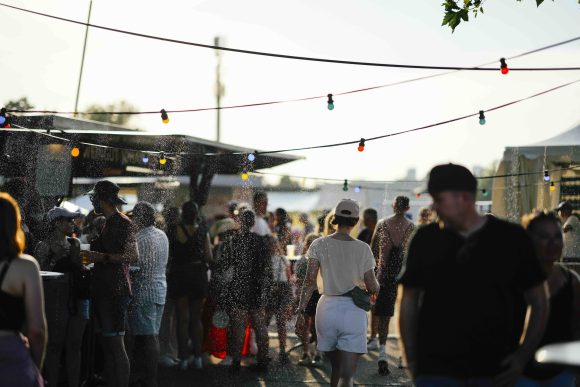
Mühr also highlights the danger of micro-environments. While a city-wide forecast might state 36°C, the temperature on an asphalted festival site under full sun can easily reach 50°C to 60°C between 12:00 PM and 5:00 PM. This window coincides with peak admission times, where crowds are most densely packed and least able to seek shade, creating a "perfect storm" for heat exhaustion.
Legal Obligations and the Safety of the "Invisible" Workforce
The impact of extreme heat extends far beyond the ticket-buying public. Falco Zanini, a specialist in visitor safety and occupational health, points out that the workforce behind the scenes—stagehands, security personnel, caterers, and technical crews—are the most vulnerable. "Extreme heat threatens the employees who must perform heavy physical labor under direct solar radiation," Zanini states.
Legally, organizers are bound by both a "duty of care" (Fürsorgepflicht) and "public safety obligations" (Verkehrssicherungspflicht). A central reference point in this regard is the updated Workplace Directive ASR A5.1, which regulates outdoor work environments. During the June heatwave, many sites reached "Heat Stage 4," a level that mandates specific protective measures. These include:
- Mandatory shading of all outdoor workstations.
- The implementation of "air showers" and water misting systems.
- Rescheduling heavy physical labor to the cooler morning or late evening hours.
- Mandatory additional breaks in temperature-controlled or shaded environments.
Prof. Dr. Kim Werner from the Osnabrück University of Applied Sciences notes that the industry’s vulnerability is now rated as "medium to high," with a rising trend. She emphasizes that the legal framework is tightening. Since July 2024, the German Climate Adaptation Act (Klimaanpassungsgesetz) has required municipalities and public actors to systematically strengthen resilience. This legal pressure is trickling down to the private event sector, where failure to adapt can lead to significant liability issues.
The Economic Reality: The Price of Resilience
The financial fallout of the 2026 heatwave has been substantial. For the Hamburg Half-Marathon, the cost of preventative measures—including 100,000 liters of drinking water and specialized cooling tubs—represented a significant budget increase, yet the event still could not proceed. This highlights a grim reality for the industry: the cost of preparing for heat can be high, but it does not guarantee that the event can take place.
Prof. Werner predicts that weather and climate risks will fundamentally change the insurance landscape for events. "We can expect higher premiums, changed insurance conditions, and higher deductibles," she explains. The industry is moving toward a model where "climate resilience" is a line item in every budget. This includes investments in professional weather monitoring, emergency infrastructure, and increased personnel costs to allow for more frequent shift rotations.

However, Werner warns against "symptom management." While water stations and misting fans are necessary, they do not address the underlying sustainability of the event format. There is a notable conflict of interest between heat mitigation and climate protection; using energy-intensive air conditioning to cool large tents increases the carbon footprint of the event, contributing to the very problem it seeks to mitigate. The future, according to Werner, may lie in more regional, flexible, and perhaps smaller formats that can adapt more easily to local environmental conditions.
Strategic Communication and Future Adaptation
The consensus among experts is that communication has become the most vital tool in an organizer’s arsenal. Bernhard Mühr notes that early and transparent communication with the public can significantly reduce the strain on on-site resources. Informing attendees about what to wear, the importance of hydration, and the location of cooling zones before they arrive at the venue is a low-cost, high-impact strategy.
Furthermore, the integration of international standards such as ISO 20121 now explicitly requires organizers to include climate-related risks in their sustainability management. This shift from "event planning" to "resilience management" is becoming the industry standard.
For those looking for practical solutions, initiatives like the "Klima-Event" project (klima-event.info)—a collaboration between the Osnabrück University of Applied Sciences, the University of Osnabrück, and various regional partners—offer a roadmap. The project provides a database of adaptation measures ranging from immediate tactical fixes to long-term structural changes.
Conclusion: A New Paradigm for the Event Summer
The summer of 2026 has demonstrated that the "business as usual" approach to event planning is no longer viable in the face of a changing climate. The wave of cancellations was a wake-up call, proving that the health of attendees and the safety of workers must take precedence over economic interests. As the industry moves forward, the focus must shift from reactive crisis management to proactive climate adaptation.
As Falco Zanini concludes, the welfare of the people behind the scenes is the foundation of the entire sector. "Without the hardworking people, there is no event. We will have to adapt in many ways to ensure their safety and the future of the industry." The events of June 2026 were not an anomaly; they were a preview of the new normal. The success of future event summers will depend on how quickly and effectively the industry can integrate climate resilience into its core DNA.
