

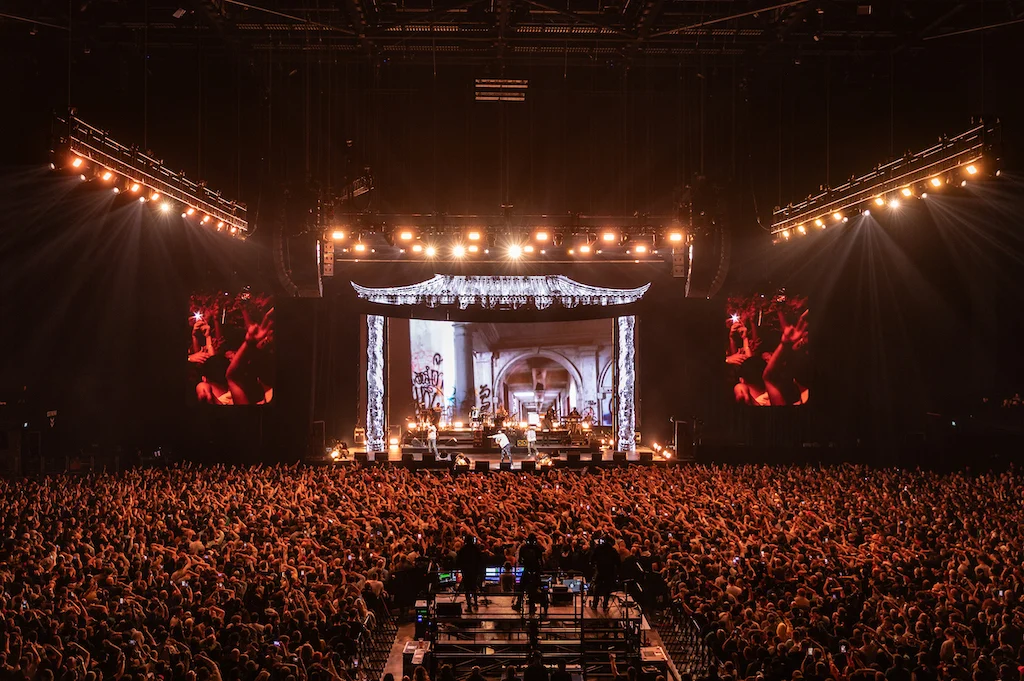
The conclusion of the Wu-Tang Clan’s "Final Chamber European Tour" in the spring of 2026 marked a pivotal moment in hip-hop history, serving as both a definitive farewell to the group’s European fanbase and a masterclass in modern arena production. Tasked with honoring more than three decades of cultural influence, the creative team was faced with the dual challenge of celebrating the group’s storied legacy while maintaining a contemporary, high-energy aesthetic that avoided the trappings of a "museum piece." The resulting production utilized a sophisticated lighting architecture, anchored by the deployment of 79 GLP JDC Burst 1 hybrid strobes and 36 GLP impression X5 Bar 1000 fixtures, to create a visual environment that mirrored the raw power and intricate philosophy of the Staten Island collective.
The Architectural Vision: Translating Shaolin into Light
The creative direction for the tour was spearheaded by Jen Bui, whose vision centered on a "temple-like" stage environment. This concept drew heavily from the Wu-Tang Clan’s long-standing fascination with Shaolin motifs and martial arts philosophy, which have been central to their identity since the release of their 1993 debut album, Enter the Wu-Tang (36 Chambers). Lighting Designer Ben Walton was tasked with translating this architectural concept into a functional arena rig.
Walton’s design philosophy for the tour was rooted in the same characteristics that define the Wu-Tang Clan’s music: simplicity, space, weight, and intention. To achieve this, the stage featured a massive curved LED wall and a central "gateway" structure that served as the focal point of the performance space. Walton’s objective was to extend the visual narrative beyond the digital confines of the LED screens, using light to define the physical volume of the arena and create a sense of atmospheric depth.
"The design approach relied on the same qualities that make many Wu-Tang tracks so strong," Walton noted during the post-tour analysis. He emphasized that the lighting was not merely an accompaniment to the video content but a structural element that filled the space around the scenic arcs and gates, providing a sense of gravity and historical weight to the performance.
Technical Specifications and Equipment Deployment
To execute this vision, the production partnered with PRG UK, a global leader in entertainment and event technology. The equipment selection was rigorous, focusing on fixtures that could provide both surgical precision and raw, overwhelming power.
The GLP impression X5 Bar 1000
The rig featured 36 GLP impression X5 Bar 1000 units, which were strategically positioned to form a linear frame around the downstage LED surface. The X5 Bar 1000 is a high-performance linear LED fixture equipped with 18 40-watt RGBL (Red, Green, Blue, Lime) LEDs. One of its most significant technical advantages is the integration of GLP’s proprietary iQ.Gamut color algorithm, which ensures consistent color temperature and high-quality white light, as well as saturated hues.
The fixtures feature a square lens design that allows for a tight 4.4-degree beam, which can expand to a wide 63-degree wash. For the "Final Chamber" tour, these bars were essential in creating "light curtains" and sharp architectural edges that defined the "temple" structure. The seamless pixel pitch between units allowed Walton to create continuous lines of light that appeared as solid architectural beams rather than a series of individual points.
The GLP JDC Burst 1
While the X5 Bars provided the structure, the 79 GLP JDC Burst 1 units provided the energy. These hybrid LED strobes were distributed across the stage floor—surrounding the artists and the band—and integrated into the overhead and audience trusses. The JDC Burst 1 is characterized by its dual nature: it features a central white strobe line divided into 12 individually controllable segments, flanked by two large RGBW LED plates.
The fixture’s 185-degree motorized tilt was utilized to bridge the gap between the stage and the audience, projecting intense bursts of light that reached the furthest corners of the arenas. Lighting Director and Programmer Jack Cannon highlighted the fixture’s performance at low intensities, noting that even when run at only 20% power, the JDC Burst 1 maintained exceptional color saturation and quality—a critical requirement for the more atmospheric, moody segments of the show.
The Challenge of Live Execution: Performance Without Timecode
A defining characteristic of the "Final Chamber European Tour" was its reliance on live execution. Unlike many contemporary arena tours that rely heavily on SMPTE timecode to synchronize lighting, video, and audio to the millisecond, the Wu-Tang Clan’s performances remained fluid and improvisational. The setlist, drawn from a catalog of hundreds of songs, often changed on the fly, requiring the lighting team to react in real-time to the performers’ cues.
Jack Cannon, operating from the lighting console, had to manage a show that was "busked" (operated manually) to a significant degree. This required a rig that was highly responsive and "readable" with a single touch. Cannon sought fixtures that could deliver immediate impact for the group’s hard-hitting beats while allowing for the subtle building of textures during more lyrical passages.
The ability of the JDC Burst 1 to transition from a blinding strobe effect to a nuanced color wash proved invaluable in this environment. The manual nature of the show ensured that no two performances were identical, mirroring the organic and often unpredictable nature of a live hip-hop ensemble featuring multiple legendary emcees.
Historical Context and Cultural Significance
The 2026 tour arrived at a time when the Wu-Tang Clan’s influence on global culture had reached an all-time high. Having evolved from a revolutionary rap group into a multi-billion dollar brand encompassing fashion, film, and television, the group’s "Final Chamber" was seen as a victory lap. The production design needed to reflect this status—moving away from the gritty, "street" aesthetics of their early years toward a more "high-art" presentation that signaled their legacy as elder statesmen of the genre.
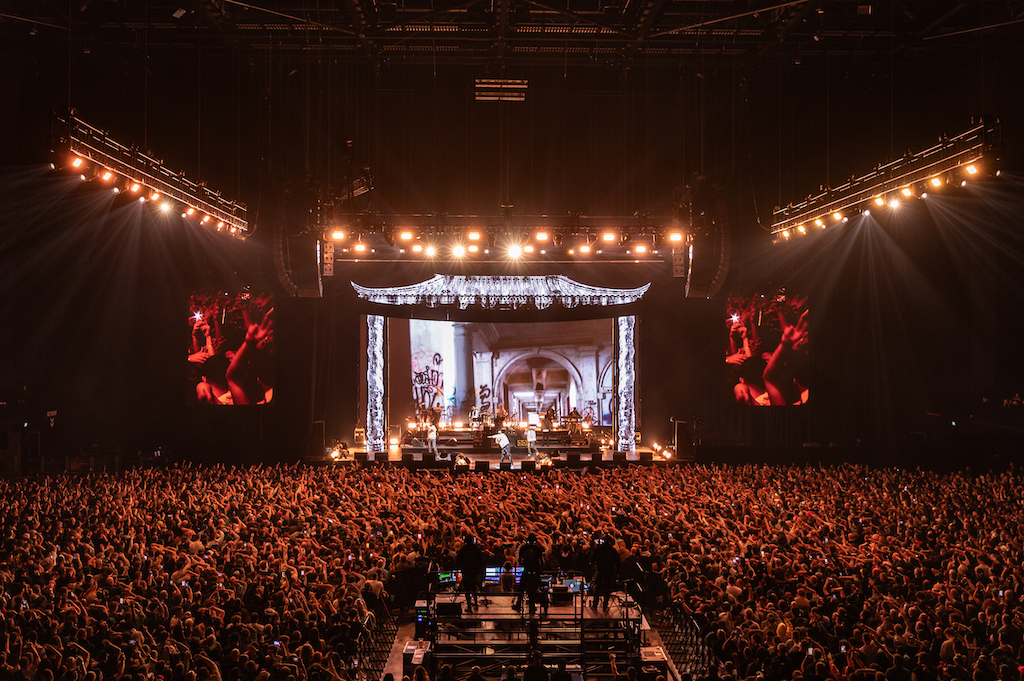
The use of the "Shaolin Temple" motif was a direct nod to the group’s foundational mythology. By using modern lighting technology to build this temple in every city from London to Berlin, the creative team successfully honored the group’s roots while utilizing the full potential of 21st-century stagecraft.
Logistical Scale and Industry Impact
The logistics of the tour were managed by a massive international crew, with PRG UK providing the backbone of the technical support. The deployment of over 100 high-end GLP fixtures across a multi-city arena circuit requires precise coordination, from power distribution to rigging safety. The reliability of the LED technology used in the X5 Bar and JDC Burst units also contributed to the tour’s efficiency, reducing the power consumption and heat output typically associated with traditional discharge-lamp strobes.
The success of the "Final Chamber" tour has already begun to influence hip-hop production standards. Historically, hip-hop tours were often criticized for lagging behind rock and electronic music in terms of visual production. However, the Wu-Tang Clan’s 2026 outing demonstrated that a rap performance could be as architecturally sophisticated and technically precise as any major pop or rock spectacle.
Looking Ahead: LEAT con 26
The technology and design principles showcased on the Wu-Tang Clan tour are expected to be a major topic of discussion at the upcoming LEAT con 26 (Live Entertainment and Technology Convention). GLP, the manufacturer behind the primary lighting fixtures used on the tour, will be a prominent exhibitor in Hall A1.
Industry professionals will have the opportunity to examine the JDC Burst 1 and the impression X5 Bar 1000 firsthand, discussing the "Final Chamber" case study with technical experts. The convention will likely highlight how the integration of high-output LED bars and hybrid strobes is redefining the possibilities for live touring, particularly in genres that demand high energy and rapid-fire visual changes.
Conclusion: A Legacy Defined by Light
Ultimately, the success of the Wu-Tang Clan’s final European journey lay in its consistency and clarity of design. By avoiding unnecessary complexity and focusing on the core elements of space, atmosphere, and energy, Ben Walton and the creative team provided the group with a stage worthy of their historical importance.
The "Final Chamber European Tour" was more than just a series of concerts; it was a visual testament to the enduring power of the Wu-Tang Clan. Through the strategic application of cutting-edge lighting technology, the production team ensured that the group’s final bow in Europe was not a look back at the past, but a bold statement on the future of live performance. As the group’s members move toward individual projects and the preservation of their collective archive, the memory of the "Final Chamber" will remain a benchmark for how cultural icons should bid farewell to the stage.
