

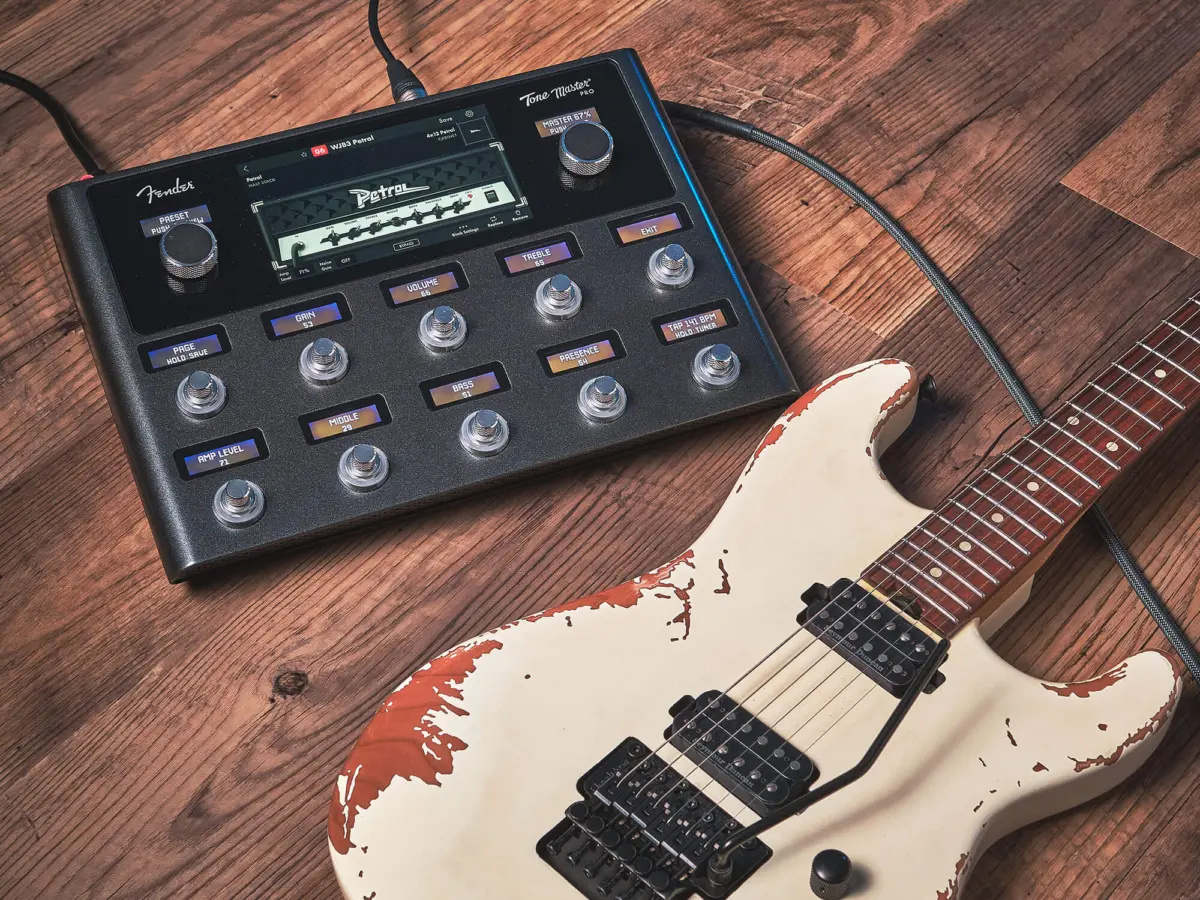
The iconic guitar manufacturer, Fender Musical Instruments Corporation, has officially confirmed that its flagship digital guitar processor, the Tone Master Pro, will soon receive Neural Amp Modeler (NAM) A2 compatibility, marking what industry analysts and enthusiasts are already calling the most significant firmware update in the device’s nascent history and a pivotal moment in the broader landscape of digital guitar amplification. This strategic integration positions Fender at the vanguard of adopting open-source, community-driven modeling technologies, potentially reshaping user expectations and accelerating innovation across the highly competitive digital processing market.
The revelation emerged from an official statement by Max Gutnik, Fender’s Chief Product Officer, who took to the dedicated Tone Master Pro Users forum to address a flurry of online speculation and persistent rumors regarding the feature. Gutnik’s post, subsequently disseminated across platforms like Reddit, provided the first concrete confirmation from Fender, clarifying that the in-house development team is actively engaged in rigorous testing of the NAM A2 functionality. While no definitive release date has been provided, Gutnik underscored Fender’s commitment to a swift yet meticulous rollout, emphasizing the objective to ensure the Tone Master Pro becomes "an amazing platform to play NAM." This proactive communication strategy by Fender, announcing a major feature prior to its full readiness, highlights the company’s eagerness to capitalize on market momentum and maintain a competitive edge.
The Strategic Significance of Neural Amp Modeler (NAM) A2
To fully appreciate the gravity of Fender’s announcement, it is crucial to understand the foundational technology behind Neural Amp Modeler (NAM) A2. Launched in June of the previous year, NAM A2 represents a paradigm shift in digital audio processing, leveraging advanced machine learning algorithms to create highly accurate "captures" of physical amplifiers, cabinets, and even effects pedals. Unlike traditional proprietary modeling, which often involves extensive digital signal processing (DSP) research and development to emulate circuits, NAM employs a neural network to learn the unique sonic characteristics and non-linear behaviors of real-world analog gear. The result is a digital fingerprint that can be played back with astonishing fidelity, often indistinguishable from the original source in controlled listening environments.
Developers of NAM have modestly described it as "the most accurate and best-sounding amp modeling technology in history," a bold claim substantiated by reports from independent blind listening tests where NAM-generated models reportedly outperformed several established and commercially successful leading rivals. This open-source architecture empowers players not only to capture their own cherished gear, preserving its unique tone in a digital format, but also to access and browse an ever-expanding, vast library of amp, cabinet, and pedal models created by a global community of users and professional sound designers. This community-driven content ecosystem, primarily facilitated through platforms like TONE3000, offers an unparalleled diversity of tones that would be impossible for any single manufacturer to replicate through proprietary development alone. The sheer volume and quality of available captures, constantly growing, present a compelling value proposition for any hardware platform that integrates NAM.
Integration Details and User Experience Implications
According to Gutnik’s initial disclosure, the integration of NAM captures into the Tone Master Pro’s signal chain is designed to be seamless and intuitive for users. NAM captures will function much like any other internal amplifier model or impulse response (IR), allowing them to be placed and manipulated within a patch with ease. Crucially, the full functionality of the Tone Master Pro’s intuitive touchscreen interface and its robust companion application will extend to NAM captures, enabling users to effortlessly browse, select, and customize their tones. A particularly appealing detail for visual-minded musicians is the ability to assign a unique graphic to each NAM capture, enhancing personalization and quick identification within the device’s interface. This level of integration suggests that Fender is not merely adding NAM as an afterthought but is working to fully embed it within the Tone Master Pro’s core operational framework, aiming for a truly cohesive user experience.
The potential impact on the user experience is profound. Tone Master Pro owners will gain access to thousands of new, high-fidelity tones, ranging from rare vintage amps to boutique modern designs, all without additional hardware purchases. This significantly expands the creative palette available to musicians, allowing for unprecedented sonic exploration and customization. For gigging musicians, it means the ability to perfectly replicate the sound of a specific studio amp or a cherished, irreplaceable piece of gear, then carry that exact tone in a compact, reliable digital format. For studio professionals, it offers a wealth of diverse tones for tracking and mixing, often at a fraction of the cost and logistical complexity of acquiring and mic’ing physical amplifiers. The implications extend beyond mere tonal variety; it democratizes access to high-end and unique sounds that were once the exclusive domain of those with substantial gear collections.
Fender’s Digital Journey and the Competitive Landscape
Fender’s foray into advanced digital modeling began decades ago, evolving through various iterations of multi-effects units and modeling amplifiers. The Tone Master series, which initially reimagined classic Fender tube amps like the Deluxe Reverb and Twin Reverb in lightweight, solid-state digital formats, marked a significant step in the company’s commitment to high-fidelity digital emulation. The subsequent release of the Tone Master Pro in 2023 represented Fender’s ambitious entry into the high-end, all-in-one guitar processor market, positioning it directly against established giants like Line 6’s Helix, Neural DSP’s Quad Cortex, Kemper Profiler, and Fractal Audio’s Axe-Fx. These devices are renowned for their proprietary modeling algorithms, extensive feature sets, and sophisticated user interfaces.
The digital amp modeling market is characterized by intense competition and continuous innovation. Manufacturers constantly strive to improve realism, expand tonal options, and enhance user workflow. Historically, these companies have relied on their proprietary research and development to craft their digital models, often guarding their algorithms as trade secrets. Fender’s decision to embrace NAM A2 represents a departure from this traditional proprietary model, signaling a willingness to integrate open-source technology into a premium commercial product. This move is particularly noteworthy given that major rivals like Neural DSP, Line 6, and IK Multimedia, while offering sophisticated modeling, have yet to announce similar widespread adoption of NAM A2.
Fender’s commitment places it among the first major modeller makers to fully integrate NAM A2. While other devices, such as Zoom’s innovative Neurig and the Blackstar BEAM Mini, have also adopted NAM access, Fender’s Tone Master Pro occupies a higher-tier professional segment of the market, making its adoption a more significant statement. This strategic maneuver could exert considerable pressure on competitors, compelling them to re-evaluate their own development roadmaps and potentially explore similar open-source integrations to avoid being outmaneuvered in terms of tonal versatility and community engagement.
Broader Implications for the Industry and Future Trends
The integration of NAM A2 into the Tone Master Pro carries profound implications for the entire music technology industry. Firstly, it provides significant validation for the open-source audio community. When a brand with Fender’s legacy and market presence throws its weight behind a community-driven project like NAM, it elevates its legitimacy and encourages further development and adoption. This could accelerate the trend towards more collaborative and open ecosystems in music software and hardware.
Secondly, it signals a potential shift in how manufacturers approach digital product development. Instead of solely relying on internal R&D for every single amp model, companies might increasingly look to integrate robust open-source frameworks to augment their offerings, allowing their internal teams to focus on hardware optimization, user interface design, and core proprietary features. This hybrid approach could lead to faster innovation cycles and more feature-rich products for consumers.
Thirdly, for existing Tone Master Pro users, this update essentially future-proofs their investment to an unprecedented degree. The ever-expanding library of NAM captures ensures that the device’s tonal possibilities will continue to grow and evolve long after its initial release, driven by the collective creativity of a global community rather than solely by Fender’s update schedule. This mitigates the risk of a digital product becoming obsolete as quickly as new proprietary models emerge.
However, challenges and considerations also exist. Ensuring the stability and seamless performance of thousands of user-generated NAM captures within a high-performance device like the Tone Master Pro requires meticulous engineering. Fender will need to manage potential issues related to capture quality variability, file management, and efficient processing to maintain the device’s renowned reliability. Furthermore, while NAM significantly widens tonal options, it is unlikely to entirely replace the meticulously crafted, proprietary amp models built into the Tone Master Pro. These factory models often serve as a baseline for the device’s core sound and represent Fender’s unique sonic identity. The future is likely to be one of synergy, where proprietary models provide a solid foundation, and NAM offers expansive, community-driven augmentation.
Timeline and Anticipation
While Max Gutnik confirmed that the feature is currently undergoing internal testing, no firm release date has been provided. This approach allows Fender to ensure the quality and stability of the integration before it reaches the end-user. The Tone Master Pro’s last major firmware update arrived in late 2023, bringing new features and enhancements that solidified its position in the market. The decision to pre-announce the NAM A2 compatibility, even without a release date, underscores Fender’s strategic intent to build anticipation and communicate its commitment to continuous innovation and user value.
The global guitar community, from bedroom players to touring professionals, now watches with keen interest. The integration of Neural Amp Modeler A2 into the Fender Tone Master Pro is more than just another firmware update; it represents a significant confluence of traditional guitar manufacturing excellence with cutting-edge open-source technology, promising an exciting new chapter in the evolution of digital guitar processing and tone creation. This move firmly establishes Fender as a forward-thinking innovator, willing to embrace new paradigms to deliver unparalleled value and sonic versatility to its users.
