

The German event industry stands at a critical juncture as it moves through the final quarter of 2026, grappling with a landscape defined by extreme volatility, structural economic shifts, and a fundamental reassessment of what constitutes "normal" operations. At the recent LEAT Con 25, a high-level panel of industry veterans gathered to dissect the current state of the market, building on a dialogue that began in early 2025 at the RoBL Summit in Hamburg. The discussion, featuring Jens Langner (Business Development Manager, Robe Germany), Frédéric Bommart (Zweinulleins), Marcel Fery (TSE AG), and Alexander Ostermaier (Bundesvereinigung Veranstaltungswirtschaft), moved beyond superficial optimism to address a sobering question: Is the industry in a temporary crisis, or has it entered a permanent state of reduced predictability and fragmented growth?
Market Segmentation: The Dichotomy of Touring and Corporate Events
The primary takeaway from the 2025–2026 period is the widening chasm between different sectors of the live experience economy. According to Frédéric Bommart, the touring sector has remained remarkably stable. Concerts and large-scale live entertainment continue to draw crowds and maintain consistent production schedules, serving as the bedrock of the industry. However, this stability stands in stark contrast to the corporate sector, which has experienced a significant downturn.
The decline in corporate events is not merely a seasonal fluctuation but a reflection of broader macroeconomic pressures in Germany. Traditionally, the automotive industry has been the largest benefactor and financier of high-end corporate events and trade fairs. As German automakers face a transformative crisis—driven by the shift to electromobility, supply chain realignments, and increased international competition—marketing and event budgets have been among the first to be rationalized. This "fragility" in the corporate world has forced agencies and technical providers to pivot, often crowding into the already saturated touring market.
The Chronology of Uncertainty: From Hamburg to LEAT Con
To understand the current sentiment, one must look at the timeline of the industry’s recovery and subsequent cooling. In February 2025, during the RoBL Summit in Hamburg, the initial conversation centered on the post-pandemic "rebound effect" and the rising costs of personnel. By October 2026, the tone had shifted from managing growth to managing contraction and extreme short-termism.
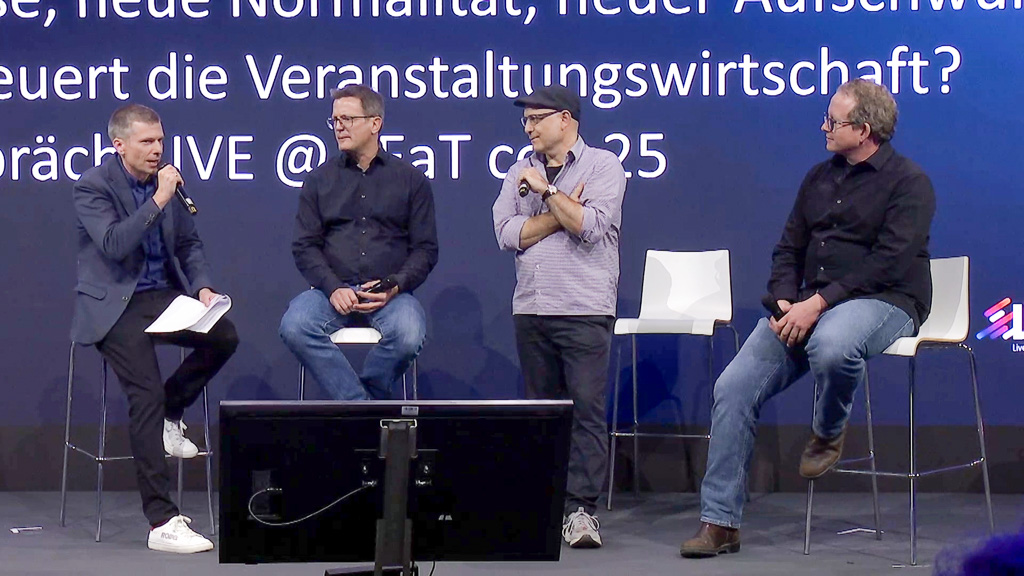
Marcel Fery of TSE AG highlighted that the lead times for projects have reached record lows. Decisions that once took months are now finalized weeks or even days before an event. This lack of planning security creates a structural stressor for technical service providers who must manage complex logistics, crew scheduling, and material disposition. The "just-in-time" nature of 2026 event planning has turned what was once an administrative challenge into a daily operational crisis, where the risk is increasingly shifted onto the service provider rather than the client.
Data-Driven Insights: The Seismograph of the Event Economy
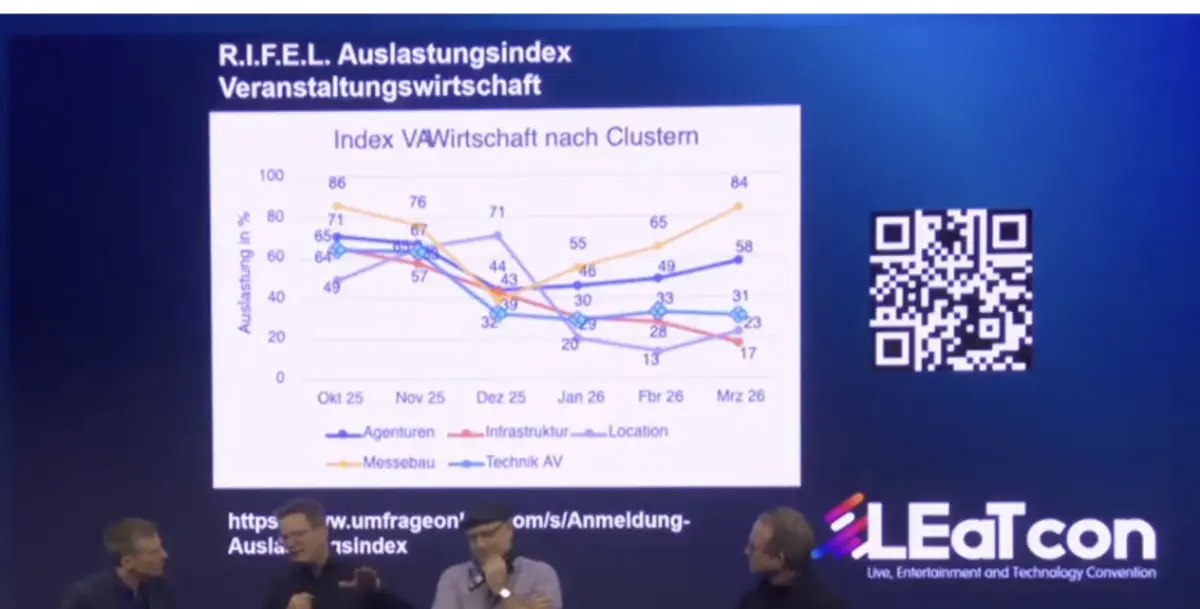
Alexander Ostermaier provided a quantitative backbone to the discussion, citing regular surveys of approximately 170 companies across the event spectrum, including technical firms, agencies, caterers, and venues. The data reveals a "nervous market" characterized by erratic sentiment swings. For instance, the industry’s expectation index saw an eight-point jump in a single month in late 2025—not due to a sudden boom, but because clients were holding back bookings until the last possible second, leading to a sudden, concentrated burst of activity.
A particularly concerning trend identified in the R.I.F.E.L. (Research Institute for Exhibition and Live-Communication) data is the downward trajectory for event locations. Venues are typically the "canary in the coal mine" for the industry; they are booked first. If location bookings decline or become increasingly short-term, it signals a cooling of the entire downstream supply chain, from catering to lighting design. Fery noted that the "location curve" is a primary source of anxiety for 2027 forecasts, as it suggests that the volume of events may be shrinking rather than just shifting.
The Political Dimension: Legal Frameworks and Labor Realities
One of the most significant developments in the 2025–2026 period has been the industry’s increased engagement with federal politics. Ostermaier noted that several long-standing demands from the event industry were successfully integrated into the national coalition agreement. Key areas of focus include:
- Flexibility in Working Hours: Moving from a daily maximum working time to a weekly logic. The current legal framework in Germany, which often mandates strict 10-hour limits, is frequently incompatible with the 18-hour days required for complex event setups and "show days."
- Legal Security for Solo Self-Employed Workers: The issue of "Scheinselbstständigkeit" (falsely labeled self-employment) has long been a "Damocles sword" over the industry. Fear of retroactive social security payments has led some clients to stop hiring freelance technicians altogether. While a few court rulings have provided temporary relief, the industry is still pushing for a comprehensive legislative framework that recognizes the unique nature of project-based event work.
- Circular Economy Initiatives: Integrating sharing models and rental logic into public procurement processes.
Human Capital: Training the Next Generation Amidst Demographic Shifts
Despite the economic headwinds, the demand for skilled labor remains high. However, the nature of the workforce is changing. The panel emphasized that the "fear" of a career in events is misplaced for those with genuine passion and technical aptitude. The industry is increasingly a high-tech field, requiring expertise in networking, software-controlled lighting, and virtual production tools.
The challenge lies in the aging demographic of the industry’s "pioneers" and the need for a balanced mix of experience and youthful innovation. Companies that fail to integrate younger crews—who are often more adept at rapid technological shifts—risk becoming obsolete. Conversely, the industry requires the "routine" and safety consciousness of veterans to manage the inherent risks of live production. Ostermaier suggested that a major study on the "generational transition" is overdue to quantify how many professionals will retire by 2030 and how many new entrants are needed to sustain the current market volume.
Efficiency and the Limits of Technological Intervention
With budgets under pressure, many clients have looked to Artificial Intelligence (AI) and automation to drive down costs. However, the panel provided a reality check on the limits of efficiency. The event industry is already one of the most efficient sectors in the global economy; the "show must go on" ethos ensures that projects are delivered on time regardless of obstacles.
While AI is revolutionizing pre-production—specifically in content creation, visualization, and administrative planning—it cannot replace the physical labor of "truck to stage" logistics. As Marcel Fery pointed out, there is very little "slack" left to cut in the setup process. Any further drive for efficiency would require a radical reorganization of trades, such as moving toward "multi-skilled" crews who can handle multiple technical disciplines. However, this raises questions about specialized quality and the increased mental burden on staff.
The Financial Reality: Inflation, Day Rates, and the "Takeaway Market"
The financial health of the industry remains a point of contention. While day rates for freelancers and technicians saw a significant jump of 30% to 50% immediately following the pandemic, those gains have largely been eroded by inflation and the rising costs of living. In the current 2026 climate, there is little room for further rate increases.
The market has become a "Takeaway Market" (Wegnehmermarkt). Since the total volume of corporate investment is shrinking, growth for one company almost certainly comes at the expense of another. This has led to aggressive price competition in certain segments, particularly in mid-sized corporate events. Providers are faced with a difficult choice: lower their margins to secure work or maintain their rates and risk losing long-term clients to lower-cost competitors.
Sustainability as an Economic Driver
Sustainability has transitioned from a marketing buzzword to a core economic strategy. The panel argued that the event industry is inherently built on a "circular economy" through the rental of equipment. The next step is convincing public and private clients to prioritize "usage over ownership."
In many public tenders, budgets are still allocated for the purchase of equipment that subsequently sits idle or is improperly maintained. By shifting toward professional service and rental models, the industry can ensure that high-quality technology remains in circulation longer, reducing waste and providing better value for taxpayers. This "rental logic" is now being championed at the political level as a key component of the industry’s green transformation.
Conclusion: A Future Built on Professionalism and Policy
The overarching sentiment from the LEAT Con 25 panel is that the event industry is not dying, but it is being fundamentally reshaped. The "New Normal" is a world where live communication remains a premium value—perhaps more so than ever in an increasingly digital world—but the frameworks supporting it are under immense strain.
The industry’s survival and future prosperity depend on two factors: structural political reform to allow for more flexible labor and legal certainty, and a shift in the "contractual culture" between clients and providers. As long as the risk of short-term cancellations and budget shifts remains solely with the service provider, the industry will remain in a state of precariousness. However, if the sector can leverage its high level of professionalism and its newfound political voice, it can move from a state of constant crisis management to one of sustainable, albeit leaner, growth. The "hands that tackle" the cases and the "nods from the director’s desk" remain as vital as ever; the goal now is to ensure the ground they stand on is stable.
