

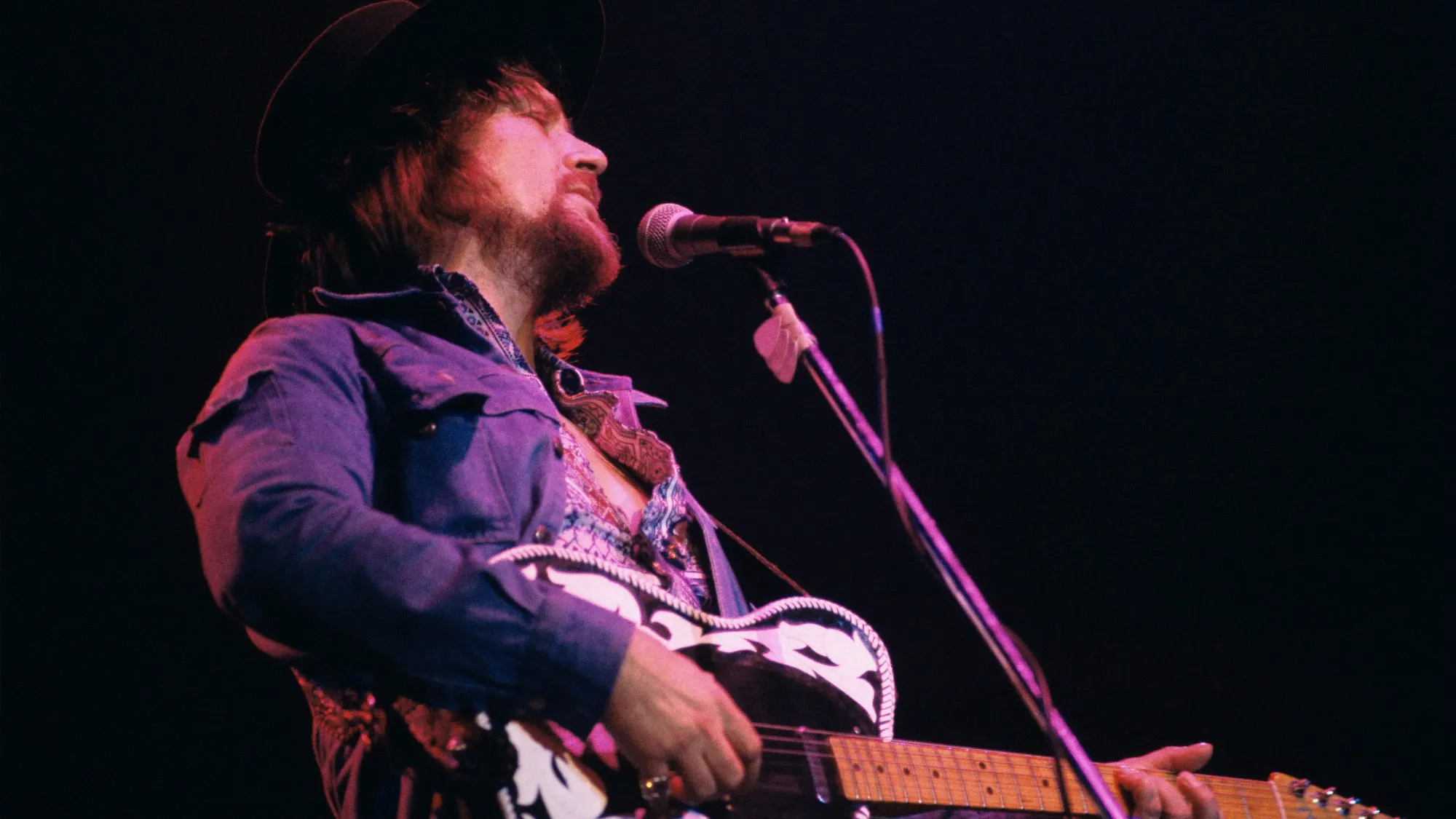
By the late 1970s, country music was undergoing a profound transformation, evolving from a regional genre rooted in traditional folk and honky-tonk into a polished, commercially dominant force that commanded the national airwaves. The year 1978, in particular, stands as a watershed moment in this evolution, representing the peak of the "Outlaw Country" movement while simultaneously ushering in the "Countrypolitan" and crossover era that would define the early 1980s. Amidst this shifting landscape, four specific tracks emerged not only as chart-topping hits but as cultural touchstones that resonated deeply with the youth of the era. These songs—performed by Waylon Jennings, the duo of Kenny Rogers and Dottie West, Don Williams, and Barbara Mandrell—encapsulated the emotional complexity, storytelling prowess, and stylistic diversity of the Nashville sound at its zenith.
The Outlaw Ethos: Waylon Jennings and the Defiance of I’ve Always Been Crazy
In 1978, Waylon Jennings was the undisputed figurehead of the Outlaw Country movement, a subgenre characterized by its rejection of the slick, overproduced standards of the Nashville establishment in favor of a more rugged, rock-influenced sound. His single "I’ve Always Been Crazy" served as both a personal manifesto and a reflection of the tumultuous lifestyle that defined the era’s rebels. Written by Jennings himself alongside his longtime drummer and collaborator Richie Albright, the song spent three weeks at the summit of the Billboard Hot Country Singles chart.
The track functioned as the title song for Jennings’ 1978 album, which arrived during a period of intense public scrutiny for the artist. Only a year prior, in 1977, Jennings had been arrested at a recording studio for possession of cocaine with intent to distribute, though the charges were later dropped due to a technicality regarding the search warrant. The lyrics of "I’ve Always Been Crazy" directly address this friction with authority: "I’ve been busted for things that I did, and I didn’t do / I can’t say I’m proud of all of the things that I’ve done / But I can say I’ve never intentionally hurt anyone."
Industry analysts of the time noted that Jennings’ success was pivotal in proving that country music could maintain its authenticity while achieving massive commercial success. By following up his No. 1 duet with Willie Nelson, "Mammas Don’t Let Your Babies Grow Up to Be Cowboys," with this self-aware anthem, Jennings solidified his status as a counter-cultural icon. The song’s production, featuring a driving rhythm and Jennings’ signature "phaser" guitar effect, bridged the gap between traditional country and the burgeoning southern rock movement, ensuring its longevity in the American songbook.
The Crossover Phenomenon: Kenny Rogers and Dottie West Define the Vocal Duo
While Jennings represented the rugged edge of the genre, the collaboration between Kenny Rogers and Dottie West exemplified the sophisticated, melodic appeal of the late 70s Nashville sound. Their 1978 hit "Every Time Two Fools Collide" became a landmark recording, marking a significant turning point for both artists’ careers. For Rogers, it was a continuation of his meteoric rise as a solo artist following his departure from the rock group The First Edition. For West, it was a career-saving resurgence that reintroduced her to a younger, broader audience.
Written by Jan Dyer and Jeff Tweel, "Every Time Two Fools Collide" served as the title track for the duo’s collaborative album. The song explores the cyclical nature of relationship conflict, utilizing a lush arrangement that appealed to both country and adult contemporary radio formats. The lyrical inquiry—"And who picks up the pieces / Every time two fools collide"—resonated with a demographic navigating the social shifts of the late 1970s.
The data surrounding this release underscores its impact. The song became Dottie West’s first-ever No. 1 single, a feat that validated her transition into a more contemporary style. The duo’s chemistry was so palpable that they were named the Country Music Association (CMA) Vocal Duo of the Year in both 1978 and 1979. This partnership demonstrated the industry’s growing reliance on "star power" collaborations to drive album sales, a strategy that would become a staple of the music business in the decades to follow. The success of "Every Time Two Fools Collide" paved the way for Rogers’ later iconic duets, most notably with Dolly Parton, and cemented West’s legacy as a versatile powerhouse in the genre.
Minimalism and Mastery: Don Williams and the Transatlantic Reach of Tulsa Time
Don Williams, often referred to as "The Gentle Giant" of country music, offered a stark contrast to the high-drama productions of his contemporaries. His 1978 hit "Tulsa Time" is a masterclass in understated rhythm and storytelling. Included on his Expressions album, the song was written by Danny Flowers, a member of Williams’ backing band. The track’s infectious, steady beat and relatable narrative about a man returning to his roots after failing to find success on the West Coast struck a chord with listeners nationwide.
The lyrics—"Well, you’ll know I been through it / When I set my watch back to it / Livin’ on Tulsa Time"—spoke to the quintessential American theme of the prodigal son and the search for belonging. Williams’ baritone delivery provided a sense of comfort and stability that became his trademark. "Tulsa Time" did not just dominate the country charts; it also caught the attention of the global rock community.
In a rare instance of immediate cross-genre validation, guitar legend Eric Clapton recorded his own version of "Tulsa Time" for his 1978 album Backless. Clapton’s version further popularized the song, leading to a live recording that reached the Billboard Hot 100. The duality of "Tulsa Time"—as both a country staple and a blues-rock favorite—highlighted the increasing fluidity between genres in the late 1970s. It proved that a well-crafted song, rooted in simple truths and a compelling groove, could transcend the narrow definitions of radio formatting.
The Rise of the Superstars: Barbara Mandrell and Sleeping Single In A Double Bed
As the decade drew to a close, Barbara Mandrell emerged as one of the most versatile and hardworking entertainers in the business. Her 1978 single "Sleeping Single In A Double Bed" was a career-defining moment, marking her first trip to the No. 1 spot on the country charts. Produced by Tom Collins and written by the prolific songwriting team of Kye Fleming and Dennis Morgan, the song was a departure from Mandrell’s earlier soul-influenced covers, leaning instead into a high-energy, disco-inflected country sound.
The song’s chorus—"Sleeping single in a double bed / Thinking over things I wish I’d said"—captured a specific brand of modern loneliness that felt fresh and relatable to 1970s audiences. Featured on her album Moods, the track utilized a catchy, rhythmic hook that made it an instant favorite in dance halls and on FM radio. Mandrell’s success was emblematic of the "Total Entertainment" era of country music; she was not just a singer but a multi-instrumentalist and television personality who would soon host her own variety show, Barbara Mandrell and the Mandrell Sisters.
The success of "Sleeping Single In A Double Bed" was not an isolated event. It was immediately followed by another No. 1 hit, "(If Loving You Is Wrong) I Don’t Want to Be Right," a cover of a soul classic that further demonstrated Mandrell’s ability to blend genres. This era of Mandrell’s career represented the commercial peak of the Nashville hit factory, where songwriters, producers, and artists worked in tandem to create polished, radio-ready tracks that could compete with pop music on every level.
Historical Context and the Socio-Economic Climate of 1978
To understand the weight of these four songs, one must consider the environment in which they were released. In 1978, the United States was grappling with the "Great Inflation," energy crises, and a general sense of post-Watergate malaise. Music served as a vital form of escapism and identity. For the "70s kids" mentioned in the original text, these songs were the soundtrack to a changing America.
Country music provided a narrative anchor during this period of instability. While disco dominated the urban centers, country music offered a sense of heritage and storytelling that appealed to the suburban and rural working class. The industry was also expanding; the CMA Awards were becoming a major televised event, and the proliferation of FM radio allowed for higher-fidelity broadcasts of the lush arrangements found in songs like "Every Time Two Fools Collide" and "Sleeping Single In A Double Bed."
Furthermore, the year 1978 saw the release of the film Every Which Way But Loose, starring Clint Eastwood, which featured a heavy country soundtrack. This cultural crossover helped mainstream the genre, making it "cool" for younger audiences who might have previously dismissed it as their parents’ music. The artists of 1978 were the bridge between the old-school Nashville of the 1950s and the stadium-filling "Class of ’89" (Garth Brooks, Alan Jackson) that would follow a decade later.
Analysis of Implications and Legacy
The enduring popularity of these four tracks suggests a unique convergence of songwriting quality and cultural timing. Waylon Jennings’ "I’ve Always Been Crazy" gave a voice to the disillusioned, while Don Williams’ "Tulsa Time" provided a rhythmic escape. The duets of Rogers and West offered a template for modern romantic ballads, and Barbara Mandrell’s hits proved that country music could be glamorous and contemporary.
Statistically, the impact is evident. All four artists mentioned are members of the Country Music Hall of Fame, and their 1978 releases continue to generate millions of streams annually on digital platforms. These songs are frequently covered by modern artists, ranging from Sturgill Simpson to Blake Shelton, proving that the structural integrity of 1970s songwriting remains a benchmark for the industry.
In conclusion, the year 1978 was more than just a successful year for the Nashville charts; it was the year country music successfully navigated the tension between its traditional roots and its commercial future. The songs of Jennings, Rogers, West, Williams, and Mandrell were the catalysts for this change. They captured the spirit of a generation caught between the rebellion of the 60s and the materialism of the 80s, leaving behind a legacy of music that remains as resonant today as it was when it first crackled over the airwaves forty-six years ago. For those who grew up during this era, these tunes are not merely nostalgic artifacts; they are the definitive markers of a golden age in American music.
