

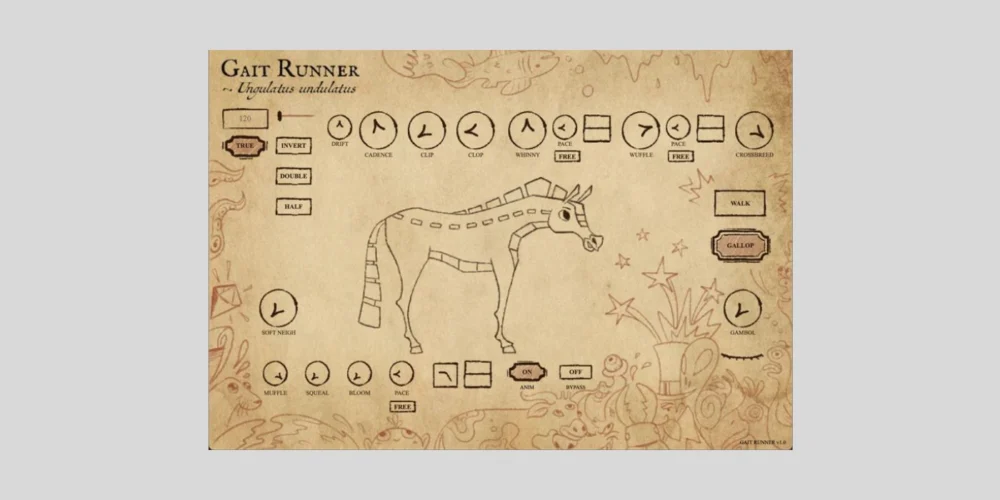
The digital audio workstation (DAW) landscape for macOS users has been enlivened by the release of Gait Runner, a distinctive rhythmic gate plugin now available for free. This tool, characterized by its unique equine-themed interface and functionality, purports to offer an innovative approach to sound design, transforming sustained audio signals into dynamic rhythmic patterns. Beyond its technical specifications, Gait Runner arrives with an elaborate, science-fiction-infused origin story, adding a layer of narrative intrigue to its utility.
The Genesis of Gait Runner: A Narrative from the Future
In a move that deviates significantly from conventional software announcements, the release of Gait Runner is framed within a compelling, albeit speculative, narrative. The developers present the plugin as a "transmission" from the year 5878, originating from the distant planet Symphagos. This imaginative backstory introduces Dr. Dara Dawes, described as a humanoid alien scientist, who embarked on an exploratory mission aboard her vessel, the HMS Bugle. During her interstellar journey, Dr. Dawes is said to have discovered Symphagos, a celestial body inhabited by unique "Symphiotes"—creatures characterized as animal-instrument hybrids.
According to this lore, Dr. Dawes meticulously collects and catalogs specimens of these Symphiotes. These biological-musical entities are then purportedly transmitted in plugin form, specifically in the Audio Unit (AU) format for macOS, making them accessible to 21st-century music producers and sound designers. Gait Runner is presented as the inaugural specimen from this extraordinary collection, an "equine-themed noise gate" that draws inspiration from the pioneering work of Eadweard Muybridge.
This narrative, while fantastical, serves as a distinctive contextual framework, inviting users to engage not only with the plugin’s sonic capabilities but also with its fictional universe. The developers themselves acknowledge the speculative nature of these claims, noting that the statement regarding the year 5878 "may or may not be factual," thereby encouraging a playful suspension of disbelief.
Technical Deep Dive: Functionality and Creative Applications
At its core, Gait Runner is a sophisticated noise gate designed to imbue sustained sounds with intricate rhythmic vitality. While the application of noise gates for rhythmic manipulation is a well-established technique in audio production, Gait Runner distinguishes itself through its specialized design and intuitive interface. It processes incoming audio, such as synth pads, drones, or ambient textures, by opening and closing the gate in a tempo-synced manner, thereby sculpting the sound into rhythmic pulses.
The plugin features two primary operational modes: "Walk" and "Gallop." These modes are visually represented by dynamic interface elements depicting horse-like species in motion, directly reinforcing the equine theme. The "Walk" mode likely offers more measured, steady rhythmic patterns, while "Gallop" mode is expected to deliver faster, more energetic, and possibly syncopated rhythms, mimicking the natural gaits of a horse. A key feature highlighted is the ability to quantize the "horse’s gait," allowing users precise control over the rhythmic subdivisions, a level of precision typically unattainable with organic, living counterparts.
Beyond basic rhythmic gating, Gait Runner integrates several parameters for advanced sound shaping. Users can introduce character and dynamic elements through controls for pitch, velocity, and filtering.
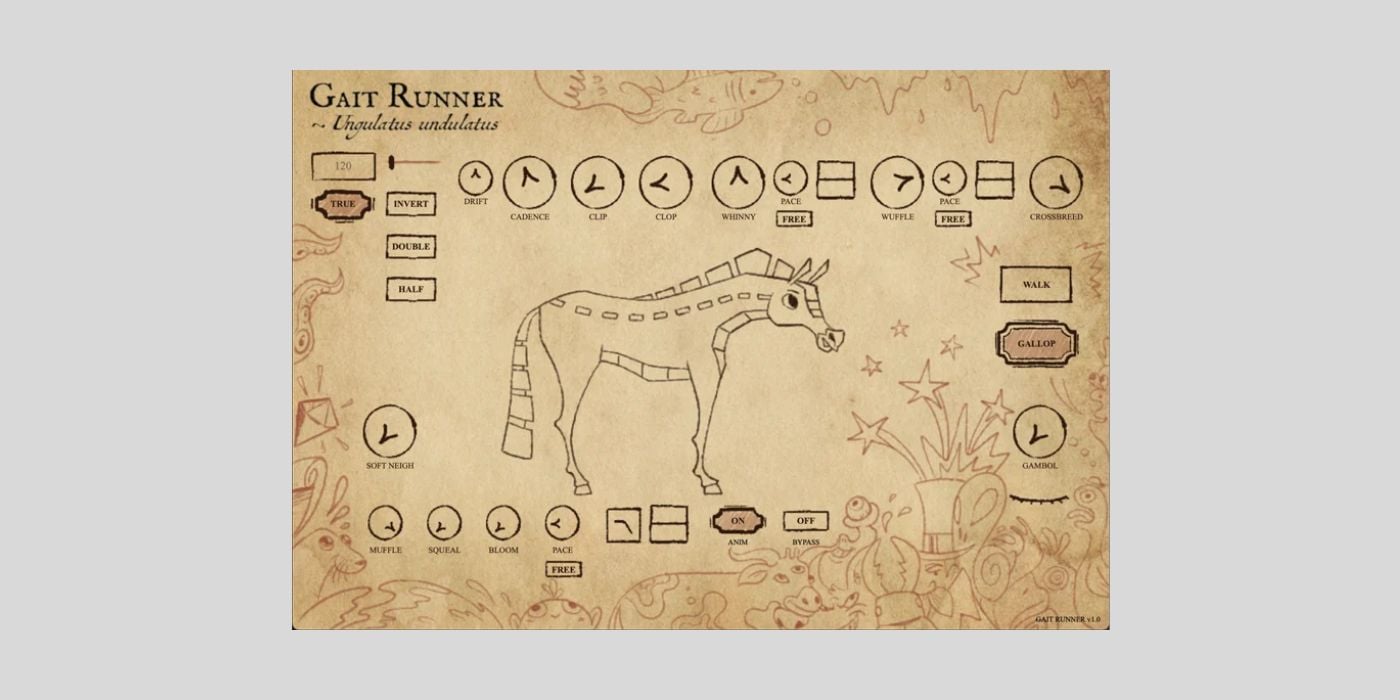
- Pitch modulation can create melodic contours or add emphasis to specific rhythmic hits.
- Velocity control allows for dynamic accents, making certain rhythmic events louder or softer, thereby enhancing the groove and expressiveness.
- Filtering capabilities enable timbral variations over time, shaping the frequency content of the gated sound to introduce sweeps, cuts, or resonant textures.
This combination of rhythmic gating with dynamic and timbral modulation capabilities positions Gait Runner as a versatile tool for generating simple, complex, or even randomized rhythms. Its potential applications span various genres, from electronic dance music and ambient soundscapes to cinematic scoring and experimental sound design, offering a novel way to inject movement and interest into static audio elements.
The Muybridge Connection: A Historical Artistic Influence
The inspiration drawn from Eadweard Muybridge, particularly his seminal work "The Horse in Motion" from 1878, provides a fascinating artistic and historical dimension to Gait Runner. Eadweard Muybridge (1830–1904) was an English photographer who made significant contributions to the development of photography and motion picture projection. His pioneering work in stop-motion photography and chronophotography revolutionized the scientific study of movement and laid foundational groundwork for the invention of cinema.
"The Horse in Motion" series, commissioned by former California Governor Leland Stanford, was designed to settle a long-standing debate about whether all four hooves of a horse leave the ground simultaneously during a gallop. Muybridge achieved this by setting up a series of cameras along a racetrack, triggered sequentially as the horse passed. The resulting photographs, when viewed in rapid succession, created the illusion of continuous motion, definitively proving that a horse does indeed lift all four hooves off the ground at certain points in its stride.
This historical photographic sequence, which captured discrete moments to reveal the fluidity of movement, resonates deeply with Gait Runner’s functionality. The plugin, in essence, "slices" a continuous sound into discrete rhythmic events, much like Muybridge’s cameras captured individual frames of a horse’s gallop. The concept of "gait" itself, referring to the manner of walking or running, is central to both Muybridge’s study and the plugin’s design, highlighting a sophisticated intertwining of historical art, scientific inquiry, and modern audio technology.
An Extended Offering: Cinematic Samples from the Blumooda System
Complementing the release of Gait Runner, the same "transmission" from the future includes a collection of 78 cinematic samples. These high-quality sound assets are purportedly sourced from the "Blumooda system," further expanding the fictional universe established by Dr. Dara Dawes. The samples are provided in 48 kHz, 24-bit WAV format, ensuring professional-grade audio fidelity suitable for a wide range of production contexts.
This collection is described as featuring "very nice textural soundscapes," suggesting an emphasis on atmospheric, evolving, and immersive audio elements. Cinematic samples of this nature are highly valued in film scoring, video game audio, ambient music production, and multimedia projects. They can be utilized to create dramatic tension, establish mood, design expansive sound environments, or serve as foundational layers for complex sound design. The inclusion of these samples alongside Gait Runner provides users with immediate sonic material to experiment with the rhythmic gate, enhancing the overall value proposition of the free offering.
Navigating Skepticism: The Meta-Narrative of Verification
The developers, or at least the original article’s author, anticipated the inherent skepticism that such an elaborate and fantastical origin story might evoke. The article explicitly addresses this potential doubt, framing it as part of the experience. The author’s personal anecdote of having "sent my own transmission to HMS Bugle, requesting the doctor to provide verification that her work is very much real," with an expected response around "2099," further embeds this meta-narrative. This playful acknowledgment of the story’s fictionality, combined with a projected "future" verification, encourages users to embrace the imaginative aspect of the plugin’s identity rather than dismissing it outright.
The concluding quote, attributed to Marty McFly from the "Back to the Future" film series – "I guess you guys aren’t ready for that yet, but your kids are gonna love it" – serves as a humorous and culturally resonant nod to the themes of time travel, future technology, and the acceptance of groundbreaking, albeit initially perplexing, innovations. This self-aware approach transforms potential criticism into an integral part of the product’s unique appeal, fostering a sense of shared intrigue and intellectual play between the creators and the user base.

Broader Implications: Marketing, Innovation, and the Freeware Landscape
The release of Gait Runner, with its blend of technical innovation, artistic inspiration, and an elaborate fictional backstory, highlights several broader implications for the audio software industry.
Innovative Marketing: The use of a rich, engaging narrative as a central marketing tool is a departure from the often purely technical announcements prevalent in the sector. This approach demonstrates a creative strategy to capture attention and differentiate a product in a crowded market. By inviting users into a speculative universe, the developers create a memorable experience that extends beyond the plugin’s functionality, fostering a sense of community and curiosity. This could inspire other developers to explore more imaginative ways to present their tools.
Value of Freeware: The availability of Gait Runner and the accompanying cinematic samples for free significantly lowers the barrier to entry for macOS users interested in advanced sound design. High-quality freeware plugins are invaluable resources for bedroom producers, aspiring musicians, and seasoned professionals alike, allowing for experimentation and creative exploration without financial commitment. This contributes to a more accessible and dynamic ecosystem for music production.
Intersection of Art and Technology: Gait Runner exemplifies the growing trend of integrating diverse disciplines—history, science fiction, visual art (Muybridge), and audio engineering—into software development. This interdisciplinary approach not only enriches the user experience but also pushes the boundaries of what a plugin can represent, transforming it from a mere tool into a piece of interactive art and storytelling.
Future-Proofing and Longevity: While the "future" dates in the narrative are fictional, the plugin itself, designed for macOS AU format, adheres to current industry standards, ensuring its compatibility and utility for contemporary producers. The emphasis on unique features like quantizable gaits and dynamic modulation ensures that Gait Runner offers capabilities that stand out from more generic rhythmic gating solutions.
Availability and Further Information
Gait Runner is currently available for free for macOS users. The installation process typically involves downloading the AU plugin file and placing it in the appropriate system folder for digital audio plugins. Users are encouraged to visit the official source or developer’s website for direct download links and any specific installation instructions.
It is worth noting that the original announcement article, dated March 6, 2026, also included a reminder for an "Afro Percussion" giveaway, set to conclude on March 7, 2026. While these dates fall in the future from the current reporting period, they are presented as part of the original article’s distinct chronological framework, further contributing to its unique, anachronistic presentation.
In conclusion, Gait Runner represents more than just a new rhythmic gate plugin. It embodies a confluence of technical ingenuity, historical homage, and audacious storytelling, offering macOS users a powerful and creatively inspiring tool wrapped in an unforgettable narrative. Its free availability ensures wide accessibility, potentially cementing its place as a distinctive and beloved addition to many a producer’s digital arsenal.
