

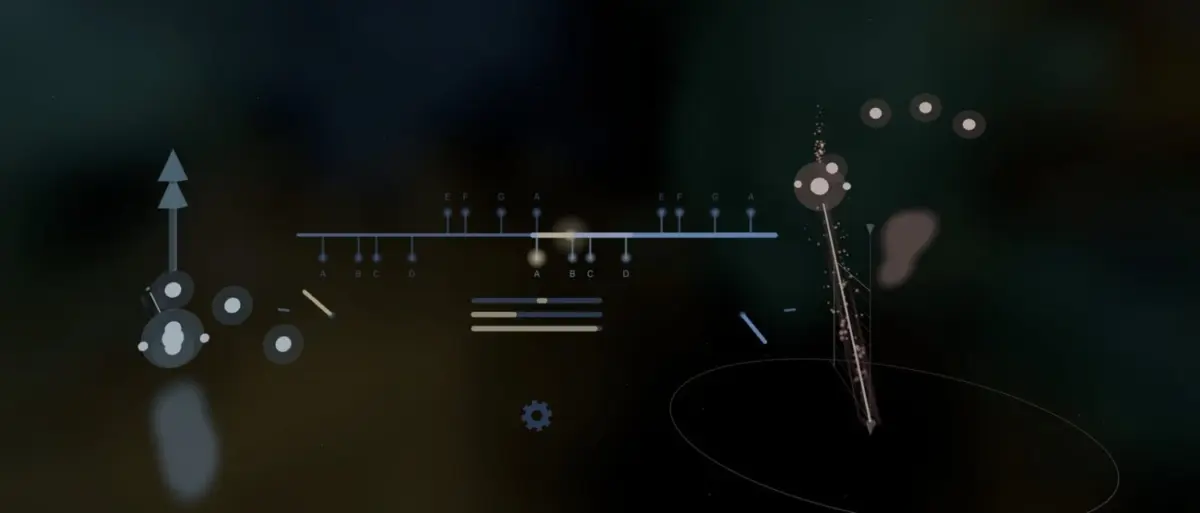
The landscape of digital music performance has undergone a significant transformation with the official release of Glinster, a sophisticated MIDI Polyphonic Expression (MPE) controller and instrument developed by industry pioneer Geert Bevin. Designed specifically for the Apple ecosystem, Glinster is now available for iPhone, iPad, and the Apple Vision Pro, marking a pivotal moment in the convergence of spatial computing and expressive electronic music. By leveraging advanced hand-tracking technology and adaptive touchscreen algorithms, the application seeks to bridge the gap between traditional tactile instruments and the burgeoning field of virtual performance interfaces.
The Evolution of Expressive Digital Instruments
To understand the significance of Glinster, one must examine the professional trajectory of its creator, Geert Bevin. For over a decade, Bevin has been a central figure in the development of "expressive" electronic instruments—devices that allow for the same level of nuance and vibrato found in acoustic instruments like the violin or cello. Bevin’s work history includes significant contributions to the Eigenlabs Eigenharp, a high-end performance instrument known for its extreme sensitivity, and the Roger Linn Design LinnStrument, which remains a gold standard for grid-based MPE control.
Furthermore, Bevin’s role in the music technology industry is perhaps most notably defined by his authorship of the original Multidimensional Polyphonic Expression (MPE) specification draft. This technical framework eventually became the industry standard adopted by the MIDI Association, allowing modern synthesizers to process multiple dimensions of control—such as pressure, pitch bend, and timbre—independently for every individual note in a chord. Glinster represents the culmination of this expertise, distilling years of hardware development into a software-based solution that utilizes the sensors already present in consumer mobile and wearable devices.
Adaptive Interface and Spatial Mechanics
The primary innovation of Glinster lies in its "adaptive" nature. Unlike traditional MIDI controller applications that present a static grid of buttons or a fixed piano keyboard, Glinster utilizes a dynamic interface that conforms to the physical dimensions of the user’s hand. This addresses a long-standing issue in mobile music production where fixed UI elements often lead to ergonomic strain or accidental triggers due to varying finger sizes and spans.
On iOS and iPadOS devices, Glinster employs a "glass-surface" interaction model. When a user places their hand on the screen, the software measures the reach and spacing of the fingers in real-time. The musical interface—scales, notes, and modulation zones—then populates directly beneath the fingertips. This "notes-to-finger" approach ensures that the instrument is always perfectly calibrated to the performer’s physical anatomy, allowing for a more intuitive and "blind" playing experience similar to that of a fretboard or a physical keyboard.
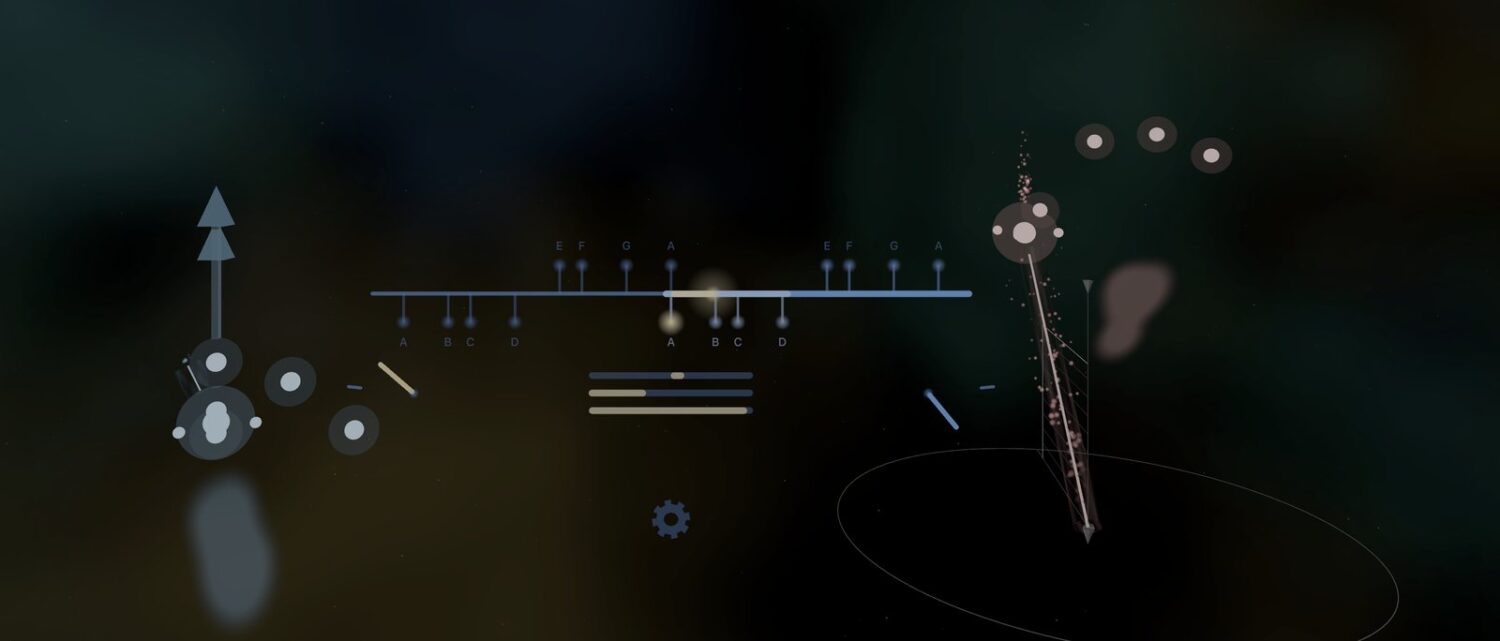
On the Apple Vision Pro, the application shifts from a 2D surface to a 3D spatial environment. Utilizing the Vision Pro’s advanced hand-tracking sensors and depth-sensing cameras, Glinster allows musicians to perform "in the air." The software tracks the position of each finger in three-dimensional space, translating micro-gestures into MPE data. This eliminates the need for physical hardware entirely, providing a portable, high-fidelity performance solution for touring musicians and studio producers who operate within the VisionOS environment.
Technical Specifications and MPE Implementation
Glinster is designed to function both as a standalone synthesizer and as a dedicated MIDI controller. It supports the AUv3 (Audio Unit version 3) standard, which is critical for professional workflows on iPad and iPhone. This allows Glinster to be loaded as a plugin within digital audio workstations (DAWs) such as Logic Pro for iPad, Cubasis, or AUM.
As an MPE-native tool, Glinster transmits five dimensions of touch data, often referred to as "5D Touch" in the industry:
- Strike: The initial velocity of the note.
- Press: Continuous pressure or aftertouch (mapped to Z-axis depth in spatial mode).
- Glide: Horizontal movement for pitch bends and vibrato.
- Slide: Vertical movement for timbral shifts or filter sweeps.
- Lift: The speed at which a finger is removed, often controlling release or resonance.
By providing these layers of data, Glinster allows users to perform complex swells and polyphonic pitch bends that are impossible on standard MIDI keyboards. For instance, a performer can hold a three-note chord and apply vibrato to only the middle note while sliding the top note up an octave, all while maintaining a constant volume on the root note.
A Chronology of MPE Development
The release of Glinster is the latest entry in a timeline of expressive digital music technology that has been decades in the making:
- 2009: Release of the Eigenharp, one of the first instruments to offer per-note multidimensional control.
- 2013-2014: Geert Bevin collaborates with Roger Linn to bring the LinnStrument to market, emphasizing a more accessible grid-based layout.
- 2015: The first formal draft of the MPE specification is authored by Bevin, seeking to standardize how controllers communicate with software.
- 2018: The MIDI Association officially adopts MPE as part of the MIDI 1.0 specification, leading to widespread support from companies like Moog, Ableton, and Apple.
- 2023-2024: The launch of Apple Vision Pro provides a new platform for spatial MIDI control.
- Present: Glinster is released, merging hand-tracking technology with the established MPE standard to create a hardware-less expressive instrument.
Market Implications and Industry Reaction
The release of Glinster at a price point of $9.99 suggests a strategic move to democratize high-end expressive control. Traditionally, MPE hardware controllers have been expensive, often ranging from $800 to $3,000. By moving this functionality into the software realm and utilizing the existing hardware of the iPhone and Vision Pro, Bevin is making expressive performance accessible to a much broader demographic of creators.
Industry analysts suggest that Glinster’s success could signal a shift in how professional audio software is developed for the Apple Vision Pro. While many early spatial computing apps have focused on immersive entertainment or productivity, Glinster is a "pro-sumer" tool that prioritizes low-latency performance and technical depth. The ability to use the Vision Pro as a precision instrument may encourage other developers to explore hand-tracking as a legitimate replacement for physical MIDI knobs and faders.
Initial reactions from the electronic music community have highlighted the "tactile" feel of the interface despite the lack of physical keys. Beta testers have noted that the adaptive layout reduces the learning curve associated with traditional MPE controllers, which often require users to memorize specific grid coordinates.
Broader Impact on Accessibility
Beyond the professional music production sphere, Glinster’s adaptive interface has significant implications for accessibility. Traditional musical instruments are often designed for a "standard" hand size, which can be exclusionary for children or individuals with limited mobility or limb differences. Because Glinster’s interface adapts to the hand rather than forcing the hand to adapt to the interface, it offers a more inclusive path to musical expression. The software’s ability to recalibrate based on the user’s reach ensures that the "sweet spot" for performance is always within their physical capability.
Pricing, Availability, and Future Outlook
Glinster is currently available on the Apple App Store as a universal purchase, meaning a single $9.99 transaction grants access to the iPhone, iPad, and Vision Pro versions. This pricing model is notably aggressive, positioning the app not just as a niche utility but as an essential tool for any mobile musician.
As spatial computing continues to evolve, the integration of MIDI and OSC (Open Sound Control) protocols into 3D environments is expected to grow. Geert Bevin’s Glinster stands as a foundational example of how legacy standards like MIDI can be successfully ported into the future of computing without losing the nuance and "soul" required for artistic performance. With its combination of a storied developmental pedigree and cutting-edge sensor utilization, Glinster is poised to become a benchmark for expressive digital instrumentation in the mid-2020s and beyond.
