

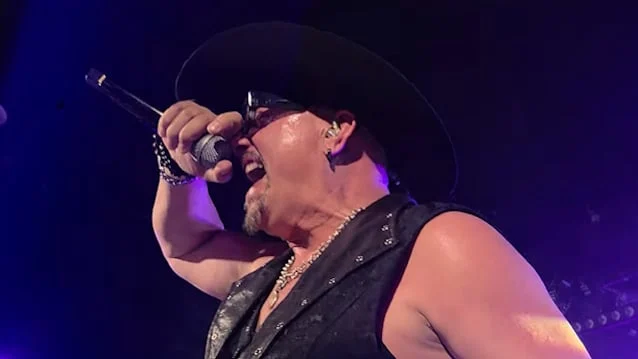
August 4, 2026 – In a candid conversation on KLOS radio’s "Whiplash" program, hosted by Full Metal Jackie, former Queensrÿche frontman Geoff Tate offered a multifaceted glimpse into his current creative landscape and personal pursuits. The iconic vocalist, whose tenure with Queensrÿche defined a significant era of progressive metal, detailed how his artistic process transcends geographical boundaries and revealed an unexpected ambition: mastering the culinary arts. The discussion also delved into the enduring relevance of the band’s seminal 1988 album, "Operation: Mindcrime," nearly four decades after its groundbreaking release.
Global Creativity and the Art of Imagination
Addressing a question about potential creative endeavors he’d pursue with more free time, Tate immediately dismissed the notion that physical location is a prerequisite for his inspiration. "I don’t need to be home, so to speak, to be creative at all," he stated. This philosophy is vividly illustrated by the production of his latest album, "[Operation:] Mindcrime III," the third chapter in the ambitious "Operation: Mindcrime" saga. Tate revealed that the album was meticulously crafted across a remarkable 14 different countries. Recording sessions took place in diverse locales, from hotel rooms and backstage areas at concert venues to the opulent setting of a castle in France and Italy.
Perhaps most striking was the mention of recording segments in the remote wilderness of the North Pole. "Parts of it were recorded in the North Pole," Tate elaborated with a laugh, "in a wonderful cabin in the middle of winter in the snow." This unconventional approach underscores his belief that creativity is an internal, imagination-based pursuit, amplified by the technological advancements of the 21st century. "Anywhere works, because it’s all imagination-based. And luckily we live in the 21st century, which gives us the technical ability to record and create without having to be in a specific place."
A Culinary Connoisseur’s New Frontier
Beyond the realm of music, Tate expressed a distinct desire to cultivate his skills in the kitchen. "I would like to learn how to cook more, ’cause I’m terrible," he admitted. This self-deprecating confession is tempered by his profound appreciation for gastronomy. "I love food. I love to eat. I love fine food and I enjoy the talent and the creativeness of a chef, like a Michelin star-rated restaurant and what they can do."
Tate drew a compelling parallel between the intricate process of culinary creation and the art of songwriting. "I would like to try my hand at that, learning more about it, the mixing of things. It’s kind of like music in a sense, ’cause you mix notes together and rhythm patterns to form music. Well, you do the same thing when you’re preparing a dish – you’re seasoning it and you have to know the basics of how things work, the chemistry of it all. So there’s a similarity there that I think I could relate to." This analogy highlights a deeper understanding of composition and balance, suggesting that his foray into cooking might yield surprisingly sophisticated results.
The Timeless Echoes of "Operation: Mindcrime"
The conversation naturally turned to the enduring legacy of Queensrÿche’s 1988 masterpiece, "Operation: Mindcrime." Tate noted that the album’s lyrical themes continue to resonate with audiences, a phenomenon he has observed for decades. "Well, people tell me all the time how relevant the album is to the present. And they’ve been telling me that for 20 years."
He attributed this sustained relevance to the persistent societal dynamics it depicts: the perennial struggle between those in power and the disenfranchised. "And I think it’s because the world doesn’t really change that much in the sense of people in power versus people who aren’t in power, the incredibly wealthy who pretty much call all the shots to the working class people like the rest of us who live paycheck to paycheck, and we go to work and do our thing. And we don’t have a lot of world choices, in a sense." Tate’s analysis suggests that the core narrative of "Operation: Mindcrime" – a story of manipulation, disillusionment, and the fight against systemic corruption – remains a stark reflection of contemporary realities. "It’s just been that way. And that’s what the story is based on, really. So it always remains relevant because the big picture doesn’t really change. It’s always us against them. The rich trying to eat the poor. It’s the same old story, so to speak. Only the names change."
The "Operation: Mindcrime" Trilogy: Evolution and Collaboration
The production of "[Operation:] Mindcrime III" represents a significant collaboration. The album was produced by John Moyer, bassist for the acclaimed band Disturbed, who has a longstanding creative partnership with Tate, having worked on four of the singer’s albums since 2015’s "The Key." Notably, "[Operation:] Mindcrime III" also marks the recording debut of guitarist Kieran Robertson. Robertson, who co-penned many of the album’s tracks with Tate, moved to the United States from Glasgow nearly a decade ago specifically to join Tate’s band as a guitarist, as reported by Ultimate Classic Rock. This transatlantic collaboration further emphasizes Tate’s global approach to music creation.
A Definitive Masterpiece: The Genesis of "Operation: Mindcrime"
Released in May 1988, Queensrÿche’s third studio album, "Operation: Mindcrime," was a watershed moment that propelled the quintet to unprecedented levels of critical and commercial success. The album’s narrative centers on Nikki, a disillusioned former drug addict entangled in a shadowy conspiracy involving a revolutionary group led by the enigmatic Dr. X. Manipulated into assassinating political figures, Nikki’s path is ultimately altered by his growing affection for Sister Mary, a nun who helps him confront the harsh truths of his predicament.
Widely regarded as one of the greatest concept albums in metal history, "Operation: Mindcrime" achieved Platinum certification in the U.S. in 1991. Its influence is further cemented by its inclusion in "Top 100 Metal Albums Of All Time" lists compiled by both Kerrang! and Billboard magazines. Rolling Stone also acknowledged its significance, remarking that "nearly 30 years after its initial release, ‘Mindcrime’ feels eerily relevant." The album masterfully explored complex themes of religion, drug abuse, and radical politics, weaving them into a compelling and intricate storyline.
The "Operation: Mindcrime" Legacy: A Tale of Two Sequels and a Legal Divide
The subsequent installment, "Operation: Mindcrime II," released in 2006, received a more divided reception. While considered a competent record in its own right, many critics and fans felt it failed to recapture the magic of the original and was an unnecessary sequel that somewhat diluted the impact of the first album.
The history of "Operation: Mindcrime" is also inextricably linked to the legal disputes that arose between Geoff Tate and the remaining members of Queensrÿche. In April 2014, a settlement was reached following a nearly two-year legal battle. The dispute originated when Tate, after being fired from the band in 2012, sued for the rights to the Queensrÿche name. Guitarist Michael Wilton, drummer Scott Rockenfield, and bassist Eddie Jackson responded with a countersuit. The resolution of this protracted legal conflict stipulated that Wilton, Rockenfield, and Jackson would continue as Queensrÿche, while Tate would retain the exclusive right to perform "Operation: Mindcrime" and "Operation: Mindcrime II" in their entirety live. This agreement has allowed Tate to continue his unique interpretation of the concept albums while the current iteration of Queensrÿche, fronted by Todd La Torre, has forged its own path.
Since Todd La Torre joined Queensrÿche in 2012, the band has released four studio albums: "Queensrÿche" (2013), "Condition Hüman" (2015), "The Verdict" (2019), and "Digital Noise Alliance" (2022), each contributing to the band’s evolving discography. Meanwhile, Geoff Tate’s continued exploration of the "Operation: Mindcrime" narrative with "[Operation:] Mindcrime III" solidifies his commitment to this monumental body of work, demonstrating that even after nearly four decades, its themes and artistic execution continue to inspire and provoke. Tate’s dual passions for musical innovation and culinary exploration, coupled with the enduring power of his most celebrated work, paint a picture of an artist who remains as dynamic and relevant as ever.
